Monthly Archives: April 2008

Time for Change is Now – and 13 years later

Folks,

Steve Braunginn, former head of the Urban League of Greater Madison, has called on Madison to really take action to boost minority achievement. As an advocate for our schools, please read the recent Isthmus opinion article at:

http://www.isthmus.com/isthmus/article.php?article=22251

If you didn’t know it already – we’ve got some real problems here with performance and achievement disparities on the basis of race in Wisconsin. Latest data is that Wisconsin is dead last among the states in this gap! Another stain is that the state’s gap in incarceration is rotten, also.

So, Braunginn’s piece is not just another “let’s do nice” opinion article – it’s critically important. He’s ringing an alarm bell that our state and community really need to work together to fix this.

In Madison, we can sometimes inoculate the discussion of race behind the low-income bracket. Aggregate performance trends at schools are “explained” largely by low-income percentages, but there is also a solid correlation between the low-income percentage and the white population. I’ll bet that if your elementary school has 25% low-income percentage that the white population is about 75%, and if the low-income percentage is 65% low income, that the white population is about 35%. And, if you understand something about boundaries, you know that this means our neighborhoods and suburbs are segregated by income and race.

To me, such segregation means lost opportunities.

In a recent Wisconsin Academy of Arts and Sciences lecture, UW Professor Gloria Ladson-Billings said its probably best to consider the racial performance and achievement gap as a national debt. She notes that it’s bizarre, but generally accurate, to go through a list of high school courses and make a prediction whether there are black kids are in the class or not. The gap is really an integration over a range of effects and over time, but where we are now is simply unacceptable.

The fact is that we need these kids. They have a ton to contribute.

And, just like a national debt of something like $9 trillion, we need to think of the debt as the expenses our children will be paying if we don’t address it. Our nation should chip away at it every day, with thought, sweat, prayer, discussion, volunteering, cultural awareness, letters to the editor, charitable contributions, friendship, mentoring, high expectations, … all the normal work we’d be committed to raising our own children.

The only thing I would add to what Steven Braunginn has said is that the time for change is not now, but in a few years. We need to carry through the kindergarten student who will eventually be prepared to be a solid citizen in 13 years. It’s just that time for the work and investment is now. The real prize comes later.

I also believe this isn’t about where our hearts are. We don’t need to change our perceptions about the importance of working against racial disparities – we already know this in our hearts. For those who don’t, words are not likely to change their hearts. Examples will.

The work itself will be like fresh air – and people will immediately start to feel better – but we’ve got a long road ahead and keep a long-term view on this.

Jerry Eykholt

Leave a comment

Filed under Uncategorized

Dressed down for dressing up

A number of schools in Madison have foregone the celebration of Halloween over the past couple of years. The stated reason for not allowing Halloween costume parades at my school is that certain children, because of religious prohibitions, cannot participate, and therefore since a few are excluded from such an activity, such an event is deemed to be exclusionary. This is part of trend happening across the country. I don’t believe there is a district policy for this, at least one I could find. Despite the canard trotted out in such situations, boundary changes being one of the latest, the one that says “kids will get over it,” I can say my two children were quite upset and still bring up the ban each Halloween and a nostalgia for the event. Now comes a story out Reedsburg.

An elementary-school event in which kids were encouraged to dress as members of the opposite gender drew the ire of a Christian radio group, whose angry broadcast prompted outraged calls to the district office.

Students at Pineview Elementary in Reedsburg had been dressing in costume all last week as part of an annual school tradition called Wacky Week. On Friday, students were encouraged to dress either as senior citizens or as members of the opposite sex.

A local resident informed the Voice of Christian Youth America on Friday. The Milwaukee-based radio network responded by interrupting its morning programming for a special broadcast that aired on nine radio stations throughout Wisconsin. The broadcast criticized the dress-up day and accused the district of promoting alternative lifestyles. “We believe it’s the wrong message to send to elementary students,” said Jim Schneider, the network’s program director. “Our station is one that promotes traditional family values. It concerns us when a school district strikes at the heart and core of the Biblical values. To promote this to elementary-school students is a great error.”

The response surprised Principal Tammy Hayes, who said no one had raised any objections beforehand. She said a flier detailing Wacky Week had been sent home with children the prior week, and an announcement was also included in teacher newsletters.

The dress-up day was not an attempt to promote cross-dressing, homosexuality or alternative gender roles, district administrator Tom Benson said. “The promotion of transgenderism — that was not our purpose,” Benson told the Baraboo News Republic. “Our purpose was to have a Wacky Week, mixing in a bit of silliness with our reading, writing and arithmetic.”

Our school’s “Wacky Day” dress up just took place recently, miraculously surviving censure. I wonder when it too will be ended. What are these people afraid of?

Robert Godfrey

1 Comment

Filed under Best Practices, education, Gimme Some Truth

We Are Not Alone #20

At the April 4 th press conference for the release of the MMSD administration’s proposed budget — at the prompting of the press — the “R-Word” (referendum) was discussed. Since the one time Tax Incremental Finance District disbursement saved Madison from the annual rituals of cuts and conflict this year (and gave Art Rainwater the fitting farewell gift of an opportunity to make his last budget a true “cost to continue” budget), referendum talk was the headline in the Capital Times and the State Journal:

Referendum talk is back for schools
Susan Troller

A gaping $9.2 million hole in the Madison school district’s 2009-2010 budget will likely be stirring talk of a referendum as soon as the city’s new schools superintendent, Dan Nerad, takes office at the beginning of July.

By Andy Hall

Madison school officials soon will begin considering whether to ask voters for additional money to head off a potentially “catastrophic ” $9.2 million budget gap for the 2009-10 school year.

We are not alone.

41 Wisconsin school districts had 61 referenda on the ballot April 1st; 33 of these were for basic operating or maintenance expenses (the remainder were to authorize debt for capital projects).

As the State Journal recently editorialized, these referenda are a manifestation of the “no win situation” districts face due to the “system for financing public schools that essentially requires most schools to spend at a faster rate than they are allowed to raise revenue.”

The mess created by the state ‘s outdated and unfair school financing system is not new, but the consequences are mounting. Gov. Jim Doyle and lawmakers tweaked the system a year ago, but the state ‘s political leaders continue to shrink from the overhaul required…

The victims are the students — along with Wisconsin ‘s future in the globally-competitive, knowledge-based economy.

Superintendent Rainwater’s last words at the press conference summed things up nicely (I hope these are not his last words on the subject — Art, enjoy retirement but please continue to advocate for our schools and children):

“The politicians in the state of Wisconsin and those who fund the politicians need to understand what’s going to happen to this state if they lose this great public school system. We will be sitting here 10 years from now, wondering what in the heck happened to us. And what happened is this: We destroyed our ability to compete in a world that is changing.”

Now to the April 1st votes (with links to the Department of Public Instruction summaries):

Now the districts where the referenda failed are looking at what to cut next.

Here is a list of probable cuts (covering two years) from Waupan where the three-year nonrecurring referendum lost by 589 votes:

  • Reduce the teaching staff at Jefferson by 2.0 FTE?s (grade 1 and grade 2)
  • Reduce the teaching staff at Washington by 2.0 FTE?s (grade 1 and grade 2)
  • Eliminate the position of Gifted and Talented Teacher (1.0 FTE)
  • Eliminate the position of Director of Instruction (.8 FTE)
  • Eliminate 1.0 FTE elementary principal
  • Restructure administration
  • Eliminate the position of Police Liaison Officer
  • Eliminate Alternative School Program (.5 ? 1.5 FTE)
  • Reduce High School Health/PE (1.0 FTE)
  • Eliminate High School French (1.0 FTE)
  • Eliminate Guidance position (.6 FTE)
  • Eliminate Media Program (1.0 FTE)
  • Eliminate Library Aide (1.0 FTE)
  • Eliminate Clerical positions (.7 FTE)
  • Eliminate part-time custodians at middle school
  • Eliminate Industrial Arts at the middle school (1.0 FTE)
  • Combine Computer/FCE at the middle school (1.0 FTE)
  • Eliminate Special Education Aide (1.0 FTE)
  • Reduce one section of Honors Math at the middle school level

*FTE – Full Time Employee

As the district website asks, “If we continue to eliminate programs and cut staff, it will diminish and erode the quality of education in our district. What will happen to our kids and our community?”

As they have been for over a decade in Wisconsin, cuts like this are being contemplated around the state —  both in districts where referenda failed in those districts where no referenda were held. AMPS will give updates on these as the school budget season continues. For now, just a couple of videos about Wisconsin Heights, where the second referendum in two years failed, this time by 75 votes out of 1,975 cast (3.8%).

From before the vote:

From after the vote:

What can we do? Keep the pressure on our state officials, especially Governor Doyle; support the Wisconsin Alliance for Excellent Schools; join ABC-Madison; write your local newspapers; and last but not least vote and know where the candidates stand before you vote.

Thomas J. Mertz

Leave a comment

Filed under "education finance", AMPS, Budget, education, Elections, finance, Local News, Referenda, School Finance, Take Action, Uncategorized, We Are Not Alone

Wright Middle School 10th Anniversary

jcwpainting_001.jpg

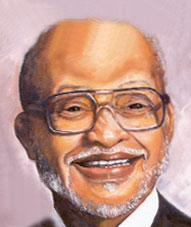
James C. Wright Middle School is holding a 10th anniversary celebration on Sunday, April 6 from 3:00-5:00 (1717 Fish Hatchery Road). Wright is a very bright spot in our district and community.  Please come and join in recognizing the good work.  There will be an original play on Reverend Wright’s life and work,  the release of a book on Reverend Wright, inspiring speeches and more.

Hope to see you there.
Thomas J. Mertz

Leave a comment

Filed under AMPS, Best Practices, education, Local News, Uncategorized

What to say?

string-telephone.jpg

Some news analyses of the mixed results of Tuesday’s (April 1st, 2008) various school referendums are in. But it was in the opening lede of today’s piece in the Wisconsin State Journal that especially caught my eye, the ongoing problem of message.

More than half of the public school referendums in the state failed to gain approval from voters in Tuesday ‘s election, sending some districts back to the calculators and calendars.

Of the 61 referendums, 30 passed and 31 failed.

In the tiny Weston School District, a request of $644,000 was denied by 31 votes, 395-364, while in expanding Jefferson, the voters decided the district did not need to spend $45.6 million for a new high school.

In both cases, superintendents thought the schools ‘ messages, while unsuccessful, were clear: Pay now or pay more later. The districts may return with recalculated referendums in the fall because the formula for state aid is not going to change.

I don’t believe this type of reporting/analysis is particularly useful, either for the public or policy makers, for one simple reason; the education community has yet to figure out a way of coming up with a common set of talking points/slogans that will give the voting public, most of whom do not have children in school, a compelling reason for their taxes to be raised (and let’s be truthful here) by less than $30 a year, in the vast majority of referendums. At the same time, I would bet most of these referendums on Tuesday, both the successful ones and those that failed, did not incorporate into their message the fact that school the funding formula is broken. Fortunately, we did not have to go before the voters this year, for reasons explained here, but will WE do any better job than other communities when MMSD will inevitably be facing another multi-million dollar shortfall next year at this time and must ask for voters for relief? The past record on this score is not encouraging.

We still have a balkanized approach to school funding reform campaigns around this state. When will the coalition building over the last ten years begin to pay off?

Robert Godfrey

3 Comments

Filed under "education finance", Elections, Referenda, School Finance, We Are Not Alone