Monthly Archives: March 2008

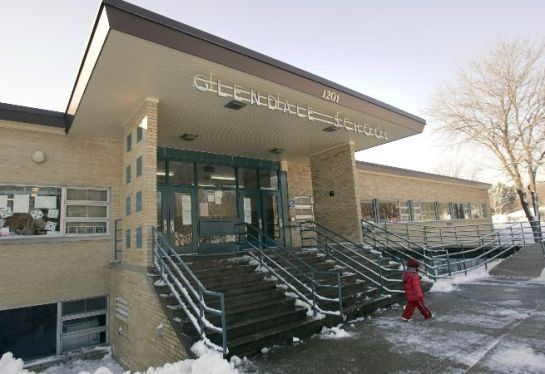
Glendale Elementary: Looking past the stats

66310.jpg
photo by: Mike DeVries/The Capital Times

A behind the scenes examination of Glendale Elementary, along with an audio slide show, is on tap in this well written piece in the Capital Times. Let’s hope this a foreshadowing of things to come as our afternoon paper attempts to reinvent itself from dead tree technology to a cyber presence in a couple of weeks from now.

Robert Godfrey

Glendale Elementary may be failing by test-based standards, but it’s succeeding by human ones.

The question of how we recognize good schools and bad ones has become a pressing issue.

In Washington, Congress is debating the reauthorization of the No Child Left Behind legislation. Locally, Madison and Sun Prairie parents have recently been upset over boundary changes that some see as sending their children to less desirable schools.

At the same time, the movement toward inclusivity in special education, a growing minority population and increasing poverty rates throughout Dane County, particularly in Madison, have put a sharp point on some important questions:

  • Do advanced students suffer when they share a classroom with struggling students?
  • How should schools address the stresses of poverty?
  • Are test scores a reliable measure of a school’s effectiveness?

This story doesn’t attempt to answer those questions; educational researchers have been struggling with them for decades. Instead, it puts one Madison elementary school under the microscope where all those currents come together — a school that by No Child Left Behind’s test-based standards is clearing failing. Yet, by the assessment of a number of parents, volunteers and other fans, the school is succeeding beyond all expectations.

A closer look at Glendale Elementary, a 50-year-old Madison school within the noisy shadow of U.S. 51, shows a school where success is occurring in ways that test scores can’t measure and poverty rates don’t reveal.

Leave a comment

Filed under AMPS, education, Local News, No Child Left Behind

Spring Fever

In honor of MMSD’s Spring Break, I’m posting this video from one of my favorite Elvis movies, Girl Happy.

Thomas J. Mertz

Leave a comment

Filed under Uncategorized

TAME’s Proposal on Military Recruiting in MMSD

schneider_war.jpg

At the March 3d Board of Education meeting Truth and Alternatives to Militarism in Education (TAME) presented a detailed proposal for regulating military recruiting in Madison schools.  Proposed policy changes developed by staff and the Board will be on the agenda at the Board’s March 24 workshop meeting (no public testimony).  I hope that TAME’s ideas are given serious consideration.

From TAME: 

TAME is a small group of citizens working hard to educate school boards, students, and parents about the excessive recruiting measures to sustain the all-voluntary armed forces.  Because the Madison School administration has been letting slide enforcement of the current Board of Education policy regarding military recruiters in Madison’s schools, and because the Madison School Board chose to allow the military to advertise on scoreboards in the gymnasiums and football fields, also a violation of the policy, T.A.M.E. became more publicly active in the last 4 months to stop this abuse and misuse of power.  In discussions with School Board members and administrators, it became clear that the Board and administration was looking for more suggestions regarding this issue.  Thus, T.A.M.E. developed this list of suggestions, and presented them at the B.O.E. General meeting on March 3, 2008.

No Child Left Behind requires that military recruiters be given the same access to students as recruiters for all other post-secondary opportunities (colleges, trade schools, employers, internships…) enjoy.  The penalty for non-compliance is loss of federal funding.  As far as I can tell from the earlier Board discussions, TAME and the district share a goal of making sure that students are not targeted by continuous high and low pressure pitches by military recruiters, while assuring that all representatives of post-secondary opportunities have the access they need to help students make informed decisions.  The problems come in with drafting and enforcing a policy in a manner that reasonably limits the military but doesn’t penalize a representative of MIT or MATC from saying hello to a student while grabbing a pop in the cafeteria.  The reality is that military recruiters are hanging around the cafeterias looking for those opportunities and this has to stop.

In 2008 the military budgeted $19,210 for each recruit!  That’s why they can pay people to hang around cafeterias.  The reason they have to spend that much is that most potential recruits are smart enough to realize that joining the military carries dangers and restricts freedoms in ways that other options don’t. 

The military has a place in our society (I pray for the day when it isn’t needed) and can be a good choice for some young people.   Nothing in TAME’s proposal hinders those students interested in the military from learning more, from finding out if it is a good choice for them.   TAME just wants to make sure that they have an equal opportunity to learn about options that don’t have over $19,000 to spend targeting them (imagine if the Peace Corps had that budget).  Read the TAME proposal and weigh in with the Board prior to their March 24 meeting.

 Thomas J. Mertz

Related Resource:

Rethinking Schools Special Section on Military Recruitment (scroll down)

Leave a comment

Filed under education, Local News, nclb, No Child Left Behind, Take Action, Uncategorized

SAGE Thoughts

lu-yu-god-of-tea.jpg

The Student Achievement Guarantee in Education (SAGE) contracts for MMSD schools will be on the agenda at Monday’s (3-10-2008) Special Board of Education Workshop meeting.  I have mixed feelings about the SAGE program because of the choices it forces school district to make.

A serious overhaul of the school funding system is needed and one of the things that should be addressed are the problems with SAGE.  Most of the proposals I’ve seen (Wisconsin Alliance for Excellent Schools, School Finance Network, Alan Odden…) would minimize or eliminate some of the issues discussed below.

I am all in favor of targeting resources (or the money to pay for resources) to children in poverty and schools with high concentrations of children in poverty.  I also think all four parts of the SAGE program are great:

Program Elements

SAGE promotes academic achievement through the implementation of four school improvement strategies:

  • class sizes of no more than 15:1 in grades K-3;
  • increased collaboration between schools and their communities;
  • implementation of a rigorous curriculum; and
  • improved professional development and staff-evaluation practices.

SAGE does this by providing districts with $2,000 per student in poverty at SAGE schools (next year it will be $2,500, the first increase since the program started over a decade ago).  I even like the fact that there are some strings associated with the money, that it has to be used in certain ways.  In this fiscal climate legislators and tax payers want to know that their money will be spent wisely and the preponderance of research (and here) indicates that the areas SAGE money can be spent are productive best practices.

The two of the biggest problems with SAGE are that 1) There are a limited number of SAGE contracts, meaning there is a cap on the number of schools (and children) that can benefit from the program (MMSD has 20 contracts);  and 2) SAGE does not direct extra resources to poor children in non-SAGE schools (it isn’t easy being a poor child in a rich school).  I’ll add a number 3, that SAGE does nothing for children after third grade).   As a result of these —  and the fact that SAGE funding is insufficient (it is an under-funded “mandate”) — the SAGE program promotes economic segregation in our schools.

Economic segregation was among the considerations in the recent West-side attendance area boundary discussions.  The Equity Task Force has weighed in with guidelines to minimize economic segregation.  I am an unapologetic believer in promoting integration as a key element of the social mission of public education.   However, the case for  economic integration does not rest solely on these ideals, significant research has demonstrated that poor children tend to achieve more in schools with an economic balance (and here and here and here…. Note that  —  like everything else in education research — there are no absolutes and that there are schools with very high poverty proportions where achievement is also high and schools with low poverty where achievement is not so high).   These finding are reflected in the local data below (see also the “Classmates Count” study).

poverty-mmsd.jpg

Graphic taken from “Effect of Concentration of Poverty in School on Reading Scores (MMSD).”

The problems come in because unless there are high concentrations of poverty in individual schools, meeting the SAGE program requirements demands great expenditures from general operating budgets, budgets that are already stretched to near the breaking point.

For simplification, I am only going to do the math for approximate classroom teacher wages and benefits costs (this means that expenses having to do with community collaboration, curriculum, staff development, evaluation, specials teachers, facilities and supplies are not included).  A full time equivalent teacher costs MMSD about $76,000/year in wages in benefits.   There are 28 schools in MMSD serving K-3 (not counting the hand-full of students listed at Lincoln; there will be 29 schools next year).  Among those schools the average number of kindergartners is 72, to make the math easier (and more dramatic), let’s use a school with 63 kindergarten students (these are  crude estimates because the the way the numbers break down with 21/1 and 15/1 are crucial and the use of multi grade classrooms opens up some other possibilities for maximizing SAGE dollars).   At a 21/1 pupil/teacher ratio this would mean the school would require 3 kindergarten teachers and classrooms.

63/21 = 3.0.

At a 15/1 ratio the school would require 5 kindergarten teachers and classrooms.

63/15 = 4.2 (round up to 5…SAGE requires 15/1 or less).

At $76,000 per teacher the difference in cost is $152,000.  Using next year’s SAGE funding ($2,500/student in poverty) it would take about 61 students in poverty to make SAGE to pay for itself.

152,000/2,500 = 60.8 (round up to 61).

Out of a class of 63, this means a poverty proportion of 96.8% is required for SAGE class size reduction to be “fully funded.”  No K-3 schools in Madison are currently at or above this level.  The closer you get to that 96.8% the less general operating money is needed.   Here is a chart for percentage of kindergarten students in poverty and local implementation costs (the unfunded portion) based on the assumptions and calculations above:

30%

$104,750
40% $89,000
50% $73,250
60% $57,500
70% $41,750
80% $26,000

This creates a dilemma.  Maximizing SAGE dollars pulls toward concentrating poor children; best practices pushes toward balancing poverty at the school level.

SAGE also creates a related dilemma in the allocation of contracts between big schools with low poverty and small schools with higher poverty numbers.  Using the contract in a big school can bring in more SAGE dollars, but will also require more local dollars also.  Using the contract in a small school will mean fewer total students will benefit and may mean fewer students in poverty benefit.  I’m going to use Gompers and Chavez to illustrate this (see here).

Gompers (2007 figures)

154 K-3 students, 60% low income, about 93 SAGE funded students,

at $2,500/student = $232,500 in SAGE dollars.

Cost differential for 15/1 ratio (four more classrooms) = about $228,000.

Chavez (2007 figures)

482 K-3 students, 27% low income, about 130 SAGE funded students,

at $250,00/student = $325,000 in SAGE dollars.

Cost differential for 15/ratio (12 more classrooms) = about $912,000.

So fully implementing (K-3) a SAGE contract at Chavez instead of Gompers would bring in more money,  serve more students and more students in poverty, but at an additional cost to the district of about $684,000 per year.  Tough choices.

In Madison these choice are made even more difficult by the fact that we have about seven schools between 23% and 33%  poverty level, but only enough SAGE contracts for two or three these schools.  These schools vary greatly in size, and the exact percentages cannot be known till after the third Friday counts in September, further complicating the issue and making the equity based choices even more elusive.

In the past Madison has worked around some of these issues via implementing various levels of SAGE (K-1, K-3, whole school…) and using local funds to reduce class size in non-SAGE schools.  Madison has also won praise for leveraging federal, state and local monies to maximize the impact of all the dollars (see: Resource Distribution in the Implementation of Class Size Reduction Policy: Looking Inside the Black Box of District Practice, MMSD is “Maxwell”). Last year was the first year the district moved away from locally based class size reductions.  Without a successful referendum in November 2008, it won’t be the last.

In closing, there are some questions surrounding what options a district has in transferring SAGE contracts.  Last year the administration analysed choices based on the assumption that contracts could be moved (and here). Recently, the Board of Education was advised that “neither the statutes nor the administrative rules expressly prohibit the transfer of a contract.”  The DPI guidelines from February of 2007 state:

Transfer of contracts has been allowed when SAGE schools have been closed, consolidated, or moved to new buildings to ensure the benefits of the program could follow the students to their new location.

  • Within the term of a five-year SAGE contract the contract may be moved by the district from an existing school to a different school more in need of the program only with the consent of the recognized representatives of both the staff and parents of the school giving up the contract
  • At the end of a five-year contract the district board may transfer a SAGE contract from one school to another the SAGE requirements will immediately apply to the school to which the contract is transferred.

I don’t know what decisions the Board might make on Monday.  With a matter this complicated and with budgetary and equity consequences for the entire district, I believe that in the absence of guidelines or policy directly addressing the issues, these discussions and decisions should take place as part of the budget process and not as a separate item.  I also wish the Board the best with these very difficult issues.  Last, I hope that the community understands that there are no easy or clear choices and that the Board must weigh many factors and options with an eye on what is best for the district as a whole.

Thomas J. Mertz

[Note post edited at 5:42 PM, 3-09-08 to correct mathematical error. The new version uses  a school with 63 kindergarten students as an illustration, the first version used a school with 72.  Because of MMSD policies and the way the numbers work out the cost differences for a school with between 63 and 91 students in a grade would not be as dramatic (only one more teacher required).  The district cannot know if a particular school will hit a sweet spot (64, 65, 66,..) or a sour spot (62, 63, 91, 92…).]

Leave a comment

Filed under "education finance", Best Practices, Budget, education, Equity, finance, Local News, Pope-Roberts/Breske Resolution, Referenda, School Finance, Uncategorized

Get-er’-done

tomorrow.jpg

State Senator Kathleen Vinehout offered some of the most compelling testimony I’ve ever witnessed this past November before the Wisconsin Senate Education Committee hearing on the Pope-Roberts/Breske School Finance Reform Resolution. Her no nonsense, “get er’ done” plaint to the committee, was direct, compelling and simple. Unfortunately, no one in a “leadership” position is prepared to listen, let alone act on her simple plea. (See her testimony at the bottom)

Senator Vinehout offered three fundamental problems with the school funding system that have to be fixed.

1. There’s a fundamental disconnect between what drives school district revenues and what drives school district costs. She gives an example; when 3 students leave from a class of 20, we cut nearly 15%, but the cost of teaching a class of 17 is almost the same as teaching a class of 20.

2. The school funding formula assumes that every student costs the same regardless of background, capability or language skills.

3. The school formula assumes that every school has the same cost structure regardless of whether it has 300 or 3,000 students and regardless of whether it covers 15 square miles or 150 square miles.

These three things work together to provide severe financial problems, particularly for those school districts I represent, the small rural communities that are dealing with declining enrollment and increasing property values.

She goes on to cite some places in her district that suffer disproportionately because they are penalized for having higher than average equalized property values but more than 40% of the student body are from lower middle class households and more than 50% of the community is low income. But under the current formula, those communities are considered wealthy, when in fact they are far from it.

Rural schools are losing ground and they’re facing two choices. They must either spend more out of local resources to provide basic education programs or be satisfied with limited educational opportunities. And the reality is that many of these school districts are so poor, that the first option is not available to them. And sacrificing educational quality should not be a choice.

Vinehout says that not only must Wisconsin be committed to the 2/3rds funding of our schools, but it must also address the long term equity problems with the school funding formula.

School funding reform has to be a priority. We need to put aside our partisan differences and we need to work together to find a plan that puts forth real reform.

-She lays out 4 essential elements for real reform:

1. We have to reduce our reliance on property tax.
2. We have to recognize that some students cost more to educate than others.
3. We have to recognize that school districts in different situations face different costs.
4. And finally, the results have to based on an adequacy study or real costs in specific circumstances.

. . . the information is out there [on how to do this], what’s missing is a commitment to finish the final assignment. We need to make that commitment as a legislature. We cannot afford to let our schools go down. Good schools prepare our children for productive lives, they make for a vibrant economy, they support vibrant communities . . . we can do a better job.

Glen Grothman, arguably the most regressive member of our state legislature, attempted a rhetorical broadside to Senator Vinehout, one that he had leveled earlier in the hearing. Suggesting that Wisconsin was one of the highest spenders on education in the country, he added further that since our income was lower than average “that would seem rather generous.” But it’s false. Based on income, Wisconsin ranks closer to the mode for all states at 17th. A number of our regional neighbors, for example, Michigan, Ohio, and Indiana (all not exactly swimming in wealth) spend more on education than we do.

Her response to Senator Grothman was one that has stayed with me for these past couple of months. It’s the kind of response, in both it’s passion and simplicity, a directness that quickened my pulse, a retort that I wish we would see a lot more of from our elected leaders, starting with our Governor and our Senate and Assembly leadership, a riposte that boldly stands up to all the special moneyed interests in this state who are determined to balkanize and weaken our public school system.

The purpose of the bill that we’re looking at today, is what I call, a get-er’-done bill. It doesn’t solve the problem. It says we need to get the problem solved. The first step is to make the commitment to get together to look at the research and say we are going to solve that. . . and were saying let’s talk about this plan, let’s have those hearings, let’s have those discussions, let’s decide as a state if we want to make the commitment to increase the amount of money or if we want to make the commitment to change the formula, we can do this. I’m not going to sit here and say what the solution is . . . we have a problem and we need to solve it. Let’s get our sleeve’s rolled up and get to work.

I’m sorry to write this, but I don’t feel we have the leadership in our state to “get er’ done” for the 2009 budget. I know plenty of folks will take issue with this, but I don’t see any hope for our deeply challenged schools for the 2011 budget cycle either, unless there is the political will to take on a fundamental re-thinking of the way we fund our state government. Property tax reform must happen; but the political capital that will be needed to be burned for such an effort on the part of our leadership – in both parties – is far too much for them to contemplate. Frankly, I think another Progressive Era-type movement will have to take hold before any real action will take place to reform our state’s funding priorities. And that seems too far off into the future for my liking and for the future of the many hundred’s of thousands of our state’s children.

Robert Godfrey

Video from Wisconsin Eye — the full November 15 hearing can be accessed here — , excerpts posted via YouTube, playlist of all Senate hearing videos posted previuosly, here (because of length, this video could not be posted on YouTube). h/t to T.J. for putting the video up.

Leave a comment

Filed under "education finance", Best Practices, Budget, education, finance, Pope-Roberts/Breske Resolution, School Finance

Knee Jerks

ppreflex.gif

The knee jerk critics of public education, including our local contingent, are quick to propagate any story that appears to put our school systems in a bad light.  Too quick.

A story spread around the anti-public education sphere today under headlines such as   “Parental Rights Die In California,” “Education or indoctrination,” You vil go to our skools und you vil like ti,” CA Judges: “Parents Have No Constitutional Right to Homeschool.””  The source of all this panic is a post by Bob Unruh on WorldNetDaily: “Judge orders homeschoolers into government education Court: Family’s religious beliefs ‘no evidence’ of 1st Amendment violation.”  One glance at this site and post is all it should take realize that this is not a reliable source.  Here are excerpts of the original post:

“We find no reason to strike down the Legislature’s evaluation of what constitutes an adequate education scheme sufficient to promote the ‘general diffusion of knowledge and intelligence,'” the court said in the case. “We agree … ‘the educational program of the State of California was designed to promote the general welfare of all the people and was not designed to accommodate the personal ideas of any individual in the field of education.'”

The words echo the ideas of officials from Germany, where homeschooling has been outlawed since 1938 under a law adopted when Adolf Hitler decided he wanted the state, and no one else, to control the minds of the nation’s youth.

Wolfgang Drautz, consul general for the Federal Republic of Germany, has said “school teaches not only knowledge but also social conduct, encourages dialogue among people of different beliefs and cultures, and helps students to become responsible citizens.”…

The father, Phillip Long, said the family is working on ways to appeal to the state Supreme Court, because he won’t allow the pro-homosexual, pro-bisexual, pro-transgender agenda of California’s public schools, on which WND previously has reported, to indoctrinate his children.

“We just don’t want them teaching our children,” he told WND. “They teach things that are totally contrary to what we believe. They put questions in our children’s minds we don’t feel they’re ready for.

“When they are much more mature, they can deal with these issues, alternative lifestyles, and such, or whether they came from primordial slop. At the present time it’s my job to teach them the correct way of thinking,” he said.

“We’re going to appeal. We have to. I don’t want to put my children in a public school system that teaches ideologies I don’t believe in,” he said.

Nazis? The pro-homosexual, pro-bisexual, pro-transgender agenda?  I’d be pretty careful linking to this stuff and I certainly wouldn’t pick a seemingly innocuous passage to excerpt and link without comment.

I try to provide context for quotes and excerpts posted here and vett the sources a bit.  I did a little of that on WorldNetDaily and you can check it out yourself here and here.

I also thought it would be worthwhile to find out more about the case before posting (click the link to read it).  The case itself isn’t all that interesting or important.  The panic over “no constitutional right” and similar ideas is silly.  I have no constitutional right to kiss my son good night and tuck him in (which I just did), but there is no constitutional prohibition either.  All the judges did was affirm the long standing idea that society and therefore the state has an interest in the education and well being of children that can at times trump the interests of parents.  This has been recognized in public education at least since the 1852 Massachusetts Compulsory School Law and is at the core of child abuse protections.

I looked at a related case against the parents too.  That’s where I found what Unruh doesn’t want you to know and those who linked to him  —  without thinking because the story seemed to support their hostility to public schools —  should have known.  The family lost their privilege to home school because of serious allegations of child abuse and other things that placed the children in danger.  Here are excerpts from that ruling:

The family’s third contact with the juvenile court came when a petition was filed in November 1993 for the same five children plus minor Rachel. According to a Department report in the instant case and a Department report in a 2001 matter involving this family, the six minors were found to be persons coming within the provisions of section 300 on the basis of the following sustained allegations: the parents’ home was dangerous to the minors in that it included, but was not limited to, approximately 60 guns, rifles and/or assault weapons; black powder in an unsecured location; and live ammunition, shells, and magazines, all of which was within access of the minors, and the guns and ammunition were in close proximity to each other. Further, the minors’ home was found to be in [*9] an endangering filthy, unsanitary and unsafe condition, and the minors were chronically filthy, and unsupervised late at night. Additionally, the parents unlawfully concealed the whereabouts of the children from the Department and father willfully gave false information to the court concerning the whereabouts of the children. Eventually all of the minors were released to mother’s care….

The fifth and current involvement of the Department with this [*10] family came as the result of minor Rachel’s contact with the Los Angeles Police Department, Wilshire Division, on January 26, 2006, when she asked to be picked up because she was tired, hungry and had no place to live. She was fourteen years old at the time. She had run away from the family home on October 29, 2005. Rachel told the Department social worker that she was tired of living under father’s house rules. She stated father would hit her with a stick, hanger or shoe if she did not follow his rules. She said he will not let her wear pants at home and she had to wear skirts or dresses, not let her wear makeup, and not let her attend public school. Rachel also reported that Leonard C. repeatedly molested her when she was between the ages of four and nine. He repeatedly groped her and would come into her room when she was in bed and put his finger into her vagina. She said she told the parents about it when she was 12 years old but they did not believe her. She stated the man still comes to the house occasionally and she worries that he might begin molesting her sister Mary Grace. She stated she engages in selfmutilation (cutting herself with a razor blade) and has problems with [*11] depression, but her parents will not send her to therapy because father tells her that speaking with him is all the therapy she needs. She stated she would never be all right with father now because she has been sexually active. She stated she would continue to run away if she is forced to live at home. The social worker reported that Rachel’s situation was similar to her sister Elizabeth’s, who also ran away, wanted to attend public school, objected to father’s house rules, was removed from the home for physical and emotional abuse, and complained that father dominates everyone in the house, including mother.

A different picture than the one of activist judges of  a totalitarian state serving the degenerate interests of the public education monopoly that Unruh would like you to believe. 

Maybe the knee jerks will be a little more careful of the company they keep the next time some bogus voucher or tax study or inflammatory report bolstering their assumptions comes their way and maybe follow the linked examples and seek the truth.  We can hope.

 Thomas J. Mertz

2 Comments

Filed under education, Gimme Some Truth, National News, Uncategorized