Author Archives: Robert Godfrey

Education: A shared value and “recession-proof”

An interesting report out on the survey results of presidential pollster Cornell Belcher presented at the recent 8th Annual Quality Education Conference in Washington, DC, focused on the significance of education as a political issue in America. He concluded from his research, as reported by The National Access Network at Teachers College, Columbia University, that “education is a high priority issue for most Americans: it is a “shared value” which is largely “recession-proof”—remaining important even when the economy is down.”

Education has consistently ranked highly among Americans’ most important political concerns. Belcher reported that in 2004, Americans ranked terrorism and moral values among the most important issues, while in 2008, these had been replaced by gas prices. Economic issues and Iraq ranked among the top five issues in both years—not surprising given the economic down turn and problems faced by the military. But education also remained a constant, consistently ranking among the top five political issues regardless of economic circumstances or foreign policy concerns.

Beyond this “shared value,” Belcher also highlighted the different views Americans have of education, which he described as four clusters in the poll. Approximately 30 percent of Americans viewed education as a top priority and believed that structural changes in funding and resource distribution were necessary to improve the educational system. Another 30 percent also value education highly, but they believe the solutions are more individual—increased parental involvement and behavioral changes among students. Another 30 percent value education highly but are not willing to increase funding for it. Finally, less than 10 percent of Americans in the poll did not believe education was a top priority.

Belcher underscored his view that peoples’ core beliefs do not typically change. However, he emphasized a view that various political messages—including those in support of educational equity and opportunity—can be cast to appeal to these different groups.

It’s striking to observe the current discussions on the banking industry bailout and contrast that with the typical rhetoric when it comes to some other core needs of society such as public infrastructure renewal and education. It would appear from this survey that upwards of 60% of Americans are concerned about the public financing of schools to provide more support for our nation’s future, despite the off-the-radar nature of the current public discourse. I wonder what the different percentage categories Madison’s voters would fall into in such a survey. We certainly will have a reality check in an upcoming referendum this fall that will attempt to just keep us above water due to a broken school finance system.

Robert Godfrey

Leave a comment

Filed under AMPS, Gimme Some Truth, National News, School Finance

The price of censorship

My daughter read this book in her middle school this past spring. I later watched the film with her, and while I was surprised by some of its rawness, it was a true story of transformative change of kids from an impoverished neighborhood who go on to attain college degrees. It was very inspirational.

The facts are these for this Indiana school. The book was in the library. The principal gave permission to use the book. Parents signed off on the book. The biggest problem going against this teacher was that the School Board appears to have had some 18 months of turmoil that started when a majority of board members ousted the School Superintendent. Sides were taken, tempers flared, and 10 folks ran for 3 spots on the School Board with the election just 2 months ago in May. The teacher decided to take her stand up against a new board & School Superintendent, who, perhaps, felt they had a mandate from the Perry Township citizens. Bad timing.

Robert Godfrey

1 Comment

Filed under Best Practices, National News

An exercise in delusion

Hieronymus Bosch

During a speech to the National Association of Latino Elected & Appointed Officials the other day, John McCain launched into a discussion of NCLB and education funding, holding up New York City (with awful – and similar funding issues to Wisconsin) and New Orleans (oy!) as examples of Republican success stories in education. Charter schools, according to him, can be our silver bullet. Pardon me, but we all need a national conversation to start now. However for Mr. McCain, it would seem his mind is made up.

“I mean, they also re-authorized No Child Left Behind, with the lessons we learned in the intervening years since we passed it, in a bi-partisan fashion, I would fully fund those programs that have never been fully funded. But let me also say to you: choice and competition. I believe that every family in America should have the same choice that Cindy and I did. We chose to send our children to a Catholic school. That was because we were able to do so. So I believe that charter schools work. I believe that they’re not much better than public education, but they provide competition. There are two examples I’d like to mention very briefly: New York City and New Orleans. If you missed it, there is now a dramatic uptick in the performance of school children in New York City, a place where a lot of experts thought there would never be improvement. We ought to go up there and see what Mr. Klein and Mayor Bloomberg and others have done and dedicated educators have done in New York City. New Orleans, they had to start at square one, as you know. There are now 30 charter schools in the city of New Orleans. Anyone will tell you that they’re starting to see a dramatic improvement in the quality of education in the city of New Orleans. My friends, choice and competition, reward the teachers, God bless them, find bad teachers another line of work. Choice and competition.”

I’ll bet Mr. “Choice and Competition” has never seen this documentary. He won’t – but you can. Educate yourself. See what magic an unregulated post-Katrina education industry has brought to New Orleans and shades of things to come if some mainstream thinking about reforming education comes to fruition.

Robert Godfrey

1 Comment

Filed under AMPS, Equity, Gimme Some Truth, nclb, No Child Left Behind, School Finance, We Are Not Alone

One day in Iraq: What if it was spent on education

Robert Godfrey

Leave a comment

Filed under "education finance", Accountability, Budget, education, Equity, Gimme Some Truth, National News, Take Action

Gender inequality and the math gap

A very interesting study appearing last week in the journal “Science” relied on a test from the Programme for International Student Assessment (PISA). It assessed over 275,000 15 year old teenagers in 40 countries. One of the most fascinating conclusions of this study was that, despite the usual reported gap in math and reading scores between boys and girls, the explanation for such a discrepancy could perhaps lie not in biology but instead could have more to do with gender equality. John Timmer from Ars Technica reports:

On average, girls scored about 2 percent lower than boys on math, but nearly 7 percent higher on reading, consistent with previous test results.

The researchers, noted, however, that the math gap wasn’t consistent between countries. For example, it was nearly twice as large as the average in Turkey, while Icelandic girls outscored males by roughly 2 percent. The general pattern of these differences suggested to the authors that the performance differences correlated with the status of women. The authors of the study built a composite score that reflected the gender equality of the countries based on the World Economic Forum’s Gender Gap Index, data extracted from the World Values Surveys, measures of female political participation, and measures of the economic significance of females.

Scandinavian countries such as Norway and Sweden score very high on gender equality measures; in these nations, the gender gap on math performance is extremely small. In contrast, nations at the other end of the spectrum, such as Turkey and Korea, had the largest gender gap. The correlations between gender equality and math scores held up under a statistical test designed to catch spurious associations. The authors even checked out the possibility of genetic effects not linked to the Y chromosome by examining whether genetic similarity between various European populations could account for these differences, but they found that it could not.

The frightening thing, from a male perspective, is that a lack of gender equality also seems to be holding down girls’ reading scores. Female superiority in reading tests is slightly lower than average in Turkey, but the gap is actually wider in countries with greater equality between the sexes. In Iceland, for example, girls outscore boys by well over 10 percent.

The math gender gap thus joins a long list of differences in test scores that were once ascribed to biology, but now appear to be caused by social influences. The study, however, leaves us with yet another question of this sort: why do boys appear to read so poorly? We clearly can’t ascribe it to social inequality, but that doesn’t mean it isn’t due to some other social factor.

Robert Godfrey

Leave a comment

Filed under AMPS, Gimme Some Truth, National News

Quotes of the Day

From the Wisconsin Center for Education Research report:

Educational equity issues within the school district [MMSD] are the source of much public controversy, with a relatively small but vocal parent community that is advocating for directing greater resources toward meeting the needs of high achieving students. This has slowed efforts to implement strong academic equity initiatives, particularly at the middle and early high school levels.

From Matthew Yglesias:

The rhetoric of No Child Left Behind is, I think, an appealing one. The idea is that, well, no child should be left behind. It’s an essentially egalitarian aspiration — the school system should try to do well for the hardest to teach kids, included ones coming from difficult backgrounds and ones who simply for whatever reason have a hard time with school. The idea of “gifted” programs is basically the reverse vision — that the school system should focus on the easiest cases and push them to the highest level of achievement possible.

There’s not a stark either/or choice between the hard cases and the easy cases, but at some level you do need to make a decision about priorities. Insofar as we’re serious about educational equality, that will to some extent involve shortchanging the best and the brightest. Insofar as we’re serious about taking the most talented as far as they can go, that will involve shortchanging equity. The former strikes me as more desirable than the latter, especially for people who want to think of themselves as being on the left.

From Michael Bérubé:

If we as a society are going to make decisions concerning prioritizing scarce educational resources, it makes sense to me, for us to consider what kind of output we desire. Do we want to, for example, maximize the number of future American Nobel prize winners and enjoy the fruits of the breakthroughs that our most gifted can achieve, or do we want to maximize the educational level of the median American worker? Both results have great value, and if we were to quantify them in terms of dollars, I’m not sure which one would prove to be of greater value to society. But I think these are the questions we should be discussing. And that devoting our resources to maximizing the future opportunities of our least educationally apt children for the sake of doing so, without examining the costs, is fuzzy-headed. Which may or may not be a liberal value. But as liberals we do acknowledge that society is not just a collection of disparate competitive individual maximizers, but that we live in a community where cooperation is also an important value. And that maximizing the strength and resources of that community is itself a liberal value.

The National Access Network just reported that “the United States now has the highest relative childhood poverty rate among developed countries.” When the test scores of white American students are reported separately and compared to the test scores of students in developed countries, the United States ranks third highest. In contrast, if Hispanic and African American test scores are compared to the same international scores, the United States ranks last and next to last. It noted that “the authors of a 2001 Wisconsin study concluded that a weighting of 3.4 times the base cost for education was needed for poverty students to reach state standards.” In a new paper on class size reduction efforts, research found that “Wisconsin SAGE class-size reduction experiments showed positive effects on student performance, especially for disadvantaged students.” Economists estimate that reduction efforts targeting disadvantaged schools nationally would cost about $2 billion, and as the evidence shows, it would reap many benefits.

Robert Godfrey

2 Comments

Filed under "education finance", AMPS, Best Practices, education, Equity, finance, Gimme Some Truth, No Child Left Behind, Quote of the Day

Channeling lucre to power

The Wisconsin Democracy Campaign today released it’s analysis of large individual campaign contributions that state lawmakers received in 2007 from donors living outside Wisconsin. For pure shamelessness, the top givers, not too surprisingly, were supporters of using public money for private schooling – a total of $41,825. The take away message – vigilance.

School voucher supporters contributed $1 of every $5 in large individual campaign contributions state policymakers accepted from special interests outside Wisconsin in 2007, a Wisconsin Democracy Campaign review shows.

The leading pro-school-voucher supporters were among the top overall out-of-state donors in 2007 (see Table 2), including Jim and Lynne Walton of Bentonville, Arkansas and Christy Walton of Jackson, Wyoming whose families own Wal-Mart at $15,800; Richard Sharp, of Richmond, Virginia, a retired Circuit City executive at $9,450; and Dick and Betsy DeVos, of Grand Rapids, Michigan whose family founded Amway at $6,150.

The Democracy Campaign noted that:

Milwaukee’s school choice program spends about $120 million a year in state tax dollars to let about 18,500 children attend private religious and nonsectarian schools rather than Milwaukee Public Schools.

The top recipients of out-of-state pro-voucher campaign cash were Darling at $7,175 followed by the Republican Assembly Campaign Committee at $4,550, Republican Senator Dan Kapanke at $2,500, Huebsch at $2,350 and Democratic Representative Jason Fields at $2,300.

In addition to direct contributions to Wisconsin candidates over the past several years, All Children Matter, a Michigan-based pro-voucher group that has political action committees in several states, has spent more than $1.5 million in the 2004 and 2006 elections on phony, negative issue ads, most of which had nothing to do with the school choice issue. Some of their activities drew a complaint pending before the state Government Accountability Board that accuses All Children Matter of laundering $90,000 in corporate contributions through its Virginia PAC which later sent $35,000 to an All Children Matter PAC in Wisconsin to spend on negative electioneering in some 2006 legislative races. The complaint also said the Virginia PAC was not registered in Wisconsin when it transferred the money.

All Children Matter’s Virginia and Ohio PACs were recently fined a total of $5.2 million for similar activity in the 2006 Ohio elections.

For a good history of All Children Matter, Dick DeVos and Howie Rich, check out the Sandlapper’s Diary.

Robert Godfrey

Leave a comment

Filed under AMPS, Gimme Some Truth, School Finance

Dressed down for dressing up

A number of schools in Madison have foregone the celebration of Halloween over the past couple of years. The stated reason for not allowing Halloween costume parades at my school is that certain children, because of religious prohibitions, cannot participate, and therefore since a few are excluded from such an activity, such an event is deemed to be exclusionary. This is part of trend happening across the country. I don’t believe there is a district policy for this, at least one I could find. Despite the canard trotted out in such situations, boundary changes being one of the latest, the one that says “kids will get over it,” I can say my two children were quite upset and still bring up the ban each Halloween and a nostalgia for the event. Now comes a story out Reedsburg.

An elementary-school event in which kids were encouraged to dress as members of the opposite gender drew the ire of a Christian radio group, whose angry broadcast prompted outraged calls to the district office.

Students at Pineview Elementary in Reedsburg had been dressing in costume all last week as part of an annual school tradition called Wacky Week. On Friday, students were encouraged to dress either as senior citizens or as members of the opposite sex.

A local resident informed the Voice of Christian Youth America on Friday. The Milwaukee-based radio network responded by interrupting its morning programming for a special broadcast that aired on nine radio stations throughout Wisconsin. The broadcast criticized the dress-up day and accused the district of promoting alternative lifestyles. “We believe it’s the wrong message to send to elementary students,” said Jim Schneider, the network’s program director. “Our station is one that promotes traditional family values. It concerns us when a school district strikes at the heart and core of the Biblical values. To promote this to elementary-school students is a great error.”

The response surprised Principal Tammy Hayes, who said no one had raised any objections beforehand. She said a flier detailing Wacky Week had been sent home with children the prior week, and an announcement was also included in teacher newsletters.

The dress-up day was not an attempt to promote cross-dressing, homosexuality or alternative gender roles, district administrator Tom Benson said. “The promotion of transgenderism — that was not our purpose,” Benson told the Baraboo News Republic. “Our purpose was to have a Wacky Week, mixing in a bit of silliness with our reading, writing and arithmetic.”

Our school’s “Wacky Day” dress up just took place recently, miraculously surviving censure. I wonder when it too will be ended. What are these people afraid of?

Robert Godfrey

1 Comment

Filed under Best Practices, education, Gimme Some Truth

What to say?

string-telephone.jpg

Some news analyses of the mixed results of Tuesday’s (April 1st, 2008) various school referendums are in. But it was in the opening lede of today’s piece in the Wisconsin State Journal that especially caught my eye, the ongoing problem of message.

More than half of the public school referendums in the state failed to gain approval from voters in Tuesday ‘s election, sending some districts back to the calculators and calendars.

Of the 61 referendums, 30 passed and 31 failed.

In the tiny Weston School District, a request of $644,000 was denied by 31 votes, 395-364, while in expanding Jefferson, the voters decided the district did not need to spend $45.6 million for a new high school.

In both cases, superintendents thought the schools ‘ messages, while unsuccessful, were clear: Pay now or pay more later. The districts may return with recalculated referendums in the fall because the formula for state aid is not going to change.

I don’t believe this type of reporting/analysis is particularly useful, either for the public or policy makers, for one simple reason; the education community has yet to figure out a way of coming up with a common set of talking points/slogans that will give the voting public, most of whom do not have children in school, a compelling reason for their taxes to be raised (and let’s be truthful here) by less than $30 a year, in the vast majority of referendums. At the same time, I would bet most of these referendums on Tuesday, both the successful ones and those that failed, did not incorporate into their message the fact that school the funding formula is broken. Fortunately, we did not have to go before the voters this year, for reasons explained here, but will WE do any better job than other communities when MMSD will inevitably be facing another multi-million dollar shortfall next year at this time and must ask for voters for relief? The past record on this score is not encouraging.

We still have a balkanized approach to school funding reform campaigns around this state. When will the coalition building over the last ten years begin to pay off?

Robert Godfrey

3 Comments

Filed under "education finance", Elections, Referenda, School Finance, We Are Not Alone

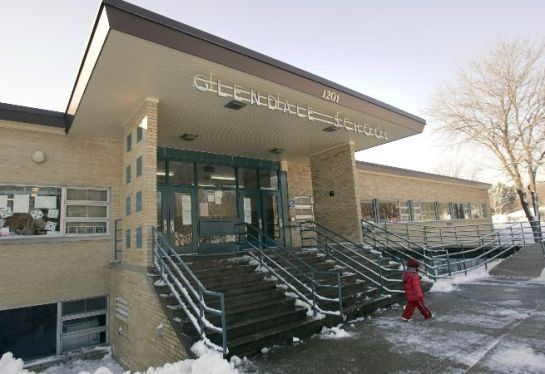
Glendale Elementary: Looking past the stats

66310.jpg
photo by: Mike DeVries/The Capital Times

A behind the scenes examination of Glendale Elementary, along with an audio slide show, is on tap in this well written piece in the Capital Times. Let’s hope this a foreshadowing of things to come as our afternoon paper attempts to reinvent itself from dead tree technology to a cyber presence in a couple of weeks from now.

Robert Godfrey

Glendale Elementary may be failing by test-based standards, but it’s succeeding by human ones.

The question of how we recognize good schools and bad ones has become a pressing issue.

In Washington, Congress is debating the reauthorization of the No Child Left Behind legislation. Locally, Madison and Sun Prairie parents have recently been upset over boundary changes that some see as sending their children to less desirable schools.

At the same time, the movement toward inclusivity in special education, a growing minority population and increasing poverty rates throughout Dane County, particularly in Madison, have put a sharp point on some important questions:

  • Do advanced students suffer when they share a classroom with struggling students?
  • How should schools address the stresses of poverty?
  • Are test scores a reliable measure of a school’s effectiveness?

This story doesn’t attempt to answer those questions; educational researchers have been struggling with them for decades. Instead, it puts one Madison elementary school under the microscope where all those currents come together — a school that by No Child Left Behind’s test-based standards is clearing failing. Yet, by the assessment of a number of parents, volunteers and other fans, the school is succeeding beyond all expectations.

A closer look at Glendale Elementary, a 50-year-old Madison school within the noisy shadow of U.S. 51, shows a school where success is occurring in ways that test scores can’t measure and poverty rates don’t reveal.

Leave a comment

Filed under AMPS, education, Local News, No Child Left Behind