
Click on image for pdf
The fun continues.
Thomas J. Mertz
Click on image for pdf
The fun continues.
Thomas J. Mertz
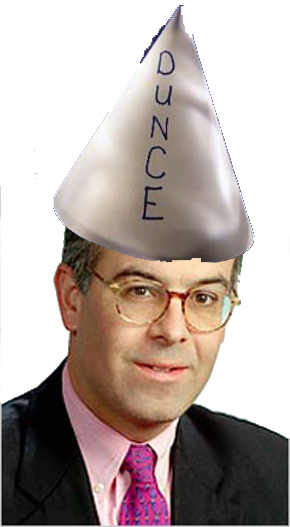
There is a lot of buzz on David Brook’s latest column and its topic — Obama’s pick for Secretary of Education and the direction of education policy in his administration (weigh in on the latter here). Many of the buzzers, like Brooks, simplemindedly frame the choice as between choosing a “reformer” and choosing a stalwart defender of the status quo (in Brooks’ case the latter is described as “teachers’ unions and the members of the Ed School establishment, who emphasize greater funding, smaller class sizes and superficial reforms”).
We’ve seen this in Madison before — the subtle “reformers as good guys,” others as uncaring, self interested or misguided defenders of a failed system. It wasn’t accurate or useful then and it isn’t now.
Much of the current discourse is derived from what Marion Brady in 2001 identified as a the narrowing of reform to “introducing market forces” via “standards and accountability” and the definition of standards and accountability as standardized testing and blaming teachers (and teacher unions), with a little privatization in the mix.
If it isn’t obvious to you how wrong and destructive this is, click the link and read what Brady had to say.
For myself, I’ll just hit a few very quick points. First, market forces aren’t what they’ve cracked up to be (pun intended). Second, the way to improve teaching is not by attacking teachers, teacher trainers and teacher unions…none of them are going away and all them are interested in improvement. Greater funding and smaller classes are not superficial, just look at the research or ask a teacher — oh yeah Brooks has dismissed the knowledge of researchers and teachers, pretty clever of him. Last, this crisis mentality is throwing the baby out with the bathwater. We have many great schools and teachers, a system that works for most and desperately needs to be improved in order to work for all. I don’t see Brooks calling for Socialism or Communism as a fix for a financial and industrial system that is obviously broken; why call for radical changes in an education system that isn’t broken?
A couple of links: Jim Horn’s take at Schools Matter and Bob Somerby at the Daily Howler on this column and related failings in education reporting (scroll down).
Thomas J. Mertz

The Wisconsin Alliance for Excellent Schools (WAES) is a statewide, independent, membership-based organization of educators, school board members, students, parents, community leaders, researchers, citizens, and community activists whose lone goal is the comprehensive reform of Wisconsin’s school-funding system. If you would like more information about the organization — or on becoming part of WAES — contact Tom Beebe at 920-650-0525 or tbeebe@excellentschools.org.
*******
New report calls for balanced approach to solving fiscal deficitMost of us who fight for school-funding reform now understand that underfunded schools are just one symptom of a crisis in public structures. To save those services that level the playing field for all of us, we will need a balanced approach to government that includes new revenues as well as prioritization of spending and cuts in non-essential services.
To answer the constant drumbeat calling for smaller government and no tax increases, a new report details “an inventory of options for reforming the state’s tax system and finding a balanced approach for filling the deficit.” “Catalog of Tax Reform Options” (http://www.wisconsinsfuture.org/publications/taxes/1108WI_TaxReformOptions.pdf) was authored by the Wisconsin Council of Children and Families (http://www.wccf.org/) and the Institute for Wisconsin’s Future (IWF at http://www.wisconsinsfuture.org).
IWF’s Jack Norman, along with the report’s other authors, talked about the report in the Nov. 22 edition of the Milwaukee Journal Sentinel in an opinion piece entitled “How to raise money for our state (http://www.jsonline.com/news/opinion/34903414.html).” Norman was also Ben Merens’ guest, Nov. 24, on “At Issue” (http://www.wpr.org/merens/index.cfm?strDirection=Prev&dteShowDate=2008-11-24%2017%3A00%3A00) on Wisconsin Public Radio.
*******
Budget cuts could degrade Rhinelander High SchoolRhinelander Board of Education meetings are very well attended these days as the community discusses the future of their children’s education in light of a failed Nov. 4 referendum. Recent discussions are centering on moving back to a seven-period day at the high-school and put the hockey and swimming teams on the budget chopping block in light of the need to trim about $2 million from the district’s 2009-10 budget.
Rhinelander implemented a four-period day 10 years ago because it was good for kids. High school Principal Terry Fondow told the board recently, however, that “because of the district’s fiscal reality” he was proposing moving back to a seven period day. This would mean reducing the number of graduation credits and advanced placement courses, increasing the student-teacher ratio, and eliminating staff. Fondow said, “It’s no doubt that I’m proposing a degradation of the high school, both in breadth and depth (http://www.newsofthenorth.net/article.cfm?articleID=24365).”
Board President Chuck Fitzgerald told the audience at a recent meeting that the group would be considering budget cuts into April or May, but that athletic programs will be among them (http://www.newsofthenorth.net/article.cfm?articleID=24390). He explained that one proposal is to close the swimming pool which would mean the elimination of the hockey and swimming programs, both of which use the pool.
Proposing the cuts, administrators said they worry they will damage education. “We are now at the level of cutting severely into what is good for children,” said co-assistant superintendent Carole Witt Starck.
*******
Proposed cuts in Merrill could “damage education”Options is the key word in the Merrill School District as the community looks to make $750,000 in for the 2009-10 school year (http://www.wausaudailyherald.com/article/20081202/WDH0101/812020464/1981). This discussion also follows on the heels of an unsuccessful referendum to exceed revenue limits ($2.9 million) on Nov. 4.
Merrill has cut its budget each year since 2000-01, and, during that span, has cut $5 million. Recommendations include eliminating the positions of three literacy teachers, cutting two teachers in high school elective courses, eliminating a middle school band teacher (reducing lesson and instruction time), and eliminating fourth grade at Maple Grove Elementary School by splitting the students among third- and fifth-grade classes.
*******
Rural school finance is subject of Dec. 10 “webinar”Rural School and Community Trust (http://www.ruraledu.org) will be holding a webinar — a web-based seminar — on the top 10 things you can do to improve Wisconsin’s financing of rural schools. The event will be held on Wednesday, Dec. 10, at 1 p.m. and consist of a conference call and a slide presentation.
Amanda Adler, director of the Rural Education Finance Center, will host the discussion.
Webinars are a regular benefit to members of the Rural School Innovation Network (RSIN), but they are also open to non-members for a fee of $45. For more information on this event or joining the RSIN, go to http://www.ruraledu.org/site/c.beJMIZOCIrH/b.3937703/k.5F87/RSIN_News_and_Updates.htm.
*******
Waupun hopes third time a charm for referendumIn an effort to keep two schools open, the administration of the Waupun School District recently came forward with a $3 million “high-stakes referendum” for the April ballot (http://www.fdlreporter.com/article/20081203/FON0101/812030440/0/FON0201).
In the past two years, voters have rejected two operational referenda. The decision to try again was among seven options outlined to balance the 2009-10 budget and beyond. One Waupun resident said “we have to make it clear (to voters) what will happen if this referendum fails. If people realize these schools will close or their child has to ride the bus over an hour every day, they might vote a little differently.”
Closing the two schools would save over $400,000. Other options for reducing the budget include cutting additional personnel, a wage freeze for non-represented employees, eliminating four athletic teams, cutting middle school extra-curricular activities, and abolishing the police liaison position.
*******
Membership in WAES is more important now than everTwo organizations and three individuals are the latest welcomed additions to WAES, a diverse, statewide coalition working for school-funding reform. Joining are Glorie Salas, Ken and Kim Bates, the Neshkoro School Visioning Committee (in the Westfield School District http://www.westfield.k12.wi.us/), and Price County Citizens Who CARE, the group that “started” the school-funding reform movement in Wisconsin when members walked from Butternut to Madison about 10 years ago to “talk about” their problems with the present finance system.
If you haven’t joined the effort to bring the reform message to everyone, do it now. WAES is an independent, non-profit, dues-supported organization. If we are going to organize communities around the state for change, we need your talent, your time, and your financial support. Go to http://www.excellentschools.org/about/join.htm … it’s quick, it’s easy, and you can join online.
When you pay your dues, you are helping to finance the core educational mission of WAES. Numbering 120 strong organizations and individuals, our mission is to make sure that as many people as possible get the message of reform. We do that by traveling around the state and holding school-funding change discussions in church basements, schools, kitchens, and meeting halls. You can find out how to bring this message to your community at http://www.excellentschools.org/calendar/SchoolFundingWorkshop.htm.
Thomas J. Mertz
Filed under "education finance", Best Practices, Budget, education, finance, Local News, Referenda, referendum, School Finance, Take Action
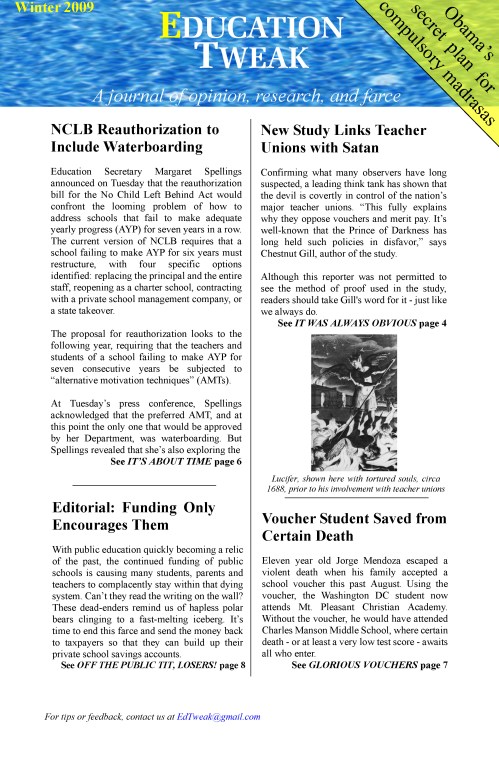
Click on image for pdf
Enjoy.
Thomas J. Mertz

Join with CAST to raise school finance reform to top of the agenda!
The referendum passed – thanks to all for your support and hard work! Now it’s time to turn our energy to school finance reform!
Without changes in the way Wisconsin finances schools, Madison and other districts will face a future of continued budget cuts and divisive referendum battles. Our local state legislators supported the referendum and support fair funding for schools. We need them to put school finance reform on the top of their agenda for the next state budget.
Please join CAST on Wednesday, Dec. 3rd 6:30pm at Hawthorne Library and help plan an event at the State Capitol in early January to meet our legislators and ask for their leadership.
Let’s plan a creative and constructive action that involves everybody– kids, parents, educators, grandparents. Bring your ideas!
Hawthorne Library is located at 2707 E. Washington Ave., 246-4548, See for this link for directions.
If you have questions or cannot join us on Dec. 3rd, but have an idea or want to be part of the event in January, please contact Jill Jacklitz at madisoncast@sbcglobal.net
Community and Schools Together
Thomas J. Mertz
Filed under "education finance", Best Practices, Budget, education, finance, Local News, School Finance, Take Action

Update: The strategic planning proposal has been posted here (thanks Barb). No time to go into depth right now, except to say that it appears to follow what was done in Green Bay fairly closely, even recommending the same facilitator (Supt. Keith Marty of Menomonee Falls).
On the agenda for the Monday, December 1, 2008 MMSD Board of Education Meeting is an action item asking for approval of a proposed “structure and timeline for the MMSD strategic planning process,” and authorization for the “the Superintendent to pursue the key steps for implementation.” This could be a big deal, I don’t know. Short of contacting Board members or administrators or staff, there is no way to know.
There is public comment at the meeting Monday. However, any comment on this proposal would be rushed because the proposal is not posted on the web and at best the public may be able to get a copy some time Monday.
I would guess the Board has seen and commented on versions of the proposal, but it has not been on an official agenda, nor has it been discussed at a public meeting.
This is no way to begin strategic planning that is supposed to include the larger community. How can we be included if we don’t even know what is going on?
In messages to the community, Board President Arlene Silveira has promised that the strategic planning process would “include strong community input.” Maybe that will come later. So far there has been no effort to inform the public of anything of substance and on Monday they are scheduled to vote.
The “structure and timeline” might not be a big deal, it might be simple housekeeping — no way to know — but if it is important, and they are serious about involving the community, they should slow things down, share the knowledge, ask for input…and involve the public from the very start.
Thomas J. Mertz
Filed under Accountability, Best Practices, education, Local News

If one accepts the reasonable principle of supporting the new president whenever he makes policy from the left or addresses basic social needs, shouldn’t progressives be cheering the White House as it rolls out the dozers, Cats and big cranes? Aren’t high-speed mass transit and clean energy the kind of noble priorities that best reconcile big-bang stimulus with long-term public value?
The answer is: no, not at this stage of our national emergency. I’m not an infrastructure-crisis denialist, but first things first. We are now at a crash site, and our priority should be to save the victims, not change the tires or repair the fender, much less build a new car. In the triage situation that now confronts the president-elect, keeping local schools and hospitals open should be the first concern, rebuilding bridges and expanding ports would come next, and rescuing bank shareholders at the very end of the line.
Inexorably, the budgets of schools, cities and states are sinking into insolvency on a scale comparable to the early 1930s. The public-sector fiscal crisis — a vicious chain reaction of falling property values, incomes and sales — has been magnified by the unexpectedly large exposure of local governments and transit agencies to the Wall Street meltdown via complex capital lease-back arrangements. Meanwhile on the demand side, the need for public services explodes as even prudent burghers face foreclosure, not to speak of the loss of pensions and medical coverage. Although the public mega-deficits of California and New York may dominate headlines, the essence of the crisis — from the suburbs of Anchorage to the neighborhoods of West Philly — is its potential universality.
Mike Davis, ” Why Obama’s Futurama Can Wait: Schools and Hospitals Should Come First in Any Stimulus Package.”
Thomas J. Mertz
Just move on up
and keep on wishing
Remember your dreams
are your only schemes
So keep on pushing
Take nothing less –
Never second best
And do not obey –
you must have your say
You can past the test
Curtis Mayfield, “Move on Up.”
The Madison school referendum, the Wisconsin Assembly, of course the Presidency and more — victories worth celebrating and building on.
As Curtis says, “keep on pushing.” This is just the start. We need to stay involved and active to in order to move on up.
Thomas J. Mertz
Filed under Accountability, Best Practices, Elections, Local News, National News, Referenda, referendum, Take Action

Successful Recurring Recurring Referenda as % of Revenue Limits, Nov. 2004 - Nov. 2008.
For a number of reasons, I’m fairly confident that the MMSD referendum will pass. In fact, I still think that Madison could have and should have passed a larger referendum. I’ll start with the could have and then revisit some of the should have.
The graph at the top of the page shows successful recurring operating referenda since November, 2004 as percentages of the district revenue caps in place at the time of the votes (operating referenda linked to building projects were not included, the final total price was used for multi-year recurring referenda, $13 million in Madison’s case). The pending Madison referendum is in red. This referendum represents 4.98% of the district’s revenue limit; the average of all the successful referenda is 8.53%. If Madison had asked for the average percent, it would have been an over $22 million referendum. With $22 million, we could have restored valued programs, renewed the maintenance and technology revenue authority, realistically considered new ways to improve the education our district offers, and more. The lesson here is that other districts, with much less of a culture of educational support, have passed relatively more sizable measures than we are considering.
For further evidence that Madison could have afforded more, we need look no further than the the recently approved 2009-10 budget and mil rate (district documents, here). Due to greater than expected growth in the tax base, individual tax rates went down more than expected, from 9.92% to 9.81%. This points to two important things. First, the starting point for referendum-related tax increases is lower than anticipated. Second, the quality of our schools continues to be a contributing factor to our healthy local economy.
Affordability is a matter of opinion and it is impossible to prove or disprove the outcome of offering the voters a larger referendum, but both the above pieces of evidence are suggestive of a positive prognosis. With counterfactuals, that’s about as good as you can do.
I could offer at least 24,189 reasons why there should have been a larger referendum. I just want to touch briefly on three today. First, I do not believe that there are $3 million worth of cuts over the next three years that will not have a negative effect on the quality of education our district provides; second, there are many valuable things that have been cut in that past that I think should have been considered for restoration; last, there will be a need for a maintenance referendum in 2010 and I believe that an extension of this should have been included.
When discussing the quality of education, it is always important to begin with the observation that we are a district with high needs. We have a higher percentage of students with disabilities, students in poverty and English language learners than the state average (data can be accessed here and is summarized here). These categories are important, because each of them are covered by underfunded mandates. Because our percentages are higher and the mandates are underfunded, Madison must spend a higher percentage (than the average district) of our general operating revenue to address these needs.
This is part of the reason that I do not believe that after 15 years and over $60 million worth of cuts, $3 million more worth of “harmless” cuts can be found. I am not naive enough to pretend that there aren’t programs and positions that are not as effective as they should be, but I do believe that there are also new and old ways that money reallocated from these budget lines could be used to improve the quality of our schools. As framed by this referendum, any new ideas or restorations of old services will only be possible after $3 million worth of cuts are found.
In a letter to the Cap Times Steve Pike detailed some of the ways past cuts have harmed our schools. I have touched on some of others here (as well as other places). Both in local budget discussions and in the fight for state finance reform, I have repeatedly said “we cannot afford to cut more.” I believe that. I believe that many of the cuts that have already been made were harmful. We have more deteriorating facilities, less current technology, larger classes, less community outreach and parent-teacher contact, a smaller variety of offerings, more difficult situations with specials classes, fewer support staff…than we used to have and and we should have.
The maintenance and technology renewal is somewhat different, but just as important. The 2009-10 school year is the last year of the non-recurring maintenance and technology referendum passed in 2006. In the 2010-11 year, MMSD will lose $5.5 million in revenue authority from this referendum (while adding an anticipated $4 million or $9 million — depending on how you count it — from the referendum on the ballot November 4). The current referendum could have been offered so that this amount was included on a recurring basis, beginning in 2010. This amount would have still left the referendum well below the average (as percentage of revenue limits) of passed recurring referenda pictured at the top. As far as I can tell this possibility was never publicly considered by the Board of Education. Because of this oversight, the district, the Board and the community will have to engage in an additional referendum process and campaign.
I’ve been campaigning on behalf of the referendum and will enthusiastically vote yes because the the alternative is so obviously wrong. My enthusiasm will be tinged with regret that the referendum could have been bigger and better, could have provided more room for dreaming and less need for cutting. I believe that a referendum like that would have passed also and our children and our community would have both benefited.
The referendum on the ballot is more than affordable, but less than it should have been. Vote Yes for Schools!
Thomas J. Mertz
Filed under "education finance", Best Practices, Budget, education, Elections, finance, Local News, Referenda, referendum, Uncategorized
Two quotes:
“Someone who does an act. In a democratic society, you’re supposed to be an activist; that is, you participate. It could be a letter written to an editor.”
“But once you become active in something, something happens to you. You get excited and suddenly you realize you count.”
In had the pleasure of meeting both Studs and Ida Terkel (and here). I remember Studs saying that he wasn’t much of an activist, that Ida had him beat there. They both were activists, they both were fine democratic citizens. I hope he voted early.
Many hours of education and pleasure, as well as inspiration to activism can be found at Studs’ “Conversations with America” site.
Thomas J. Mertz
Filed under Best Practices, Take Action, Uncategorized
 Fund a Classroom Project in Madison