Category Archives: Budget

“Do It Again?” Another Referendum for Salem

tantsisyixn_22096_lg

The Kinks, “Do It Again” (click to listen or download)

On Thursday, the Salem Board of Education voted to try again for an operating referendumOperating referenda for the district failed in June 2008, September 2008 and February of 2009.  The September referendum lost by a fairly large margin, but the June and February votes were 269 to 235 and 654 to 694.

Those working for the referenda must feel like Sisyphus forever rolling the stone up the hill, but never getting to the top, or Tantalus, with sustenance always just out of reach.  Unlike those mythological figures, the school supporters and the children of Salem have done nothing to deserve their cruel fate.

Their decision to go to referenda again indicates that they are unwilling to accept the devastating cuts in store for their schools.  I can’t blame them.

Whether this one passes or not, an inordinate amount of time and energy will have been spent trying to secure adequate funding for the district.  This is time that should have been spent educating the students.  That’s what happens when you live in a state with a broken system for funding education.  Sign on with the Wisconsin Alliance for Excellent Schools and the School Finance Network to work to fix this.

Back to Salem.  Advocates continue to make a strong case, reminding all that strong schools are essential for healthy communities.

Proponents of the board have said that increase is needed to save programs and staff, to provide opportunities for children, and ultimately to protect property values in the community. If the school system goes into decline, they argue, the whole community will ultimately be affected.

“I’m scared too, we took a huge pay cut in my family. My wife was out of work,” said Scottie Washington. But he believes families will leave the community and home values will decline if programs are cut. “If this referendum doesn’t pass this is going to be a ghost town,” he said.

The ask this time will be for a three-year non recurring referendum at $1.16 million a year.  The vote will be at a special election on April 28.  This looks like the same measure that was voted down in February.

I haven’t seen a new presentation of potential cuts yes, but the ones form the earlier campaign are probably still in play.

clcik on image for pdf

click on image for pdf

There is much more Salem referendum related material here, including the slideshow embedded below.

It should be noted that the major issue in Salem is and has been class size.  Smaller class sizes is one of the “best practices” that almost everyone agrees helps all children learn and almost every agrees is particularly important for children from poor or difficult backgrounds.  When we know what works, we should make sure that the resources are there to do what works.

I admire the tenacity of the Salem Board and wish them the best.  Let’s follow their example at the state level and “get’r done” on school funding reform (again, join WAES, join SFN).

Thomas J. Mertz
Leave a comment

Filed under "education finance", Best Practices, Budget, education, Elections, finance, Local News, Pope-Roberts/Breske Resolution, Referenda, referendum, School Finance, Take Action, Uncategorized

Lunchtime Enlightenment

14526a1

Cap Times reporter Mary Ellen Gabriel does an extraordinarily thorough examination today of both the school lunch program and the efforts of University of Wisconsin-affiliated REAP program (Research, Education, Action and Policy on Food) to implement some changes in how we feed our children. It’s an issue I’ve had some involvement with for a number of years, including my current work with the Healthy Classrooms Foundation (more on this in a later post).

The piece, in part, examines the questions related to whether MMSD’s school lunch program is unhealthy for kids.

It depends who you ask. On one side is a well-trained food service department that manages to feed 19,000 kids under a bevy of guidelines on a slim budget. On the other is a growing number of parents and community advocates armed with research about the shortcomings of mass-produced food and race-to-the-finish mealtimes.

For critics there are a number of concerns.

A lack of fresh fruits and vegetables, high fat and salt content in items perceived as “processed” or “junk food,” little nutritional information on the Web site, too much plastic, too much waste and too little time to eat.

The piece is well worth a read in order to understand the challenges in trying to produce thousands of healthy and nutritious meals a day to students, more than half of whom qualify for free and reduced-price lunches, and to do it all with a shrinking budget. Groups have tried to step in and offer closer farmer to school efforts, a movement now in 22 states – but with some failures as well as successes. This is a noble project, still in its infancy in many ways, one that is trying to bring change to an important but constrained large institution. Let’s wish them well.

Robert Godfrey

2 Comments

Filed under AMPS, Best Practices, Budget, Gimme Some Truth, Local News

WAES School-Funding Reform Update, March 2

waesgraphic

Table of Contents below, click here for the full update.

Update — The hearing on the School Finance Network plan highlighted below is still very important, but it is in the process of being rescheduled.  Watch AMPS for more info.

I want to highlight the first item.  Save the Date –March 24 — this is important.  The School Finance Network plan is a very good plan and enjoys broad support.  Attend the hearing and show the legislature you care about school funding.

Update — The hearing on the School Finance Network plan is still very important, but it is in the process of being rescheduled.  Watch AMPS for more info.

School-funding reform update, week of March 2

  • SFN reform plan subject of March 24 hearing at the Capitol
  • SFN plan continues to be in the news around Wisconsin
  • Evers, Fernandez meet in West Allis at state Superintendent debate
  • 2009-11 state budget appears to be on the fast track
  • WAES doing good work, but needs your financial support
  • Tax cuts cost state billions since mid-1990s, LFB report says
  • Four groups renew memberships in WAES
  • Oneida County Board petitions state for school-funding reform
  • Round-up of funding problems from around Wisconsin
  • Early childhood care and education key to economic development
  • Help WAES correct e-mail update glitch
  • School-funding reform calendar
  • The Wisconsin Alliance for Excellent Schools (WAES) is a statewide, independent, membership-based organization of educators, school board members, students, parents, community leaders, researchers, citizens, and community activists whose lone goal is the comprehensive reform of Wisconsin’s school-funding system. If you would like more information about the organization — or on becoming part of WAES — contact Tom Beebe at 920-650-0525 or tbeebe@excellentschools.org.

    Thomas J. Mertz

    Leave a comment

    Filed under "education finance", Budget, education, Elections, finance, Local News, Referenda, referendum, School Finance, Take Action, Uncategorized

    School Funding Action – Florida

    From MYFOX 35, Orlando.

    This weekend thousands of Florida parents, teachers, students, administrators and community members took part in militant “Make Our Schools A Priority” protests against cuts in education.

    The big event was the rally in Orlando reported in the video above (more here), but smaller actions have been held around  the state, some of which included legislators in attendance (examples here and here).

    The economic situation, tax collections, the state budget and local school budgets are all in dire circumstances.  Some of this is detailed on the Channel13, Central Florida web site.  A couple of examples:

    Brevard County:

    MONEY:

    WHAT’S BEEN DONE:

    WHAT COULD HAPPEN:

    Marion County:

    MONEY:

    WHAT’S BEEN DONE:

    I like the militancy, the mass actions and even the confrontational tone.   I sincerely believe that although things are nowhere near as bad in Wisconsin that after 15 years of annual cuts in educational opportunities we also have a crisis in school funding.   I worry that polite advocacy fails to communicate the reality of that crisis.

    A Saturday, March 21 meeting of the Wisconsin Joint Finance Committee will be held at Miller Park.  This would be a great time to turn out some numbers for education and comprehensive education finance reform.

    Back in Florida, the Legislature returns for a budget session on Tuesday facing a $700 million shortfall.  Governor Charlie Crist is scheduled to give his “State of the State” address on that day.

    Hat tip to Sherman Dorn for making me aware of the goings on in Florida.

    For more on school finance in Florida, see the National Access Network state page.

    Thomas J. Mertz

    Leave a comment

    Filed under "education finance", Best Practices, Budget, education, finance, Local News, National News, School Finance, Take Action, Uncategorized, We Are Not Alone

    Jim Doyle, “State of the State,” 2003

    journal_media_file_getasp

    I’ve been doing searches for a second “Broken System, Broken Record” Quotes of the Day (look for it soon) and came across the text of Governor Doyle’s 2003 “State of the State” speech (his first).  He doesn’t use the phrase “broken system,” but he does say some things worth rereading.

    It is time to reform the way Wisconsin funds our children’s education. That is why tonight I am announcing that I will form a Governors Task Force on Education Financing.

    This is too important of an issue to squeeze it into a budget proposal or devise a new plan in just a few weeks.

    To do it right we need to do two things. First, all views must be represented. Parents, taxpayers, teachers, community leaders. Urban districts, rural districts. Wealthy areas, poorer areas.

    Second, the meetings must be open, in full view of the public.

    That Task Force was formed and produced some good work.  Since June of 2004, that work has gathered dust.

    I’m often hard on Governor Doyle in relation to his support for education.  I’ll acknowledge that he has been a friend to education in many ways and deserves credit and thanks for that.  What he has not been (in my opinion) is the champion for education that we need.

    Doyle has done very well in protecting the schools from the worst of the potential cuts under a system that all but guarantees some cuts and some property tax increases; he’s tried to keep the state’s 2/3 funding commitment viable, he’s worked for increases in SAGE and Special Education funding and succeeded in making these programs slightly less underfunded.  All this is good.

    What he hasn’t done (unless you count the recent trial balloon, which may be  a good sign) is  followed up his statement form 2003: “It is time to reform the way Wisconsin funds our children’s education.” That statement was true in 2003; after six years of annual cuts to educational opportunities of 1% to 2% it is even more true today.  I hope that we will soon see Governor Doyle act on this truth and be the champion he could and should be.

    Thomas J. Mertz

    Leave a comment

    Filed under "education finance", Accountability, Best Practices, Budget, education, finance, Local News, School Finance

    WAES School Funding Reform Update, Week of February 16, 2009

    waesgraphic

    Click here for a pdf of the full update.  Table of contents below.

    School-funding update

    • Governor gets involved in school-funding reform discussion
    • Governor’s budget helps schools keep their heads above water
    • Funding reform effort gaining steam around the state
    • WAES doing good work, but needs your financial support
    • Two new members join WAES; 11 renew memberships
    • HOPE plan making rounds of Legislature again this session
    • New study shows benefits to Wisconsin of combined reporting
    • Norman talks school-funding reform on Milwaukee Public Radio
    • School-funding reform news from around Wisconsin
    • Get involved in budget process at WCCF 2009 Advocacy Camp
    • Help WAES correct e-mail update glitch
    • School-funding reform calendar

    The Wisconsin Alliance for Excellent Schools (WAES) is a statewide, independent, membership-based organization of educators, school board members, students, parents, community leaders, researchers, citizens, and community activists whose lone goal is the comprehensive reform of Wisconsin’s school-funding system. If you would like more information about the organization — or on becoming part of WAES — contact Tom Beebe at 920-650-0525 or tbeebe@excellentschools.org

    Thomas J. Mertz

    Leave a comment

    Filed under "education finance", Budget, education, finance, Local News, Referenda, referendum, School Finance, Take Action, Uncategorized

    The Stimulus, What Was Not Funded: School Constuction

    newspaper3

    Excerpts from the Wisconsin State Journal, “Rebuilding Wisconsin, Part 1: A long and costly to-do list.”

    PUBLIC SCHOOLS

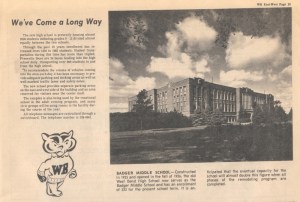
    West Bend Public School Superintendent Patricia Herdrich said she can hardly bear to walk through the district’s Badger Middle School. Built in the 1920s, the old school is the worst of the substandard buildings in this district about 75 miles northeast of Madison.

    There are, Herdrich said, 13 different levels in the school because of the hodge-podge tangle of additions over the years. There are no elevators.

    “You can’t make it accessible,” Herdrich said. “I’ve had kids on crutches crawling up and down stairs.”

    In hundreds of school districts across Wisconsin, students are stuck in inadequate and even dangerous buildings, jammed into too-small classrooms or housed in trailers in school parking lots, according to Miles Turner, director of the Wisconsin Association of School District Administrators…

    The problem is that, since school expenditures were capped by the state Legislature in 1993, the corner that has been most frequently cut by money-starved districts has been building maintenance and repair.

    In its most recent survey of school district spending, the Wisconsin Education Association Council found that 82 percent of the 303 districts that responded have cut money for improvements to buildings and grounds.

    And 77 percent reported delaying building maintenance or improvement projects. According to the 2007 infrastructure report from the Wisconsin chapter of the American Society of Civil Engineers, the median reported need of the state’s 431 school districts to catch up on repair and maintenance projects is $695,000 while the average need is $1,768,563.

    But some districts are in such dire shape that the cost of delayed projects far surpasses those numbers. Herdrich in West Bend said the district’s total deferred maintenance is $80 million.

    Bringing Badger Middle School up to standards alone would cost $29 million, she added…

    [A]s the stimulus bill was being put together, the state School Administrators Alliance conducted a needs survey of the state’s school districts.

    Only 228 responses were received from all 431 districts, but for just those districts, when it comes to repair, maintenance, and building needs topped $2.5 billion.

    Referendums have offered relief only in some districts.

    In West Bend, for example, voters defeated a $119.3 million building referendum in 2007 by a 62.6 percent to 37.4 percent margin.

    The district had hoped to have another referendum in November but decided against that when the economy went south.

    Now, a $68 million building referendum is scheduled for April…

    The version of the bill that passed the House of Representatives included what seemed a healthy amount for Wisconsin schools — a total of $729.6 million, including $317.2 million for construction.

    But the political debate and resulting compromise in the Senate resulted in much of the money for school construction, including maintenance and repair, being slashed from the bill.

    “That line item was zeroed out,” said John Forrester, a spokesman for the School Administrators Alliance. So superintendents such as Herdrich in West Bend, initially buoyed by reports that the stimulus bill could offer some help to repair dilapidated buildings, now find themselves wondering again how to house students safely in the face of failing referendums and dwindling state funds.

    It should go without saying that the current broken school finance system requires successful referenda for almost all construction, maintenance and remodeling projects.

    Thomas J. Mertz

    Leave a comment

    Filed under "education finance", Best Practices, Budget, education, finance, Local News, Referenda, referendum, School Finance

    Oneida County Resolution on School Finance

    559px-map_of_wisconsin_highlighting_oneida_countysvg

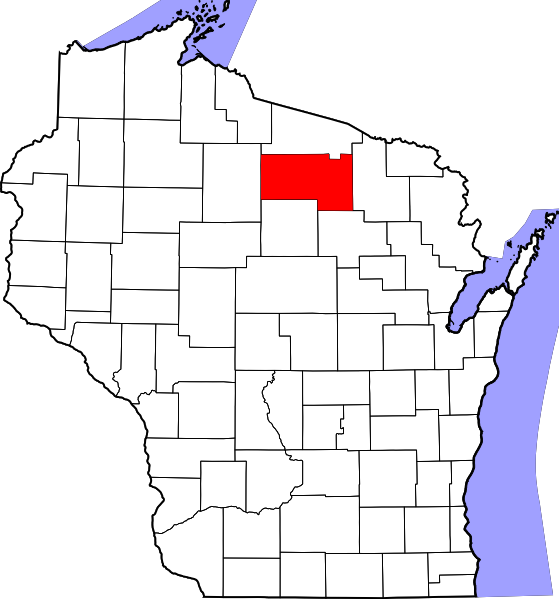
    There was at least one positive vote for the future of education in Wisconsin on February 17th.  The Oneida County Board of Supervisors went on record supporting “legislative change to the state-aid formula to more fairly distribute state-aids throughout the state of Wisconsin” (full resolution here).

    According to the Lakeland Times, Supervisors explained the situation and their votes as follows.

    “… I just thought it would be nice that the people of Oneida County know that the supervisors … will support this resolution and bring it down to Madison,” Dean said. “This resolution, 13-2009, is to support our schools – Rhinelander and other districts. With the decreasing state aids to schools, Oneida County school districts are receiving less state aids based on school aid formulas. Oneida County property taxes is not the answer. The state is obligated – I’ll say it again, the state is obligated – to support the district schools. The Legislature has to make some kind of adjustments … If we send support like this, and other people as well, maybe they’ll see that we do have a problem. In closing – if you think education is expensive, try ignorance.”

    Supervisor Gary Baier agreed, noting “property value rich and tax poor” northern Wisconsin districts are facing an economic crisis under the current school funding formula.

    “The [school funding] formula is broken, it hasn’t worked for years …,” he said. “If they (the state) say they are going to fund it (education) two-thirds, then they ought to fund it two-thirds.”

    I’m going to be asking the Dane County Board to do something similar.

    Thomas J. Mertz

    Leave a comment

    Filed under "education finance", Budget, education, finance, Local News, School Finance, Take Action, We Are Not Alone

    Cuts Coming to Salem

    sheetmusic1

    “We All Love Our School”,  written by 4th grade Salem students in 2007, performed by 2nd and 3d grade students in 2008-9. Click to listen or download.

    We All Love Our School

    written by 4th grade Salem students in 2007

    Salem is Great. It’s the biggest in the state. We all love our school!
    White and blue our colors true. We all love our school!
    At Salem we’re having fun.
    Salem we’ve just begun
    Salem students are the best.
    We’re a cut above the rest.
    A-round every turn, there is some-thing to learn. We all love our school!
    A peaceful place puts a smile on your face. We all love our school!
    At Salem we learn and grow.
    Salem out to recess we go.
    Falcon is our name and learning is our game!

    Referenda in six districts failed on Tuesday.  That means each of these districts must to scale back their plans in ways that do the least harm to their students.  This is all part of business as usual under Wisconsin’s broken school funding system.

    Here is a preview of what is in store for Salem.  The headline in the Kenosha News promises “Deep Cuts,” 17 layoffs and reductions in music and art.  The story offers further details

    Cuts approved Thursday include eliminating band for children in fifth and sixth grade, cutting down on the number of gym classes children take each week, cutting back on art, and reducing reading specialty programs. All after-school sports and clubs would be eliminated, and class sizes would climb in grades three through eight. There were cuts in support staff and the administrative staff as well.

    The source of the problem is also explained:

    Salem has been facing budget shortfalls as it grapples with state school funding regulations that cap the amount of revenue schools can receive. The district has been covering its operating deficit using savings, but faces a deficit of more than $1 million next school year.

    Two board members voiced the lament familiar to many around the state:

    “This is killing me,” board member Shane Gerber said during the vote, the names of teachers who are targeted for layoff were read off. In the audience, teachers began to cry as names were read off and some walked out of the meeting.

    “We as a board are now faced with cutting programs we know are good for kids,” said President Patty Merrill. “We have attempted three referendums, all three failed. The cuts must be made.”

    If you haven’t already, listen to the song at the top and then try to convince yourself that  slowing the bleeding via band aids and reshuffles is the best we can do for the children of Salem and Wisconsin.  When you are done, contact the Governor and your legislators and tell them they need to listen to voices of children also; tell them that these children deserve music and art and reading help and all the other components of a full education.  Sign on with the Wisconsin Alliance for Excellent Schools and the School Finance Network while you are at it.

    Thomas J. Mertz

    Leave a comment

    Filed under "education finance", Best Practices, Budget, education, finance, Local News, Referenda, referendum, School Finance, Uncategorized

    The Man With a “Plan”

    94575

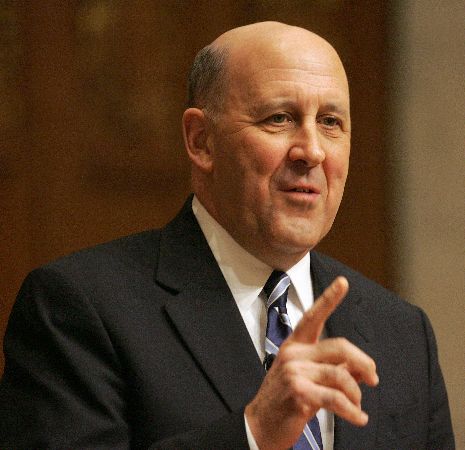
    After greeting the School Finance Network (SFN) plan with little better than contempt and offering a budget proposal that at best slows the bleeding in school finance (after 15 years of steady blood loss), Wisconsin Governor Jim Doyle has previewed his own “plan” for fixing school funding.  It may be a good starting point for talking (not as good a starting point as SFN’s work), but I don’t think contains the answers to the financial and other struggles of our schools and I don’t like the way it only provides the  resources needed to “improve student performance” (which unfortunately will likely be defined by the flawed and limited WKCE) to those districts that meet criteria that have nothing to do with education.

    Like many policy proposals these days, it uses rewards and punishments, carrots and sticks.  The reward is an opportunity to escape from the revenue caps, to no longer have to cut 1%-2% of educational programing annually.  The punishment is to continue under the system that has eaten away at our schools, limited our students’ opportunities and put our state’s future in danger for the past 15 years.

    The rewards are tied to the following ill-defined (at this point) policies:

    • Join together for the purposes of negotiating union contracts

    • Make employees use the state health plan unless the school district already has a plan that is cheaper

    • Require schools to agree to a list of practices that would improve student performance

    • Provide compensation for teachers that better reflects the needs of individual schools such as those in rural districts that struggle to attract teachers for some subjects

    I’m going to leave the contracts, compensation and health insurance aside for now in order to say a few words about #3, the “best practices.”

    Doyle cited the work of Alan Odden as the basis for the kind of practices he has in mind.  The Wisconsin School Finance Adequacy Initiative Final Report for 2007 has some good ideas about “best practices” based on research  and good estimates of the costs of these practices, also based on research.   Some of the things in the Odden report are stronger than others and some would be difficult for many districts, but small classes, formative assessments used wisely, teacher coaches, staff development are all good ideas.

    What Odden and SFN both propose is funding these practices for all schools.  Doyle seems think that access to best practices should be a reward available only to those who get all their ducks in order. I guess the New “New Wisconsin Promise” will be “A Quality Education for Every Child Who Lives in District that Joined with Other Districts to Negotiate Contracts and Limit Health Care Costs.”

    I want to make it clear that neither Odden nor SFN wants to simply give the schools more money to do whatever they want (although both do show proper respect for the  professional knowledge of our state’s educators).  Both include means of targeting money to research based programs and both also propose “accountability” evaluations.

    There are ways to target money toward best practices but still make the resources available to all schools  (the Student Achievement Gaurentee in Education — SAGE — program is a partial example).  You can do categorical aids which can only be spent in certain ways,  you can do grants, you can do reimbursements.  Instead, Doyle ties the resources for best educational practices to his ideas of the best financial and policy (and probably political) practices.  As education policy, this makes no sense.

    We’ve had 15 years in Wisconsin under a system of school finance that is based on the politics of tax policies, not education.  As a nation, with No Child Left Behind we’ve been punishing schools instead of helping them.

    If Doyle’s plan moves forward, I sincerely hope that education is put first and that the stick punishment is put away;  that the very good ideas about funding promising educational practices are enacted in a manner that will reach all districts, all schools, and all students in Wisconsin.

    Thomas J. Mertz

    2 Comments

    Filed under "education finance", Accountability, Best Practices, Budget, Contracts, education, finance, Local News, nclb, No Child Left Behind, School Finance