
Category Archives: Local News

Equity, Diversity and TAG in MMSD — What They are Reading and More

John Rury on Ruby K. Payne

(article being discussed is subscription only)

I’ve previously expressed my thoughts on the Madison Metropolitan School District’s Talented and Gifted plan and equity issues (here, here and Robert Godfrey also posted on this here).  At the January 4, 2010 meetings, the Board of Education received an update on the plan.  From reading this update, things are worse than I had feared.

Among the materials identified as being used for staff development is a book by Ruby K. Payne, whose other work is the subject of the video above.  They are also employing The Cluster Grouping Handbook by Susan Winebrenner and Dina Brulles.  I’d like to offer some relevant quotes:

“The typical pattern in poverty for discipline is to verbally chastise the child, or physically beat the child, then forgive and feed him/her”

—–

The poor simply see jail as a part of life and not necessarily always bad. Local jails provide food and shelter and, as a general rule, are not as violent or dangerous as state incarceration.” (Emphasis added)

—–

“And one of the rules of generational poverty is this: [women] may need to use [their] bod[ies] for survival. After all, that is all that is truly yours. Sex will bring in money and favors. Values are important, but they don’t put food on the table—or bring relief from intense pressure.”  (Emphasis added)

—-

“Also, individuals in poverty are seldom going to call the police, for two reasons: First, the police may be looking for them; second, the police are going to be slow to respond.”  (Emphasis added)

All from Ruby K. Payne, A framework for understanding poverty.

“Throughout life we all seek like-minded people with whom to work and play; we are much more comfortable with people who understand and accept us as we are.”  (Emphasis added)

Susan Winebrenner and Dina Brulles, Cluster Grouping Handbook

“I have repeatedly pointed out that people prefer the company of people like themselves, that this is natural and healthy, and that we should organize our society on this assumption.”  (Emphasis added)

—–

“Assumptions about police bias are especially common among minority groups that have the most to gain from good relations with the police. Blacks, in particular, are convinced of police “racism.” In extreme cases, this belief leads to murderous rampages like that of Brian Nichols with which this report begins. It is not an exaggeration to say that his victims might be alive today if the facts in this report were widely known. In countless less severe cases, a belief in police bias leads to suspicion, resentment, and lack of cooperation, all of which make it harder for the police to do their jobs, and more likely that minorities will suffer from crimes that could have been solved or prevented. How often do assumptions about police—and societal—racism so anger blacks that they go beyond lack of cooperation to crime itself? It is profoundly destructive for minorities to have exaggerated resentments toward the society in which they live.”  (Emphasis added)

Jared Taylor, “Reply to Tim Wise,” and “The Color of Crime.”

The last two quotes — from Jared Taylor — are ringers.  MMSD isn’t using anything from Taylor (that I know of); that’s good because the Southern Poverty Law Center labeled him one of “40 to Watch” and described him as a “courtly presenter of ideas that most would describe as crudely white supremacist.”  That Taylor, Payne, Winebrenner, Brulles all sound so much alike says much about the slippery slope of grouping, racism and classism; that MMSD’s work on TAG has taken us onto this slope is shameful and inexcusable.

Other than vague references to “research and review of support models” reading Removing the Mask: Giftedness in Poverty by Paul D. Slocumb and Ruby K. Payne is the only activity listed under the heading “Support for Underrepresented Populations.  I haven’t had a chance to read this book, but in fairness I should say that from the excerpts I’ve seen, it does contain some good things about the limited utility of standardized tests in identification.  That’s good, but I doubt it outweighs the attitudes and assumptions that are at the core of Payne’s work (a little more on Payne below).

The update also references the TAG Advisory Committee.  A membership list and , agendas, but no minutes have been belatedly posted.  It is clear that by any measure the closed appointment process fell short of the stated goal of  “reflecting [the district’s] demographic make-up.”  I’d like to particularly point out that it is very unlikely that there are any people in poverty or without college degrees represented; 47% of MMSD students are low income, 58% of district families have at least one parent without a college education.   Such gross under-representation in a committee that is supposed to address under-representation is not a good sign.   They can do better and perhaps would have done better if they had reached out beyond “people like themselves.”

That raises another issue with the Advisory Committee.  Of the 33 names listed, 11 work for the district, at least one other has a contractual relationship with MMSD via a grant, 3 others have professional lives associated with Talented and Gifted education.  I don’t think that any TAG or grouping skeptics have been included.  “People like themselves,” not representative of the community.

If TAG in MMSD is live up to the promise of equity,  identification is key (support after identification is also essential).  The sections of the update dealing with identification indicate that little or no progress has been made toward more equitable identification procedures.  We are talking more of the same:  biased achievement tests (MAP, under consideration is yet another inappropriate test, the CogAT tests also under consideration are a mixed bag) and referrals (which research shows are more biased than the tests).  The district needs to move from achievement measures to aptitude assessments and until it has been demonstrated that TAG can be equitable, they need to go slow with labeling and grouping students.  Maya Cole and Lucy Mathiak raised some of this at the meeting

There is one small positive sign in a related area.   For years I have asked for demographic breakdowns of students being served by advanced programs and participating in advanced classes.  I’ve been ignored, I’ve been told the data didn’t exist, Ive been told I would be given the data shortly…finally Superintendent Dan Nerad told me that the data on students being served by TAG (part of what I’ve asked for, but not all of it) exists but is of poor quality and would not be released (I guess I could do a Freedom of Information request).  The good news is that one of the proposed Strategic Plan Core Measures is “Advanced Course Participation Rate.”  I have been assured that this and all the student related performance measures (including TAG participation) will be reported with disaggregated demographic breakdowns.  At least then we will have a baseline measure and one that I hope will spur better and more urgent action.

I’ll leave the MMSD issues for now on a positive note and move to a very few words about Ruby Payne

Payne’s work is based on little or no research, perpetuates stereotypes and reinforces  middle class hegemony.  There are many good critiques of Payne, but most are under copyright restrictions.  These and other entries from the blog Education and Class and this from the Journal of Educational Controversy are  good places to start.

So much of the critiques go back to the critique of Great Society Culture of Poverty/Cultural Deficit approaches.  In the wake of the Black Power Movement it became untenable to equate difference with deficits, (as Payne does).  Resurgent pluralism demanded that the strengths of various cultures be recognized and respected.  This is subtle in practice.  Few dispute that schools should give children the tools they need to thrive in a culture dominated by “middle class,” liberal, capitalist norms and mores.  What Payne and other deficit practitioners do is go beyond this by elevating these norms  and mores as superior.  In the process, the liberatory potential of schooling is abandoned.  It should go without saying that this is in conflict with the Cultural Relevance program and other aspects of the Strategic Plan.   Payne, like KIPP, wants to teach poor children to “work hard and be nice” and not how to change the system that produces and reproduces inequality.

I’m going to close with another video discussing Ruby Payne, this one from 14 year-old John Wittle (worth watching).

Thomas J. Mertz
2 Comments

Filed under Best Practices, education, Equity, Local News, Uncategorized

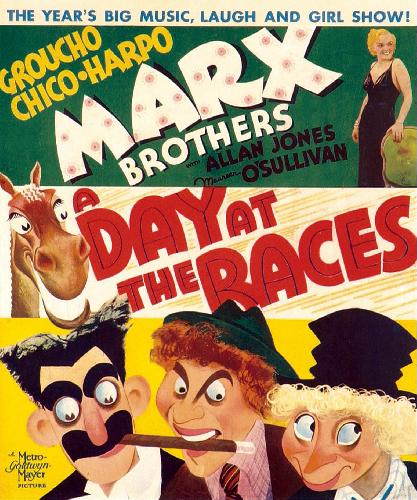
Off to the Race(s)?: Madison School Board Election (Updated, 1-5-2010)

Updated 1-5-09 Brenda Konkel has the scoop.

School Board ends up with the biggest surprise:

School Board – NO RACES

Maya Cole unopposed

Beth Moss unopposed

James Howard walks into the seat vacated by Johnny Winston Jr.

Tom Farley, despite getting my signature and a couple others at 4:30, failed to get 100 signatures and is not on the ballot

There are three seats up on the Madison Metropolitan School District (MMSD) Board of Education this Spring.  So far it looks like two incumbents — Beth Moss and Maya Cole —  will be seeking re-election unopposed and the open seat vacated by Johnny Winston Jr will be contested by at least two candidates, James Howard and Tom Farely.

Farley’s entry may raise the profile of this race.  He’s best known as the brother of the late comedian (and Madison/Maple Bluff native) Chris Farley.  Tom Farley authored/edited an oral history of his brother and is a founder of a substance abuse prevention foundation inspired by his brother’s death.  He is also a marketer and motivational speaker (irony abounds).  He’s served on some city and county committees but doesn’t appear to have been much involved with MMSD.

Back in September Farley announced on his Twitter page that he was running for Lt. Governor; news reports from that time make it clear that he was intending to run as a Republican.  That didn’t happen and now he’s running for School Board and claiming a relatively long standing Democratic affiliation.  In a comment on the Cap Times story on his candidacy, Farley wrote:

To be very honest, coming to grips with my party affiliation has been an interesting journey – especially since returning to Madison six years ago. In short, was a Republican but have now firmly embraced my Democratic soul (I joined the Dem. Party of Dane Cty during last year’s election – and voted Obama).

I’ll leave it to the reader to parse the relative values Farley places on his soul, his  political affiliations and his ambitions.

In another comment on that same story Farley displays a disturbing ignorance about the Madison Board of Education.  In explaining his candidacy he refers to his experiences as a parent of a “special needs” student and adds:

I feel that bringing that perspective and unique voice to the school board is something long overdue.

It would be difficult to have much knowledge of the Madison School Board and not know that Beth Moss is a parent of a student receiving special education services and that both prior to and since her election she has been active locally and at the state level as an advocate on special education issues.  Very difficult; almost impossible.

In a comment on a Wisconsin State Journal editorial on the Edgewater proposal Farley expresses dangerous ideas about open government:

Open meetings pander to people’s fears and mistrust of civic leaders; they hinder enlightened and creative solutions; and they actually enable citizens to continue to harbor unsubstantiated, biased judgements (sic) about everything under the sun. Show me any functioning socialist government (if possible), and I’ll show you a group of leaders still able to email their colleagues, hold a conference call or have a job-related discussion with peers while sitting around the”popular table” in the “People’s Cafeteria”. Here in Madison we can’t do any of that without posting a meeting notice one week prior.

Open meetings certainly sound “fair”, but fair doesn’t create great cities.

Yow.  Pretty scary (regular readers will know that I’m a big fan of public input and open meetings).

Farley’s been very busy in comments sections lately, interested voters may also want to check out his thoughts on the Freedom From Religion Foundation posted on the recent Isthmus story .

One thing I can say for Farley’s announced opponent, James Howard is that he has a good awareness of the workings of the Madison schools and School Board developed over years of active involvement.  In fact the headline of the story announcing his run read: “James Howard, active in Madison schools, to run for Winston’s board seat.”  He served on the East Area Long Range Planning Committee a few years ago and on the recent Strategic Planning Team.  I worked with him when we were both among the co-chairs of the 2006 Community and Schools Together (CAST) referendum campaign (he wasn’t active in the 2008 effort) and on Beth Moss’s 2007 campaign.  He’ll bring some knowledge and experience to the race.

Maya Cole announced her candidacy for re-election in an email to supporters on December 27.  It reads in part:

Although I am far from satisfied with what we have accomplished (a personality flaw), I do believe I have provided some valuable input and initiative and that we have made progress in many policy areas where we: formalized the process of evaluating the superintendent; created a better process for charter initiatives; evaluated our expulsion process to be consistent across the district; widened the scope of measures that determine the success of students in the district; and, expanded the involvement of community members in our deliberations regarding mathematics, four-year-old kindergarten, school nutrition/lunches and technology in MMSD.

I’ll just note that I don’t consider not being satisfied “a personality flaw” and send her this Replacements song as a reminder.

I don’t believe Beth Moss has made a formal announcement, but she’s gathering signatures and went through the process to win the Progressive Dane endorsement for her re-election effort.

It isn’t too late for more candidates to enter; the filing deadline is January 5. 2010.   Whatever my thoughts about all of those already declared, I think that contested races are good for democracy and democracy is good for the schools.   All the filing information are here.

Thomas J. Mertz

14 Comments

Filed under education, Elections, Local News, Uncategorized

Ain’t that Special? — Doyle Calls Legislative Session (Updated)

Louise Max, 'Blue Plate Special" (click image for more).

Lame Duck, pretend “Friend of Education” Governor Jim Doyle has called a special legislative session to consider his Race to the Top lottery inspired Mayoral Control proposal and the insane proposal to give the State Superintendent the power to take control of any district for any reason he deems sufficient.  The executive order is here; press release here.

The Wisconsin Sate Journal is reporting that Democratic leaders in both the Senate and the Assembly are not enthusiastic.

However, Senator Jeff Plale is in the bag.

Ed Garvey hits the right notes in his reaction.

The timing of this special session will limit public input on the proposal to limit public input (Kafkaesque?),  With that in mind,  I’m posting some public comment.  Here are two videos from a recent anti-Mayoral Control protest:

For much more, see this recent roundup on AMPS.

Update

Representatives Grigsby and Colon also issued press releases.  I liked this from Grigsby:

At this point, it goes without saying that the governor’s proposed mayoral takeover is not the only option for reforming Milwaukee Public Schools. I am working to ensure that the “RACE for Success” receives consideration at any Special Session in which mayoral takeover is pushed upon the legislature. Of course, I would prefer that any legislation related to the future of MPS go through the normal legislative process, a process which would ensure public input, but Governor Doyle seems intent on avoiding that opportunity. Any legislation on the future of Milwaukee Public Schools deserves a public hearing, but both proposals for education reform should be heard if the legislature enters into a Special Session.

Thomas J. Mertz

Leave a comment

Filed under Accountability, Arne Duncan, education, Local News, Uncategorized

Snow — MMSD Schools Closed, December 9, 2009

“Snow,” from White Christmas

Here is the announcement.  Enjoy.

District News

For Wednesday, December 9, 2009

All Madison School District schools will be closed due to inclement weather.  This also means that all school buildings will be closed for the entire day and evening for MSCR, athletics and other activities.

Thomas J. Mertz


Leave a comment

Filed under education, Local News

4K “Surplus” and other Board of Education Agenda Items (With Live Blogging)


Note: Because I was writing this as the meeting was going on, I did some live blogging.  I’ve taken out those portions of the post and linked them here.  They are mostly on the Reading Recovery report and proposal.  Some interesting things.  Worth reading or watching the video when it is up. — TJM

Please also note a correction/expansion in the Reading recovery section (12/08/200. 10:45 AM).

Monday, December 7 will be a very busy evening for the Madison Metropolitan School District Board of Education.  Tonight, among other things they will consider 4 year old kindergarten implementation plans and costs; Reading Recovery matters; a 3% total package increase for District Administrators; and Strategic Plan Performance Objectives and Measures, Core Performance Measures and First Priority Action Steps (with costs).  Unless I am mistaken, these will be discussed in Committees tonight and then come back to the Board for action next Monday and some, like 4k even later.  That’s the new system.

4 year Old Kindergarten

Since the Wisconsin State Journal article is misleading, I’ll start with that one. The headline calls 4K a “Junior Mint” (bad pun) and the article includes this passage:

Under state funding rules, the Madison School District would not be fully reimbursed for its 4K expenses until the third year of the program, when the district would actually reap a surplus from the state.

So during its first year in Madison public schools, 4K would run an estimated deficit between $2.64 million and $3.87 million. By year three, however, the program would show a surplus of close to $4 million. (emphasis added)

The big problem with this framing is that the projected surplus is not in state funding but in revenue limit authority and last I checked well over 80% of MMSD’s revenue limit authority is collected via local property taxes.

It makes a big difference which stack the coins come from, such a big difference that cuts in the state share induced the Madison Board and many others to not use all of their authority this year.  They thought that property taxpayers couldn’t or wouldn’t stand for it.  As a result, MMSD will not be doing maintenance projects that had been previously funded via a voter approved referendum.

I don’t see any discussion of where the start up costs  will come from (maybe I missed it), but my guess is the district’s growing Fund Balance.

One thing I will say for the MMSD is that they used a conservative (and depressing) $200 per pupil annual revenue limit increase for their projections.

I don’t know enough about costs to judge those projections.  I’m a little skeptical of the surplus in general because almost across the board, across the state revenue limits do not keep up with cost-to-continue.  I do know that we should try to move 4k forward if we can afford it and these look like viable options.

Reading Recovery

There is a long and controversial history with the Reading Recovery remediation in Madison.  I’ve always been supportive of the program, but a bit skeptical of the claimed local “success” rate (if the reality was anywhere near what was being reported, then much good and even “bang for the buck” was happening).  The report linked above gives some better data, a lower “success” rate and some options for the future.  I’m very glad to see this level of analysis.  I haven’t had the time to do more than skim, but I’m more confident of the conclusions than I was previously.

With that in mind, I would tentatively support the third of the three options offered (the administration recommends the second).

I especially like the pre-K to 5 continuity and the inclusion aspects.

Correction/Expansion:  I confess to having only skimmed when I posted earlier.  Having looked closer I see I misunderstood option 3.  Now that I am clearer, I support option 2. This is the one that takes the Reading Recovery that is working — full implementation with wrap around supports and followup —  and puts it in the neediest schools and eliminates the partial and unsupported implementations.  I would prefer to expand the version that is working, but that is not an option before the Board (I misunderstood #3 to be that option).

Administrative Pay and Benefits

The proposal is for 1.48% pay increase and a 3% total package increase to cover (1.52%) increased benefit costs.  There is something unseemly about administrators getting a pay increase at a time when we aren’t taxing to the max, aren’t doing maintenance and will be looking at program cuts in the Spring.  I know most work hard and most do a good job…but…. times is tough all over and most of these people earn in the six figure range.

No cost estimate is included.  There should be.

My gut reaction is give them the benefit costs increase and not the salary.  Times is tough.

Strategic Plan

When I first read these I had some concerns about the possible lack of  disaggregated reporting called for.  The “Core Performance Measures” draft says “All measures related to students will be disaggregated…” but there is no similar statement for the non-performance (ie participation) measures in the big “Strategic Objectives Performance Measures” and in places specific disaggregations are identified (Special Ed for one).   I was given assurance that the intent is to have all of these disaggregated and that in some manner that will be made part of the public record at the meeting.

I’ve posted requests and discussed the issue on this blog, asked in public and private, as an individual and as an Equity Task Force member for disaggregated data on participation in advanced and other programs.  We can’t know how we are doing on removing barriers to educational opportunities without this information.  I do hope that after all these years we get it and on a regular basis.  Let’s see how bad the disproportionalities are and then see how the efforts to address these are working.

On a related note, I’ve been told that the required Equity Report information will be included in a broader January report.  I’m glad something is happening and appreciate those on and off the Board who have pushed.

This is very late for an annual report (it will be 21 months since the policy was enacted) and not ideal.  If the intent was to have at least one meeting  a year where the focus was on equity measures, placing this in a larger report will not achieve this goal.

I have some similar concerns with the “Core Performance Measures” and the lager (200 item) “Strategic Objectives Performance Measures.”  Ideally the Core items will give the “forest” and the larger ones will be for those of us who like to get lost in the trees.  There is no doubt in my mind that the items on that larger list will get very little attention from the Board…information overload.  This makes it crucial that the Core list include the right things.

I don’t think it does that.  Here is the list:

I see a lot of use of the WKCE, probably too much.  I also don’t see anything about how well we are doing changing district culture and school climate, increasing participation in anything but the ACT, direct evaluation of any Strategic Plan associated initiatives…This isn’t a whole lot different than what NCLB requires.  In fact some of these have the NCLB fiction of 100% proficiency as the goal.   Not good.

Take a look at some different things in the big list and think about what you’d like to see included.  Post in comments if you want.  I’d especially like to hear what members of the Strategic Plan Team.  I plan to try in the next week or so…time is tight so I might not get a chance to do much.  One idea is to look at the effects of the Individual Leaning Plans that will be piloted.

One more thought on the big list for now and then a a little more.

This one is personal.  On page 11 there are three items about Community Engagement.  All simply ask for number counts of community members at engagement sessions, on advisory groups…  There needs to be something about the quality of the experience.  Having attended too many engagement sessions and served on Task Force, I can tell you that these experiences can and do produce disengagement.  This needs to be addressed, the quality needs to be improved and counting numbers of participants won’t even put the problem on the radar.

Thomas J. Mertz

Leave a comment

Filed under "education finance", Best Practices, Budget, Contracts, education, finance, Gimme Some Truth, Local News, School Finance, Uncategorized

Mark Pocan in the Lions’ Den — Last Monday’s MMSD Board Meeting

State Representative Mark Pocan met with the Madison Metropolitan School District Board of Education on Monday, November 30 to discuss “K-12 Funding in Wisconsin and the Impact of the State Budget on School District Finances.”  (State Senator Mark Miller, who was also expected, was ill, Liz Stevens from his office attended in his stead).  The short version of what transpired is that although Pocan brought Bob Lang and Dave Loppnow from the Legislative Fiscal Bureau as support, they were unable to “shut the lions’ mouths” and the Board got a few nips in.  Beyond that, Pocan explained the intent and context of the budget “fix,” emphasized the importance of addressing revenue issues, gave some thoughts on school finance reform, defended parts of his record and more-or-less split the blame for everything bad between Governor Jim Doyle and the economy.

I have to give Pocan some credit and respect for facing the lions and for being very forthright and forthcoming.  I’ll even go beyond that and say that when he was talking about what can and should be done and why, he showed understanding and that he cared.  It was words, not actions, and I want action from my State Rep.. But at least he didn’t shut the door on action.  Let’s help him open that door (more on that below, but think Penny for Kids).

You’ll have to rely on my memory and notes for the longer version, because as I anticipated, the meeting was not broadcast or recorded (Susan Troller, whose story inspired the meeting, was there for most of it, but I don’t think it is the kind of story that the Cap Times covers these days).  That’s too bad, because some interesting and maybe important things were said.

Pocan began the meeting by asking to speak separately about the recent state budget and school funding in general (or what he refers to as “the formula”).  This division was mostly followed, but the two cannot be absolutely separated.  One big link between them, and an issue that came up again and again, was revenues.  The recently completed state budget was made tough because of a lack of revenues; positive school finance reform requires adequate, sustainable and equitable revenue sources.  Pocan said as much more than once.

The 2009-11 State Budget and the “Fix”

During the discussion of the state budget, most of the talk was about about the “fix” that came after the April revenue numbers called for further cuts.  The fix included $147 million in cuts to school aids. This was dampened partially through an attempt to share the bleeding, by including provisions to limit resulting cuts to 10% for any particular district.  Madison’s overall cuts came in at about 15% and people were not happy.  According to Pocan, the 10% figure only applied to the new cuts caused by the $147 million loss and not the aggregate cuts from the entire state budget.  Fair enough, and yes, some of the displeasure was due to a misunderstanding of this distinction.

But really this was, and is, a distraction.  Most of the displeasure wasn’t about how the last round of cuts were handled.  It really was about how much total money was invested in education; capital provided at levels well below cost-t0-continue; and a cut in state aid, while, at the same time, big property tax increases were passed on to many school districts.

On both the big picture and on the particulars of the “fix,” the issue is revenues.  Pocan talked a lot about revenues, tax fairness and tax reform.  He said good things.  He made the point multiple times that if the discussion of taxation and revenues had been left to the Grover Norquists of the world, then public education, and much of the other good that government does, would continue to die the death of a thousand cuts; the “beast” will be starved.  He’s right.  It is happening everyday.

He also defended his record and the recent state budget by pointing to the tax increase on the highest earner bracket, the closing of the so called Las Vegas loophole, and some improvement on capital gains taxation legislation.  All good and Pocan does deserve credit.  Still, at the end of the day, our state was left with a budget that did not adequately fund education and other essential investments and is not sustainable. The thinness of the hopes Pocan expressed about the prospect of avoiding a budget reconciliation after the April 2010 tax collections — translate as more cuts — is sufficient evidence that he knows this isn’t sustainable.

Doyle No Friend of Education

It was on the topic of revenues that Pocan threw Governor Doyle under the bus, repeatedly.  Most of this happened in the context of the budget “fix.”  Because much of what Pocan described occurred in private conversations and the Caucus meeting where Pocan’s and Doyle’s position may have been discussed with other Democrats, and were closed to the public, we have only Pocan’s word to go on.  Pocan’s version does agree with the public record (as far as that goes) and also explains Doyle’s contemptuous dismissal of calls for a more public budget process.  I believe him, but continue to think that the more that public policy making occurs in public the better.  Voters shouldn’t be left with any doubts about things this important.

The story, as Pocan told it, is that when the April, 2009 revenue shortfall happened, Doyle was in public and private talking about 5% or greater cuts in school aids (shared revenues for municipalities were also discussed,  but this is an education blog so I’m leaving that out).  Pocan said they (Miller, and maybe others implied, but Liz Stevens didn’t confirm that) met with Doyle and pushed to have new revenues as part of the fix.  Pocan seemed to favor the expansion of the sales tax to cover services (what I think of as the Erpenbach proposal from a few years ago) and more action on capitol gains, but he may have also had other things in mind.

Shortly thereafter Doyle made a public statement that as far as he was concerned, revenues and tax reform were off the table as part of the solution.  Pocan says that, as Doyle was making the statement, he became so angry that he called the Governors office to cancel their next scheduled meeting.  Good for Pocan — at least in private he showed some backbone.  It would have been nice if he’d showed it in public at the time.

As Pocan described it, the choices were limited.  The possibility of overriding a Gubernatorial veto was nonexistent, so all they could do was negotiate.   Apparently the 10% cut ceiling was part of these negotiations.  The “balance” between state aid and revenue limits was also part of the negotiations.

Later, when asked by Board member Beth Moss about the lowering of the revenue limit increase — from $280 to $200 —  that was also part of the “fix,” Pocan revealed that in exchange for a higher revenue limit, Doyle demanded at least a 4% cut in state aid; the $200 limit increase came with with only a 2.5% cut in state aid.

When Bob Lang joined the conversation to explain that the desire was to limit property taxes, Pocan stepped in to make a point that this was part of the Governor’s agenda, not the Democratic Party, and added, “The problem is when we take the Grover Norquist part of the debate we can’t talk about it …. tax fairness, … we need a civic debate about revenue.”

Pocan ended the exchange saying “Schools did way better than if the Gov had sole control.”  Keep all this in mind next time Doyle prefaces his Race to the Top (RttT) inspired proposals with references to his record as a friend of education.

School Finance and Reform

From there it was on to a more general discussion of school finance.  Pocan hit all the usual notes about the complexity of the system, how tinkering can create unintended consequences, how any change may have winners and losers, and the political difficulties of that, and made generally discouraging noises about the difficulty of real positive change.  There wasn’t much new here, but there were some things I’d like to highlight.

First and foremost is Pocan’s championing of tax reform and the need to talk about revenues.  This is great to hear.  I do think he gets it, and expect to hear more from him on this in the coming months. I have some small hope that the talk will be linked to action.

Pocan spoke from the heart about the needs of students in poverty as well as the diverse needs of other students and displayed his understanding that any positive reforms must address these needs, either via categorical aid or a foundation plan.  The positive duty to address the needs of these students highlighted in the Vincent v. Voight decision also makes this is a Constitutional matter.  It is also the wise and right thing to do and it was good to be reminded that Representative Pocan knows that.   This of course requires investments and revenues.

His repeated references to Andy Reschovsky were also heartening.  I like Andy and think he is one of the best experts on taxation and school finance that Wisconsin has.

Pocan also expressed the view, held by many, that school finance reform needs to be done as a stand alone, not as part of the biennial budget process.  That means that now is the time to get moving.

In response to Lucy Mathiak’s query about just that point — why isn’t there movement, if now is the time? — Pocan said that “The executive [Governor Doyle] has things stalled around the MPS restructuring.”  I tell you, Doyle’s RttT lottery ticket purchase proposal is the gift that just keeps on giving.

School Board Members React

At this point Superintendent Dan Nerad and the Board asked questions and made comments and engaged in some back-and-forth with the guests.  Before covering a little more of what was revealed, I’d like to offer some words from the Board to give the tone of their reactions.

Beth Moss  — “This is difficult to swallow and really quite ridiculous.”

Lucy Mathiak — “I didn’t ask about the Executive level, I asked about you…somebody has to start.”

Marj Passman — “Show courage.”

Maya Cole — “What kind of economy are we growing…we have to invest in the future.”

Johnny Winston Jr. — “I’m disappointed, a couple of years ago when we were talking about closing schools, you sent us a letter and told us not to, that if the Democrats were to gain control you’d fix this … Madison is changing, has changed, and if we can’t afford to maintain schools and education it will keep changing till it is like Milwaukee … what do you tell a middle class family thinking about moving here when they ask about cuts to education?”

As I said at the top, they got some nips in and maybe broke some skin.  Good for them.

Equalization, Equity and Tertiary/Negative Aid

There was a strange set of exchanges inspired by Ed Hughes’ complaint about tertiary/negative aid (whereby Madison and other high spending districts lose progressively more state aid the higher they spend).  What was strange to me was that everyone seemed hostile or confused about the basic concept that this is a way to equalize educational opportunity across the state, that it is important that kid’s futures are not determined (or less prescribed) by where they live.  I think how Wisconsin implements this policy could be improved, however, I retain my belief in the goals and ideals of this policy.  There have been complaints about this for years; the complaints may be louder this year because the cuts in state aids have further exacerbated this and other flaws in our school finance system.

Of course, as Dave Loppnow pointed out, negative aid is also intended as a disincentive to raise property taxes. However, in practice, I’m not sure it works that way, because when a district like Madison goes to referendum, it includes these costs into their calculations and in fact asks for a higher amount, i.e. higher property taxes.  This makes it harder to pass referenda, but they do pass and at higher amounts.

Loppnow also conjectured that because revenue caps already limit property taxes, this disincentive was not necessary.  That may be true. But it is also true that the combined disincentives have not equalized spending and opportunities around the State.  Something has to be in place to make sure the opportunities for kids in Whitefish Bay and Rhinelander are at least in the same ball park.  That means either much more state aid via a foundation guarantee or some form of negative equalization.

Ed Hughes asserted that there was “no necessary connection between property value and willingness to spend.” I’m not sure this is true and intend to run some numbers — when I find the time —  the Lake Districts and some others obviously support this idea, but in the aggregate it might not be the case.

Either Lang or Loppnow responded, in part, by saying that attempts had been made to use income instead of property wealth in equalization and that “it didn’t work.”

I’ve heard this from others, but have to ask: What we are doing now doesn’t “work” either, so what do you mean when you say it doesn’t work?  Is this timidity and inertia or a real analysis?

This and That

A few more observations:

A Penny for Kids — Prospects and Action

Despite the relative silence on the topic, I left the meeting feeling a little better about the prospects of the Penny for Kids campaign (although not any better about the prospects of full comprehensive school funding reform in the near future).

I heard one of the legislative leaders say repeatedly that revenue options need to be on the table and advocated for. Penny for Kids is a viable revenue option, it is gaining support and nobody else is talking revenues.  If Pocan was sincere, he has to give the proposal serious consideration and should give it his support.

I heard one of the legislative leaders speaking about the need to fund the education of children in poverty.  Part of the Penny for Kids proposal creates and funds a categorical aid for low income students.  The proposal also increases aid to other high needs students.  If Pocan was sincere he should embrace these positive steps toward comprehensive reform.

Mostly I heard a legislative leader who was frustrated and looking for a way to help the schools, to do something he believes in (he was a bit defensive at times as well).  Penny for Kids is a way to meet the crisis in education funding and move toward an equitable and sustainable educational investments.  If Mark Pocan is looking, I think Penny for Kids is the best thing he is going to find, at least in the short term.

It isn’t easy to move elected officials from words to action.  One thing that helps is a show of public support.  You can do this in two ways (do both):  First go to the Penny for Kids website and sign the petition; second, send Mark Pocan a quick email saying you support Penny for Kids and he should too.  You don’t even have to explain why — he gets it.

Thomas J. Mertz

2 Comments

Filed under "education finance", Best Practices, Budget, education, finance, Local News, Pennies for Kids, School Finance, Take Action, Uncategorized

Mayoral Control Links and Thoughts

I haven’t had much time to blog lately and the items are piling up, so it is time to catch up a little.  Here are some links to and comments on some relatively recent items on Mayoral control.

From the Chicago Tribune, Chicago school board begins 2nd internal investigation.”

Chicago Mayor Richard Daley’s handpicked Board President has committed suicide, his handpicked Board is under investigation for misuse of funds for the second time and has refused to release documents requested by the media.  That’s good management and open governance Chicago style.  That’s the model that Arne Duncan and Jim Doyle want to bring to Wisconsin.

Advocates for Mayoral control keep telling us that the change increases accountability by giving ultimate responsibility to a single elected individual –  the Mayor.  I have yet to hear of an instance or see a poll that indicates any Mayor in a Mayoral control district’s election has been decided by their management of the schools; I know that Mayor Daley will continue to be re-elected no matter what happens with the schools.   That’s not accountability.

A lot is happening with the resistance to mayoral control in Milwaukee.  Here’s a video on some of it:

Henry Hamilton of the NAACP Executive Committee and Christine Neumann-Ortiz — executive director of Voces de la Frontera — had a good recent column in the Journal-Sentinel: “In takeover, your vote silenced.”

Friend of AMPS and former candidate for State Superintendent Todd Allan Price has a long piece at CounterPunch that is worth the time: “Milwaukeeans vs. the Privatization Pandemic: Milwaukee League Comes to the Defense of Public Schools.”

Todd and I also co-wrote a Jerry Bracey inspired piece for FightingBob that includes some things on Mayoral control: “Bracey’s last stand

Dominique Paul Noth’s lengthy “Barrett’s ‘cynical’ decision puts city Dems in bind” at the Milwaukee Area Labor Council is also worth the time spent.

Meanwhile the education DINO elite insider organization Democrats for Education Reform (DEF) has opened a Wisconsin office staffed by political lifer, convicted thief (see the Wisconsin State Journal, August 20, 2002), former strip club and school voucher PR flack Katy Venskus.

Alan J. Borsuk has a post up contrasting a recent DER event with the unanimous testimony against mayoral control at a recent public hearing.

Borsuk also covered Mayoral control researcher turned advocate Kenneth K. Wong’s recent visit to the state.  At the event and in the interview on WPT’s “Here and Now” below Wong offers a lot of double talk about elections and accountability, simplistically equating higher turnout at Mayoral elections with greater accountability on education matters.  This is only true if education is a decisive issue, otherwise it is nonsense.

Vodpod videos no longer available.
I think this quote from the Borsuck piece is revealing on how much Wong cares about keeping the public in public education:

It is best to have public support for mayoral control, he said, but it can still work even if it’s passed over major opposition.

“Nothing is easy,” he said. As for Milwaukee, he said, “It has to happen fast. . . . They should make it effective January 1.”

This crisis mentality is dangerous, especially when we are talking about a reform that by Wong’s own calculations will have a minimal impact on education in Milwaukee.  In his book The Education Mayor the achievement gap between Milwaukee and the rest of the state is pegged at 2.4 standard deviations; his research shows that “strong” mayoral control has produced gains of .2 to .33 standard deviations.  Accepting his data and the causality, that means that the best case Mayoral control scenario leaves Milwaukee students over 2 standard deviations behind the state.  As Wong himself states, “This is not a silver bullet.” So why the hurry?

In a not unrelated matter, people concerned about accountability should be talking about DINO Reform poster girl and DC Superintendent Michelle Rhee’s effort to intervene in an Inspector General’s investigation of her fiance, the charter school operator and now Mayor of Sacramento, Kevin Johnson.  The IG was subsequently fired by the accountability loving Obama administration.  Links here and here.

Thomas J. Mertz

Leave a comment

Filed under Accountability, Arne Duncan, education, Gimme Some Truth, Local News, National News, Uncategorized

WAES School Funding Reform Update, Week of 11/30/2009

From the Wisconsin Alliance for Excellent Schools.  Table of contents below — related items on AMPS linked –, full update here.

If you haven’t gone to the Penny for Kids site and signed the petition yet, take a minute and do it!

Thomas J. Mertz

Leave a comment

Filed under "education finance", Budget, education, finance, Local News, Pennies for Kids, School Finance, Take Action, Uncategorized

Equity Report — Tired of Waiting

Salvador Dali, "The disintegration of the persistence of memory" (click for more information)

The Kinks, “Tired of Waiting for You” (click to listen or download).

It has been almost 18 months since the Madison Metropolitan School District Board of Education enacted a new Equity Policy (policy here, minutes here, video here).  The policy included the requirement that:

Administration will report on an annual basis to the Board of Education the extent of progress on specific measures in eliminating gaps in access, opportunities and achievement.

Administration will develop an annual report that will provide data on the distribution of staff, financial, and programmatic resources across all schools.

19 months.  No report.  I’m tired of waiting.

In the Strategic Plan and the Talented and Gifted Plan, much has been made of the reporting requirements.  Some good things were included in these requirements.  I hope they decide to follow their own rules on these, unlike they have on the Equity Policy.

Much more on what I think the Equity reporting should include here.

Thomas J. Mertz

1 Comment

Filed under Accountability, Best Practices, education, Equity, Local News, Uncategorized

Pocan and Miller at the MMSD Board Meeting

The agenda for the Monday November 30th Madison Metropolitan School District Board of Education meeting lists a “Discussion with State Joint Finance Committee Co-Chairs regarding K-12 Funding in Wisconsin and the Impact of the State Budget on School District Finances.”   So State Representative Mark Pocan and State Senator Mark Miller will be talking money with the Board.  They were two of the most powerful individuals in the passage of the recent state budget that hit the schools in Madison and around the state so hard.  It will be interesting to hear what they have to say.

I do hope they are more forthright and and forthcoming than they have been previously on this topic.  Pocan’s column in the Tenney-Lapham Neighborhood Association Newsletter (page 16) was particularly bad in this regard.

The meeting is at 5:00 PM in room 103 of the Doyle Building.  There is no public testimony, but if you are interested I’d plan on showing up because the last time the Board met with legislators is the only meeting in recent memory that was not broadcast or recorded.

Thomas J. Mertz

Leave a comment

Filed under "education finance", Budget, education, finance, Gimme Some Truth, Local News, School Finance, Uncategorized