(Essentially Nothing) Is This the Best They Can Do?

Billy Preston, “Nothing from Nothing” (click to listen or Download

I just read State Representative Kim Hixson’s press release on the passage by the Assembly Education Committee of Assembly Bill 150, creating a state level tax deduction of up to $500.00 for educators who purchase supplies for their students.  This is a fine idea, but really nothing to brag about.

The logic as I see it is,  A)Public support of education is on the decline (they know this because they passed the budgets and left the “formula” and these are the sources of the decline); B)To make up for the decline educators are reaching in their own pockets to buy supplies (at an average annual rate of $1,752 according to this); C) Therefore we will change the tax code to slightly ease the burden on teachers.

It get’s worse.  The legislation only applies if there isn’t a concurrent Federal deduction in place, like there has been in recent years and is expected to be in future years.  Thanks for nothing.

I find it disgusting that this is the best they have done to adequately fund education in Wisconsin.  Nothing.

Please, remind them they can do something.  The Penny for Kids campaign is the best thing going in this area.  Sign the petition, drop the legislators a note, write letter to your local paper.  Don’t do nothing.

Thomas J. Mertz

Leave a comment

Filed under "education finance", Budget, education, finance, Gimme Some Truth, Local News, Pennies for Kids, School Finance, Take Action, Uncategorized

Some Leadership in Madison on Penny For Kids!

On Monday, January 11, 2010, both the Madison Metropolitan School District Board of Education and the Board of Madison Teachers Incorporated acted to support the Wisconsin Alliance for Excellent Schools (WAES) Penny for Kids dedicated sales tax for education campaign!  They showed leadership.

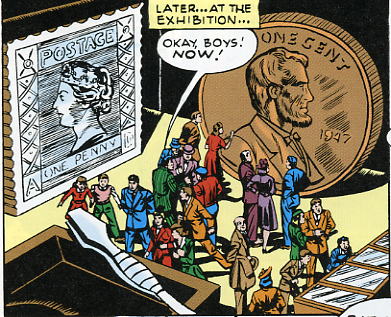
The district and the union have great track records of being on the front lines of school finance reform advocacy.  Our community has been good too.  We can all be better.  As the comic panel above says “Now!”  If nothing is done, the 2010-11 budgets are going to be bad (a projected loss of 15% in state aid in Madison).

There will be some opportunities to get more involved soon (stay tuned to AMPS), but for now the simple and almost  painless thing to do is visit the website, learn more, sign the petition and ask others to do the same.  You can also check in with WAES and the Penny for Kids effort on Facebook.  How much easier can it get?

We now have some leadership; we still need more help at all levels.

Thomas J. Mertz

Leave a comment

Filed under "education finance", Budget, education, finance, Local News, Pennies for Kids, School Finance, Take Action, Uncategorized

Our Children and Over $400 Million

Whoever wins the Madison Metropolitan School Board seat that James Howard and Tom Farley are contesting will be one of seven people who are responsible for our children and over $400 million of our tax money.   I believe that as of this writing AMPS is the only place (newspaper, website, television station, radio station…) that has reported Howard’s challenge to Farley’s nomination papers and Farley winning that challenge and a spot on the ballot.

I think that the position of School Board member is important and that developments like these are “news.”  I find it distressing that none of the professional media outlets seem to agree.

To give a fuller picture of local coverage it should be noted that Susan Troller covered earlier portions of this story in the Cap Times (herehere and elsewhere); that Joe Tarr picked up on AMPS coverage for the Isthmus/Daily Page; and that the last story to appear in the Wisconsin State Journal declared uncontested races (this week, Gayle Worland of the WSJ has filed worthwhile pieces on 4K and the Badger Rock Charter School effort).

Thomas J. Mertz

1 Comment

Filed under education, Elections, Gimme Some Truth, Local News, Uncategorized

Game On: Farley v. Howard

We’ve just received word that Tom Farley has had his nomination papers accepted and he is a candidate for school board against James Howard. For more on Mr. Farley’s travails in entering the race see AMPS coverage here and here.

Robert Godfrey

Leave a comment

Filed under AMPS, Elections, Local News

Why a Charter School? and Related Questions

The Ramones, “Questioningly” (click to listen or download)

I often find the rhetorical device of “asking questions” annoying.  However there are times when the conventional wisdom becomes so pervasive that it is necessary to step back and ask some of the most basic questions.   This has happened with Charter schools.  The most basic question is “Why a Charter School?.”

This hit me while I was watching the discussion of the Badger Rock Charter School proposal at last Monday’s Madison Board of Education meeting (video here).  At one point Beth Moss said something along the lines of (paraphrasing), “This is the kind of innovative thing that we can’t do with district schools.”  Marj Passman says something similar in an Isthmus story.  This can become a self-fulfilling prophecy.  If you believe that innovations are beyond the district’s capabilities,  then they will be beyond the district’s the district’s capabilities.  One of my related questions is “why not, why can’t the district do innovative things like Badger Rock in the absence of a Charter?”.

Before going forward I should say three things.  First, our older son attended the Charter (in name only) JC Wright Middle School.  The only relevance that I see in relation to this is that the experience  informed my thoughts, others may think it makes me a hypocrite or something so I thought I’d put it on the table.  Second, this isn’t directly about “why not a Charter?  That’s another topic and one that I’ve hit pieces of in other posts.  Third, I want to say that I agree with many who have expressed admiration for the Badger Rock proposal.  There is much that is creative, innovative, thoughtful and good.  As the discussion on Monday made clear there are still unanswered questions and some issues that will be difficult to resolve.   I do not oppose the recommendation to seek the planning grant on the agenda 12/11.  This is only indirectly about that proposal.

What it is directly about is re-starting a discussion or consideration of the advantages of Charters as a policy choice and extending that discussion or consideration to include ideas about what districts can and cannot do.  The current assumption that thoughtful innovation requires Charter Schools bugs me.  It bugs me even more that the the preferred path for community partnerships like the one envisioned by the Badger Rock group has become Charters.

There was a time when districts, communities and even corporate partners initiated exciting educational work in the context of traditional district schools, district magnet schools, district laboratory schools, embedded programs and other non-Charter ways.  In Madison Shabazz and Spring Harbor are obvious examples that this can be done.  I attended a district Magnet, Laboratory School in Evanston Illinois, where more recently they have created embedded Dual Language Immersion and Afrocentric programs.  It can still be done.

The “we can’t do it without a Charter” attitude seems lazy.  First I’d like to know in some detail why it supposedly can’t be done without a Charter.  If that proves to be the case,  than in most instances wouldn’t the best policy be to figure out why and change things so that the benefits of innovation could be achieved through district programs?  It is sad that so many have given up on the reforms that would benefit all students in order to pursue those that will only touch very few (even the staunchest Charter advocates understand that for the foreseeable future the vast majority of American children will attend district schools).

I’ll offer one answer to the titular question: Money!  Unfortunately Federal policy-makers, foundations and many others are all acting on the unexamined assumption that innovation or even diversity of educational programing requires Charters.   I have a friend who is a Superintendent of a small district.  He is justly proud of an environmental Charter school he helped create.  We’ve never talked about it much, but a  couple of months ago he started describing how the only reason to have it be a Charter was the money.   This is pragmatic, but it only shifts the question to “Why is money available for Charters and not district-based creative programs?”

Let’s ask the questions and examine the assumptions and do what we need to expand creativity and energy in districts and district schools.  Let’s also make sure they have the resources to do this.

As I was finishing this I saw a great post on a related topic from Richard Kahlenberg (hat tip Jim Horn, Schools Matter).  Among other things Kahlneberg contrasts the segregative  impact of Charters with the  desegregative history of magnet schools.  Worth reading.

Also worth reading is Madison Board Member Lucy Mathiak on the Badger Rock proposal (welcome to the Madison EduBlogoSphere Lucy).

Thomas J. Mertz

1 Comment

Filed under "education finance", Arne Duncan, Best Practices, education, Equity, finance, Local News, Uncategorized

Farley vs Howard, the Latest News (Updated)

I just got off the phone with the City Clerk’s office.  Tom Farley submitted papers and there is a “challenge” (their word, not mine) to the papers filed.  I was told that Farley’s papers have not been reviewed.

I forgot to confirm that it was James Howard who challenged the papers (I don’t think anyone else has standing, but I could be wrong) and I forgot to ask for a time-line.  So much for this intrepid reporter’s skill set.

Update:

I looked up the Administrative Rules and am offering some excerpts:

2.05

(4) Any information which appears on a nomination paper is entitled to a presumption of validity. Notwithstanding any other provision of this chapter, errors in information contained in a nomination paper, committed by either a signer or a circulator, may be corrected by an affidavit of the circulator, an affidavit of the candidate, or an affidavit of a person who signed the nomination paper. The person giving the correcting affidavit shall have personal knowledge of the correct information and the correcting affidavit shall be filed with the filing officer not later than three calendar days after the applicable statutory due date for the nomination papers.

(5) Where any required item of information on a nomination paper is incomplete, the filing officer shall accept the information as complete if there has been substantial compliance with the law.

On the timing, I heard that a resolution is expected Monday, but if I read this another section correctly Tom Farley has three days to respond to the challenge (I think that means he has till the end of the day Monday; maybe he already has and that’s why people are saying Monday).

2.07 (4)

(b) The response to a challenge to nomination papers shall be filed, by the candidate challenged, within 3 calendar days of the filing of the challenge and shall be verified. After the deadline for filing a response to a challenge, but not later than the date for certifying candidates to the ballot, the board or the local filing

Those laying odds may be interested in this section (although it is kind of silly to lay odds without having more first hand  information about the papers themselves).

2.07 (3)

(a) The burden is on the challenger to establish any insufficiency. If the challenger establishes that the information on the nomination paper is insufficient, the burden is on the challenged candidate to establish its sufficiency. The invalidity or disqualification of one or more signatures on a nomination paper shall not affect the validity of any other signatures on that paper.

Last, I also heard that it was James Howard or people close to him who challenged the papers.

Thomas J. Mertz

2 Comments

Filed under education, Elections, Local News

Tax Talk — Are they listening?

I just did a quick surf of recent news stories and opinion pieces from around Wisconsin and it should be clear to all that our State’s current system of raising revenues and  and funding of essential services (including, but not limited to education services) isn’t working and isn’t sustainable.  Yet nobody in power is talking about this and they don’t appear to be listening either.  Keeping their heads in the sand isn’t going to change the reality and fiddling with things like Race to the Top while the state catches fire is more of the same in terms of questionable short term patches where long-term structural work is needed.

I’ll get to the clips below, but first a call to action.   The people we elected to state office promised to address these matters, but they haven’t and things just keep getting worse.  With tax collections down 12%, a state “budget reconciliation” is almost certain this Spring.  It will likely entail cuts in state services,  cuts in shared revenue to municipalities and Counties and cuts in state education aid.  Unless there is public pressure it will likely not include addressing the structural problems of an inadequate revenue system.  The only sustained and realistic work being done that puts the structural issues on the table is the Penny for Kids campaign to enact a dedicated sales tax for education.  If you are tired of the way things are going, learn more about the campaign and sign on as a supporter.  Penny for Kids is not the big fix, but it will stop some of the cuts and will move Wisconsin in the right direction.  If you are in Madison, the School Board will be considering a resolution in support on Monday (1/11/2010)  and it would be good to check in with them and let them know your thoughts.  For anyone in the state, contact your legislators and the Governor, write  a letter to the local paper…get active.

Here is what is happening and what people are saying.

In Oshkosh, “Crowd tells school board to raise taxes, not cut budget.”  Due to declining state revenues and an inadequate revenue cap, the Oshkosh  district must cut between $2 million and $3 million in programs and services form next year’s budget.  Because  even cuts of this size would require substantial property tax hikes, cuts in the $5 million range and not taxing to the maxare under consideration.  In a promising sign, the crowd was against these further cuts:

Those attending Tuesday’s meeting spoke out against every one of those options, saying the cuts would dismantle the district’s efforts to improve its quality of education. Most had a special interest such as preserving their home school, keeping equity and stability for students with special needs, maintaining small class sizes. The common thread tying almost all speakers together was a preference for raising taxes over saving money.

“We’ve been fighting to get the waste out of our schools for what, 10-15 years? There ain’t no more waste, folks,” said Oshkosh resident Thatcher Peterson, who has had two daughters graduate from the district.

Heidi Supple, parent of a third grader at Lakeside Elementary, said, “I don’t know about your stocks or your IRAs, but everything is down right now. If I’m going to invest in anything, I’m going to invest in our children.”

Madison and many others districts did not tax to the max last year.  This may become an annual controversy.  Without state level revenue reform it will spread.  Local School Boards are caught in the middle.

Fewer details, but similar issues are playing out in Neenah.

The Neenah school board faced a huge crowd Tuesday night after announcing nearly $3 million in budget cuts some parents fear are too steep.

The cuts include 26 jobs — 16 of them are teaching positions — eliminates a popular elementary strings and band program, reduces funds for special education, and limits arts options for eighth-graders.

The standing room only crowd on-hand was trying to persuade the school district not to make drastic cuts. Still, school board members say there’s just no money.

Penny Paiser-Wilson’s elementary music class is on the front line of the budget deficit. It’s one of many cuts being proposed by the Neenah Joint School District for the Fall of 2010.

And at the end of the story, this line:  “The school board president says the deficit is due to a drop in state funding.”  He got that right.  Statewide, state created problems call for statewide, state created solutions.  Raising local property taxes even more is not the answer.

According to Jonathan Krause, the Wisconsin Covenant — a promise of a college education to all those who qualify — is $2 billion in the red.  First they break the “New Wisconsin Promise” of  “A Quality Education for Every Child” along with numerous campaign promises about education, services, tax fairness and sustainability, but this wasn’t enough.  They had to raise kids’  hopes, get them to sign  a pledge and then break that pledge.   Nice.

It isn’t just education.  Library budgets are precarious as this letter from Stevens Point documentsChris Liebenthal reports on the decline in Milwaukee Co.  parks due to budget cuts here.   County budgets cut human services, cities struggle to plow the streets…and our state officials — the only ones who can do something about arresting this decline  — spend their time and our tax dollars making Cheese the official state snack.

There is a good overview from the Milwaukee Public Policy Forum.  They share my sense of urgency:

So what does this mean for state, county and municipal officials in Wisconsin? It means that the fundamental problems that have created persistent and growing structural deficits at the state, Milwaukee County and City of Milwaukee will not magically disappear and must be the subject of equally persistent focus in 2010.

Are our elected officials paying attention?

In closing, Dave Zweifel has a great column on the need for revenue reform.  I’m not sure I support all that is being proposed, but these ideas (and others, including Penny for Kids) deserve consideration — something there is no indication will happen unless the public pressure mounts.  Here is a long excerpt:

Gary Bahr of Belleville should have been elected to the state Assembly when he ran for the western Dane County seat back in 1994.

The retired small-town banker is one of the few who has consistently challenged our legislators to think outside the box about taxes. He rightfully insists that the state should completely scrap its present tax system and start over with one that makes sure everyone except the very poor pays a fair share of taxes.

Instead, state government keeps the same broken system in place, tinkering on the edges every budget year and in these hard economic times unconscionably pushing a bigger burden down to the local level, where the regressive property tax is already chasing people out of their homes. In the end, everything stays the same, even the deficits. And now comes the news that legislators have cut back on reimbursing local governments for the services they provide state buildings — a move that puts another $4 million on the backs of Madison property taxpayers alone.

For two decades now, Bahr has been urging the Legislature to take our public schools and county governments off the property tax. Taxes on property ought to be used strictly for municipal services like police, fire and garbage pickup. And everyone who benefits from the services, including churches and nonprofits, would pay property taxes, which he estimates would be about 85 percent less than they are now.

If you care about the state, our children and the future;  get involved, do something to make our elected officials back up their words with real positive action.  If they won’t,  help elected people who will.

Thomas J, Mertz.

Leave a comment

Filed under "education finance", Best Practices, Budget, education, finance, Local News, Pennies for Kids, School Finance, Take Action

WAES School-funding Reform Update, January 5, 2010

From the Wisconsin Alliance for Excellent Schools.  Table of contents below; pdf of full update here.

* Sign petition urging legislators to consider “A Penny for Kids”
* Governor’s school-funding reform … raise property taxes?
* UW education dean wonders if a “Race to the Top” is what is needed
* Neenah, Stevens Point deal with school budget deficits
* School-funding formula is moving the pain around the state
* New school but old funding problems for Greenfield
* Greenfield joins WAES, but your help is needed
* School-funding, education reform forum set in Middleton, Jan. 28
* Rep. Mark Pocan talks funding reform in the Lions’ Den
* Gazette surprised Wisconsin spends less than average on schools
* IWF, WTA note drops in Wisconsin’s spending and taxing ranks
* New report says better early education would benefit the economy
* Correction to an earlier story
* Help WAES correct e-mail update glitch
* School-funding reform calendar

You can now connect with WAES on Facebook!  If you haven’t yet, take a few minutes to learn about Penny for Kids and sign the Petition here.

Thomas J. Mertz

Leave a comment

Filed under "education finance", Arne Duncan, Best Practices, Budget, education, finance, Local News, Pennies for Kids, School Finance, Take Action

Equity, Diversity and TAG in MMSD — What They are Reading and More

John Rury on Ruby K. Payne

(article being discussed is subscription only)

I’ve previously expressed my thoughts on the Madison Metropolitan School District’s Talented and Gifted plan and equity issues (here, here and Robert Godfrey also posted on this here).  At the January 4, 2010 meetings, the Board of Education received an update on the plan.  From reading this update, things are worse than I had feared.

Among the materials identified as being used for staff development is a book by Ruby K. Payne, whose other work is the subject of the video above.  They are also employing The Cluster Grouping Handbook by Susan Winebrenner and Dina Brulles.  I’d like to offer some relevant quotes:

“The typical pattern in poverty for discipline is to verbally chastise the child, or physically beat the child, then forgive and feed him/her”

—–

The poor simply see jail as a part of life and not necessarily always bad. Local jails provide food and shelter and, as a general rule, are not as violent or dangerous as state incarceration.” (Emphasis added)

—–

“And one of the rules of generational poverty is this: [women] may need to use [their] bod[ies] for survival. After all, that is all that is truly yours. Sex will bring in money and favors. Values are important, but they don’t put food on the table—or bring relief from intense pressure.”  (Emphasis added)

—-

“Also, individuals in poverty are seldom going to call the police, for two reasons: First, the police may be looking for them; second, the police are going to be slow to respond.”  (Emphasis added)

All from Ruby K. Payne, A framework for understanding poverty.

“Throughout life we all seek like-minded people with whom to work and play; we are much more comfortable with people who understand and accept us as we are.”  (Emphasis added)

Susan Winebrenner and Dina Brulles, Cluster Grouping Handbook

“I have repeatedly pointed out that people prefer the company of people like themselves, that this is natural and healthy, and that we should organize our society on this assumption.”  (Emphasis added)

—–

“Assumptions about police bias are especially common among minority groups that have the most to gain from good relations with the police. Blacks, in particular, are convinced of police “racism.” In extreme cases, this belief leads to murderous rampages like that of Brian Nichols with which this report begins. It is not an exaggeration to say that his victims might be alive today if the facts in this report were widely known. In countless less severe cases, a belief in police bias leads to suspicion, resentment, and lack of cooperation, all of which make it harder for the police to do their jobs, and more likely that minorities will suffer from crimes that could have been solved or prevented. How often do assumptions about police—and societal—racism so anger blacks that they go beyond lack of cooperation to crime itself? It is profoundly destructive for minorities to have exaggerated resentments toward the society in which they live.”  (Emphasis added)

Jared Taylor, “Reply to Tim Wise,” and “The Color of Crime.”

The last two quotes — from Jared Taylor — are ringers.  MMSD isn’t using anything from Taylor (that I know of); that’s good because the Southern Poverty Law Center labeled him one of “40 to Watch” and described him as a “courtly presenter of ideas that most would describe as crudely white supremacist.”  That Taylor, Payne, Winebrenner, Brulles all sound so much alike says much about the slippery slope of grouping, racism and classism; that MMSD’s work on TAG has taken us onto this slope is shameful and inexcusable.

Other than vague references to “research and review of support models” reading Removing the Mask: Giftedness in Poverty by Paul D. Slocumb and Ruby K. Payne is the only activity listed under the heading “Support for Underrepresented Populations.  I haven’t had a chance to read this book, but in fairness I should say that from the excerpts I’ve seen, it does contain some good things about the limited utility of standardized tests in identification.  That’s good, but I doubt it outweighs the attitudes and assumptions that are at the core of Payne’s work (a little more on Payne below).

The update also references the TAG Advisory Committee.  A membership list and , agendas, but no minutes have been belatedly posted.  It is clear that by any measure the closed appointment process fell short of the stated goal of  “reflecting [the district’s] demographic make-up.”  I’d like to particularly point out that it is very unlikely that there are any people in poverty or without college degrees represented; 47% of MMSD students are low income, 58% of district families have at least one parent without a college education.   Such gross under-representation in a committee that is supposed to address under-representation is not a good sign.   They can do better and perhaps would have done better if they had reached out beyond “people like themselves.”

That raises another issue with the Advisory Committee.  Of the 33 names listed, 11 work for the district, at least one other has a contractual relationship with MMSD via a grant, 3 others have professional lives associated with Talented and Gifted education.  I don’t think that any TAG or grouping skeptics have been included.  “People like themselves,” not representative of the community.

If TAG in MMSD is live up to the promise of equity,  identification is key (support after identification is also essential).  The sections of the update dealing with identification indicate that little or no progress has been made toward more equitable identification procedures.  We are talking more of the same:  biased achievement tests (MAP, under consideration is yet another inappropriate test, the CogAT tests also under consideration are a mixed bag) and referrals (which research shows are more biased than the tests).  The district needs to move from achievement measures to aptitude assessments and until it has been demonstrated that TAG can be equitable, they need to go slow with labeling and grouping students.  Maya Cole and Lucy Mathiak raised some of this at the meeting

There is one small positive sign in a related area.   For years I have asked for demographic breakdowns of students being served by advanced programs and participating in advanced classes.  I’ve been ignored, I’ve been told the data didn’t exist, Ive been told I would be given the data shortly…finally Superintendent Dan Nerad told me that the data on students being served by TAG (part of what I’ve asked for, but not all of it) exists but is of poor quality and would not be released (I guess I could do a Freedom of Information request).  The good news is that one of the proposed Strategic Plan Core Measures is “Advanced Course Participation Rate.”  I have been assured that this and all the student related performance measures (including TAG participation) will be reported with disaggregated demographic breakdowns.  At least then we will have a baseline measure and one that I hope will spur better and more urgent action.

I’ll leave the MMSD issues for now on a positive note and move to a very few words about Ruby Payne

Payne’s work is based on little or no research, perpetuates stereotypes and reinforces  middle class hegemony.  There are many good critiques of Payne, but most are under copyright restrictions.  These and other entries from the blog Education and Class and this from the Journal of Educational Controversy are  good places to start.

So much of the critiques go back to the critique of Great Society Culture of Poverty/Cultural Deficit approaches.  In the wake of the Black Power Movement it became untenable to equate difference with deficits, (as Payne does).  Resurgent pluralism demanded that the strengths of various cultures be recognized and respected.  This is subtle in practice.  Few dispute that schools should give children the tools they need to thrive in a culture dominated by “middle class,” liberal, capitalist norms and mores.  What Payne and other deficit practitioners do is go beyond this by elevating these norms  and mores as superior.  In the process, the liberatory potential of schooling is abandoned.  It should go without saying that this is in conflict with the Cultural Relevance program and other aspects of the Strategic Plan.   Payne, like KIPP, wants to teach poor children to “work hard and be nice” and not how to change the system that produces and reproduces inequality.

I’m going to close with another video discussing Ruby Payne, this one from 14 year-old John Wittle (worth watching).

Thomas J. Mertz

2 Comments

Filed under Best Practices, education, Equity, Local News, Uncategorized

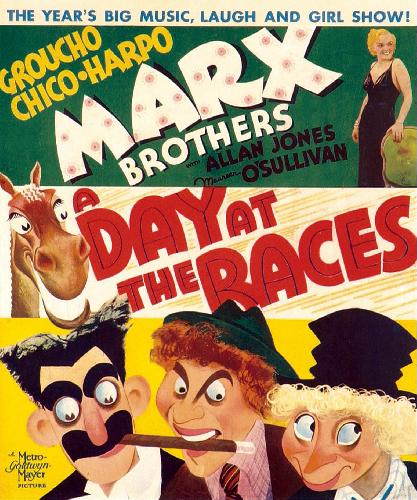
Off to the Race(s)?: Madison School Board Election (Updated, 1-5-2010)

Updated 1-5-09 Brenda Konkel has the scoop.

School Board ends up with the biggest surprise:

School Board – NO RACES

Maya Cole unopposed

Beth Moss unopposed

James Howard walks into the seat vacated by Johnny Winston Jr.

Tom Farley, despite getting my signature and a couple others at 4:30, failed to get 100 signatures and is not on the ballot

There are three seats up on the Madison Metropolitan School District (MMSD) Board of Education this Spring.  So far it looks like two incumbents — Beth Moss and Maya Cole —  will be seeking re-election unopposed and the open seat vacated by Johnny Winston Jr will be contested by at least two candidates, James Howard and Tom Farely.

Farley’s entry may raise the profile of this race.  He’s best known as the brother of the late comedian (and Madison/Maple Bluff native) Chris Farley.  Tom Farley authored/edited an oral history of his brother and is a founder of a substance abuse prevention foundation inspired by his brother’s death.  He is also a marketer and motivational speaker (irony abounds).  He’s served on some city and county committees but doesn’t appear to have been much involved with MMSD.

Back in September Farley announced on his Twitter page that he was running for Lt. Governor; news reports from that time make it clear that he was intending to run as a Republican.  That didn’t happen and now he’s running for School Board and claiming a relatively long standing Democratic affiliation.  In a comment on the Cap Times story on his candidacy, Farley wrote:

To be very honest, coming to grips with my party affiliation has been an interesting journey – especially since returning to Madison six years ago. In short, was a Republican but have now firmly embraced my Democratic soul (I joined the Dem. Party of Dane Cty during last year’s election – and voted Obama).

I’ll leave it to the reader to parse the relative values Farley places on his soul, his  political affiliations and his ambitions.

In another comment on that same story Farley displays a disturbing ignorance about the Madison Board of Education.  In explaining his candidacy he refers to his experiences as a parent of a “special needs” student and adds:

I feel that bringing that perspective and unique voice to the school board is something long overdue.

It would be difficult to have much knowledge of the Madison School Board and not know that Beth Moss is a parent of a student receiving special education services and that both prior to and since her election she has been active locally and at the state level as an advocate on special education issues.  Very difficult; almost impossible.

In a comment on a Wisconsin State Journal editorial on the Edgewater proposal Farley expresses dangerous ideas about open government:

Open meetings pander to people’s fears and mistrust of civic leaders; they hinder enlightened and creative solutions; and they actually enable citizens to continue to harbor unsubstantiated, biased judgements (sic) about everything under the sun. Show me any functioning socialist government (if possible), and I’ll show you a group of leaders still able to email their colleagues, hold a conference call or have a job-related discussion with peers while sitting around the”popular table” in the “People’s Cafeteria”. Here in Madison we can’t do any of that without posting a meeting notice one week prior.

Open meetings certainly sound “fair”, but fair doesn’t create great cities.

Yow.  Pretty scary (regular readers will know that I’m a big fan of public input and open meetings).

Farley’s been very busy in comments sections lately, interested voters may also want to check out his thoughts on the Freedom From Religion Foundation posted on the recent Isthmus story .

One thing I can say for Farley’s announced opponent, James Howard is that he has a good awareness of the workings of the Madison schools and School Board developed over years of active involvement.  In fact the headline of the story announcing his run read: “James Howard, active in Madison schools, to run for Winston’s board seat.”  He served on the East Area Long Range Planning Committee a few years ago and on the recent Strategic Planning Team.  I worked with him when we were both among the co-chairs of the 2006 Community and Schools Together (CAST) referendum campaign (he wasn’t active in the 2008 effort) and on Beth Moss’s 2007 campaign.  He’ll bring some knowledge and experience to the race.

Maya Cole announced her candidacy for re-election in an email to supporters on December 27.  It reads in part:

Although I am far from satisfied with what we have accomplished (a personality flaw), I do believe I have provided some valuable input and initiative and that we have made progress in many policy areas where we: formalized the process of evaluating the superintendent; created a better process for charter initiatives; evaluated our expulsion process to be consistent across the district; widened the scope of measures that determine the success of students in the district; and, expanded the involvement of community members in our deliberations regarding mathematics, four-year-old kindergarten, school nutrition/lunches and technology in MMSD.

I’ll just note that I don’t consider not being satisfied “a personality flaw” and send her this Replacements song as a reminder.

I don’t believe Beth Moss has made a formal announcement, but she’s gathering signatures and went through the process to win the Progressive Dane endorsement for her re-election effort.

It isn’t too late for more candidates to enter; the filing deadline is January 5. 2010.   Whatever my thoughts about all of those already declared, I think that contested races are good for democracy and democracy is good for the schools.   All the filing information are here.

Thomas J. Mertz

14 Comments

Filed under education, Elections, Local News, Uncategorized