Teenage Kicks

Saturday, May 17th is our older son’s birthday. He turns 13, becomes a teenager. In honor of the occasion, here are a couple of videos.

Teenage Kicks, by the Raconteurs (he’s a big Jack White/White Stripes Fan).

Teenage Kicks, by the Undertones (I’m a big Undertones fan).

I know this strays from the topic of this blog, but I am sure the teen years will be educational for all of us.

Happy Birthday.

Thomas J. Mertz (Dad)

Leave a comment

Filed under AMPS, Local News

A Message to Gov. Doyle (updated)

The Wisconsin Assembly joined the Senate last night in passing a budget repair bill. In the Assembly, the Madison delegation was split. Governor Doyle has promised swift action, including some vetoes. Some democrats are saying they will vote to override (some?, all?) vetoes.

The bill is not great for schools. One good thing is the measure closing the “Wal-Mart Loophole.” If we are going to move toward better school funding, fairer tax policies have to part of the answer. Not so great is shifting $125 million from state aids to local school taxes. This will make passing referenda more difficult.

Madison Superintendent Art Rainwater sent a message to Governor Doyle about another bad provision, this one further limits phase in funding for school districts wishing to start 4 year-old kindergarten programs.

May 15, 2008

Governor Jim Doyle
115 East – State Capitol
Madison, WI 53702

Dear Governor Doyle,

I am requesting that you use your partial veto powers to improve the unnecessarily restrictive 4-year old kindergarten language contained in the budget repair bill.

The provision allows for a 5-year phase-in of 4K programs only for school districts that are operating a 4K program during the 2007-08 school year. This language would only benefit a handful of school districts. Allowing all school districts to phase-in 4K programs would assist districts, such as Madison, in potentially moving forward with 4K programs and assist your laudable goal of expanded early childhood opportunities for our state’s children.

Madison Schools has worked with local child care providers to lay the groundwork for a 4K program, but is substantially stymied by funding problems. The inequity in K4 funding should be fixed in the 2009-2011 biennial budget. It is fundamentally wrong for a Milwaukee voucher school to be able to start a 4K program and September and receive the full state reimbursement by the following June – public schools should have the same opportunity.

Please veto the 4K language to allow all school districts the opportunity to phase in a 4K program over a 5-year period. Thank you for your steadfast support of K-12 public education.

Sincerely,

Art Rainwater
Superintendent

The consensus in Madison is growing that we need need to do this in the very near future. If this measure goes through, it will be nearly impossible.

If you believe that we should establish 4k, now is the time to join Superintendent Rainwater in contacting the Governor and our legislative delegation.

Update:

Doyle issued his veto message.  He did not go along with the legislature on the school aid payments, but he did OK the limit on 4K phase in funding.  This is not good news for the future of 4K in Madison and the state.

Thomas J. Mertz

Leave a comment

Filed under "education finance", AMPS, Budget, education, finance, Local News, Referenda, School Finance, Take Action

Honoring Carol Carstensen

School Board’s Carstensen gets fond farewell

Samara Kalk Derby (Capital Times)— 5/15/2008 7:19 am

More than 100 friends, colleagues, family members and parents showed up at a farewell party Wednesday at Olbrich Gardens to say goodbye and thank you to Carol Carstensen, who served six terms on the Madison School Board and stepped down after the spring elections.

“There will never be another Carol Carstensen. I will predict that,” said School Board member Johnny Winston Jr. “There will never be another School Board member in this community that will serve 18 years. I miss her already.”

Winston called it a wonderful experience to work with Carstensen.

“She really not only knew the material and had a grasp of the issues going on, but she also had her pulse on the community as well,” he said.

Former board member Nan Brien, who served with Carstensen in the early 1990s, said that for 18 years Carstensen was the spokesperson on the board for all the kids in the district.

“She was particularly adamant that all kids, no matter their background, have an opportunity for the best education. That is the heart and soul of who Carol Carstensen is,” Brien said.

Carstensen always cared about the kids above anything else, she added. “That’s really why she fought all the budget battles and all the referendum battles — so the district would have the resources to give all the kids an equal opportunity,” Brien said.

The liberal Carstensen, who served four years as president of the seven-member board, aggravated conservatives by backing all 14 referendum questions during her tenure. Her critics viewed her as an advocate of higher school property taxes in Madison. Still, she never lost a School Board election.

Carstensen said she was delighted by the turnout at her party Wednesday. Old friends and new friends came out from the various areas of her life — the school district, her neighborhood, her book club, and the UW Law School, where her husband, Peter, is a professor.

She said she’s been ambivalent about stepping down.

“There are a lot of things I don’t miss and won’t miss at all, but there are other things — a number of things that have yet to be decided — that I will miss,” Carstensen said.

“The new superintendent will be working with the board in a new way, and I will miss that,” she said.

Well-wishers approached with their goodbyes: “Eighteen years is not nearly enough as far as I’m concerned,” one said. “Enjoy the freedom,” said another. “What are you going to do on Monday nights?” wondered a third.

Carstensen said she plans to do some volunteer work on the re-election campaign of Wisconsin Supreme Court Chief Justice Shirley Abrahamson and possibly the presidential campaign of Barack Obama.

David Cohen, a district parent, called Carstensen “one of the nicest, fairest School Board members that any parent would ever have to engage, and I’ve engaged with her a lot — good and bad.”

Many people at the gathering said they admired Carstensen’s dedication. “I do think that’s why she served as long as she did,” said Carole Trone, who has three children in the district.

“She believes in our schools. I think sometimes it was a thankless position with tough choices to make,” Trone added. “I think she symbolizes what makes this community strong — that we have people like her who are willing to give so many years of service.”

Mary Ellen LaChance, a district Reading Recovery teacher leader, called Carstensen a thoughtful decision-maker and someone who is willing to listen and learn about all the different facets of school programs.

“Obviously, the fact that she’s worked for so many years as a School Board member reflects her extreme dedication to education and Madison,” LaChance said.

Parent Jerry Eykholt called Carstensen an analytical thinker, who is strategic and effective.

“She’s just a fantastic community member, first and foremost. Everyone knows where her heart is — it’s really with the kids and how they are progressing. It’s hard not to join her.”

I had the pleasure of being part of this tribute to Carol. Not mentioned in the story is that the event was appropriately a fund raiser for the Foundation for Madison Public Schools. Here is a form to make a donation in Carol’s name.

It is difficult to give Carol Carstensen enough thanks for all the good she has done our schools and community. I think the best way is to follow her example and work to keep our schools strong; Volunteer in your school, serve on a district task force or committee, work to change the state school finance system, help with a referendum campaign

Thomas J. Mertz

Leave a comment

Filed under AMPS, education, Local News, Referenda, Take Action

Board Member Budget Amendments Posted

The MMSD website just posted the proposed budget amendments of Board of Education members (and one from the administration). The Board will consider and vote on the budget on Monday, May 12. It looked like there might be some action (click for video) on class size and specials classes and some other things, but that didn’t happen.

Instead, just one amendment from the administration concerning what seems to be Fund 80 housecleaning on contributions to the Wisconsin Retirement system and the tax levy (anyone know if this is a new issue or how the retirement contributions were handled in prior years?); one from Beth Moss funding the replacement of 143 Windows 98 computers via a reduction in the reserve for contingency; and one from Marjorie Passman employing $60,000 of the Fund 80 levy (contingent on other funding?) to help continue the Madison Family Literacy/Even Start Literacy program at Lakeview/Northport. All seem reasonable to me. That’s it. Relative budget peace.

It is important to realize that this peace is the product of a one time distribution of excess Tax Incremental Finance District collections. Next year, we are back to dealing with the “going out of business” system of funding education in Wisconsin. Without a referendum, these are the budget projections (for Fund 10).

Lots of red ink ahead. Time to get to work on a referendum.

Thomas J. Mertz

1 Comment

Filed under "education finance", AMPS, Best Practices, Budget, education, finance, Referenda, School Finance, Uncategorized

Learning in and from the past

In an earlier post I mentioned that my students are working on a primary sources assignment. At least one student is writing about a document found in a recently posted digital history collection of material from Madison schools stretching from the 1880s to the mid 1970s. The project is a “cooperative effort between the Madison School & Community Education Library (MSCEL), the UW School of Education and the University of Wisconsin Digital Collections Center (UWDCC). ” It contains over 17,000 pages of material. I’ve only looked at 100 or so, but have found it fascinating.

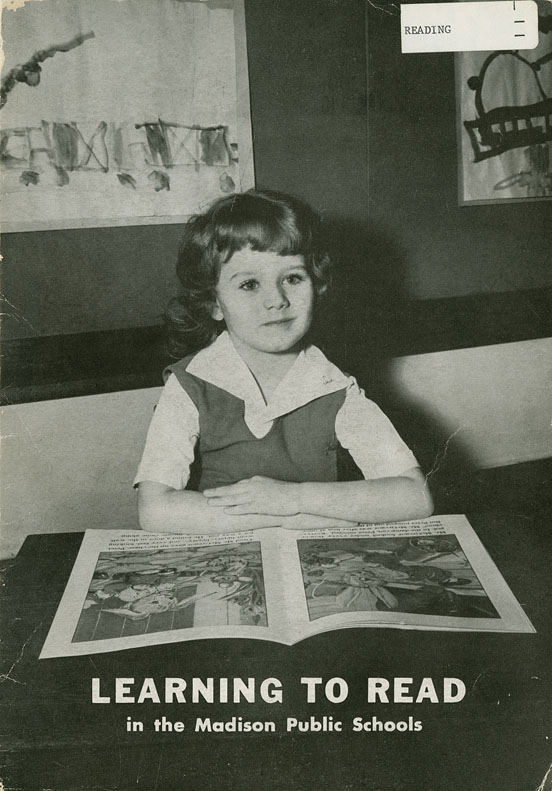
Here are a couple of choice excerpts from Superintendent Phillip Falk’s 1949 Learning to Read in the Madison Public Schools.

Problems of Long Standing

One of the most common misunderstandings in recent years is the belief that a startling new technique of teaching reading is being used which lacks some of the sterling virtues of the old techniques. Usually the implication is that either the old “alphabet” method, which began with the a b c’s, or the phonic method, which emphasized the sounds of letters, is the logical way to teach beginning reading. Any change in procedure today is looked upon as the cause of every deficiency, from inability to read well orally to poor spelling.

Few adults can remember the method by which they learned to read. Records show that the a b c method was discarded in Madison as early as 1871. In his short report for that year Superintendent B. M. Reynolds stated, “During the year the teachers in the Primary grades have discarded the Alphabetic Method of teaching reading, and have adopted what is called the ‘Word-Method’.”

By 1889 the phonic method, too, was losing ground. In December of that year Isabella Lamont, a primary teacher in Madison’s Second Ward school, read a paper before the state teachers’ convention in which she stated, “In the teaching of reading (which is the key to every other study and is therefore of the first importance) there is the a b c method, the word method, the sentence method, and the phonic method. None of these methods is wrong, but all are incomplete … ” One may well ask how new is new,or how old is old.

And (describing the practices of 1949)

There is no one “best” method of teaching children to read. Almost every known method, technique, or device is utilized as needed – experience, phonetic, word, sentence, story, meaningful drill or practice – not in isolation, but in an approach to a particular problem of a particular group or of a particular child.

Makes sense to me.

Thomas J. Mertz

Leave a comment

Filed under AMPS, Best Practices, education, Local News

Quotes of the Day

From the Wisconsin Center for Education Research report:

Educational equity issues within the school district [MMSD] are the source of much public controversy, with a relatively small but vocal parent community that is advocating for directing greater resources toward meeting the needs of high achieving students. This has slowed efforts to implement strong academic equity initiatives, particularly at the middle and early high school levels.

From Matthew Yglesias:

The rhetoric of No Child Left Behind is, I think, an appealing one. The idea is that, well, no child should be left behind. It’s an essentially egalitarian aspiration — the school system should try to do well for the hardest to teach kids, included ones coming from difficult backgrounds and ones who simply for whatever reason have a hard time with school. The idea of “gifted” programs is basically the reverse vision — that the school system should focus on the easiest cases and push them to the highest level of achievement possible.

There’s not a stark either/or choice between the hard cases and the easy cases, but at some level you do need to make a decision about priorities. Insofar as we’re serious about educational equality, that will to some extent involve shortchanging the best and the brightest. Insofar as we’re serious about taking the most talented as far as they can go, that will involve shortchanging equity. The former strikes me as more desirable than the latter, especially for people who want to think of themselves as being on the left.

From Michael Bérubé:

If we as a society are going to make decisions concerning prioritizing scarce educational resources, it makes sense to me, for us to consider what kind of output we desire. Do we want to, for example, maximize the number of future American Nobel prize winners and enjoy the fruits of the breakthroughs that our most gifted can achieve, or do we want to maximize the educational level of the median American worker? Both results have great value, and if we were to quantify them in terms of dollars, I’m not sure which one would prove to be of greater value to society. But I think these are the questions we should be discussing. And that devoting our resources to maximizing the future opportunities of our least educationally apt children for the sake of doing so, without examining the costs, is fuzzy-headed. Which may or may not be a liberal value. But as liberals we do acknowledge that society is not just a collection of disparate competitive individual maximizers, but that we live in a community where cooperation is also an important value. And that maximizing the strength and resources of that community is itself a liberal value.

The National Access Network just reported that “the United States now has the highest relative childhood poverty rate among developed countries.” When the test scores of white American students are reported separately and compared to the test scores of students in developed countries, the United States ranks third highest. In contrast, if Hispanic and African American test scores are compared to the same international scores, the United States ranks last and next to last. It noted that “the authors of a 2001 Wisconsin study concluded that a weighting of 3.4 times the base cost for education was needed for poverty students to reach state standards.” In a new paper on class size reduction efforts, research found that “Wisconsin SAGE class-size reduction experiments showed positive effects on student performance, especially for disadvantaged students.” Economists estimate that reduction efforts targeting disadvantaged schools nationally would cost about $2 billion, and as the evidence shows, it would reap many benefits.

Robert Godfrey

2 Comments

Filed under "education finance", AMPS, Best Practices, education, Equity, finance, Gimme Some Truth, No Child Left Behind, Quote of the Day

Channeling lucre to power

The Wisconsin Democracy Campaign today released it’s analysis of large individual campaign contributions that state lawmakers received in 2007 from donors living outside Wisconsin. For pure shamelessness, the top givers, not too surprisingly, were supporters of using public money for private schooling – a total of $41,825. The take away message – vigilance.

School voucher supporters contributed $1 of every $5 in large individual campaign contributions state policymakers accepted from special interests outside Wisconsin in 2007, a Wisconsin Democracy Campaign review shows.

The leading pro-school-voucher supporters were among the top overall out-of-state donors in 2007 (see Table 2), including Jim and Lynne Walton of Bentonville, Arkansas and Christy Walton of Jackson, Wyoming whose families own Wal-Mart at $15,800; Richard Sharp, of Richmond, Virginia, a retired Circuit City executive at $9,450; and Dick and Betsy DeVos, of Grand Rapids, Michigan whose family founded Amway at $6,150.

The Democracy Campaign noted that:

Milwaukee’s school choice program spends about $120 million a year in state tax dollars to let about 18,500 children attend private religious and nonsectarian schools rather than Milwaukee Public Schools.

The top recipients of out-of-state pro-voucher campaign cash were Darling at $7,175 followed by the Republican Assembly Campaign Committee at $4,550, Republican Senator Dan Kapanke at $2,500, Huebsch at $2,350 and Democratic Representative Jason Fields at $2,300.

In addition to direct contributions to Wisconsin candidates over the past several years, All Children Matter, a Michigan-based pro-voucher group that has political action committees in several states, has spent more than $1.5 million in the 2004 and 2006 elections on phony, negative issue ads, most of which had nothing to do with the school choice issue. Some of their activities drew a complaint pending before the state Government Accountability Board that accuses All Children Matter of laundering $90,000 in corporate contributions through its Virginia PAC which later sent $35,000 to an All Children Matter PAC in Wisconsin to spend on negative electioneering in some 2006 legislative races. The complaint also said the Virginia PAC was not registered in Wisconsin when it transferred the money.

All Children Matter’s Virginia and Ohio PACs were recently fined a total of $5.2 million for similar activity in the 2006 Ohio elections.

For a good history of All Children Matter, Dick DeVos and Howie Rich, check out the Sandlapper’s Diary.

Robert Godfrey

Leave a comment

Filed under AMPS, Gimme Some Truth, School Finance

Primary Sources

My students have an exercise based on primary sources due soon. It seemed like a good idea to post some here.

It is hereby declared to be the policy of the commonwealth to encourage all school committees to adopt as educational objectives the promotion of racial balance and the correction of existing racial imbalance in the public schools. The prevention or elimination of racial imbalance shall be an objective in all decisions involving the drawing or altering of school attendance lines and the selection of new school sites.

An Act providing for the Elimination of Racial Imbalance in the Public Schools, Massachusetts, 1965

George Wallace 1968 television ad, from The Living Room Candidate.

Richard Nixon 1972 television ad, from The Living Room Candidate.

.

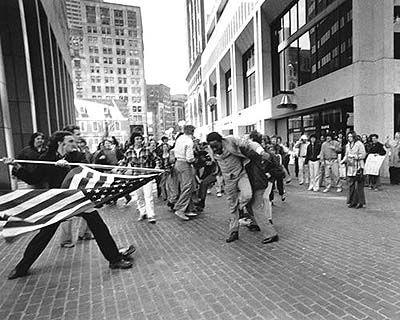
“Soiling Old Glory” Louis P. Masur (Boston anti-busing protest, 1976)

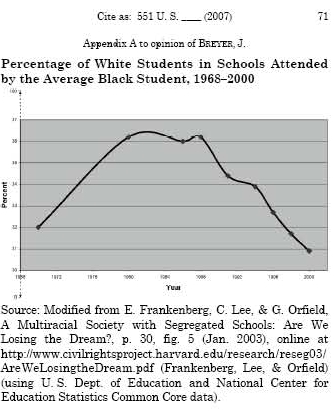
From Justice Stephen Breyer’s dissent in Parents Involved in Community Schools v Seattle School District (2007).

From MMSD, click image for power point (I wish they would update these).

And bonus links to recent blog entries on school desegregation from Sherman Dorn and Eduwonkette

Thomas J. Mertz

Leave a comment

Filed under AMPS, Best Practices, education, Equity, National News, Uncategorized

Pass the Hatchet

“Let me chop it, let me chop it”

Roger and the Gypsies – Pass the Hatchet (listen)

Marc Eisen of the Isthmus has checked in again on the Madison Schools with a column titled “When Policy Trumps Results.” This time the target of his ill informed scribblings is the equity work of the district, particularly the Equity Task Force, of which I was a member. It is a hatchet job.

Mr. Eisen gets his facts wrong, misreads or misrepresents task force documents and at no point engages with the content of the task force’s work. We offered the Board ideas for policies and practices that we thought would help produce and assess results. You would never know that reading Mr. Eisen’s column. Despite the title, all he seems to care about is style.

In return, I’m going to wield the axe. I’m going to go paragraph by paragraph to highlight the low level of knowledge and effort Eisen displays and the ultimate emptiness of his critique, hitting some other things along the way (quotes from Mr. Eisen in italics). Mr. Eisen’s column probably does not deserve this much attention. However the power of the press is such that often when uncorrected, “the legend becomes fact.” I believe equity work in our school district is too important to allow that to happen. Let’s get started.

Much to its credit, the Madison school board has mostly ignored the March 2007 recommendations of the district’s Equity Task Force.

This is simply wrong. On April 21 the Board of Education moved forward on equity, asking the Administration for a redraft of a working document based largely on the report of the task force. Over the last year — in discussions over budgets, school closings, boundaries, discipline and expulsions and more — Board members have explicitly and implicitly employed the work of the Task Force. I wish the Board had more extensively and more directly worked through the Report in public meetings, but the record shows they haven’t ignored it.

This earnest but unhelpful committee delved into the abstractions of what distinguishes “equity” from “equality,” how the board might commit to equity and what esoteric guidelines could measure that commitment.

Yes we were an earnest bunch. Who else would volunteer their time for a year and a half?

I’m no judge of how helpful we were/are, but I do know that Board members (of all stripes), administrators, and teachers have all termed the work of the task force “helpful.” In a manner typical of Isthmus coverage of school issues, rather than talk to those involved — the people who the task force sought to help –, Eisen simply asserts his own opinion.

As to “abstractions of what distinguishes ‘equity’ from ‘equality,'” I am not sure what Report Mr. Eisen read, but there is nothing resembling this in the Final Report. The word equality appears only once in a simple statement that “equity and equality, though closely related, are not the same.” We did discuss this among ourselves and discuss it when we met with community groups, because we wanted to be clear that equity cannot be achieved via a “one size fits all” version of equality.

We were asked by the Board of Education to give them a definition of equity, a statement of commitment and guidelines for implementation. Mr. Eisen labels these last two “esoteric.” This seems to me to be a poor word choice. The vast majority of these portions of the Task Force Report are written in plain language, there is a minimum of education speak; it is very accessible. Click the link and judge for yourself. We also sought to ground the strategies by preparing a responsibility chart and giving examples of how success might be measured.

This points to another basic misunderstanding of Mr. Eisen’s. The guidelines in the report are “guidelines for implementation,” clearly labeled as such and make no mention of measuring commitment or anything else. Because we shared Mr. Eisen’s desire for results we went beyond our charge to include a statement on “Monitoring and Evaluating Outcomes,” emphasized accountability in the statement of commitment and included in the appendices the notes on measuring success. These are separate and distinct for the guidelines.

It is worth noting that a number of the guidelines for implementation are things that Mr. Eisen has advocated for in the past (and even advocates in the column under discussion). Some examples from the Report (linked to works of Mr. Eisen with similar ideas)

I honestly don’t know what to make of Mr Eisen’s wholesale dismissal of the task force in light of these and other shared beliefs. There may be a clue in his next paragraph.

If you are already slipping into catatonia from the meaningless rattle of words, that’s understandable. This is stuff that appeals to progressive professors at the UW-Madison School of Education and to graduate students who aspire to become progressive professors at the UW-Madison School of Education.

Before speculating on Mr. Eisen’s agenda, I can’t resist pointing out the “meaningless rattle of words” inducing catatonia can only be those of Mr. Eisen because the only words quoted from the task force to this point are “equity” and “equality.’ In addition to being a poor reader and a lazy researcher, Mr. Eisen is either a perceptive self critic or a very bad writer/editor.

Once past this revealing gaffe, Mr. Eisen indulges in a favorite sport of the neo-conservatives, ridiculing “progressives” and academics (more below). I’m a proud progressive. While I share some of this skepticism toward academics, I think Mr. Eisen’s brush is much too broad.

“Equity,” the committee announced in its report to the board, “involves opportunity; access; elimination of barriers; distribution of resources; protection of specific groups; recognition and acceptance of differences” and marches on for another 75 words in an act of faux definition.

Two important things here. First, Mr. Eisen does not quote the definition itself, only the introductory material. Second, he has no specific criticisms of any of the ideas the task force sought to include in the definition, only general ridicule and dismissal. For the record, here is the definition we suggested to the Board:

Equity assures full access to opportunities for each MMSD student to achieve educational excellence and social responsibility.

In a sense Mr. Eisen is correct that this is a faux definition. We avoided saying what equity is, settling on trying to say what equity does, to put the focus on results

The more it seeks to explain itself, the more suspect the whole equity endeavor becomes. As someone who sat through a meeting at East High last year where the task force’s work was explained to baffled parents (we filled out a survey that asked, “What does the definition of equity mean to you?”) and who then watched a poorly attended forum discuss the task force’s findings at Centro Hispano on April 3, all I can ask is:

What is it about progressives and their penchant to champion programs on the basis of their rhetorical gloss rather than their success, or at least their prospects for success?

I was one of the presenters at the East High meeting and attended the forum at Centro Hispano. The purpose of the East High meeting was not to explain the task force work, but to get feedback. At that and other venues we received some very useful feedback. I didn’t take a survey about who was “baffled” and who wasn’t, but my memory is that once we got past who we were and what we wanted from them, the parents were interested and engaged. I just dug up a couple of emails from parents who were there and neither indicates any bafflement. I don’t doubt that Mr. Eisen was baffled, but I do question his unsupported assertion that the others in attendance were.

As to the meeting at Centro Hispano, the forum was organized by a charter school advocacy group, only one Equity Task Force member was involved, at least two of the invited panelists were not familiar with the task force’s work (although the announcement said a task force member would be on the panel, to my knowledge none were invited), the Task Force Report was apparently attached to the invitations but discussing the work of the task force was not on the announced agenda and only came up in passing. Mr. Eisen’s characterization is misleading.

The question Mr. Eisen asks seems to be the crux of his complaints. He reads the recommendations of the task force as mere rhetoric and sees nothing that offers “prospects for success.” Here we differ. I see much that I think will add to the success of the district, but beyond that I find it sad and confusing that Mr. Eisen can read the Report and find nothing of use — even in areas where he is in agreement with the recommendations — and can only respond with a nonsensical criticism (disguised as a question) of those easy strawmen “progressives.” For the record, the task force was a relatively diverse group and I have doubts about how many members could accurately be called progressives. I don’t care, but if Mr. Eisen is going to label people, maybe he should learn something about them first.

The Madison schools face a real problem in the achievement gap that separates white students from minority students, poor students from middle-class students.

I can’t think of a bigger challenge for this community than to get these kids up to grade level before they get lost in the hormones and peer pressure of middle and high school.

These are the kids who drop out, who lack the skills to hold jobs, who run the risks of drugs and alcohol, who break the law, who shatter neighborhood comity, who get busted.

I agree with most of this. The only thing I’d add is that we can’t ignore those students who are already in middle and high school and behind. Here and elsewhere Mr. Eisen appears to have given up on these students.

Call me naive, but I think most Madisonians are prepared to give these troubled kids extra help. They might volunteer their own time in the Schools of Hope program to tutor struggling readers. They might support raising taxes to fund four-year-old kindergarten or other programs designed to rescue kids from a dreadful fate.

This point needs to be emphasized. Madisonians aren’t afraid to tax themselves. They just want good services in return and know that their money isn’t being wasted.

Yes, I will call you naive, or at least somewhat naive.

Schools of Hope has been a great success. The community involvement has been heartening, the results impressive, but gaps remain and both involvement and progress seem to have plateaued. Again, the task force recognized the importance of community involvement as one part of the answer.

The task force also called for universal quality early childhood education. Unfortunately this is one part of the Report the Board of Education has ignored. After the Centro Hispano meeting I had a long talk with Mr. Eisen. Most of it was about how shoddy the Isthmus coverage of school issues is, but at one point he challenged me by asking (something like) “Why aren’t you advocating for four-year-old kindergarten?” I answered that I was and that the task force had also. I explained to him that in private conversations with multiple Board members I had asked them to consider a referendum on 4K, that just that evening I had brought the matter up with a Board member and that thus far they had not shared his optimism and have been reluctant to move in this direction.

I’m going to keep trying to get a referendum on 4K because it is the right thing to do, but I understand their reluctance and am also not optimistic. There is a pressing need for an operating referendum — without a successful referendum the district in 2009-10 will face $5-$10 million in cuts from the same service budget — and this has to be the first priority. Multiple measures on a referendum ballot invite a split vote, making it more difficult to pass any. I’d like to at least try for 4K and hope to convince at least four Board members. I hope Mr. Eisen continues to advocate for 4K.

I’m not terribly optimistic about an operating referendum vote either. Mr. Eisen blithely declares that “Madisonians aren’t afraid to tax themselves. They just want good services in return and know that their money isn’t being wasted.” Maybe Mr. Eisen believes that our schools waste money and don’t provide good services (if so, I’d be happy to go round for round with him on these matters), because the last time MMSD asked Madisonians to tax themselves to preserve programs and services, the measure lost by almost 11%. I also want to point out that making the case for any referendum, a 4K referendum in particular is going to involve citing the expertise of those progressive education professors that Mr. Eisen doesn’t like, the work of Progressive Dane and other progressive organizations and the votes of many progressives. It does not make sense to dismiss and alienate these people.

But I can’t for the life of me see them rallying around a pompous and abstruse equity policy, especially one that reads like it was formulated by the UW Department of Leftwing Social Engineering. (Example: “Equity will come about when we raise a generation of children tolerant of differences and engaged in their democracy to stop the processes leading to inequity.”)

Again Mr. Eisen’s reading skills seem to have failed him. The quoted passage is not from the body of Task Force Report, nor the draft policy but an excerpt from public comments included in the appendices. At best this is irresponsible; at worst it is dishonest. I ask readers to judge pomposity and abtuseness themselves and note that again Mr. Eisen says nothing about the substance of the task force’s work, only the style. If anything it appears that Mr. Eisen is the one obsessed with matters of rhetoric to exclusion of content.

The issue of public response is a real, if secondary, one. The primary job of the task force was to report to the Board of Education. This was not a campaign document. That said, we did recognize that a commitment to equity could either enhance or detract from perceptions of the district and that the success of all things related to public schools require public support. It was our hope that the community would recognize that our recommendations addressed important matters in a positive ways.

There is some evidence that Mr. Eisen is wrong in general about Madisonians rallying around equity. The East Area Parent Teacher Organization and the Northside Planning Council have been using equity as a rallying point for years and have had some success in generating Board and public interest.

The school board, after a suitable 14-month delay, should politely shelve the task force’s recommendations when it finally gets around to voting on them in May.

As the comments on Mr Eisen’s opening paragraph indicated, it is much too late for that.

Equity can be honored in principle, but in practice the board needs to be laser-focused on the practicalities of closing the achievement gap.

So much more wrong here. First there is the implication that raising achievement can be accomplished via a laser focus, when common sense and research agree that academic success depends on multiple factors and no single initiative can promise results for most (much less all) students. There is the related implication that MMSD has been neither focused nor successful in raising achievement. Both of these are relative and subjective, but again I disagree and again Mr. Eisen offers no evidence in support of his position. Most significantly Mr. Eisen does not identify what that focus would entail. The task force offered specific recommendations, Mr. Eisen does not.

Mr. Eisen has been on record in opposition to one initiative of demonstrated utility in raising the achievement of those in the middle and at the bottom and supported by the task force: heterogeneous or mixed ability classrooms. Maybe his desire for a laser focus is a desire to make sure that his children and the children of his peers aren’t part of the effort to improve the achievement of poor children.

Too often Madison’s libs and progs devote themselves to elaborate exercises in policy-making as if policy is an end in itself.

I can only speak to the case of the Equity Task Force, but in that case I can say without fear of contradiction that none of us saw policy as an end in itself, but as a means to an end. We knew words in a policy book without action are useless and actions without results are a wasted effort. Many of us are and have been involved at the school, district and state level working for better policy, actions and results.

Here I’m going to get a little earnest. It was an honor to serve with my fellow Equity Task Force members. They are people who care deeply about making our schools work for all students and have repeatedly demonstrated their commitment by volunteering their time. I’m proud of our work and proud to have come to know you all.

Most of the rest of the article is about Inclusionary Zoning (I hope Brenda Konkel or someone more familiar with that issue weighs in), but one further reference to education deserves attention.

This failure has only exacerbated the school board’s challenge in dealing with the achievement gap. The research is crystal clear: Kids in high-poverty schools fare far worse academically than poor kids attending middle-class schools.

This is exactly why policy matters. The current policy and practices of the district say nothing about economic segregation in classrooms and are relatively weak in school assignment (see here). The task force recommended that the administration annually report to the Board any schools or classrooms that significantly diverge from the overall socio-economic makeup of the district and offer actions to address this segregation. Mr Eisen may have a better way to deal with this issue. He offers none beyond Mayor Cieslewicz’s ill conceived “share the poverty” proposal. My thoughts on that will have to wait for another day, but simple numbers show that even if this is wildly successful and 2,000 children in poverty move to other districts, MMSD will still be at close to 40% free and reduced lunch. History shows that those children will remain geographically concentrated. Whatever the solution, it will involve policy.

This is all very frustrating. Many people read the Isthmus and few people pay much attention to school issues that do not directly impact them. Mr. Eisen’s latest “effort” is one of many examples of that newspaper’s confidently criticizing the schools and the Board of Education with little regard for logic or truth. It is all about posturing, style over substance. Nowhere in his column does Mr. Eisen discuss any of the policy recommendations of the task force. Nowhere. There is a certain irony in that Mr. Eisen’s supposed concern for results is manifested exclusively as a critique of style.

Bob Somerby at The Daily Howler has extensively documented how the national press does the same thing — from falsely labeling Al Gore a congenital liar to constant references to of John McCain’s “straight shooter” image — they endlessly repeat falsehoods or focus on the trivial; ignoring important matters in order to create amusing fictions. The people working to make our schools better, the children and the public deserve better.

Thomas J. Mertz

1 Comment

Filed under AMPS, Best Practices, Equity, Gimme Some Truth, Local News, Referenda, Take Action, Uncategorized

Time for Change is Now – and 13 years later

Folks,

Steve Braunginn, former head of the Urban League of Greater Madison, has called on Madison to really take action to boost minority achievement. As an advocate for our schools, please read the recent Isthmus opinion article at:

http://www.isthmus.com/isthmus/article.php?article=22251

If you didn’t know it already – we’ve got some real problems here with performance and achievement disparities on the basis of race in Wisconsin. Latest data is that Wisconsin is dead last among the states in this gap! Another stain is that the state’s gap in incarceration is rotten, also.

So, Braunginn’s piece is not just another “let’s do nice” opinion article – it’s critically important. He’s ringing an alarm bell that our state and community really need to work together to fix this.

In Madison, we can sometimes inoculate the discussion of race behind the low-income bracket. Aggregate performance trends at schools are “explained” largely by low-income percentages, but there is also a solid correlation between the low-income percentage and the white population. I’ll bet that if your elementary school has 25% low-income percentage that the white population is about 75%, and if the low-income percentage is 65% low income, that the white population is about 35%. And, if you understand something about boundaries, you know that this means our neighborhoods and suburbs are segregated by income and race.

To me, such segregation means lost opportunities.

In a recent Wisconsin Academy of Arts and Sciences lecture, UW Professor Gloria Ladson-Billings said its probably best to consider the racial performance and achievement gap as a national debt. She notes that it’s bizarre, but generally accurate, to go through a list of high school courses and make a prediction whether there are black kids are in the class or not. The gap is really an integration over a range of effects and over time, but where we are now is simply unacceptable.

The fact is that we need these kids. They have a ton to contribute.

And, just like a national debt of something like $9 trillion, we need to think of the debt as the expenses our children will be paying if we don’t address it. Our nation should chip away at it every day, with thought, sweat, prayer, discussion, volunteering, cultural awareness, letters to the editor, charitable contributions, friendship, mentoring, high expectations, … all the normal work we’d be committed to raising our own children.

The only thing I would add to what Steven Braunginn has said is that the time for change is not now, but in a few years. We need to carry through the kindergarten student who will eventually be prepared to be a solid citizen in 13 years. It’s just that time for the work and investment is now. The real prize comes later.

I also believe this isn’t about where our hearts are. We don’t need to change our perceptions about the importance of working against racial disparities – we already know this in our hearts. For those who don’t, words are not likely to change their hearts. Examples will.

The work itself will be like fresh air – and people will immediately start to feel better – but we’ve got a long road ahead and keep a long-term view on this.

Jerry Eykholt

Leave a comment

Filed under Uncategorized