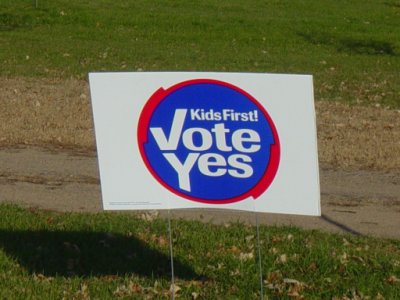
Yes, you read that right. In another sign of how municipalities must cope with the lack of community resources to ensure the necessary access of their citizens to a quality education. The mayor of Akron, Ohio
Has proposed leasing the city-owned sewage system to a private contractor for up to $200 million and using the money to finance college scholarships for Akron’s public high school graduates.
…
He said money for the scholarships would help students attend the University of Akron or a trade school in the city, and turning over the system to a contractor would include rate caps and service guarantees.
Plusquellic said the plan would address brain drain — a migration of talented students out of the city. The city’s population also has dropped 4 percent, to 207,934, since 2000 because of a decline in the manufacturing industry.
Plusquellic’s plan is a twist on programs in other U.S. cities, including Kalamazoo, Mich., that offer scholarships to students with the hope that they eventually stay. But the National Association of Student Financial Aid Administrators knows of no other program that leases a sewage system to pay for college scholarships.
Are band-aid solutions going to remain the “go to” panacea for public education in America?
Community and Schools Together (CAST) has been working to educate the public on the need to change the state finance system and support referendums that preserve and expand the good our schools do. We are eager to continue this work and help pass the referendum the Madison Metropolitan School District Board of Education approved on Monday, August 25, 2008.
“The support and interest from everyone has been great,” said Franklin and Wright parent and CAST member Thomas J. Mertz. “We’ve got a strong organization, lots of enthusiasm, and we’re ready to do everything we can to pass this referendum and move our schools beyond the painful annual cuts. Our community values education. It’s a good referendum and we are confident the community will support it.”
Community and Schools Together (CAST) strongly supports the Madison Metropolitan School District Board of Education’s decision to place a three-year recurring referendum on the November 4, 2008 ballot. This is the best way for the district to address the legislated structural deficit we will face over the next few years.
This responsible approach provides time for the MMSD and the community to engage in the strategic planning that will take our already excellent schools to the next echelon. It will also establish a solid foundation for setting future budgets, justifying future referendums, and working for state finance reform. Such a process could be easily derailed if the community and district become distracted by discussion of major reductions in programs and services. At little cost to taxpayers, the Board’s action has given our community an opportunity to enter the Superintendent Nerad era in a way that will allow us to make good use of his talents and contributions.
“If we want to look at the big picture and plan for the future, we need the certainty that a recurring referendum provides,” stressed Hamilton Middle School parent and CAST activist Jerry Eykholt.
Since 1993 the district has reduced programs and services by over $60 million, even as other costs have continued to rise. The proposed referendum will provide basic operating funds to maintain the existing programs and services in Madison’s schools. Over the last fifteen years more than $60 million of programs and services have been cut. Without a referendum the cuts will continue at ever higher levels.
“Without the referendum, the preliminary areas identified by Superintendent Nerad and his staff for further cuts would create unwarranted stresses on our students, making it much harder to provide the education they deserve,” said Deb Gilbert, a CAST member and parent of two children at Leopold.
CAST is confident that the board and administration understand this referendum simply provides the authority to exceed revenue limits and, with the community, will continue to seek additional efficiencies and limit levy amounts to that needed to ensure a sound education for Madison’s children.
“I like the partnership aspects,” said CAST Treasurer and Falk parent Jackie Woodruff. “They clearly understand that we all need to work together to make the best use of the resources the community provides.”
A three-year referendum is a responsible way to allow the community and district to engage in a strong partnership to ensure the future success of Madison schools and students while minimizing the impact on children and tax payers.
CAST is proud of the quality of Madison’s schools and what they have achieved, even as resources have been cut and the needs of our population have grown through rapidly changing demographics-evidence of the dedication and creativity of the MMSD staff and the Madison community. Quality public education is essential to maintaining the economic health and quality of life of our community.
“We need to keep our schools strong-they are at the heart of our neighborhoods and what makes Madison such a great place to raise children” said Jill Jacklitz an activist with CAST and parent at Marquette and Lapham.
CAST is a grassroots organization of parents, educators, and community members that is dedicated to educating the citizens of Madison about school funding referenda in the Madison Metropolitan School District.
If you believe quality public schools for all is an integral part of our democracy, join us in working to assure our schools have adequate resources. We look forward to sharing a positive message about the future of the MMSD. Visit www.madisoncast.org for more information or contact:Community and Schools Together, madisoncast@sbcglobal.net.
Since I am active with CAST and quoted in the statement, now would be a good time to clarify some things.
CAST is a coalition of people dedicated to working for the passage of school referenda and educating on state school finance reform. Decisions are made collectively. Individuals involved differ on many matters related to school issues, even those related to referenda and school finance reform. As a group, we do and say what the group thinks best.
I also blog here and write about what I — as an individual — think is best. What I write or say, here or elsewhere, as an individual should in no way be considered to reflect the beliefs of CAST as an organization. Anything from CAST will be clearly labeled as such. Anything else is just me on my soapbox.
This should be obvious, but I think it needed saying.
[There are three parts to this post: A news roundup, an explanation and analysis of the administrative proposal and my thoughts on why the first year of the referendum should be $6 million instead of the $5 million proposed. Although they are intertwined, the bulk of each part is presented in the order listed. — TJM]
Some clarifications on this report. Marjorie Passman is incorrectly identified as Lucy Mathiak. The “list of potential cuts” mentioned is very, very, very initial. It is a first effort to identify general areas that may be discussed for cuts. I heard more than one Board member grumble about what was in the list. Board President Arlene Silviera has promised to schedule a discussion of this list and potential cuts in general at a future date. I suggest all hold off on critiquing or complaining till that discussion takes place. We all know that $6 million to $8 million in cuts would be painful. For now, let’s just use our imagination as to where this pain would be experienced.
Some clarifications on this report. First the use of $2 million from the Fund Balance in the first year is based on an estimated $4 million growth in the Fund Balance as the 2007-08 year is closed out (more below). The “other” $2 million from the Community Services Fund (Fund 80) Fund Balance as part of the plan to minimize the tax impact, is actually a plan to decrease the Fund 80 levy by that in amount in 2009-10 and use excess money previously collected instead to fund on going Fund 80 programing.
That said, Madsen has a quote from Superintendent Dan Nerad worth citing:
We’re about two things here: one is ensuring that the needs of our kids are met to be educated well and the other is to be sensitive to taxpayers going forward.
And Hall quotes Marj Passman with a sobering reminder of what this is about:
[W]e’re desperate and we need this passed and even if it is passed we’re not adding anything back.
Supt. Nerad is calling this a partnership. So what’s the partnership and what’s the plan? The partnership is an addendum to the deal that was struck long ago when public education was established. At that time and since, our society has entrusted our children, our tax dollars and our futures to public schools with the understanding that the schools with the help of community members will educate the rising generation, create a society based on opportunity for all and be good stewards of the public funds provided for this most important work. While asking the voters for more funds via a referendum, Supt. Nerad demonstrates good faith and worthiness in two ways. First, the request is substantially less than is needed for “cost-to-continue” budgeting and there is a promise to meet these shortfalls by finding new ways to do things without sacrificing (and maybe improving) the quality of education. Second (but not unrelated), Supt. Nerad and Assistant Supt. Erik Kass have sought and found ways to minimize the impact of exceeding the revenue caps on local property tax payers. In other words, the addendum might read: “In exchange for a small increase in our revenue authority — less than 1.5% — we promise to use this increase responsibly to educate while doing our best to minimize the burden placed on local property taxpayers.”
This sounds like a pretty fair deal. I think it would be a better deal for our community if we upped the “small increase in our revenue authority” a bit.
I want to go through the details of the plan and my thoughts in three parts. First, what is (and is not) proposed for the referendum, then the ways that the costs to property taxpayers will be mitigated. Finally some words on why I think that the district should ask for more money in the first year. There will be some overlap.
The (Proposed) Referendum.
Three year, recurring.
$5 Million year one (projected gap, $8.11 million).
$4 million year two (projected gap, $4.37 million).
$4 million year three (projected gap, $4.26 million).
Recurring means that it is cumulative. The authority to exceed the revenue cap the second year will be $9 million and the third year and beyond $13 million. The advantages of a recurring referendum are two-fold: It allows for better long-term planning and it minimizes the gap and probable cuts to meet that gap in subsequent years. The disadvantage is that recurring referenda are more easily demagogued. I’m not sure why this is so, except that the words “Permanent Tax Increase” carry some emotional weight. Of course the same people who use this appeal complain about the lack of long-range planning. Consistency is rarely the strong suit of the complaining classes.
What isn’t proposed is preserving everything the way it is now. There will be cuts or reorganizations or reallocations each of the three years. They won’t be huge, they probably won’t be too divisive, but they will happen each year.
I value the fresh perspective and approaches Dan Nerad has brought. I am glad that there will be comprehensive strategic planning and that new ways of doing things will be implemented. I understand that this is being connected to asking for less than the gaps in the referendum and that is a legitimate connection.
I don’t think asking for this much less than the gaps is for the best. I think that in order for our children to realize the full benefit of contributions of the new administration we should authorize resources at least equal to a cost-to-continue budget. I’m not advocating keeping things as they are; I’m advocating reforms without cuts. I’m advocating $6 million for the first year (because of the recurring formulation, this also funds the subsequent years). This money can be used to do things like restore Ready-Set-Goals, revitalize the equity work of the district, expand funding of supplemental positions via something like the equity resource formula, fix some of the problems with class size and specials, initiate world languages in the early grades…and most importantly implement initiatives identified through the strategic planning processwith less pressure to defund existing programs.
I think that as a community we can afford this. That brings me to the tax impact parts of the plan.
Mitigating the Property Tax Impact
As presented by Dan Nerad and Erik Kass, the tax impact mitigation plans have little directly to do with the referendum itself. It is likely that most of these would be implemented even if there was no referendum. However, they are indirectly related in two ways. First, they are a demonstration of the partnership principles that Supt. Nerad has articulated; second, in very real ways they make a referendum more affordable to the local taxpayers. I want to start this part of my consideration with a some charts from the administration’s presentation.
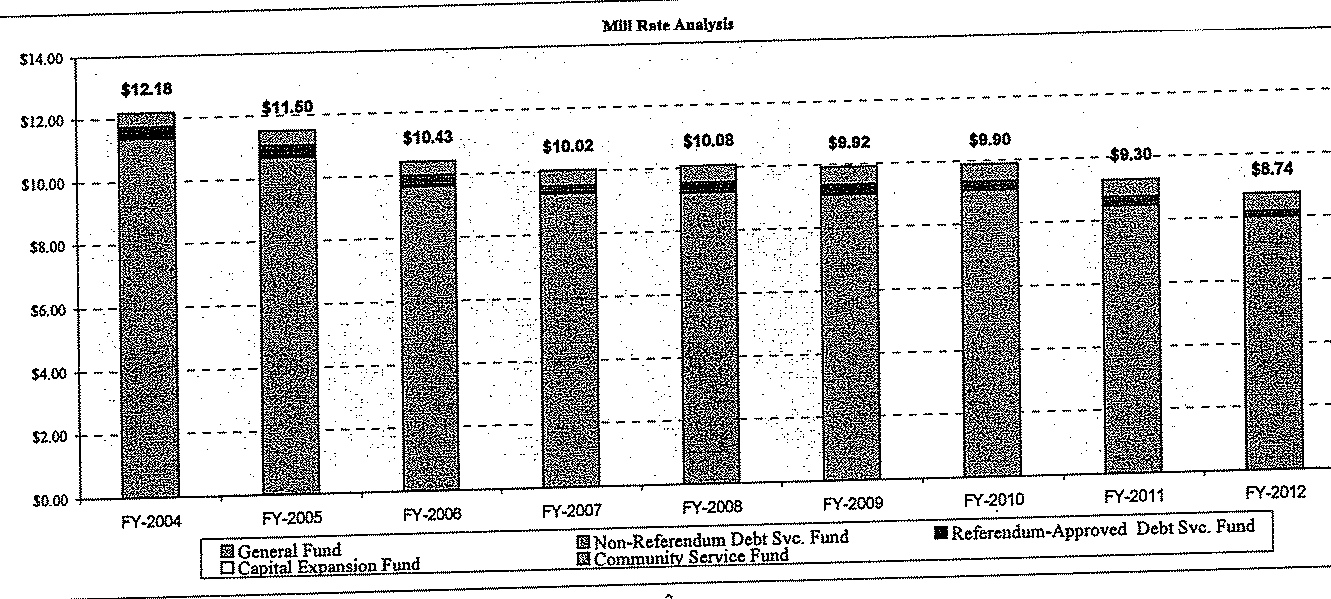
Mill Rate History and Projections without a Referendum
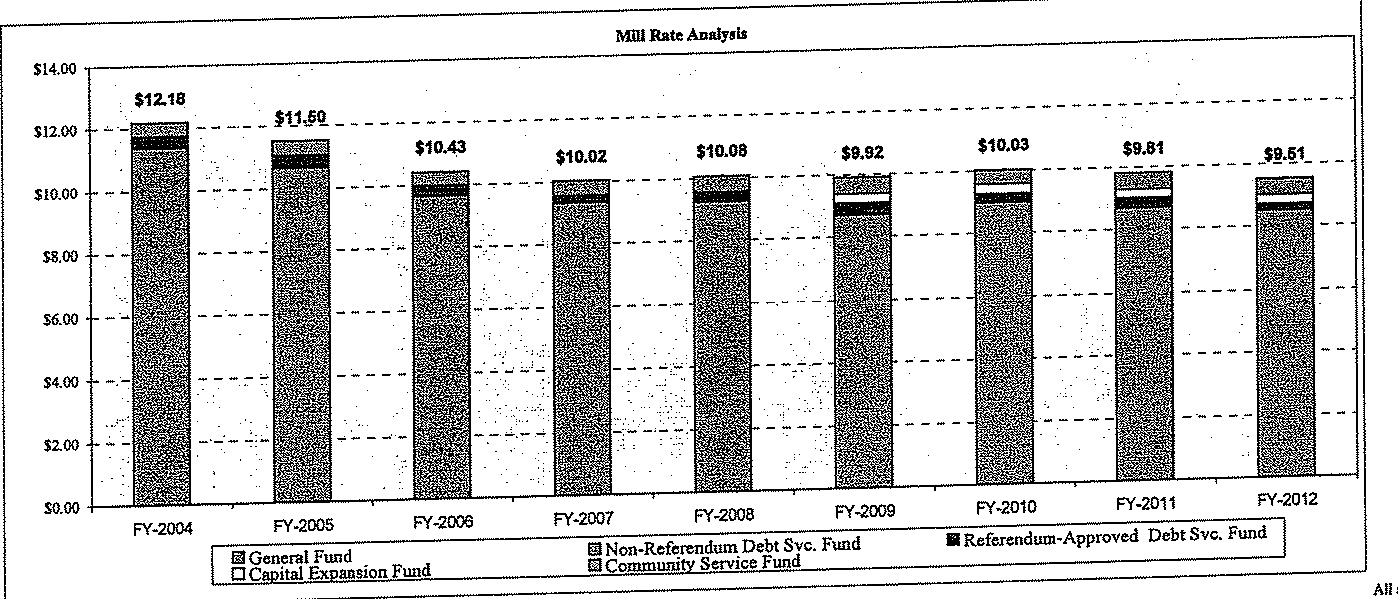
Mill Rate History and Projections With A Referendum, Other Administrative Proposals and Renewal of Maintenance Referendum.
Mill Rate History and Projections with A Referendum, Other Administrative Proposals and Renewal of Maintenance Referendum
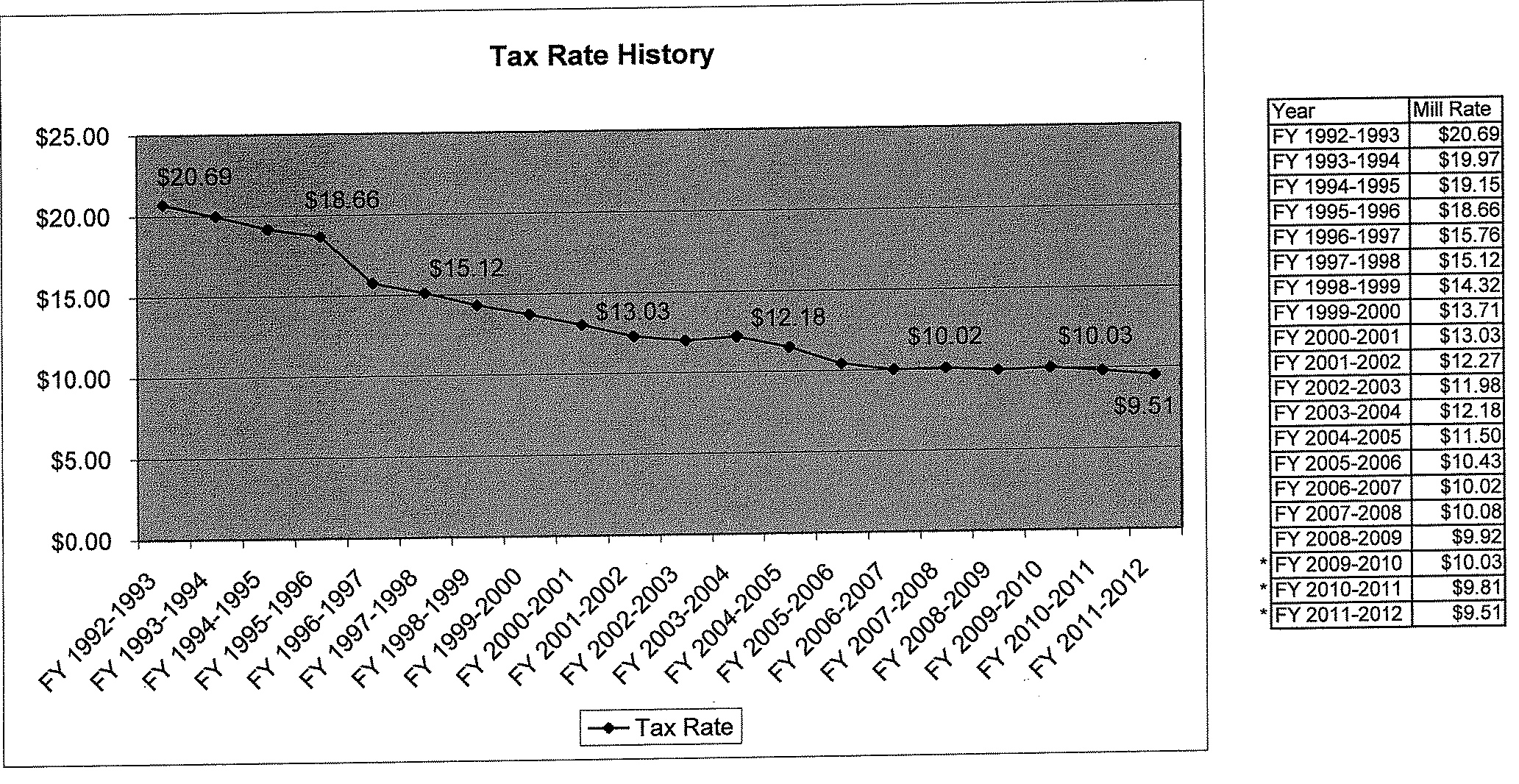
The first chart is the status quo. If there is no referendum and nothing else changes mill rates (taxes per $1,000 of property value) will resume their significant downward trend. With the exception of a very slight up-tick in 2007-8, the school mill rate has fallen steadily since 1992-3. For 2008-9, it is less than one half of what it was in 1992-3!
If there is a referendum and the proposed changes are enacted, the downward trend will also continue with the exception of another slight up-tick for 2009-10 (charts 2 and 3). The calculations I’ve seen say that for $250,000 home taxes will drop about $27.50 from the current rate in the second year and about $100.00 in the third.
This will be accomplished in four ways. First, by not seeking revenues to the amount of the projected gaps. Second, by slowing the rate of growth of the operating Fund Balance (Fund 10) and using some of the Community Service (Fund 80) Fund Balance to lower that levy without cutting programs. Third by moving money to a Capital Expansion Fund (Fund 41) which shifts the responsibility for some revenue from local taxpayers to the state (I’ll offer a more complete explanation at a later date). All of these are fiscally sound practices. The last piece is a conservative projection of 4% annual growth in the total value of property in the district.
Mitigate and Do the Right thing
I fully support all of these ideas for mitigating the tax impact, including not seeking the full gap amount. Where I differ is that I think we should seek closer to the gap and ask for $6 million in the first year. Our schools and our children are worth it.
The projections for what this will cost get very complicated. If my calculations are correct adding $1 million to the first year would produce the following mill rates:
Year 1: 13.24
Year 2: 11.54
Year 3: 10.68
The highest of these puts about where we were in 1999, when the revenue caps had been wrecking their damage for four years. By year three, mill rates would be back at 2005 levels.
I haven’t had a chance to project the tax impact on a $250,000 home for all three years (too many variables), but my initial calculation is that in the first “worst” year it would be $36.30, or about $9.00 more than what the administration proposed. For something as important as education, I think we can afford that much.
I want to leave numbers aside and talk about three things that I observed and heard today while registering my son for first grade. They are minor and they are indicative of what happens when we neglect our schools, or try to do things on the cheap.
On the entrance to the playground there is a ramp with concrete walls on either side. On one side the wall has crumbled and rebar is sticking out. The rebar is covered by empty plastic soda bottles taped on.
While on the playground, I spoke with the custodian. We talked about lots of things. My spouse asked if wood chips had been ordered (they are badly needed). He said they had, but the amount sent in the last few years has not been sufficient for all the surfaces that need covering.
We also spoke about snow removal. Apparently due to budget cuts, there are no longer removal crews assigned to specific schools (in all cases). Each snowfall brings different crews. Before this was the case, there was good communication about the particular characteristics of this school site and the crew knew where to plow and where not to, where to pile snow and where not to. Now it is random and the school custodians spend time each snowfall taking care of what was not done correctly.
A crumbling wall with dangerous metal protruding, a short load of wood chips and not staffing consistently aren’t huge things. Still they are things we should be able to afford to do right. I know we can’t afford them or many other things. I know we still have some Windows 98 computers in our schools.
What does this say about us that we haven’t cared enough to demand that this situation be fixed? What does it say about us that our school officials think that in order to get us to pass a referendum they need promise further cuts?
I’m not sure that the referendum as proposed will change any of this. It may help with some of these. It will keep things from getting (much) worse and that is very important.
I truly believe that quality public education is what creates and preserves prosperous and enjoyable communities; that public schools are the best tool we have for creating opportunities and overcoming inequality; that if we want the next generations to live in a better world our schools are the best tool we have for making that happen.
(If this passes) There won’t be another operating referendum for some time (maybe never if the state finance system gets fixed). Let’s do it right this time.
One more million in the first year and loads of possibilities open up. We can dream a little again. Wouldn’t that be great?
I’ll be working hard in support of a referendum as proposed by the administration (find out how to help by visiting Community and Schools Together), but I’d have a bigger smile on my face as I worked if the Board and the administration would askfor some more opportunities to dream.
Share your thoughts in the comments here and let the Board know what you think. Come to the Board meeting Monday, August 25 (last I heard, there will be public testimony) or write: comments@madison.k12.wi.us.
Thomas J. Mertz
[Slightly revised, 11:50 AM and 12:48 PM, 8/22/08]
On Tuesday, August 18, 2008 the voters of the Wausaukee school district will for the third time in six months vote on an operating referendum. The first two failed. This time a failed referendum will likely mean the end of the Wausaukee school district.
Advocates for school finance reform in Wisconsin often refer to the current system of funding education as a “going-out-of-business plan.” Opponents may deride this as hyperbole, but it is literally true. Wausaukee is in critical condition, many other districts are in intensive care. Even districts in no immediate danger of dissolution annually suffer through divisive program and service cuts or the pain and strain of referenda, sapping the health from the hearts of our communities.
The Peshitgo Times has again done a great job reporting on all the dissolution, referendum and budget news in Wausaukee. Most of what follows is from their most recent report.
On the dissolution front, State Superintendent of Public Instruction Elizabeth Burmaster has appointed the Boundary Appeal Board members who will decide the fate of the district. Starting in August and ending in November, the Board will hold four hearings and review information on transportation, facilities, finances and more.
If the Boundary Appeals Board decides the school should be closed, the ruling will become effective Sept. 1, 2009. Students, assets and debts of the district, along with the properties that support the school, will be allocated to neighboring school districts. Those assigned districts will be allowed, without referendum, to raise their tax levies enough to offset the costs created by the influx of new students.
The Board will continue their work regardless of the outcome of the referendum, but a successful referendum will make dissolution unlikely.
The district has a very good fact sheet posted. Here is how the Times explains the vote:
Tuesday’s referendum asks Wausaukee School District voters to allow the board to levy $675,000 over the state levy limits in school purpose property taxes each year for the next 10 years. If approved, the increase will cost the owner of a $100,000 property approximately $102 in additional taxes for each of the next three years. After three years the school building debt will be paid off, which will result in a savings of approximately $102 on a $100,000 property, bringing the levy back down to current levels. There appears to be no way to estimate tax increases that could be caused if the district is dissolved and reallocated.
Like many in the state, district officials and others in the community are also working to fix the state finance system so that others don’t have to go through this. District Administrator Jan Dooley, along with officials from neighboring districts recently met with representatives of Marinette County Association for Business and Industry to discuss school funding. On October 6 and 7, in conjunction with the Northwoods Summit Dooley will join other educators and business people to talk about the need for school finance reform. As Dooley noted, this is something that everyone needs to get involved in: “As the school goes, so goes the community.”
For those who think that the school funding has not hurt the quality of education in our state, some numbers in Wausaukee might serve as a reality check.
During the 2007-2008 school year the union support staff was reduced by 3.5 full time equivalent positions. Teaching staff for the 2008-2009 school year will be reduced from last year by 8.245 full time equivalent positions. The 38.875 FTE teaching positions is down from slightly over 56 positions in 2000-2001. In addition, teachers have accepted a two-year wage freeze and agreed to pay 10 percent of their health insurance costs. New hires will pay 20 percent of their insurance costs.
That’s a 17.5% reduction in teachers in one year and a 30% decrease since 2000-2001! Also note that even with pay freezes, health care cost reductions and other concessions that very few unions or individuals would agree to (and none are legally obligated to make) , the district still cannot balance their books without a referendum.
The cut that probably will resonate most with Madisonians is the elimination of the SAGE class size reductions. I’ve written before about SAGE as an underfunded program and the choices this forces districts — including Madison — to make. In Wausaukee they decided that they could not afford to keep their partially funded small classes for the early grades. DPI has extended the deadline in case they reconsider, but that does not appear likely.
The board decided to end the program because added cost exceeded the amount of added state aid, Dooley said, but that could change if there would be a large influx of students eligible for free and reduced lunches when school opens in fall. However, restoring the program even if that happened would mean they would either need to double up on some of their special classes or hire additional staff, and they could end up with three teachers to be laid off the following year. Despite the potential problems, she declared, “I want to walk with this.”
Research on the benefits of small classes for the early grades has met the test time and time again. If you want “research-based,” “data-driven” best practices, this is about as good as it gets. Unfortunately, the way the SAGE program and school finance in Wisconsin are set up this is increasingly becoming a practice that districts cannot afford to implement or keep. Sad. Shameful.
I hope that the referendum on Tuesday passes, that the district remains intact and that our elected officials are paying attention to what is happening with our schools in Wausaukee and around the state.
From Lakeview Elementary (MMSD) teacher Susan J. Hobart in The ProgressiveMagazine.
One Teacher’s Cry: Why I Hate No Child Left Behind
By Susan J. Hobart, August 2008 Issue
I’m a teacher. I’ve taught elementary school for eleven years. I’ve always told people, “I have the best job in the world.” I crafted curriculum that made students think, and they had fun while learning. At the end of the day, I felt energized. Today, more often than not, I feel demoralized.
While I still connect my lesson plans to students’ lives and work to make it real, this no longer is my sole focus. Today I have a new nickname: testbuster. Singing to the tune of “Ghostbusters,” I teach test-taking strategies similar to those taught in Stanley Kaplan prep courses for the SAT. I spend an inordinate amount of time showing students how to “bubble up,” the term for darkening those little circles that accompany multiple choice questions on standardized tests.
I am told these are invaluable skills to have.
I am told if we do a good job, our students will do well.
I am told that our district does not teach to the test.
I am told that the time we are spending preparing for and administering the tests, analyzing the results, and attending in-services to help our children become proficient on this annual measure of success will pay off by reducing the academic achievement gap between our white children and our children of color.
I am told a lot of things.
But what I know is that I’m not the teacher I used to be. And it takes a toll. I used to be the one who raved about my classroom, even after a long week. Pollyanna, people called me. Today, when I speak with former colleagues, they are amazed at the cynicism creeping into my voice.
What has changed?
No Child Left Behind is certainly a big part of the problem. The children I test are from a wide variety of abilities and backgrounds. Whether they have a cognitive disability, speak entry-level English, or have speech or language delays, everyone takes the same test and the results are posted. Special education students may have some accommodations, but they take the same test and are expected to perform at the same level as general education students. Students new to this country or with a native language other than English must also take the same test and are expected to perform at the same level as children whose native language is English. Picture yourself taking a five-day test in French after moving to Paris last year.
No Child Left Behind is one size fits all. But any experienced teacher knows how warped a yardstick that is.
I spent yesterday in a meeting discussing this year’s standardized test results. Our team was feeling less than optimistic in spite of additional targeted funds made available to our students who are low income or who perform poorly on such tests.
As an educator, I know these tests are only one measure, one snapshot, of student achievement. Unfortunately, they are the make-or-break assessment that determines our status with the Department of Education.
They are the numbers that are published in the paper.
They are the scores that homebuyers look at when deciding if they should move into a neighborhood.
They are the numbers that are pulled out and held over us, as more and greater rigidity enters the curriculum.
I was recently told we cannot buddy up with a first-grade class during our core literacy time. It does not fit the definition of core literacy, I was told. Reading with younger children has been a boon to literacy improvement for my struggling readers and my new English-speaking students. Now I must throw this tool away?
In an increasingly diverse public school setting, there is not one educational pedagogy that fits all students. We study and discuss differentiated curriculum, modify teaching strategies, and set “just right reading levels” to scaffold student learning. But No Child Left Behind doesn’t care about that. It takes no note of where they started or how much they may have progressed.
As a teacher, I measure progress and achievement for my students on a daily basis. I set the bar high, expecting a lot.
I don’t argue with the importance of assessment; it informs my instruction for each child.
I don’t argue with the importance of accountability; I believe in it strongly—for myself and my students.
I have empathy for our administrators who have to stand up and be told that we are “challenged schools.” And I have empathy for our administrators who have to turn around and drill it into our teacher heads, telling us we must do things “this” way to get results. I feel for them. They are judged on the numbers, as well.
No Child Left Behind is a symptom of a larger problem: the attack on public education itself. Like the school choice effort, which uses public funds to finance private schools and cherry-pick the best students, No Child Left Behind is designed to punish public schools and to demonstrate that private is best.
But I don’t think we’ve turned a corner that we can’t come back from. Public education has been a dynamic vehicle in our country since its inception. We must grapple with maintaining this progressive institution. Policymakers and educators know that education holds out hope as the great equalizer in this country. It can inspire and propel a student, a family, a community.
The state where I teach has a large academic achievement gap for African American and low income children. That is unacceptable. Spending time, money, energy on testing everyone with a “one size fits all test” will not eliminate or reduce that gap.
Instead, we need teacher-led professional development and more local control of school budgets and policymaking. Beyond that, we need to address the economic and social issues many children face, instead of punishing the schools that are trying to do right by these students.
We’ve got things backwards today. Children should be in the front seat, not the testing companies. And teachers should be rewarded for teaching, not for being Stanley Kaplan tutors.
Ten years ago, I taught a student named Cayla. A couple of months ago, I got a note from her, one of those things that teachers thrive on.
“Ms. Hobart was different than other teachers, in a good way,” she wrote. “We didn’t learn just from a textbook; we experienced the topics by ‘jumping into the textbook.’ We got to construct a rainforest in our classroom, have a fancy lunch on the Queen Elizabeth II, and go on a safari through Africa. What I learned ten years ago still sticks with me today. When I become a teacher, I hope to inspire my students as much as she inspired hers.”
Last week, I received a call from Niecy, another student from that class ten years ago. She was calling from southern Illinois to tell me she was graduating from high school this month and had just found out that she has won a scholarship to a college in Indiana. I was ecstatic in my happiness for her. We laughed, and I told her I was looking at a photo of her on my wall, building a pyramid out of paper bricks with her classmates.
I also had a recent conversation with Manuel in a grocery parking lot. He reminded me of my promise eight years ago to attend his high school graduation. I plan to be there.
Cayla and Niecy and Manuel are three of the reasons I teach. They are the reasons that some days this still feels like a passion and not a job.
When I pick up the broom at the end of the day to sweep my class due to budget cuts, I remember Cayla.
When I drive home demoralized after another meeting where our success is dissected with a knife manufactured in Texas, I remember Niecy.
When another new program that is going to solve the reading disparity, resulting in higher test scores, is introduced on top of another new program that was supposed to result in the same thing, I remember Manuel.
They are the fires that fuel my passion. They are the lifeboats that help me ride this current wave in education.
Eight or ten years from now, I want other former students to contact me and tell me a success story from their lives. I don’t want to be remembered as the teacher who taught them how to sing “Testbusters” or to “bubble up.” I want to be remembered as a teacher who inspired them to learn.
Susan J. Hobart, M.S. Ed., is a National Board Certified Teacher living in the Midwest.
Stories in both newspapers and on the radio and television, another presentation to the Board of Education, referendum talk everywhere.
In the State Journal Andy Hall set the table with a report over the weekend and followed up with a story on Monday. Tamara Madsen of the Cap Times had the story on Tuesday. With the exception of Johnny Winston Jr. — who Andy Hall quotes as saying ” “Gotta have it…We can’t wait for the state to help us out” — all the other Board Members seem to be playing things close to the vest (to one degree or another). I think Johnny Winston Jr, is right. The dollar figure might not be settled and the case has to be taken to the people, but as Board Members who have extensive knowledge of the the district’s finances it should be clear to one and all that some operating referendum is the right thing to do. The longer it takes them to come out and say that, the less time we all have to convince those who don’t know as much about the situation and the harder that job becomes. Let’s move beyond the “if” and get to the “how” the “how much” and the “for what.”
The Monday, August 4, 2008 Madison Board of Education meeting was mostly devoted to further presentations by Supt. Dan Nerad and Eric Kass on the past, present and future. The materials from these presentations and information on the next week’s public forums have been posted on the MMSD site under the heading “Current Financial Condition.” I’m going to highlight some of the things there.
The “Current Options to Address Fiscal Situation” is the “master narrative document,” with the others mostly expanding on things outlined there. It gives the big story, and the details are in the accompanying documents. It moves from the state finance system, to what Madison has done in the way of savings and cuts, to the possibilities of further cuts and savings and referendum options. One thing I liked is that in this document (and the one from the previous week) Supt. Nerad began with an introductory quote from the Vincent v. Voight school finance decision:
Wisconsin students have a fundamental right to an equal opportunity for a sound basic education. An equal opportunity for a sound basic education is one that will equip students for their roles as citizens and enable them to succeed economically and personally.
A not-so-subtle reminder that that school finance in this state violates the spirit and maybe the letter of the law.
The “Effects of Reduction” is a partial assessment of the impact that previous program and service cuts have had on the education of our children and the functioning of the district. More detailed budget line listings are in the Historical Budget Reductions 1993-2008 by Category and Historical Budget Reductions 1993-2008 documents. As a friend pointed out in an email to me today many “important existing and proven successful programs and personnel” have been cut over the years and that as we talk about a referendum it makes sense to look toward not only preserving what we have, but also to restoring what we have given up (I’d add expanding in new directions too). The class and a half arrangements for specials and the general loss of locally funded class size reduction is a recent cut that appears to be putting a strain on teachers and students. Three other things really jumped out at me from this document. First is the “Ready, Set Goals” conferences. Every teacher and parent I’ve talked to found these valuable and at $84,000 it seems like something we should be able to afford. The second is the loss of 32 FTE positions in Student Services and Alternative Programs (psychologists, social workers, nurses…). Last, I’d note the cuts of 157 FTE (teachers and SEAs in Special Education).
The “Effects” document also addresses the gutting of the work in Parent, Community and Race Relations. I knew this had happened, but it took going through the line-by-line histories to appreciate how the district’s once concerted effort has eroded to almost nothing.
1997-98 Eliminate Parenting Classes.
1997-98 Eliminate Diversity Advocacy Positions.
1998-99 Eliminate Alternatives to Suspensions.
2000-01 $10,000 cut to “Staff and Student Equity.”
2001-02 Eliminate Two Minority Student Achievement support teachers.
2001-02 Eliminate clerical position in Race Relations.
2001-02 Project Bootstrap, Centro Hispano and Urban League Partnerships cut (moved to Fund 80?).
2002-03 Community Partnerships Coordinator moved to Fund 80.
2002-03 Parent Community Response Unit funding reduced $85,000.
2004-05 Race Relations Coordinator of Parent Relations Eliminated.
2004-05 .5 FTE Parent Community Relations Response Teacher cut.
2005-06 Eliminate Parent Community Response Department.
2006-07 Cut of $45,131 in “Race Relations – Supplies and Materials.”
2006-07 Eliminate Race Relations Special Assistant Supt.
2006-07 Cut $45,254 in “Minority Achievement Supplies and Materials.”
Keep in mind that this all happened at a time when our district was growing more diverse. I’m not going to defend every race or community relations program that has been cut, but I do think that this is an area where we should consider putting more resources, not fewer.
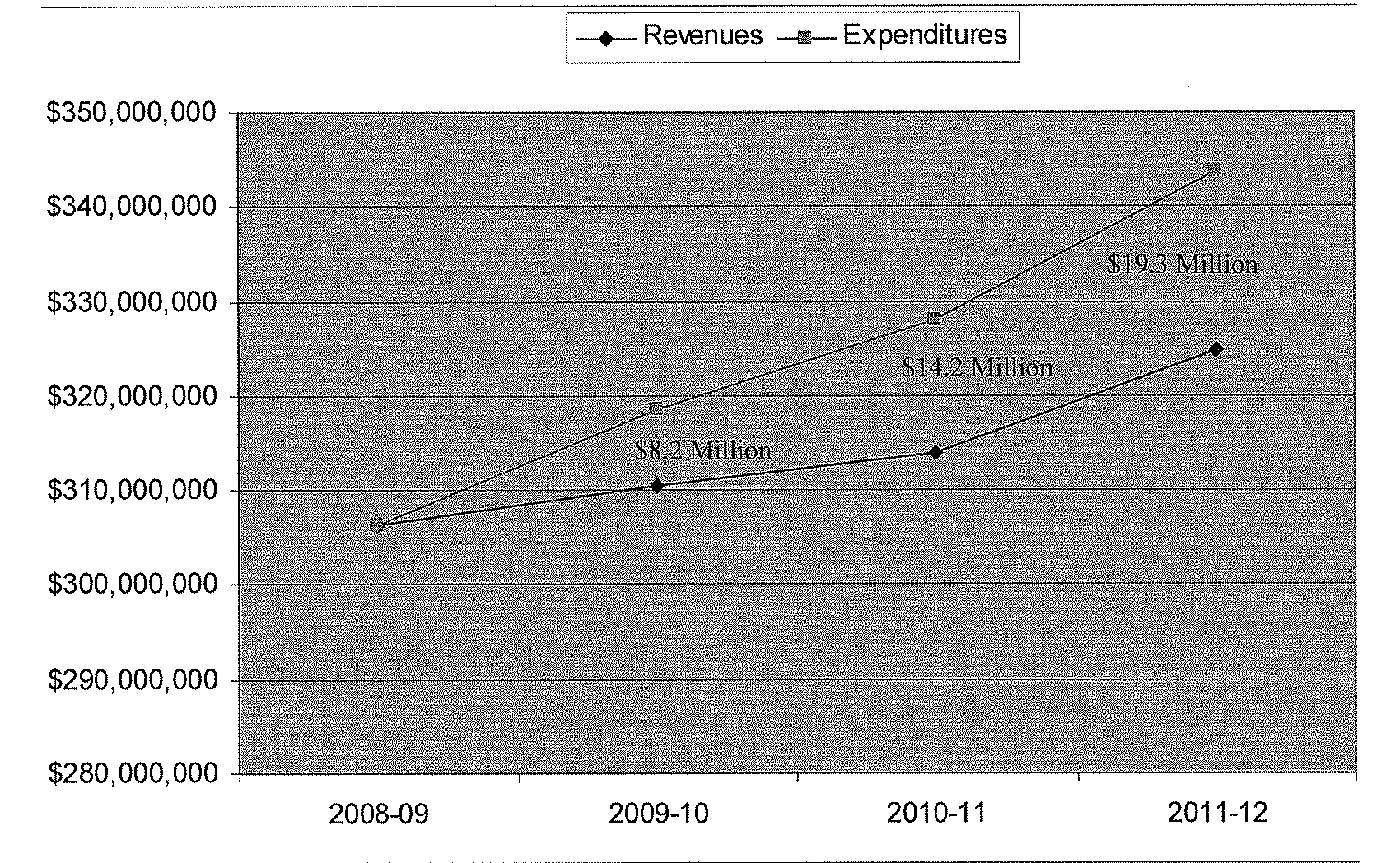
Off that soap box for now. One more item I want to highlight from the presentation materials is the “Examples of Efficiencies.” Art Rainwater used to say that the first couple of years under the revenue caps actually helped the district figure out how to do things better and these examples in areas like transportation and energy conservation show that this has continued. Supt. Nerad may find other new efficiencies, but we can’t cover the $8.2 million and growing gap through efficiencies.
From "Current Options to Address Fiscal Situation," MMSD.
One item listed is the much maligned Lawson Software system, which according to the current figure (as revised in the “Current Options” document) has led to $700,000 in annual staffing savings. It is also worth pointing out that a December 2007 article in the American School Board Journal praised the cooperation among area districts in purchasing and implementing the system and noted that the approach taken reduced both short and long term costs. I’m no expert on business operation software for school systems, but I do know that the ASBJ is a reliable source and I trust them more than I trust our local ranting and raving radio talk show host (listen here as Lucy Mathiak does her best to get a word in).
As families across our community begin preparations for the 2008-09 school year, the Board of Education is going out into the community to discuss the financial status of the district.
Two public forums are scheduled:
Tuesday, August 12at 6 p.m. in the WarnerParkCommunity Center, 1625 Northport Drive, and
Thursday, August 14at 6 p.m. in the JamesMadisonMemorialHigh School Auditorium, 201 S. Gammon Rd.
The forums will provide an overview of the district’s financial situation and a discussion of the Board’s options, including going to referendum this November.
The audience will be divided into small groups depending on the number of people attending. The small groups will be facilitated by members of the Management Team and a Board member will be assigned to each group. This will provide an opportunity for questions and discussion.
Key questions that will be asked each small group include:
Is there any additional information you need regarding the District’s financial situation?
What are your reactions to the options the Board is considering?
Are there other ideas you have to address the District’s current financial situation?
At the end of the evening, there will be a large group share-out of information from each smaller group.Notes from each group will be organized and posted on the website.
We encourage you to attend, so you are better informed about the fiscal issues confronting the school district. Please feel free to pass this information on to others.
The MMSD Board of Education held their first discussion of a possible referendum at their Monday, July 28, 2008 meeting. Most of the right and expected things were said (more below, video should be up here soon).
What stuck with me from the meeting was something Marj Passman said. I’ve used part of her statement as the title of this post.
“We’ve given up on dreaming…the dreams that keep you going.”
The topic was the toll that the pressures from the state school finance system has taken on our district and how a referendum might help. There was much talk at other points in the meeting of wanting to avoid both a comparative discussion of potential cuts and belaboring past cuts. Ms Passman spoke to some of this, but she did something much more important; she reminded us that endless cycles of cuts have taken away opportunities to think about and work toward the best possible public schools. It made me think of the Langston Hughes poem, “A Dream Deferred.” As Marj said, we need these dreams to keep us going.
This is important in so many ways.
Struggling to do more with less without dreams or hope is demoralizing. As teachers and staff and the administration and the Board lose track of their dreams and hope, this hopelessness is inevitably communicated to our students. That’s exactly the wrong lesson to be teaching.
As the structure and dollar amounts for a referendum discussed, I hope all keep what Ms. Passman said in mind. Some will oppose a referendum of any size and many others will look to do a referendum on the cheap, partially in anticipation of planning and restructuring that Dan Nerad is already laying the groundwork for. This is the wrong attitude. We need to give Supt. Nerad some room to work; we need to finance our schools so that not every new initiative requires scaling back some existing program; we need to be able to try to make some of our dreams a reality.
I’ve got other observations about the discussion, but first some “news.”
The biggest news is that new Asst. Superintendent for Business Services, Erik Kass, in reviewing the assumptions for budget projections, “found” a $1 million “error.” That places the 2009-10 budget gap at $8.2 million, instead of $9.2 million. Mr. Kass will be doing a complete review of the projections prior to the final decision on a referendum. As Supt. Nerad pointed out, there may be no more errors or if there are additional errors found they may lead to increases or decreases in the projected budget shortfall.
The other important news concerns the schedule for decision making. The almost unspoken assumption everyone is operating under is that there will be an operating referendum on the ballot on November 4, 2008. For that to happen, the Board needs to have referendum language to the clerk’s office by the start of September. This means a pretty tight schedule for all discussions, forums, deliberations and votes. Things may change, but here is my understanding of the next steps (with some comments).
At this meeting I think more of the nitty-gritty of a a referendum will be discussed. This may include alternate ways to look at budget history and projections (Board members had some specific requests), a projected schedule through the November vote with some initial talk of communication planning (another Board request), recurring vs. nonrecurring and other matters of type and form, maybe a presentation of some of the potential cuts or changes if there is no referendum or if a referendum fails, the scheduling of public forums prior to a referendum vote and more.
This looks to be a continuation and expansion of the discussions from the August 4 meeting.
Week of August 11, Public Forums
This is the tentative time set aside to hear from the public. There will likely be two forums, one on the East Side and one on the West Side. In order to be as friendly as possible, the administration is seeking to schedule these at non-MMSD sites. It was heartening to hear the Board and Supt. Nerad seeking ways to involve as many people and groups as possible.
We will have 2 information/public input sessions for the community to provide feedback on our options. These are scheduled for:
* Tuesday, August 12, 6:00-8:00pm, Warner Park Community Center
* Thursday, August 14, 6:00-8:00pm, Memorial High School
The discussion of the forums also touched on what the Board does and does not want from the forums, with a general agreement that the comparative cut talk isn’t very helpful. Elected officials seeking to shape the kind of input they get from the public is a tricky issue. On one hand, it is very reasonable for them to first figure out what will be of use to them and then look at ways to get this type of information. On the other hand, on things like referenda (and maybe everything else), it is important that officials be exposed to the full and free range of opinions and ideas. Whatever attempts are made to shape this process, experience tells me that people in our district will do and say whatever they want.
Johnny Winston (and maybe others) anticipated the possibility that the Board may not be ready to make a final decision on August 18, that they may want more time to think and hear from constituents. If this is the case, the vote will be on August 25.
The timing on all this is tough. Some of this has to do with the change in the Superintendency. I think it would have been better if the discussions and public input had started months ago, maybe as long ago as last Fall. It didn’t and we have to make the best of it. The Board should also learn from this and do better in anticipating and preparing to make major decisions on things like referenda. I think that in the long run the strategic planning process that Supt. Nerad is initiating will take care of this, but there may be things that will come up before that process is far enough a long to deal with them (Leopold crowding comes to mind).
Supt. Nerad and many Board members correctly identified the state funding system as the root cause and seem committed to upping the effort to work for change.
My last thoughts are two-fold. First, I urge everyone to use the available opportunities for public input and to use them to share your dreams for the schools. Second, the (pre)campaign work has begun, contact Communities and Schools Together (CAST) to get involved.
There measures where you don’t want to be #1; Fetal Alcohol Syndrome (FASD) is certainly one of these. Unfortunately, the Oshkosh Northwestern reports that Wisconsin leads the nation in reported drinking among women of childbearing age and likely leads in FASD (hat tip to Madison NORML).
Dr. Georgiana Wilton, an associate scientist at the University of Wisconsin Department of Family Medicine in Madison, believes it’s likely the state leads the nation in that category, though such data is not kept by every state.
Prenatal alcohol exposure is a leading cause of mental retardation and learning disabilities nationwide. By that standard, Wisconsin babies are at greatest risk.
Wisconsin leads the nation in reported drinking among women of childbearing age. The state has the highest prevalence of frequent alcohol consumption among women ages 18 to 44, according to a 2006 risk-factor survey by the Centers for Disease Control and Prevention….
Exposure to alcohol puts a fetus at risk of a cluster of preventable developmental problems known collectively as fetal alcohol syndrome or the related fetal alcohol spectrum disorders — a term describing the range of effects that can occur in any individual whose mother drank alcohol during pregnancy.
Brain damage, facial deformities, growth deficits, heart, liver and kidney defects characterize fetal alcohol syndrome, as do difficulties with vision, hearing, learning, attention, memory and problem solving.
An individual with fetal alcohol syndrome can incur a lifetime health cost of more than $860,000, although the National Organization on Fetal Alcohol Syndrome says costs can be as high as $4.2 million. It costs the U.S. $5.4 billion annually in direct and indirect costs. Direct costs are estimated at $3.9 billion annually, which includes healthcare costs as well as costs associated with social services and incarceration.
Sixty percent of individuals with FASD will end up in an institution (mental health facility or prison). And it is estimated that almost 70 percent of the children in foster care are affected by prenatal alcohol exposure in varying degrees.
Not mentioned are the increased educational costs associated with FASD. Like lead paint exposure, this is preventable factor which adversely effects the future prospects of children, costs our schools time and money and contributes to inequality. It is also another example of why schools alone are not sufficient to address the needs of our children (and their parents) and why things like the “Broader, Bolder Approach to Education” make sense.
Excerpts from the recent New York Times article, “The Next Kind of Integration” (with links and emphases added).
In the last 40 years, Coleman’s findings, known informally as the Coleman Report, have been confirmed again and again. Most recently, in a 2006 study, Douglas Harris, an economist at the University of Wisconsin, found that when more than half the students were low-income, only 1.1 percent of schools consistently performed at a “high” level (defined as two years of scores in the top third of the U.S. Department of Education’s national achievement database in two grades and in two subjects: English and math). By contrast, 24.2 percent of schools that are majority middle-class met Harris’s standard.
There are, of course, determined urban educators who have proved that select schools filled with poor and minority students can thrive — in the right circumstances, with the right teachers and programs. But consistently good education at schools with such student bodies remains the rare exception. The powerful effect of the socioeconomic makeup of a student body on academic achievement has become “one of the most consistent findings in research on education,” Gary Orfield, a U.C.L.A. education professor, and Susan Eaton, a research director at Harvard Law, wrote in their 1996 book, “Dismantling Desegregation.”
Most researchers think that this result is brought about by the advantages that middle-class students bring with them. Richard Kahlenberg of the Century Foundation lays them out in his 2001 book, “All Together Now”: more high-level classes, more parent volunteers and peers who on average have twice the vocabulary and half the behavioral problems of poor students. And, especially, more good teachers. Harris, the economist, says that poor minority students still don’t have comparable access to effective teachers, measured by preparation and experience. The question, then, is whether a plan that integrates a district by class as well as by race will help win for all its schools the kind of teaching that tends to be linked to achievement. “The evidence indicates that it would,” Harris says.
Ronald Ferguson, an economist at the Kennedy School of Government at Harvard, is less persuaded. His research highlights the nagging persistence of a racial achievement gap in well-off suburbs. “What happens with the achievement gap in a place like Louisville,” he says, “will depend on how vigilant their leaders are to make sure high-quality instruction is delivered across the board.” Such teaching is more likely in a school with a critical mass of middle-class parents, he concedes. But he stresses that to reap the benefits, poor kids have to be evenly distributed among classrooms and not just grouped together in the lowest tracks. “To the degree a district takes the kids who struggle the most academically and spreads them across different classrooms, they’re making teachers’ work more doable,” he says. “And that may be the biggest effect.”
Whatever the exact answer, there is some support for the view that schools can handle a substantial fraction of poor students without sacrificing performance. In Wake County, test scores of middle-class students have risen since instituting income-based integration. Additionally, Kahlenberg points out that middle-class students are generally less influenced by a school’s environment because they tend to learn more at home, and that the achievement of white students has not declined in specific schools that experienced racial (and thus some class) desegregation.
Would schools need to track students by ability to protect middle-class students, who are more often higher-achieving than their low-income peers? Perhaps not. In a 2006 longitudinal study of an accelerated middle-school math program in Nassau County N.Y., which grouped students heterogeneously, the authors found that students at all achievement levels, as well as minority and low-income students, were more likely than the students in tracked classes to take advanced math in high school. In addition, the kids who came into the program as math whizzes performed as well as other top-achievers in homogenous classes.
This study underscores Ronald Ferguson’s point about the value of seating students of different backgrounds and abilities in class together, as opposed to tracking them. Still, it’s worth noting that less than 15 percent of the students studied in Nassau County were low-income. So the math study doesn’t tell us what happens to the high-achieving middle-class kids when close to half of their classmates aren’t as well off.
I’ve posted about the missed opportunities for Madison to be a leader in this new integration movements many times. Two examples are linked below. I do want to make clear — as I wrote in one of those posts — I believe that “[f]or the most part MMSD has done a very good, if relatively quiet and indirect job of addressing [all kinds of] diversity. ” I’m still asking for more.
It must be that time of year, or more likely the “going out of business” state finance system continuing to take its toll on districts in Wisconsin. Five more districts have placed referenda Fall ballots. That brings the total to ten by my count, eight for operation and maintenance and two to issue debt for, renovating and upgrades.
The district could wait to ask residents to pay for new projects, but [Board President Randy] Gracyalny said gambling on the economy improving and prices going down isn’t a move he wants to make.
“Where will we be three years from now?” he asked. “I don’t know. No one knows. We know where we are now.
“Yeah, we might not absolutely need this, this year. But if we put it off too long, it’s going to get to that point of making some tough cuts.”
It is a smart approach and I wish them the best (more here).
In the districts seeking to pay for operations and maintenance it is the usual recipe of costs rising faster than allowed revenues, with added seasoning of declining enrollments for some.
Taking them in chronological order, Wausaukee will vote on August 19th. This is the “do or (probably) die” referendum. You can read lots more about Wausaukee in previous posts. Sadly, our local media has had nothing to say about this. Nothing. Even the Chicago Tribune picked up the story, but not our Madison newsies. The district has posted a “Fact Sheet” on the referendum and — as they have to — are moving ahead with the dissolution planning. The linked story from the Peshtigo Times is worth reading, especially the lengthy statement Board member Dave Kipp offered before voting against dissolution. Rather than excerpt that, I offer excerpts from a letter to the editor by Gert Wilson, “Retired Teacher”:
Democracy has diminished and that is sad because children learn from adults and what they see is disrespect for others’ opinions and bossy individuals who control meetings to delay or stop procedures. Of course, all people are not guilty of such actions.
We have seen this also at Coleman, Crivitz and Wausaukee in regard to education. The Times has been overwhelmed with nasty discussions, critical items in the paper and parents discussing issues in irate voices along with school boards. As usual, the students pay the price. They probably will, if Wausaukee folds and students have to ride to Crivitz. When will they eat, sleep and do school work? (emphasis added)
Amberg, a few years ago, opted to join the Wausaukee School District. Was that an error? Now it is possible these student will ride to Crivitz. Teachers, school boards and parents, are you happy about all your adult complications? I give credit to all who try to make it right.
Small towns cannot survive peaceably when all this divides friends and parents and teaches some children to rebel, be bossy, be bullies, show disrespect and have drinking problems.
Neillsville has been experiencing declining enrollment at a rate of 30 or more students a year and started out as a low spending district in 1993 when the revenue caps were put in place. This is a double whammy. District spending levels are still based on what they spent over 15 years ago; because the caps are set on per member basis, declining enrollment –especially in small districts — makes it increasingly hard to cover fixed costs such as heating and transportation and almost impossible to pay for diverse offerings that larger districts take for granted. As Superintendent John Gair said: “”We’re at the point now where departments are made up of one person in some cases. If we reduce (spending) any more, we’re going to lose programs for kids.” To meet these challenges, Neilsville is asking for a five-year, $300,000 a year increase in the amount of revenue they are allowed to collect.
According to District Administrator Jeff Holmes, Montello is one year away from joining Wausaukee in dissolution (or exploring consolidation). Last September two referenda were defeated; one operating and one to borrow for things like resurfacing the parking lot and replacing air conditioning. They cut for administrators last year and have not replaced retiring teachers. This time they are going to ask for a two-year non recurring $950,000 increase in their revenue limits. If it passes, two years isn’t very long. Unless the Governor and the Legislators do something quick, they will have to go back to the voters again.
Lafarge, Mercer, Seneca, and Pittsville all have November 4 referenda scheduled.
Approve the new referendum to keep the school open.
Close the school and dissolve the district.
Consolidate with another district.
“Dissolving” was also mentioned. They are asking for four-year, $350,000 per year revenue cap relief.
Seneca is another small enrollment, rural district with declining enrollment. I’ve described above what this does to the ability to give students the education they deserve, the Institute for Wisconsin’s Future’s Atlas of School Finance goes into more detail. They are asking for $800,000 a year on a recurring basis.
Pittsville covers 440 square miles and serves 686 students. Wrap you mind around that and you will understand that districts like this are essential (consolidate into a district that serves 1,300 students spread over 1,000 square miles?) and do not enjoy the economies that larger, more compact districts have. Because of these these issues and projected declining enrollment, the plan in Pittsville is to decrease staff even if the three-year $175,000 nonrecurring referendum passes.
These posts are a lot of work, but they are also rewarding. I learn about the districts in Wisconsin, the good they are doing, their hopes and dreams. I urge you to visit a few of the district web sites linked here; look at the pictures, read the mission statements, find things like Pittsville’s “Why enroll your child at Pittsville?” and sense the pride and dedication. You will find it rewarding too.
Why can’t we put in place a way of investing in our children’s future that makes those words an accurate boast? Why not Governor Doyle? Why not Senators and Assembly members? Why not?
Take the five minutes to click the links and ask them. Maybe if enough of us do, something will change.