Category Archives: Take Action

A Message to Gov. Doyle (updated)

The Wisconsin Assembly joined the Senate last night in passing a budget repair bill. In the Assembly, the Madison delegation was split. Governor Doyle has promised swift action, including some vetoes. Some democrats are saying they will vote to override (some?, all?) vetoes.

The bill is not great for schools. One good thing is the measure closing the “Wal-Mart Loophole.” If we are going to move toward better school funding, fairer tax policies have to part of the answer. Not so great is shifting $125 million from state aids to local school taxes. This will make passing referenda more difficult.

Madison Superintendent Art Rainwater sent a message to Governor Doyle about another bad provision, this one further limits phase in funding for school districts wishing to start 4 year-old kindergarten programs.

May 15, 2008

Governor Jim Doyle
115 East – State Capitol
Madison, WI 53702

Dear Governor Doyle,

I am requesting that you use your partial veto powers to improve the unnecessarily restrictive 4-year old kindergarten language contained in the budget repair bill.

The provision allows for a 5-year phase-in of 4K programs only for school districts that are operating a 4K program during the 2007-08 school year. This language would only benefit a handful of school districts. Allowing all school districts to phase-in 4K programs would assist districts, such as Madison, in potentially moving forward with 4K programs and assist your laudable goal of expanded early childhood opportunities for our state’s children.

Madison Schools has worked with local child care providers to lay the groundwork for a 4K program, but is substantially stymied by funding problems. The inequity in K4 funding should be fixed in the 2009-2011 biennial budget. It is fundamentally wrong for a Milwaukee voucher school to be able to start a 4K program and September and receive the full state reimbursement by the following June – public schools should have the same opportunity.

Please veto the 4K language to allow all school districts the opportunity to phase in a 4K program over a 5-year period. Thank you for your steadfast support of K-12 public education.

Sincerely,

Art Rainwater
Superintendent

The consensus in Madison is growing that we need need to do this in the very near future. If this measure goes through, it will be nearly impossible.

If you believe that we should establish 4k, now is the time to join Superintendent Rainwater in contacting the Governor and our legislative delegation.

Update:

Doyle issued his veto message.  He did not go along with the legislature on the school aid payments, but he did OK the limit on 4K phase in funding.  This is not good news for the future of 4K in Madison and the state.

Thomas J. Mertz

Leave a comment

Filed under "education finance", AMPS, Budget, education, finance, Local News, Referenda, School Finance, Take Action

Honoring Carol Carstensen

School Board’s Carstensen gets fond farewell

Samara Kalk Derby (Capital Times)— 5/15/2008 7:19 am

More than 100 friends, colleagues, family members and parents showed up at a farewell party Wednesday at Olbrich Gardens to say goodbye and thank you to Carol Carstensen, who served six terms on the Madison School Board and stepped down after the spring elections.

“There will never be another Carol Carstensen. I will predict that,” said School Board member Johnny Winston Jr. “There will never be another School Board member in this community that will serve 18 years. I miss her already.”

Winston called it a wonderful experience to work with Carstensen.

“She really not only knew the material and had a grasp of the issues going on, but she also had her pulse on the community as well,” he said.

Former board member Nan Brien, who served with Carstensen in the early 1990s, said that for 18 years Carstensen was the spokesperson on the board for all the kids in the district.

“She was particularly adamant that all kids, no matter their background, have an opportunity for the best education. That is the heart and soul of who Carol Carstensen is,” Brien said.

Carstensen always cared about the kids above anything else, she added. “That’s really why she fought all the budget battles and all the referendum battles — so the district would have the resources to give all the kids an equal opportunity,” Brien said.

The liberal Carstensen, who served four years as president of the seven-member board, aggravated conservatives by backing all 14 referendum questions during her tenure. Her critics viewed her as an advocate of higher school property taxes in Madison. Still, she never lost a School Board election.

Carstensen said she was delighted by the turnout at her party Wednesday. Old friends and new friends came out from the various areas of her life — the school district, her neighborhood, her book club, and the UW Law School, where her husband, Peter, is a professor.

She said she’s been ambivalent about stepping down.

“There are a lot of things I don’t miss and won’t miss at all, but there are other things — a number of things that have yet to be decided — that I will miss,” Carstensen said.

“The new superintendent will be working with the board in a new way, and I will miss that,” she said.

Well-wishers approached with their goodbyes: “Eighteen years is not nearly enough as far as I’m concerned,” one said. “Enjoy the freedom,” said another. “What are you going to do on Monday nights?” wondered a third.

Carstensen said she plans to do some volunteer work on the re-election campaign of Wisconsin Supreme Court Chief Justice Shirley Abrahamson and possibly the presidential campaign of Barack Obama.

David Cohen, a district parent, called Carstensen “one of the nicest, fairest School Board members that any parent would ever have to engage, and I’ve engaged with her a lot — good and bad.”

Many people at the gathering said they admired Carstensen’s dedication. “I do think that’s why she served as long as she did,” said Carole Trone, who has three children in the district.

“She believes in our schools. I think sometimes it was a thankless position with tough choices to make,” Trone added. “I think she symbolizes what makes this community strong — that we have people like her who are willing to give so many years of service.”

Mary Ellen LaChance, a district Reading Recovery teacher leader, called Carstensen a thoughtful decision-maker and someone who is willing to listen and learn about all the different facets of school programs.

“Obviously, the fact that she’s worked for so many years as a School Board member reflects her extreme dedication to education and Madison,” LaChance said.

Parent Jerry Eykholt called Carstensen an analytical thinker, who is strategic and effective.

“She’s just a fantastic community member, first and foremost. Everyone knows where her heart is — it’s really with the kids and how they are progressing. It’s hard not to join her.”

I had the pleasure of being part of this tribute to Carol. Not mentioned in the story is that the event was appropriately a fund raiser for the Foundation for Madison Public Schools. Here is a form to make a donation in Carol’s name.

It is difficult to give Carol Carstensen enough thanks for all the good she has done our schools and community. I think the best way is to follow her example and work to keep our schools strong; Volunteer in your school, serve on a district task force or committee, work to change the state school finance system, help with a referendum campaign

Thomas J. Mertz

Leave a comment

Filed under AMPS, education, Local News, Referenda, Take Action

Pass the Hatchet

“Let me chop it, let me chop it”

Roger and the Gypsies – Pass the Hatchet (listen)

Marc Eisen of the Isthmus has checked in again on the Madison Schools with a column titled “When Policy Trumps Results.” This time the target of his ill informed scribblings is the equity work of the district, particularly the Equity Task Force, of which I was a member. It is a hatchet job.

Mr. Eisen gets his facts wrong, misreads or misrepresents task force documents and at no point engages with the content of the task force’s work. We offered the Board ideas for policies and practices that we thought would help produce and assess results. You would never know that reading Mr. Eisen’s column. Despite the title, all he seems to care about is style.

In return, I’m going to wield the axe. I’m going to go paragraph by paragraph to highlight the low level of knowledge and effort Eisen displays and the ultimate emptiness of his critique, hitting some other things along the way (quotes from Mr. Eisen in italics). Mr. Eisen’s column probably does not deserve this much attention. However the power of the press is such that often when uncorrected, “the legend becomes fact.” I believe equity work in our school district is too important to allow that to happen. Let’s get started.

Much to its credit, the Madison school board has mostly ignored the March 2007 recommendations of the district’s Equity Task Force.

This is simply wrong. On April 21 the Board of Education moved forward on equity, asking the Administration for a redraft of a working document based largely on the report of the task force. Over the last year — in discussions over budgets, school closings, boundaries, discipline and expulsions and more — Board members have explicitly and implicitly employed the work of the Task Force. I wish the Board had more extensively and more directly worked through the Report in public meetings, but the record shows they haven’t ignored it.

This earnest but unhelpful committee delved into the abstractions of what distinguishes “equity” from “equality,” how the board might commit to equity and what esoteric guidelines could measure that commitment.

Yes we were an earnest bunch. Who else would volunteer their time for a year and a half?

I’m no judge of how helpful we were/are, but I do know that Board members (of all stripes), administrators, and teachers have all termed the work of the task force “helpful.” In a manner typical of Isthmus coverage of school issues, rather than talk to those involved — the people who the task force sought to help –, Eisen simply asserts his own opinion.

As to “abstractions of what distinguishes ‘equity’ from ‘equality,'” I am not sure what Report Mr. Eisen read, but there is nothing resembling this in the Final Report. The word equality appears only once in a simple statement that “equity and equality, though closely related, are not the same.” We did discuss this among ourselves and discuss it when we met with community groups, because we wanted to be clear that equity cannot be achieved via a “one size fits all” version of equality.

We were asked by the Board of Education to give them a definition of equity, a statement of commitment and guidelines for implementation. Mr. Eisen labels these last two “esoteric.” This seems to me to be a poor word choice. The vast majority of these portions of the Task Force Report are written in plain language, there is a minimum of education speak; it is very accessible. Click the link and judge for yourself. We also sought to ground the strategies by preparing a responsibility chart and giving examples of how success might be measured.

This points to another basic misunderstanding of Mr. Eisen’s. The guidelines in the report are “guidelines for implementation,” clearly labeled as such and make no mention of measuring commitment or anything else. Because we shared Mr. Eisen’s desire for results we went beyond our charge to include a statement on “Monitoring and Evaluating Outcomes,” emphasized accountability in the statement of commitment and included in the appendices the notes on measuring success. These are separate and distinct for the guidelines.

It is worth noting that a number of the guidelines for implementation are things that Mr. Eisen has advocated for in the past (and even advocates in the column under discussion). Some examples from the Report (linked to works of Mr. Eisen with similar ideas)

I honestly don’t know what to make of Mr Eisen’s wholesale dismissal of the task force in light of these and other shared beliefs. There may be a clue in his next paragraph.

If you are already slipping into catatonia from the meaningless rattle of words, that’s understandable. This is stuff that appeals to progressive professors at the UW-Madison School of Education and to graduate students who aspire to become progressive professors at the UW-Madison School of Education.

Before speculating on Mr. Eisen’s agenda, I can’t resist pointing out the “meaningless rattle of words” inducing catatonia can only be those of Mr. Eisen because the only words quoted from the task force to this point are “equity” and “equality.’ In addition to being a poor reader and a lazy researcher, Mr. Eisen is either a perceptive self critic or a very bad writer/editor.

Once past this revealing gaffe, Mr. Eisen indulges in a favorite sport of the neo-conservatives, ridiculing “progressives” and academics (more below). I’m a proud progressive. While I share some of this skepticism toward academics, I think Mr. Eisen’s brush is much too broad.

“Equity,” the committee announced in its report to the board, “involves opportunity; access; elimination of barriers; distribution of resources; protection of specific groups; recognition and acceptance of differences” and marches on for another 75 words in an act of faux definition.

Two important things here. First, Mr. Eisen does not quote the definition itself, only the introductory material. Second, he has no specific criticisms of any of the ideas the task force sought to include in the definition, only general ridicule and dismissal. For the record, here is the definition we suggested to the Board:

Equity assures full access to opportunities for each MMSD student to achieve educational excellence and social responsibility.

In a sense Mr. Eisen is correct that this is a faux definition. We avoided saying what equity is, settling on trying to say what equity does, to put the focus on results

The more it seeks to explain itself, the more suspect the whole equity endeavor becomes. As someone who sat through a meeting at East High last year where the task force’s work was explained to baffled parents (we filled out a survey that asked, “What does the definition of equity mean to you?”) and who then watched a poorly attended forum discuss the task force’s findings at Centro Hispano on April 3, all I can ask is:

What is it about progressives and their penchant to champion programs on the basis of their rhetorical gloss rather than their success, or at least their prospects for success?

I was one of the presenters at the East High meeting and attended the forum at Centro Hispano. The purpose of the East High meeting was not to explain the task force work, but to get feedback. At that and other venues we received some very useful feedback. I didn’t take a survey about who was “baffled” and who wasn’t, but my memory is that once we got past who we were and what we wanted from them, the parents were interested and engaged. I just dug up a couple of emails from parents who were there and neither indicates any bafflement. I don’t doubt that Mr. Eisen was baffled, but I do question his unsupported assertion that the others in attendance were.

As to the meeting at Centro Hispano, the forum was organized by a charter school advocacy group, only one Equity Task Force member was involved, at least two of the invited panelists were not familiar with the task force’s work (although the announcement said a task force member would be on the panel, to my knowledge none were invited), the Task Force Report was apparently attached to the invitations but discussing the work of the task force was not on the announced agenda and only came up in passing. Mr. Eisen’s characterization is misleading.

The question Mr. Eisen asks seems to be the crux of his complaints. He reads the recommendations of the task force as mere rhetoric and sees nothing that offers “prospects for success.” Here we differ. I see much that I think will add to the success of the district, but beyond that I find it sad and confusing that Mr. Eisen can read the Report and find nothing of use — even in areas where he is in agreement with the recommendations — and can only respond with a nonsensical criticism (disguised as a question) of those easy strawmen “progressives.” For the record, the task force was a relatively diverse group and I have doubts about how many members could accurately be called progressives. I don’t care, but if Mr. Eisen is going to label people, maybe he should learn something about them first.

The Madison schools face a real problem in the achievement gap that separates white students from minority students, poor students from middle-class students.

I can’t think of a bigger challenge for this community than to get these kids up to grade level before they get lost in the hormones and peer pressure of middle and high school.

These are the kids who drop out, who lack the skills to hold jobs, who run the risks of drugs and alcohol, who break the law, who shatter neighborhood comity, who get busted.

I agree with most of this. The only thing I’d add is that we can’t ignore those students who are already in middle and high school and behind. Here and elsewhere Mr. Eisen appears to have given up on these students.

Call me naive, but I think most Madisonians are prepared to give these troubled kids extra help. They might volunteer their own time in the Schools of Hope program to tutor struggling readers. They might support raising taxes to fund four-year-old kindergarten or other programs designed to rescue kids from a dreadful fate.

This point needs to be emphasized. Madisonians aren’t afraid to tax themselves. They just want good services in return and know that their money isn’t being wasted.

Yes, I will call you naive, or at least somewhat naive.

Schools of Hope has been a great success. The community involvement has been heartening, the results impressive, but gaps remain and both involvement and progress seem to have plateaued. Again, the task force recognized the importance of community involvement as one part of the answer.

The task force also called for universal quality early childhood education. Unfortunately this is one part of the Report the Board of Education has ignored. After the Centro Hispano meeting I had a long talk with Mr. Eisen. Most of it was about how shoddy the Isthmus coverage of school issues is, but at one point he challenged me by asking (something like) “Why aren’t you advocating for four-year-old kindergarten?” I answered that I was and that the task force had also. I explained to him that in private conversations with multiple Board members I had asked them to consider a referendum on 4K, that just that evening I had brought the matter up with a Board member and that thus far they had not shared his optimism and have been reluctant to move in this direction.

I’m going to keep trying to get a referendum on 4K because it is the right thing to do, but I understand their reluctance and am also not optimistic. There is a pressing need for an operating referendum — without a successful referendum the district in 2009-10 will face $5-$10 million in cuts from the same service budget — and this has to be the first priority. Multiple measures on a referendum ballot invite a split vote, making it more difficult to pass any. I’d like to at least try for 4K and hope to convince at least four Board members. I hope Mr. Eisen continues to advocate for 4K.

I’m not terribly optimistic about an operating referendum vote either. Mr. Eisen blithely declares that “Madisonians aren’t afraid to tax themselves. They just want good services in return and know that their money isn’t being wasted.” Maybe Mr. Eisen believes that our schools waste money and don’t provide good services (if so, I’d be happy to go round for round with him on these matters), because the last time MMSD asked Madisonians to tax themselves to preserve programs and services, the measure lost by almost 11%. I also want to point out that making the case for any referendum, a 4K referendum in particular is going to involve citing the expertise of those progressive education professors that Mr. Eisen doesn’t like, the work of Progressive Dane and other progressive organizations and the votes of many progressives. It does not make sense to dismiss and alienate these people.

But I can’t for the life of me see them rallying around a pompous and abstruse equity policy, especially one that reads like it was formulated by the UW Department of Leftwing Social Engineering. (Example: “Equity will come about when we raise a generation of children tolerant of differences and engaged in their democracy to stop the processes leading to inequity.”)

Again Mr. Eisen’s reading skills seem to have failed him. The quoted passage is not from the body of Task Force Report, nor the draft policy but an excerpt from public comments included in the appendices. At best this is irresponsible; at worst it is dishonest. I ask readers to judge pomposity and abtuseness themselves and note that again Mr. Eisen says nothing about the substance of the task force’s work, only the style. If anything it appears that Mr. Eisen is the one obsessed with matters of rhetoric to exclusion of content.

The issue of public response is a real, if secondary, one. The primary job of the task force was to report to the Board of Education. This was not a campaign document. That said, we did recognize that a commitment to equity could either enhance or detract from perceptions of the district and that the success of all things related to public schools require public support. It was our hope that the community would recognize that our recommendations addressed important matters in a positive ways.

There is some evidence that Mr. Eisen is wrong in general about Madisonians rallying around equity. The East Area Parent Teacher Organization and the Northside Planning Council have been using equity as a rallying point for years and have had some success in generating Board and public interest.

The school board, after a suitable 14-month delay, should politely shelve the task force’s recommendations when it finally gets around to voting on them in May.

As the comments on Mr Eisen’s opening paragraph indicated, it is much too late for that.

Equity can be honored in principle, but in practice the board needs to be laser-focused on the practicalities of closing the achievement gap.

So much more wrong here. First there is the implication that raising achievement can be accomplished via a laser focus, when common sense and research agree that academic success depends on multiple factors and no single initiative can promise results for most (much less all) students. There is the related implication that MMSD has been neither focused nor successful in raising achievement. Both of these are relative and subjective, but again I disagree and again Mr. Eisen offers no evidence in support of his position. Most significantly Mr. Eisen does not identify what that focus would entail. The task force offered specific recommendations, Mr. Eisen does not.

Mr. Eisen has been on record in opposition to one initiative of demonstrated utility in raising the achievement of those in the middle and at the bottom and supported by the task force: heterogeneous or mixed ability classrooms. Maybe his desire for a laser focus is a desire to make sure that his children and the children of his peers aren’t part of the effort to improve the achievement of poor children.

Too often Madison’s libs and progs devote themselves to elaborate exercises in policy-making as if policy is an end in itself.

I can only speak to the case of the Equity Task Force, but in that case I can say without fear of contradiction that none of us saw policy as an end in itself, but as a means to an end. We knew words in a policy book without action are useless and actions without results are a wasted effort. Many of us are and have been involved at the school, district and state level working for better policy, actions and results.

Here I’m going to get a little earnest. It was an honor to serve with my fellow Equity Task Force members. They are people who care deeply about making our schools work for all students and have repeatedly demonstrated their commitment by volunteering their time. I’m proud of our work and proud to have come to know you all.

Most of the rest of the article is about Inclusionary Zoning (I hope Brenda Konkel or someone more familiar with that issue weighs in), but one further reference to education deserves attention.

This failure has only exacerbated the school board’s challenge in dealing with the achievement gap. The research is crystal clear: Kids in high-poverty schools fare far worse academically than poor kids attending middle-class schools.

This is exactly why policy matters. The current policy and practices of the district say nothing about economic segregation in classrooms and are relatively weak in school assignment (see here). The task force recommended that the administration annually report to the Board any schools or classrooms that significantly diverge from the overall socio-economic makeup of the district and offer actions to address this segregation. Mr Eisen may have a better way to deal with this issue. He offers none beyond Mayor Cieslewicz’s ill conceived “share the poverty” proposal. My thoughts on that will have to wait for another day, but simple numbers show that even if this is wildly successful and 2,000 children in poverty move to other districts, MMSD will still be at close to 40% free and reduced lunch. History shows that those children will remain geographically concentrated. Whatever the solution, it will involve policy.

This is all very frustrating. Many people read the Isthmus and few people pay much attention to school issues that do not directly impact them. Mr. Eisen’s latest “effort” is one of many examples of that newspaper’s confidently criticizing the schools and the Board of Education with little regard for logic or truth. It is all about posturing, style over substance. Nowhere in his column does Mr. Eisen discuss any of the policy recommendations of the task force. Nowhere. There is a certain irony in that Mr. Eisen’s supposed concern for results is manifested exclusively as a critique of style.

Bob Somerby at The Daily Howler has extensively documented how the national press does the same thing — from falsely labeling Al Gore a congenital liar to constant references to of John McCain’s “straight shooter” image — they endlessly repeat falsehoods or focus on the trivial; ignoring important matters in order to create amusing fictions. The people working to make our schools better, the children and the public deserve better.

Thomas J. Mertz

1 Comment

Filed under AMPS, Best Practices, Equity, Gimme Some Truth, Local News, Referenda, Take Action, Uncategorized

We Are Not Alone #20

At the April 4 th press conference for the release of the MMSD administration’s proposed budget — at the prompting of the press — the “R-Word” (referendum) was discussed. Since the one time Tax Incremental Finance District disbursement saved Madison from the annual rituals of cuts and conflict this year (and gave Art Rainwater the fitting farewell gift of an opportunity to make his last budget a true “cost to continue” budget), referendum talk was the headline in the Capital Times and the State Journal:

Referendum talk is back for schools
Susan Troller

A gaping $9.2 million hole in the Madison school district’s 2009-2010 budget will likely be stirring talk of a referendum as soon as the city’s new schools superintendent, Dan Nerad, takes office at the beginning of July.

By Andy Hall

Madison school officials soon will begin considering whether to ask voters for additional money to head off a potentially “catastrophic ” $9.2 million budget gap for the 2009-10 school year.

We are not alone.

41 Wisconsin school districts had 61 referenda on the ballot April 1st; 33 of these were for basic operating or maintenance expenses (the remainder were to authorize debt for capital projects).

As the State Journal recently editorialized, these referenda are a manifestation of the “no win situation” districts face due to the “system for financing public schools that essentially requires most schools to spend at a faster rate than they are allowed to raise revenue.”

The mess created by the state ‘s outdated and unfair school financing system is not new, but the consequences are mounting. Gov. Jim Doyle and lawmakers tweaked the system a year ago, but the state ‘s political leaders continue to shrink from the overhaul required…

The victims are the students — along with Wisconsin ‘s future in the globally-competitive, knowledge-based economy.

Superintendent Rainwater’s last words at the press conference summed things up nicely (I hope these are not his last words on the subject — Art, enjoy retirement but please continue to advocate for our schools and children):

“The politicians in the state of Wisconsin and those who fund the politicians need to understand what’s going to happen to this state if they lose this great public school system. We will be sitting here 10 years from now, wondering what in the heck happened to us. And what happened is this: We destroyed our ability to compete in a world that is changing.”

Now to the April 1st votes (with links to the Department of Public Instruction summaries):

Now the districts where the referenda failed are looking at what to cut next.

Here is a list of probable cuts (covering two years) from Waupan where the three-year nonrecurring referendum lost by 589 votes:

  • Reduce the teaching staff at Jefferson by 2.0 FTE?s (grade 1 and grade 2)
  • Reduce the teaching staff at Washington by 2.0 FTE?s (grade 1 and grade 2)
  • Eliminate the position of Gifted and Talented Teacher (1.0 FTE)
  • Eliminate the position of Director of Instruction (.8 FTE)
  • Eliminate 1.0 FTE elementary principal
  • Restructure administration
  • Eliminate the position of Police Liaison Officer
  • Eliminate Alternative School Program (.5 ? 1.5 FTE)
  • Reduce High School Health/PE (1.0 FTE)
  • Eliminate High School French (1.0 FTE)
  • Eliminate Guidance position (.6 FTE)
  • Eliminate Media Program (1.0 FTE)
  • Eliminate Library Aide (1.0 FTE)
  • Eliminate Clerical positions (.7 FTE)
  • Eliminate part-time custodians at middle school
  • Eliminate Industrial Arts at the middle school (1.0 FTE)
  • Combine Computer/FCE at the middle school (1.0 FTE)
  • Eliminate Special Education Aide (1.0 FTE)
  • Reduce one section of Honors Math at the middle school level

*FTE – Full Time Employee

As the district website asks, “If we continue to eliminate programs and cut staff, it will diminish and erode the quality of education in our district. What will happen to our kids and our community?”

As they have been for over a decade in Wisconsin, cuts like this are being contemplated around the state —  both in districts where referenda failed in those districts where no referenda were held. AMPS will give updates on these as the school budget season continues. For now, just a couple of videos about Wisconsin Heights, where the second referendum in two years failed, this time by 75 votes out of 1,975 cast (3.8%).

From before the vote:

From after the vote:

What can we do? Keep the pressure on our state officials, especially Governor Doyle; support the Wisconsin Alliance for Excellent Schools; join ABC-Madison; write your local newspapers; and last but not least vote and know where the candidates stand before you vote.

Thomas J. Mertz

Leave a comment

Filed under "education finance", AMPS, Budget, education, Elections, finance, Local News, Referenda, School Finance, Take Action, Uncategorized, We Are Not Alone

TAME’s Proposal on Military Recruiting in MMSD

schneider_war.jpg

At the March 3d Board of Education meeting Truth and Alternatives to Militarism in Education (TAME) presented a detailed proposal for regulating military recruiting in Madison schools.  Proposed policy changes developed by staff and the Board will be on the agenda at the Board’s March 24 workshop meeting (no public testimony).  I hope that TAME’s ideas are given serious consideration.

From TAME: 

TAME is a small group of citizens working hard to educate school boards, students, and parents about the excessive recruiting measures to sustain the all-voluntary armed forces.  Because the Madison School administration has been letting slide enforcement of the current Board of Education policy regarding military recruiters in Madison’s schools, and because the Madison School Board chose to allow the military to advertise on scoreboards in the gymnasiums and football fields, also a violation of the policy, T.A.M.E. became more publicly active in the last 4 months to stop this abuse and misuse of power.  In discussions with School Board members and administrators, it became clear that the Board and administration was looking for more suggestions regarding this issue.  Thus, T.A.M.E. developed this list of suggestions, and presented them at the B.O.E. General meeting on March 3, 2008.

No Child Left Behind requires that military recruiters be given the same access to students as recruiters for all other post-secondary opportunities (colleges, trade schools, employers, internships…) enjoy.  The penalty for non-compliance is loss of federal funding.  As far as I can tell from the earlier Board discussions, TAME and the district share a goal of making sure that students are not targeted by continuous high and low pressure pitches by military recruiters, while assuring that all representatives of post-secondary opportunities have the access they need to help students make informed decisions.  The problems come in with drafting and enforcing a policy in a manner that reasonably limits the military but doesn’t penalize a representative of MIT or MATC from saying hello to a student while grabbing a pop in the cafeteria.  The reality is that military recruiters are hanging around the cafeterias looking for those opportunities and this has to stop.

In 2008 the military budgeted $19,210 for each recruit!  That’s why they can pay people to hang around cafeterias.  The reason they have to spend that much is that most potential recruits are smart enough to realize that joining the military carries dangers and restricts freedoms in ways that other options don’t. 

The military has a place in our society (I pray for the day when it isn’t needed) and can be a good choice for some young people.   Nothing in TAME’s proposal hinders those students interested in the military from learning more, from finding out if it is a good choice for them.   TAME just wants to make sure that they have an equal opportunity to learn about options that don’t have over $19,000 to spend targeting them (imagine if the Peace Corps had that budget).  Read the TAME proposal and weigh in with the Board prior to their March 24 meeting.

 Thomas J. Mertz

Related Resource:

Rethinking Schools Special Section on Military Recruitment (scroll down)

Leave a comment

Filed under education, Local News, nclb, No Child Left Behind, Take Action, Uncategorized

NCLB Action

We haven’t posted much on No Child Left Behind lately.  Time to remedy that.

The reauthorization/reform are still pending, but don’t appear likely in this election year (see also here).  I don’t know if that is good news or bad news.  A straight re-authorization would be very bad news, but a better federal education policy (and less high stakes testing, less money for charters and vouchers, more money for underfunded mandates, more realistic accommodations and exclusions of special education students and English language learners for all testing) would be welcome, whatever the name.

I have to thank Madison teacher Gary L. Stout for prompting me on this post (and to add the Collaborative for Academic, Social, and Emotional Learning to the AMPS Resources page — check it out).  Gary, along with David Wasserman (see here and here, on AMPS) has been doing his best to get out a teacher’s perspective on the damage the law is doing to our schools and children.  Here is an excerpt from his site on NCLB (check out the Social, Emotional, and Academic Learning in Kindergarten material too, it is well worth the time if you care about early education).

Developmentally Appropriate Practices

If a person is truly knowledgeable about what constitutes Developmentally Appropriate Practices (DAP) for our school age children it is inconceivable that they support NCLB.

The concept of Developmentally Appropriate Practices are the cornerstone of what is good for our children in all schools. You will never, ever see the two phrases NCLB and DAP in the same sentence in any credible professional educational journal, never, ever. The more a person studies and works in teaching the more a person sees how developmentally inappropriate NCLB really is.

NCLB is the most destructive, vindictive piece of federal legislation ever passed. It is a deliberate assault on public education. It is a disease that is presently in every classroom, every day. It starts in kindergarten classrooms by undermining all aspects of Developmentally Appropriate Practices. It continues on through the grades and stops in High School when it lures, misleads, misinforms, and recruits our students into the all too real prospects of death or maiming. It is a tribute to the existing presidential administration
and their success at destruction and manipulation. NCLB is an all encompassing cancer that needs to be stopped.

The whole essay is here, including good quotes from our Board of Education members.  One more excerpt on what we can do: Take Action!

What Can We Do?

It is easy to be critical of NCLB. The challenging part is addressing the question of what can we do to change things?

1. We need to unite and get politically active locally and nationally to eliminate NCLB or change it drastically. The problem is that political change is slow. We as a nation have been taking steps backward in the education of our children for five years now. We will continue going backwards on a daily basis as long as NCLB exists as it is today.

2. It is critical for Wisconsin to change the way our public schools are funded. The elimination of revenue caps and the use of property taxes as a major way to fund public schools has got to change.

3. Third, we need to educate many of our co-workers, parents, and the voting public as to the truth about how our schools are being deliberately set up for failure and how our schools are presently failing on a daily basis to meet even the basic needs of all our children
There are also at least three things we can do immediately as a progressive and accountable school district.

1. Stop the one dimensional focus on academic learning and teach to the whole child. We need to teach and give every child the opportunity to grow socially, emotionally, physically, and creatively as well as academically.

In March 2003 I addressed a Madison school board committee suggesting that our school districts emphasis on testing and academic learning at the expense of social, emotional, physical and creative learning was developmentally inappropriate. Since then our approach to teaching to the whole child as become even more one dimensional with the developmentally inappropriate mandates of NCLB.

2. Change the focus of the Madison summer school program. Instead of using behavioral issues as a deterrent to getting into the program, children with behavioral issues should be the first to be enrolled. The public needs to know that when a classroom has just one socially
inappropriate child, that child takes educational opportunities away from every child in the classroom. Social development is similar to reading and math development. They need to be taught every day, in every classroom, at every grade level.

3. We need to remember Rosa Parks and say no to NCLB. Our school district should be commended for having the courage to say no to the Reading First program. Lets have the courage to say no to NCLB. As a community lets find ways to fund our schools without having the George Orwell effect tied to federal dollars.

I’ll add one more.  The Board of Education Communications Committee is planning forums on various topics.  I think the NCLB Act should be one of them.  If you agree, let them know.

Here are some of my other favorite anti-NCLB resources:

The Educator Roundtable (with petition).

Susanohanian.org (with a compilation of NCLB Outrages).

No NCLB.org

Thomas J. Mertz

Leave a comment

Filed under Accountability, Best Practices, Budget, Elections, Equity, finance, Gimme Some Truth, Local News, National News, nclb, No Child Left Behind, School Finance, Take Action, Uncategorized

Everybody Wins!

gold-stars2.jpg

“We’re a Winner,” Curtis Mayfield (listen).The Madison Board of Education voted tonight (7-0) to change the schedules of Board and Committee meetings for the next three months instead of moving non-agenda public comments to the end of meetings.

Open and convenient access for the public has been preserved, the Board has a schedule that they believe will allow them to be more productive and efficient.  Everybody wins.

Many thanks to all who expressed concerns, lent support or offered suggestions

Thomas J. Mertz

Leave a comment

Filed under AMPS, Best Practices, education, Local News, Take Action, Uncategorized

Democracy and Efficiency (part II)

ito13.jpg

On Monday February 18 the public will get a chance to speak to the the Board of Education about the proposal to move public appearances on non agenda items to the end of meetings. I implore all interested members of the public, pro and con, to attend on Monday and make your voices heard. The meeting will be in the Doyle Building auditorium. It starts at 5:00, but the public hearing on the proposal is on the agenda after the report of the Citizens [School] Naming Committee report. I would guess this will be after 5:30.

In an earlier postI promised to offer some constructive suggestions on this proposal and the broad matter of balancing the desire for public participation with the desire for efficiency. I realize that these are not exactly the same “problems” Board President Arlene Silviera identified — “The issue is that the Board would like to focus on its business at a more reasonable hour in order to make good decisions for the children of the district” — but I think they are close enough.

When searching for solutions, it is essential to begin by demonstrating that the “problem” actually exists and if it does the next step is to assess how serious it is.

Here are the Board priorities for the year:

– Develop specific, measurable goals regarding strategic priorities

– Attendance, dropouts, truancy, expulsions, bullying

– Equity discussion – follow through/implementation

– Hiring a new Superintendent

– Considering/weighing options for a possible referendum

I don’t know everything that the Board has done, but based on what I do know and can find I’d like to go through these one by one and assess the progress.

Develop specific, measurable goals regarding strategic priorities

The Performance and Achievement Committee developed and forwarded to the Board a “Strategic Plan Accountability Matrix,” It was approved on November 11 . I believe that this is a partial fulfillment of this priority. The matrix isn’t posted on the district web site so I can’t be sure, but this appears to be related to the ongoing work of the district and Board moving toward implementing value added analysis (a blessing, but a mixed blessing in my opinion, see here, here and here, to start). The strategic priorities should also play some role in the Board’s equity work.

Attendance, dropouts, truancy, expulsions, bullying

After much work, the expulsions policy has been revised. I can’t find much on the others ( code of conduct revision here), but again the equity work should touch on them. Another partial fulfillment.

Equity discussion – follow through/implementation

One meeting devoted largely to Equity where progress was made and a second (at the end of a night made long by on-topic public appearances at the Long Range Planning Committee and other matters), where not much was accomplished. I have many things to say about process the Board has pursued with their equity work (some here), but this is not the place to go into that. I would put this in the “barely started” category.

Hiring a new Superintendent

This is huge and was hugely time consuming. They did a very good job throughout the process and ended up with a fine choice.

Considering/weighing options for a possible referendum

They started this in a timely manner, made some progress but because of the TIF windfall it ended up being “the referendum that wasn’t.”

I think this is a pretty impressive record of accomplishments. Add to it revising the school naming policy, beginning West side boundary discussions, settling the MTI teacher contract, beginning work on community forums and partnerships, as well as other initiatives that are under my radar; and weathering the storms of consolidation and budget reconsideration, General Vang Pao, and private school busing and it looks to me like a fairly successful term. I am skeptical that this record indicates a problem that rises to the level of requiring what I consider the drastic action of making it more difficult (however slightly) for the public to communicate with the Board. Obviously some Board members disagree or it wouldn’t have come up.

Although skeptical, I’ll stipulate that there is a problem, that the Board has been unable to give sufficient attention to their work and priorities. The next step should be to evaluate a range of solutions. The Board produced one “solution” and did little in the way of evaluating its’ effectiveness.

I hope to have documentation of how much time was spent on off-topic public appearances before Monday. Having sat through many meetings, watched video of others and reviewed minutes of even more, my initial impression is that the vast majority of off-topic public appearances this term have been about the school consolidation/budget reconsideration, the General Vang Pao school naming, private school busing and Military ads/recruiting. At least the first two of these are exceptional situations and concern problems of the Board’s own making. Some might say this describes the others also. My point is that week in and week out, year in and year out, off-topic public testimony does not seem to consume all that much time or energy.

In all these cases and more, I believe that the community, the district and the Board have all benefited from the opportunities for open public input. If there is to be any new limit, I would like it to be time based instead of topical. For example, if there are more than 15 registrants, limit of speakers for two minutes.

Any assessment of time or energy spent on off-topic public appearances only makes sense in the context of a comparative assessment of time spent on other tasks. I don’t have documentation on this either, but it seems the Board spends an inordinate amount of time with housekeeping matters, paying bills and and taking other actions that are required by law. The obvious solution is to use a consent agenda, to bundle these matters into a single vote. This has come up twice (that I know of) in Board discussions; once here and the second time during the discussion of the public input “problem.” Despite the efforts of some Board members, it has never appeared on an agenda. It is a reform that makes sense.

I am only going to make one more suggestion here, and this only deals indirectly with efficiency, but I think it would enhance communication and democracy and may induce fewer people to use Board meeting time with public input. Board members should hold office hours. One of the problems with the rituals of public input and the black hole of emailing or writing elected officials is that the public often feels they are not being listened to. I know Board members also have public phone numbers, but calling them seems like such an imposition. Office hours would allow dialogue between Board members and the public — something, for legal and other reasons, sorely lacking at Board meetings. Carol Carstensen used do do something like this in her home by hosting regular open houses, but these raised legal issues that led to their demise. What I am proposing is that Board members rotate and that each week at a designated time one or two be available for appointments or walk in meetings. I really think this would help.

Communication is a two-way street and the public is not without fault in the communication problems that exist. John Dewey wrote:

All communication is like art. It may be fairly said, therefore, that any social arrangement that remains vitally social, or vitally shared, is educative to those who participate in it. Only when it becomes cast in a mold and runs in a routine way does it lose its educative power. “

Too often the public input sessions — both on and off topic — consist of all parties going through the motions. With this in mind, I offer some initial tips on giving effective, communicative public input:

  • Be informed and accurate.
  • Know what can or cannot be done, but also don’t lose sight of and do communicate your dreams for the future.
  • Be polite and respectful (this one can be hard, but at least keep it civil).
  • Don’t rehash old history. Past conflicts and mistakes should be used sparingly and only to point ways forward.
  • Offer realistic alternatives.
  • Try to see the “big picture” and demonstrate that you do.
  • Remember that the School board’s primary focus and reason for being is to improve student achievement for all children
  • Use personal stories, but don’t make it personal, tie them to larger concerns.
  • Thank the elected officials for past and future things.
  • Don’t criticize the people, criticize their actions (or inaction).
  • Sustain involvement. Elected officials have more respect for people who stick around and keep working.
  • Look for common ground, but if it isn’t there be straight forward about that.
  • Don’t make threats.
  • Don’t complain about taxes unless that is the one focus of your testimony.

As usual, this is too long, so I’ll leave it at this. Your suggestions on effective input, Board efficiency or anything else are welcome. Just leave a comment.

Thomas J. Mertz

1 Comment

Filed under Accountability, AMPS, Best Practices, Local News, Take Action, Uncategorized

Democracy and Efficiency (part I)

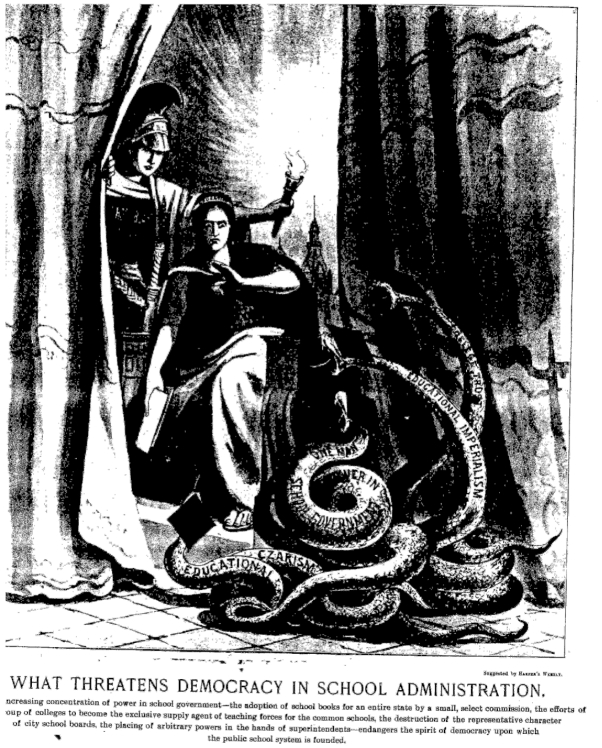
what-threatens-democracy-2.jpg

The Madison School Board has drawn fire from Progressive Dane for a proposed policy change regarding public appearances.

The change would limit public commentary preceding school board meetings to agenda items. Individuals who want to speak on issues that are not part of the agenda would be required to speak after the business portion of the meeting was complete….

[Board of Education President, Arlene] Silveira objected to characterizing the change as an effort to limit public discussion or input.

“That is simply not true. This has been a discussion about trying to find a solution to a problem in getting the work done we were elected to do. Under this proposal, people can certainly speak on non-agenda items, just not before we begin our business meetings,” she said.

Susan Troller Capital Times, February 9, 2008 (emphasis added)

We need to move beyond the unsupportable assertions that the proposed public appearances policy revision does not limit public input (however slightly) and start asking if the new limits are an acceptable trade-off for increased efficiency.

In democratic governance there is almost always a trade-off between efficiency and democracy. More participatory structures tend to be less efficient (there are some ways of gaining efficiency that have little impact on participation and some ways of enhancing participation that have little impact on efficiency; I will touch on some of these in part II). This extends beyond opportunities for the public to vote, petition or make our voice heard to questions of balance concerning the proper breadth or shape of the responsibilities claimed by or ceded to the public, elected officials and appointed professional administrators. Among democratic systems, the least democratic structures give the most responsibility and power to those at the farthest remove from the public, professional administrators.

In school governance at one end of the spectrum would be the annual school meeting, which vested comprehensive powers in the voters who attended. At the other end would probably be the mayoral appointed superintendents given sweeping powers (Michelle Rhee in Washington DC is a recent example).

These have been live issues since at least the Progressive Era. In that period those who favored efficiency over democracy, often called “administrative progressives,” mostly triumphed, creating what historian David Tyack called “The One Best System.” Most of the histories of these conflicts focus on the winners. As a historian and an activist I have always been more attracted to their opponents, unstable coalitions of intellectuals (John Dewey for one), women’s groups, unions, Populists, Socialists, teachers, and partisan politicians who resisted what William George Bruce (Milwaukee Democratic politician – who opposed partisan politics in school governance, these coalitions were very unstable and strange –, school board member and founder of the American School Board Journal) called “Educational Czarism.” They had their victories too.

Almost everyone involved had some claim to the label “progressive.” This points to a dilemma in progressivism, then and now. Progressives have faith that politics and government can work for the common good and in order to accomplish this — to advance the common good — government must be efficient. Progressives with a democratic orientation also value democratic structures and wide participation, which make efficiency harder to achieve. This is the dilemma presented by the proposed limit on public appearances concerning non-agenda items.

The conflicts over school governance were and are entwined with conflicts over the purposes of schooling. For the most part Progressive Ea efficiency advocates emphasized the role of the schools in training workers and their opponents were more concerned with education for personal growth and citizenship. This is a gross oversimplification in that both sides favored some form of industrial or vocational education and the conflicts were about who would control it (some of the administrative progressives were happy to have private industry directly in charge) and what forms it would take (manual training was viewed as promoting personal development while vocational education was often seen as an effort to recreate inequalities in the name of “social efficiency”). Still, I think it is important to bring up as a reminder that the structures of education are related to what is taught, constituting a hidden curriculum. The lesson of limiting public appearances is that to some degree the priorities of the Board of Education take precedence over the concerns of the public. This has to be part of the discussion too.

Historically the structures and aims of education in Madison have had a relatively good balance between efficiency and democracy. I would like to see it stay that way.

As I said earlier, I would like to see this proposal set aside and have the Board and the public together tackle the broad questions of balance between efficiency and public participation. I’ve got some specific suggestions that will be included in part II of this post (as soon as I find the time to draft that…need to work on my own efficiency). I am going to close this post with some outlines of what I am talking about.

I would like to see a wider consideration of Board practices, some documentation about how much time has been spent on various tasks (including but not limited to off topic public testimony) and a variety of solutions evaluated, solutions that address “problems” confined to what the Board does as well as solutions involving the public perhaps changing our behavior too.

Whatever the results, I think that this has to be an issue that Board engages the public on. I am very glad that there now will be an opportunity for the public the weigh in on February 18, prior to the vote. That is a start, but however the vote goes, the larger dilemmas of democracy and efficiency aren’t going to go away. Rejecting the proposal could lead to constructive cooperation and creative solutions, enacting it will exacerbate distrust and resentments.


Thomas J. Mertz

For further reading:

David B. Tyack, The One Best System: A History of American Urban Education.

William J. Reese, Power and the Promise of School Reform: Grass Roots Movements During the Progressive Era.

Raymond E. Callahan, Education and the Cult of Efficiency.

Robert B. Westbrook, John Dewey and American Democracy.

2 Comments

Filed under Accountability, AMPS, Best Practices, education, Local News, Take Action

Tin-eared and Wrong-headed

eartrumplb.pngbottom.jpg

Update:

Board of Education President Arlene Silveira just posted this on The Daily Page 

 Time Out. The press release that started this thread was not accurate. There will be public speaking on this topic at the meeting on 2/18.I will continue to come back to the main point. The issue is that the Board would like to focus on its business at a more reasonable hour in order to make good decisions for the children of the district.If people do not like the proposal on the table, please recommend an alternative. An alternative is not to say “let’s leave things as is”. This does not address the problem.Looking forward to your ideas!Arlene Silveira

I am glad to see some movement and agree that both sides need to be creative.

It should be noted that according to all information available to the public prior to this The Daily Page post, the Progressive Dane Press Release was accurate. 

I was contacted earlier today by the Board of Education staff person (after the Press Release was issued) about a change but given no details.  My request for more information has not been answered yet (This is not a complaint about the Board staff people.  They, like so many in the Doyle building, do a great job and are always helpful.  I just want to be as open as possible about what I knew when.). 

See you on the 18th (and maybe the 11th too).

At the Board of Education meeting Monday (2/4/2008) a proposal was put forth to enact new limits on public testimony. This proposal and the way it was introduced and discussed showed some on the Board at their worst, both tin-eared and wrong-headed. These are overlapping criticisms, because with the interactions between elected officials and the public, perceptions (tin-eared) and realities (wrong-headed) are inseparable.

Before I go further a caveat is in order. I did not attend the meeting on Monday and only watched the last 45 minutes or so at home. Still, I’m pretty confident in what I have to say.

The proposal is a revision of Board policies 1220 and 1222. I haven’t obtained a copy of the exact language yet (that points to one problem with the way this is being done and another with the proposal iteslf, when I get an electronic copy I’ll link here), but the gist of it is that they want to move public appearances concerning topics that are not on the agenda for that meeting from the beginning (where they have been since at least 2000) to the end (an indeterminate time). K-12 students are exempted.

The rationale offered is that extensive, “off topic” public appearances have kept the Board from effectively doing the work the Board wants to do. There is no doubt that public appearances before the Board — mostly “on topic” — have at times been exhausting or that there is room for improvement on both sides of communication between the Board and the public. Rather than improving communication, the pending revision seeks to make communication more difficult.

It is outageous for a Board which has acknowledged communication and public relations problems in their goals for the Superintendent (it was also on the initial list of annual Board priorities, but Lawrie Kobza moved to delete it, Ms Kobza was conspicuous in her support of the current effort to limit public appearances) to contemplate such an action, it borders on insane that they would do so in a manner that excludes the public from having any input.

One thing needs to be made clear, whatever Board members say about the intent not being to limit public input, the result is that public input will be limited in terms of both quantity and quality. Logistically the proposal is a nightmare. Let me use the proposal itself as the first illustration.

A very general item appeared on the agenda distributed on Thursday or Friday (1/31 or 2/1). I contacted a couple of people for details and got only vague answers. It appears that the actual proposal was distributed to Board members on Monday (the day of the meeting) and the first chance the public got to see it was via the distribution of copies at that meeting.  [I have been asked to clarify the chronology and given new information to do so. Board members were given a draft policy on Thursday 1/31, an explanation via email on Friday 2/1 and the the proposed policy on Monday 2/4. A vote was possible on Monday, 2/4 but since this was not sure, the possible continuation to 2/18 was already arranged.] Monday afternoon I am contemplating making childcare and other arrangements in order to possibly give public testimony on a proposal that I don’t know the contents of. One source told me there probably won’t be a vote, so I decide not to go (it turns out there was almost a vote). The point of this is that the nature agenda items and the timing of their publication makes it hard for the public to participate. It gets worse. Thanks to the intervention of two members, the Board did not vote and will take this up again on 2/18 (mark the date). That meeting will be a workshop session, meaning no public appearances. In fact, there are no Board meetings scheduled between now and the vote where public appearances are allowed. So I missed my chance and the Board was spared the horror of listening to me for three minutes. I will however be attending the Communications Committee meeting on 2/11 and if public appearances are allowed will be saying my piece (that agenda isn’t out yet), I suggest you do the same.

This was an agendaed item, so if the new policy was in place I still could have testified at the start (and I would have if there has been any way for me to know what it was without going to the meeting). Now I want to look at non-agendaed items and what the Board is contemplating. These fall into two categories. The first consists those things that the Board is not aware of or is doing nothing about; the second consists of those things that Board has been addressing or plans to address at other meetings. If you want to talk with the Board about any of these, you will have to wait your turn. In practical terms, that means planning on sitting through a meeting that may go one hour or may go four hours (tell that to your spouse or try to arrange for childcare on those terms) and then at the very end, after the Board has done what they want, those members that stick around will give your what attention they have left to give. Is this a recipe for effective communication? I understand that the Board wants to work on what the Board wants to work on, but I also understand that the Board doesn’t know everything and that there are some things they know about that they don’t want to deal with. I like the fact that it is relatively easy for the public to try to inform the Board or get them to address things they would rather not, to speak often inconvenient truth to power (or at very least call public attention to these things). In setting the agenda, the Board (especially the President and Vice President) already have great power. This would enhance that power at the expense of the rest of us.

As usual, this is too long, but I want to work through one more example before wrapping it up. Multiple Board members cited the failure of the Board to make any meaningful progress on Equity at their 1/28 meeting as an illustration of why this policy is “needed.” They couldn’t have picked a worse example. On April 16, 2007 the Equity Task Force presented our report to the Board of Education. The Board was busy with more pending matters, gave the summary a brief polite hearing, thanked the Task Force and pledged to return to the report (no vote, but that’s what they said and what the minutes indicate). On June 20, 2007 the Board made Equity a priority for the year. On December 3, 2007 — almost eight months after the Task Force gave them our report and six months after the Board made Equity a priority — the Board held a workshop session on Equity. On January 28, 2008the Board held another workshop meeting on Equity. This is the meeting where little got done and the one that Board members used to place the blame on public appearances. On that front, the lengthy public appearances that night were for the Long Range Planning Committee and were about an agendaed item, so the proposed revision wouldn’t have changed anything!

Looking at the bigger picture, it stretches credibility well past the breaking point to assert that off topic public appearances were a major factor in preventing the Board from addressing Equity for eight months. Don’t play me for a fool. Again, it gets worse. Under the new policy, only agendaed items may be addressed at a time when members of the public are able to easily appear and the Board is paying full attention. In the eight months since the Task Force gave the Board our report, Equity has not appeared on the agenda of a single meeting where public appearances were allowed. Board members also touted other means of communicating with them. Any fool knows these aren’t the same. Prior to the January 28 meeting six Equity Task Force members (myself included) sent the Board a letter expressing concerns about the process of their work on Equity, including the lack of public input. To my knowledge only two Board members responded and our letter and concerns were not part of the discussion at the meeting. I can’t help but think that if we had been able to read that letter to them in person at the start of one or more meetings, things might have been different.

Reading through this I find that I hit the “wrong-headedness” more than the “tin-eared.” It should be obvious how counterproductive ramming through a limitation of public input (without any public input on the proposal) is to the goal of improved communications. If it isn’t, I suggest everyone — including Board members — watch the video. You’ll be amazed at how self-centered and arrogant some of our elected Board members sound.

I admire the hard work of our Board of Education and appreciate the difficulties they face in trying to do what they think is best. However, the best intentions can still lead to bad decisions. Let’s not let that happen this time. Contact the Board, testify at the 2/11 Communications Committee meeting (while you still can), write the newspapers…. If we can move past this wrong-headed mess, we can continue to work together — the board and the Public — to figure out ways to improve communication, a project that has already begun under a the auspices of a planned Progressive Dane School Budget 101 seminar (among other things I’m chair of the PD Education Task Force).

Thomas J. Mertz

An undesirable society, in other words, is one which internally and externally sets up barriers to free intercourse and communication of experience. A society which makes provision for participation in its good of all its members on equal terms and which secures flexible readjustment of its institutions through interaction of the different forms of associated life is in so far democratic.

John Dewey, Democracy and Education

8 Comments

Filed under Accountability, Best Practices, Equity, Local News, Take Action, Uncategorized