From the Cleveland Municipal School District Visions of Democracy - Digital Gallery. Click on image for more.
April 7, 2009 will be a big day for school votes in Wisconsin. There is the State Superintendent race (I’m backing Tony Evers, for reasons that I hope to have a chance to post on at some length), 41 school referenda in 29 school districts are on the ballot (those posts are in the works, see here for a summary of the measures) and around the state voters will elect their representatives to school boards. The League of Women Voters of Dane County election guide has been published and posted, with answers from many of the candidates and descriptions of local referenda.
I spent some time going through the candidates answers and was struck by the combination of widespread concerns about the ability to provide necessary and desired educational opportunities under the pressures of budget constraints and by how few pointed to the broken state school finance system as the source of this ongoing situation.
The biggest exception is MMSD Board president Arlene Silveira. This is what she wrote about the “the major issues confronting your school district, and, if elected, how will you deal with them?”
Equitable school funding system. Unless changed, all school districts will be forced to make devastating cuts detrimental to all students. I will initiate community-based advocacy efforts to work toward changing the funding. Enhancement of minority achievement efforts by improving efforts in schools to raise instruction quality; expanding availability of schooling opportunities and working with community to develop policies that enable all children to begin/attend school on a more even playing field. Ensure we are providing students with skills needed to compete in the 21st century, irrespective of their path. Continue efforts focused on redesign of our high schools. (Emphasis added.)
One large looming issue facing Madison’s School District is MONEY!
True, but not very helpful.
The same is true for most other Dane County candidates who discussed the issue (many did not discuss finances at all or had almost nothing to say — these responses have not been included). Here is what other Dane County candidates said about school finances.
Expenditures continue to raise and outpace funding. The board and administration need to review funding formula and actual costs per student and determine if the tax payers would incur a tax savings or a tax loss by allowing transfer students from outside our community to enroll in the District.
The Edgerton School District will soon be replacing a principal and its superintendent; it will also be facing a significant decrease in its high school enrollment and will have to tackle large maintenance expenses with a tight budget.
Crafting a budget that meets the needs of our students and allows us to continue to improve the education we provide continues to be a significant challenge. This is especially difficult with state imposed revenue controls. The key to meeting this challenge is to make sure that all of the board’s decisions are made with the goal of providing the best educational experience that we can. The Marshall School District has done a good job of implementing needed changes and improving our educational programs during difficult economic times by keeping this key idea in mind.
Ziegler also refers to the importance of “full funding” for “”bilingual education for all children; b) music and art; c) civics; d) 4-year-old kindergarten; e) preparation for the work force.”
Tight budgets, academic performance and school safety are top issues facing many schools, including Marshall. I have been a good steward of the school district’s finances in my nine years on the board and will continue to make budget decisions in the interest of what is best for the success of students.
One of the major issues for this district is the budget shortage that is forecasted for the next couple of years. Because this is an issue that is likely going to be a recurring issue I would like to see the next board take a hard and fast look at this year’s deficit and see how the decisions that are made this year will affect upcoming years. Additionally, we need to be cognizant of any how any cuts will impact our building infrastructure and the quality of our children’s education.
As a nation we are facing tough economic times and the Monona Grove School District is not immune to this. Our biggest challenge in the next couple of years will be to prevent our district from cutting programs and activities that make our district special and from falling further into debt. I will listen without bias to all ideas and suggestions on the best way to achieve this with the least negative impact to our students and teachers. Neighborhood growth continues to be a challenge for our schools; we must proactively address this issue to prevent overcrowding at our schools.
Annually the Board must adopt a budget that balances the needs of students, fairly compensates employees, maintains facilities and does not burden taxpayers. We have done that during my Board tenure.
During this time of uncertain budgets and fluctuating enrollments, we need to maintain opportunities. We must find creative options to meet all District goals while also serving our students and community. School consolidations need to happen logically and painlessly. We must make wise decisions regarding staffing, transportation, and boundaries during this time of transitions.
Increasing student achievement, recruiting and retaining quality staff and maintaining facilities are all priorities in SASD. The current state funding formula creates challenges to these priorities in districts like SASD with declining enrollment. School consolidation, bussing guideline updates, and enrollment-driven staff reductions will help in the short term. It is important to continue our collaborative work to encourage community growth, energy conservation and educate our community on school funding issues and solutions including pressure to bring legislative change that will provide more long-term financial relief. (Emphasis added.)
Property taxes are also an issue, especially for those on fixed income. I would support a solution for the fixed income hardship at the state level. Despite rising costs, my goal is stabilize or even reduce the property tax rate.
The Sun Prairie Area School district has been both blessed and cursed with a rapidly growing student population. We don’t have to deal with the budget problems associated with declining enrollments, but growth has its own budget issues. Growth has required significant investment in infrastructure, and has required the District to work hard to meet the needs of our student population. I am a firm believer that all children are entitled to a quality education. If elected, I will continue to pursue all opportunities that support quality education for all students.
Two other observations. First, it appears that incumbents are more likely to “get it” that the budget problems begin with the state system. Second, despite the facts that about 250 referenda have been held in the last two years and about as many can be expected in the next two years, I don’t believe a single candidate directly mentioned referenda.
One article, “Putting Teachers in the Driver’s Seat,” discusses strategies such as Collaborative Teacher Research, Critical Friends Groups, Lesson Study, Book Clubs, and the National Board’s “Take One!.” As the author, professional development coach Anthony Cody, notes “There is a great deal of research that shows the most powerful forms of professional development create opportunities for teachers to collaborate and reflect on student learning.”
In the second article, “Grassroots Professional Development,” 2004 Florida Teacher of the Year Dayle Timmons described the multiple forms of collaborative development in use at her Chets Creek Elementary School. Many of these are similar to those described by Cody. Reading about Timmons experiences two things stood out.: First, the very creative use of technology, second, the absolute necessity of sufficient time for collaborative work and planning.
“Teacher-directed professional development” is also a theme of the article “Reinventing Professional Development in Tough Times.” The article notes that although potentially more effective and less expensive than contracting with outsiders, internal work isn’t free. Teachers, whether as leaders or collaborators need release time from the classroom in order to prepare and follow up.
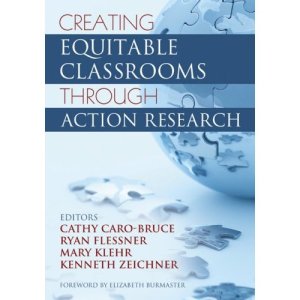
This brings us back to MMSD. We have an incredibly talented staff, in most schools a climate of professional collaboration thrives, in the classroom action research the basis for great staff development is already in place (take a look yourself, you’ll be impressed). What is needed is the initiative and funding to put this work to work, to put the action research into action (some of this may be happening, but I can’t find any record and haven’t heard anything).
Historian John Hope Franklin died on March 25, 2009 at age 94. Franklin was a consummate scholar, a pioneer in African American history, an engaged citizen and a man of great warmth. His honors include the Presidential Medal of Freedom, a MacArthur “Genius” Grant, The Presidencies of both the Organization of American Historians and the American Historical Association and many more. I had the honor being mentored by one of his former students, Betty Balanoff, and of meeting him through Betty.
Those in a position to speak for the country and to outline its current mission insist that we citizens are undertaking to share with the world the blessings of a free and prosperous society and to spread democracy throughout the world. Under the most favorable circumstances, this would be a remarkable mission; and it is not too much to argue that these are not the most ideal times for such an undertaking. Before we enter upon such an ambitious mission it is well to remember that we ourselves are still in the process of becoming democratic, and it has taken us more than two hundred years to arrive at this stage.
Franklin’s scholarship is a reminder of our nation’s struggles and triumphs in the process of “becoming democratic” and of the distance that remains. This scholarship was informed by his own struggles and his own belief in the ideals of freedom and democracy. The scholarship was also inseparable from his work as a citizen to move our nation toward true democracy and freedom. History was a tool for social change.
The traditions of activist scholarship and scholarly activism that Franklin exemplified are in danger of being lost. Teaching at all levels is increasingly dominated by the consumerist pressures of vocationalism and entertainment. Scholarship is increasingly informed almost exclusively by the pressures of tenure where narrow debates within the academy matter more than contributions to furthering social justice. In the public sphere, simplistic sound bytes take precedence over informed analysis. Both the academy and the public sphere are poorer because of these developments.
As John Hope Franklin demonstrated, scholarship in general and history in particular have great contributions to make to advancing social justice. I believe that his life also demontsrates that enagement with contemporary social action enriches scholarship.
On the first day of each class I teach, after covering the official scope and goals of the course, I lay the syllabus aside and confess to students that in my own head and heart, the most important goal is to use the knowledge of history to make them better and more engaged citizens. When I do this I think of the Betty Balanoff and how her activism, scholarship and teaching advanced the legacy of John Hope Franklin and how I, in turn am honored to advance Betty’s legacy.
This is a practice that I think is wrong (see here and here) and I apologize for having done this.
I still believe that the scores at Nuestro Mundo are cause for alarm.
Standardized test scores are of limited utility in judging the quality of a school or assessing educational experiences, but they aren’t of no use. I think of test scores as one tool that can indicate some success or call attention to problems. Most of the time fair, good or even great test scores don’t tell us much but “proceed with caution,” (because caution is always in order when dealing with kid’s futures). Sometimes the test scores tell us to slow down and pay attention, look for what is going wrong and for ways to fix it. I believe that the results of Nuestro Mundo fall into this category.
On a related topic of using educational statistics, see Sherman Dorn’s recent post “Grokking Social Science Statistics” (well worth reading).
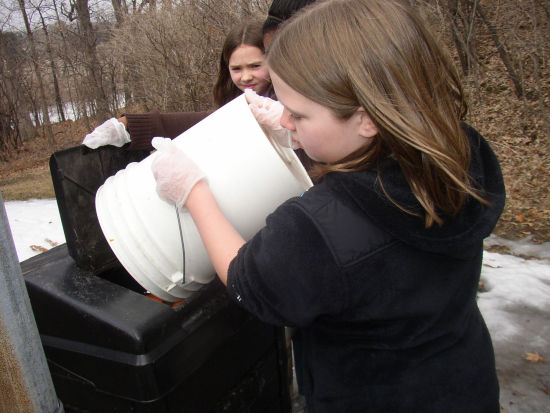
A very nice story by Anita Weier on school and community work to create and maintain gardens at some of Madison’s East Side elementary schools is posted on the Cap Times site.
The kids are taking responsibility, learning about sustainable practices, such as composting and from the story, obviously having fun.
Unfortunately, the Madison School Administration appears to be less than enthusiastic. Doug Pearson, director of building services for the school district raised reasonable, if not insurmountable, issues with expanded composting.
Less reasonable on the surface is Assistant Superintendent Sue Abplanalp apparent over-concern with the possibility that neglected gardens will detract from appearances. Unfortunately, the raised bin of mud (which once held trees and grass), the bare dirt, the crumbling wall and other unattractive features that greet me at Franklin School each morning as I drop off my son have not inspired the same level of concern.
According to Abplanalp, an expansion of the program will be at least partially dependent on the results of focus groups and may involve “centralization.” Focus groups. centralization, planning for failure…these are great ways to kill the great grassroots cooperative spirit that is flowering in these gardens.
Jasper Johns, "Target With Four Faces" (click on image for more information)
The Strategic Planning Committee set many laudable, if difficult to reach targets and the process of figuring out how to get to these targets has begun. This includes the first designated opportunities for members of the public to weigh in.
Tomorrow evening (March 25, 2009, 6:00 to 7:30) at the La Follette High School LMC there will be a “Community Engagement Session” on the Madison Metropolitan School District strategic planning. There will be another session at Memorial High School on April 16. According to the announcement: “These two sessions will give attendees an opportunity to receive an overview of the draft strategic plan and to give feedback on it in small groups.”
On the page linked above, there is a video linked where Supt. Nerad says “In the months after these three sessions in January, more members of the community will be involved in developing action plans for each priority area of need.” I sincerely hope that these sessions are not the extent of the reach beyond the appointed Committee Members. Supt. Nerad’s language fits with things that were said prior to the January meetings and indicates that the “Actions Teams” would not necessarily be made up exclusively of those appointed to the initial Strategic Planning Committee.
Thus far this has not been the case. The Committee members have been meeting as self appointed “Action Teams,” to “identify actions steps” based on the priorities set by the Committee as a whole and that the public has been welcome at these sessions only as “observers.” This means that the work has moved into step two before there has been any real attempt at engagement with any not part of the team.
The district did a good, if relatively secretive job in seeking diverse and varied representation on the Strategic Planning Committee. The sessions scheduled for 3/25 and 4/16 are also good things. However, if this planning and especially the implementation that will follow are to be successful, much more extensive openness, inclusion and outreach in all phases of the work would be advisable.
As noted last week, under Wisconsin’s broken school funding system, Spring is the season for budget cuts in districts around the state. The latest places the axe is falling are Minocqua-Hazelhurst-Lake Tomahawk, Kaukauna, and Oshkosh.
Minocqua-Hazelhurst-Lake Tomahawk (MHLT) is a K-8 district serving 550 students spread out over 350 square miles. It is a classic “small but necessary” district in dire need of realistic sparsity aid as one part of an improved system of funding schools. Governor Jim Doyle’s budget proposal cuts the already inadequate sparsity aid by 1%.
The Lakeland Times reports that the district voted to lay off two teacher, cut the employment of three others by 20%, lay off four educational support team members and discontinue funding for outside curriculum integration with the Lakeland Union High School (LUHS).
These were obviously painful decisions. One board member had this to say about the curriculum integration defunding:
“We’re facing decisions that you well know,” board member Billy Fried said. “We’re negotiating with teachers. We’re making cuts in staff, and it’s really hard to look them in the face and also look our taxpayers in the face when we’re kind of shrinking our own, yet maintain an outside service that a lot of us feel confident they [MHLT current staff] can do a good job.”
The probability of an operating referendum in the near future was part of the decision:
“If I had any thoughts or felt that from the administration that it would be detrimental to the students, I would do nothing [and continue the service] … I think, too, one thing to keep in mind is we are going, we know we have to go to referendum soon, and I think we need to show we’ve done every possible thing before we go to referendum,” [Board Member] Laura Ahonen said.
Administrators and others did weigh in on the issue. Principal Rob Way “admit(ted) that it would be a challenge, but one that they could handle successfully.” Tom Gabert, Lakeland Union High School Board Member said “The major concern with doing it internally, was that past experience has shown that when there is no money on the table, it often gets neglected.”
Combined with the layoffs and this decision means that MHLT staff will be asked to do more with less. The newspaper simply noted that the layoff notices were given with “much regret.”
The district plans to propose a freeze on administrator salaries and reduce at least one full-time equivalent administrator, said school district Human Resources Director John Sprangers.
The list includes 36 full-time teachers and nine part-time teachers primarily from middle and high school elective courses. Music and special education departments would take the biggest hit, losing six educators each.
Last year, “The district filled a $1.4 million hole in its budget… entirely by cutting non-personnel expenses such as maintenance and department funds.” These cuts are part of the reason that there is now a maintenance operating referendum on the ballot. What an insane circle of robbing Peter to pay Paul and then asking for money to pay back Peter while taking back from Paul…This has to end.
Note that both larger class sizes and fewer options will result from the cuts. According to the Northwestern the middle school schedule will be reconfigured “allowing each teacher to do more,” (I’ll add “with less” because that’s what is happening, and note that the “more” is in terms of classes and students taught and the the reality in terms of quality and learning will likely be that they are doing less).
Kaukauna serves about 4,100 students with a staff of approximately 500 and a budget of about $52 million. In order to meet the projected $2.9 million shortfall for 2009-10, the Board froze administrator salaries, and laid off over 10% of their teachings staff. The projections are based on very conservative estimates of future revenue caps, but past experiences with losing students due to open enrollment and underestimates of costs have taught the Board to be conservative. One Board member noted that the new cuts will probably lead to the loss of more students via open enrollment.
Delayed maintenance projects, threatening safety are also a factor in the layoffs.
Board President Jeff McCabe and clerk Cindy Fallona pointed out that because of cuts, administrators have had to tack on more duties without being compensated. Among them are financial officer Bob Schafer, who is overseeing buildings and maintenance, and human resources director Mary Weber, who is serving as Park principal. Randy Hughes, special education and pupil services director, has helped with administrative duties at an elementary school. Eric Brinkmann, Haen principal, tracks student academic performance for the district.
Superintendent LLoyd McCabe correctly identified Wisconsin’s dysfunctional system of educational investment as the source of all these troubles:
McCabe is hoping state lawmakers will tackle the school funding issue to relieve pressure on districts.
“I think that there’s pretty good agreement that state funding has to be revised and the problem that the state has is that they don’t have the money to do anything about it,” he said.
“Wisconsin schools cannot continue to produce students who rank at the very top of the nation with the funding structure that exists today.”
This leads directly to my “join the fight” plea.
If we don’t put/keep the pressure on, nothing will happen except more cuts, more referendum fights, more kids not getting the education they need and deserve, fewer kids reaching adulthood with the tools to be successful…we all need to get and be active.
Use your own experiences to write your own letters to the editor:
Don’t forget the April 1, 2009 MMSD “Legislative Informational Community Session” and the April 21 Assembly hearing on the School Finance Network (SFN) plan (details on both, here).
Though people are once again starting to see the signs of a market in recoup mode after a national credit meltdown, some area school districts are still struggling to make ends meet, and because of that, are passing the bill onto taxpayers.
Or at least trying in the case of many districts that have seen numerous referendums fail and fail miserably as taxpayers are standing up for what they think is a bad formula being handed down by the state.
As budgets are cut and staff members begin seeing their jobs in jeopardy, athletic teams are doing their best to remain untouched.
It is good to see reporters and newspapers recognize the cause of local district problems is at the state level.
By Ricardo Levins Morales from the Northland Poster Collective, click on image for more information.
Most states’ NCLB tests are, sadly, essentially insensitive to instruction, that is, those tests are unable to detect the impact of improved instruction in a school or district even if such improvement is unarguably present. The chief cause for such instructional insensitivity stems directly from the test-construction procedures employed to create almost all NCLB tests. Those procedures turn out to make scores on NCLB tests more directly related to students’ socioeconomic status than to how well those students have been taught. Instructionally insensitive NCLB tests simply can’t distinguish between effective and ineffective instruction. (Emphasis added)
These profiles emerge as an artifact of how items are selected. Test developers include in their respective proprietary item pools only those items shown to sort students in the same relative order in terms of their likeliness of getting an item correct. (In other words, ideally for each item in a given area, Student Q should always be more likely to get it right than Student S.) When high-stakes tests are then assembled using only the items that fit with these internal sorting profiles, the tests themselves also end up being remarkably robust in keeping students in the same relative order in terms of their overall scores (Student Q’s overall test score is very likely to be higher than S’s).
Using this approach, test scores will continue to predict other tests scores in ways that will remain remarkably insensitive to the quality of content-specific instruction. And just one of the unintended consequences of this insensitivity to instruction may be that those schools feeling the most pressure to improve test scores will resort to emphasizing test-taking skills, as opposed to meaningful academic content, as a compelling alternative strategy for attaining immediate, if short-lived, results. (Emphases added)
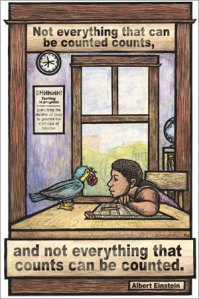
I came across this phrase a few times recently and I really think it captures one huge flaw with the reliance of standardized tests. By design they do not measure learning, instead they sort into a bell (or other) curve. If all students learn something, no matter how important that something is, it will not be included on a standardized test because it doesn’t sort.
This inescapable truth seems to be lost on President Obama, Sec. Arne Duncan and all those in Congress, state legislatures and local school districts who keep calling for more money to be spent on testing and data systems. Although there is potential for better testing I fear that this will only expand the inappropriate uses of the existing testing, testing that for the most part hinders real accountability by this “insensitivity to instruction,” and harms education by wasting time and money on things that don’t help students be successful in anything but taking tests. Garbage in, garbage out.







 AMPS
AMPS 