Monthly Archives: June 2008

An exercise in delusion

Hieronymus Bosch

During a speech to the National Association of Latino Elected & Appointed Officials the other day, John McCain launched into a discussion of NCLB and education funding, holding up New York City (with awful – and similar funding issues to Wisconsin) and New Orleans (oy!) as examples of Republican success stories in education. Charter schools, according to him, can be our silver bullet. Pardon me, but we all need a national conversation to start now. However for Mr. McCain, it would seem his mind is made up.

“I mean, they also re-authorized No Child Left Behind, with the lessons we learned in the intervening years since we passed it, in a bi-partisan fashion, I would fully fund those programs that have never been fully funded. But let me also say to you: choice and competition. I believe that every family in America should have the same choice that Cindy and I did. We chose to send our children to a Catholic school. That was because we were able to do so. So I believe that charter schools work. I believe that they’re not much better than public education, but they provide competition. There are two examples I’d like to mention very briefly: New York City and New Orleans. If you missed it, there is now a dramatic uptick in the performance of school children in New York City, a place where a lot of experts thought there would never be improvement. We ought to go up there and see what Mr. Klein and Mayor Bloomberg and others have done and dedicated educators have done in New York City. New Orleans, they had to start at square one, as you know. There are now 30 charter schools in the city of New Orleans. Anyone will tell you that they’re starting to see a dramatic improvement in the quality of education in the city of New Orleans. My friends, choice and competition, reward the teachers, God bless them, find bad teachers another line of work. Choice and competition.”

I’ll bet Mr. “Choice and Competition” has never seen this documentary. He won’t – but you can. Educate yourself. See what magic an unregulated post-Katrina education industry has brought to New Orleans and shades of things to come if some mainstream thinking about reforming education comes to fruition.

Robert Godfrey

1 Comment

Filed under AMPS, Equity, Gimme Some Truth, nclb, No Child Left Behind, School Finance, We Are Not Alone

Our schools are in danger, and some are just throwing stones

Joan Miro – “Personage Throwing a Stone at a Bird.” (1926)

Prince Buster, “Dont Throw Stones” (click to listen)

John Smart — of the Park Falls School Board, the Policies & Resolutions Committee of the Wisconsin Association of School Boards and the Board of Directors of the Wisconsin Alliance for Excellent Schools — provides some more big picture context and good advice related to the vote by the Wausaukee School District to dissolve.

Our schools are in danger, and some are just throwing stones
by John Smart

It was just announced that the Wausaukee School Board has voted to dissolve their school district. They have had two failed referenda asking to allow them to exceed the state-imposed revenue caps, the last one losing by 19 votes, and the Board felt it had run out of options. Board President Dennis Taylor said, “The choice is not ours. The choice is the taxpayers of this community.”

If the dissolution goes through, the 500 or so students in the district will be distributed to surrounding schools in Wabeno, Marinette or maybe Crivitz or Pembine.

So many of our school districts are having financial problems that I should have thought that everyone would have some genuine understanding of the situation by now, but apparently that’s not so. There are still “experts” in the woods who think they have all the answers.

There have been 88 school referenda in Wisconsin so far this year in attempts to override the state’s unrealistic revenue caps, and exactly half of them failed, like Wausaukee’s. That means that school districts like Washburn, Rhinelander, Chetek, Durand, Hartford and so many others are in the process of making drastic cuts in curricular and co-curricular programs, thus depriving our next generation of the wherewithall to compete in the 21st Century global economic sweepstakes. Others may be contemplating the drastic measure that Wausaukee has taken.

It’s easy to level blame on the school boards and administrators for not doing their duty, but school boards are just local citizens who are willing to take on the job because it’s so important. It’s really everyone’s responsibility to study the issues and take part in the solutions. How many local citizens attend your district’s school board meetings? Ten or twenty? More? Less? Do you?

It’s also too easy to blame teachers and their unions. Our teachers are dedicated professionals who are working overtime to educate our kids. They’ve put themselves through a minimum of four years of higher education and must continue to take classes in order to maintain their licenses. Their compensation should be compared to other professionals, like doctors, dentists and lawyers, and in that company they’re hardly overpaid. Plus – I challenge anyone who thinks that teaching in 2008 is easy to spend a day in a classroom! I have.

Enrollments are declining in most of our districts. In Park Falls, we just graduated a class of 85, but our kindergarten class was 53, which doesn’t bode well for the future.

We’re trying to consolidate with the Glidden district in order to boost our combined numbers. Even though there are always snags in such attempts, we’re hoping that we can combine our strengths and build a great new school district.

But, considering declining enrollments and the failure of the state funding formula, consolidations are far from the ultimate answer, as those of us in the trenches know only too well.

The state school funding formula is based on student numbers, so that is not working in our favor, and will continue to get worse unless major reforms are instituted.

State aids are also based on equalized property evaluations, and ours in the Park Falls School District have risen, from $303,606,538 in 1997-8 to $648,752,692 in 2007-8, thanks in large part to expensive “cottages” built on our beautiful lakes and rivers by seasonal visitors and retirees. To the state formula, which is based on property values rather than income, this makes it look like we’re more than twice as wealthy as we were ten years ago, and consequently our school aids have been reduced.

In Park Falls, we received $3,923,263 from the state ten years ago and $2,578,690 this past school year. Our enrollment may have dropped, but the expenses of running a school haven’t dropped! Everything from teachers’ salaries to energy costs have gone up, and the difference must, of necessity, be raised from local property taxpayers. In Park Falls, our tax levy has risen from $1,820,324 ten years ago to $3,844,298 this past school year.

The current state school funding formula was passed as a temporary, stop-gap measure in 1993, but is still in place. It sets the QEO, a limit to the compensation teachers can be given, and the revenue cap, a limit to how much the school districts can levy from property taxes. But it left a gap between the two that assured a fiscal nightmare, which is now upon us. It should also be pointed out that teachers are the only public employees who are limited by law in raises to their compensation packages, and school districts are the only municipal governmental units limited by caps in tax levies.

The legislature has been incapable of dealing with this issue. The “No New Taxes” people in the Assembly are determined to hold firm, resisting the clear need for sales tax and corporate tax reforms, which would put more revenue into the general fund and allow more adequate school aids.

There are good plans for school funding reform on drawing boards all over the state [and nation], and they are all hinged to the realization that there is nothing a society does that is more important than educating its young. The Wisconsin Alliance for Excellent Schools has some terrific ideas [www.excellentschools.org] – please check them out.

There is an election in November, and with it the opportunity to change the do-nothing legislature. Please make sure that your candidates understand how critical the school funding issue is, and vote accordingly.

The future demands nothing less. Please let’s make Wausaukee the last school closing in Wisconsin.

More on Park Falls, here.

Thomas J. Mertz

Leave a comment

Filed under "education finance", Accountability, AMPS, Best Practices, Budget, education, Elections, finance, Referenda, referendum, School Finance, Take Action, We Are Not Alone

Wausaukee School District Votes to Dissolve

19 votes.

That was the margin by which the June 24, 2008 non-recurring, one year $575,000 school operating referendum lost in Wausaukee. 19 votes out of 1107 cast (number from the DPI site, the linked Peshtigo Times story appears to be wrong). Now according to the Eagle-Herald, the Wausaukee Board of Education feels that the best thing to do is to dissolve the district.

[In a story from WBAY (Green Bay)] School Board President Dennis Taylor says, “the choice is not ours. The choice is the taxpayers of this community. The community has to decide if they’re willing to spend an extra $180, in some cases $150 a year to keep a school open in this community.”

Blaming those who voted against a referendum, although accurate because they are the proximate cause, misses the bigger picture, the role of the state school finance system.

District Administrator Jan Dooley provided some of this:

She feels hopes for a state “bail out” are in vain. She said there are many districts in almost the same financial position as Wausaukee, and if the state lets one it will have to help them all. “I don’t see the state intervening by offering assistance to Wausaukee over and above what is offered ot all districts in the state, because then the floodgates would open. The only chance would be a change in the state aid formula.”

“We have cut, and we have cut to a level that we feel we cannot risk cutting more staffing without losing kids,” Dooley declared. “I think everyone in the district should be asking, ‘What do we want for the children of our district, and what do we need to do to bring that about?’ Our children don’t deserve to have more programs cut on them,” she declared. “This is about children and their futures! I am an educator at the core of my being and this resonates deep within me. Right now it’s the children that are at the forefront in my mind.”

She said Wausaukee is at a point where “We’re caught in what I call the death spiral. We have established what we believe is a sound education for our children. If we cut more, parents will say I want more, so they will take their children and put them into another district. If we cut more, we risk losing more students, which means we lose more aids, and have to cut still more programs. it’s a downward spiral that won’t end.”

“The children in the School District of Wausaukee deserve an education that is no less than any other children in the state,” she declared.

The failure of a referendum in February inspired a thorough discussion of the roll of state finance system in this sad turn of events. After that vote, people on both sides of the issue looked to our elected state officials for change.

[Gerry] Gerbers described the proposed referendum as, “Ill designed and ill conceived,” in that it offered no long-term solutions…

Gerbers cited figures showing that the district is property rich and income poor. Wausaukee School District residents have family and individual incomes below the state average. More than 10 percent of the population is at or below the poverty level. He and Kipp said residents cannot afford more tax increases.

Village President Clark Caine argued that the state kicks in and pays property taxes for poor households under the Homestead property Tax Relief law, “so that is really not an issue.” [Editor’s Note: In theory this is correct, but the Homestead Credit formula has not been adjusted for inflation, so many people who should qualify, don’t. — TJM}

Gerbers reviewed a bit of the state aid formula. Wausaukee, because of huge amounts of recreational properties which are rapidly rising in value, gets only 14.93 percent of its expenses reimbursed by the state. Peshtigo gets five times more aid per student than Wausaukee.

Gerbers is calling attention to the problems of the many high property value, high cost, low income districts in the state. These are described further in the Atlas of School Finance from the Institute for Wisconsin’s Future. Some believe that the current “Sparsity Aid” — ironically featured on the front page of the DPI website today (snap shot, here) — sufficiently addresses the needs of the districts. It doesn’t. Gerbers is right about this, but he was wrong to oppose the referendum because it isn’t a long term solution. referendum supporters had the right idea:

Ann Hartnell asked why not call for approval of this referendum, and use that approval anyway to buy time for the changes they plan to propose. She said the school board would not be obligated to levy the full amount authorized by the referendum.

Caine also urged approving the referendum, then pushing for change….

Trustee Hilbert Radtke said people in Madison and Milwaukee do not realize the difficulties faced by rural districts under existing funding formulas, and we don’t have enough votes here to change it.

A suggestion from the floor was to enlist the help of non-resident property owners, since they also pay taxes in the district. Get them to contact their legislators from parts of the state where there are enough votes.

Hartnell agreed, but said even a concerted campaign from all of Marinette County might make a huge difference.

I hope that despite the disappointment these plans go forward and that this situation catches the attention of the Governor and the Legislature.

What next for Wausaukee? Some people are already working for yet another referendum.

Resident Gerald Schimidt says, “the community has the potential to basically shrivel up, die, go away. We don’t want to see that.”

John May says, “it will be a shame for a small community like this to lose a big school like that.” His son Cody goes to school here, but the way things are going he may not be for much longer.

The school is now considering shutting down. It’s nearly $200,000 in debt and the board says it can’t cut costs anymore.

School board member Dave Kipp says, “the level of frustration is very high. We have done everything we can to cut costs to the bone without sacrificing a quality education for our kids. That’s the key point.”

The only way to potentially save the school is for taxpayers to step up. Which is exactly what John Guarisco is doing at this barbeque, collecting signatures to ask the school board for yet another referendum and another chance for taxpayers to save their school district.

Meanwhile the planning for a July 2009 closure has begun. If this happens, the students will be disbursed to five neighboring school districts — Crivitz, Pembine, Marinette, Wabeno, or Goodman-Armstrong Creek — all of which face similar difficulties under our state school finance system, a system designed not to educate, but to keep property taxes low and politics safe.

Please join the Wisconsin Alliance for Excellent Schools and others in working to enact a way of funding schools that puts education first. Please contact your Legislators and Governor Doyle and tell them this has gone on too long.

Thomas J. Mertz

Leave a comment

Filed under "education finance", AMPS, Budget, education, Elections, finance, Referenda, referendum, School Finance, Take Action, Uncategorized, We Are Not Alone

One day in Iraq: What if it was spent on education

Robert Godfrey

Leave a comment

Filed under "education finance", Accountability, Budget, education, Equity, Gimme Some Truth, National News, Take Action

George Carlin on NCLB, Education and More

Warning, expletives not deleted (it would have been wrong to delete the expletives of the man responsible for bringing the “Seven Dirty Words You Can’t Say on Television” all the way to the Supreme Court).

Don’t rest in peace George; keep stirring up trouble wherever you are.

Thomas J. Mertz

1 Comment

Filed under Best Practices, Gimme Some Truth, National News, nclb, No Child Left Behind, Quote of the Day

“Ain’t No Miracle Worker”

The Brogues, “I Ain’t No Miracle Worker” (click to listen).

There is a lot of excitement about Dan Nerad taking the reins as Superintendent of MMSD. I share this excitement. I’ve had the pleasure of meeting him three or four times, have read numerous articles about him and his work, have talked to people who know him from Green Bay and have researched what he has accomplished in his career. All this leads me to believe that Dan Nerad is a very high quality district leader who will fit well in Madison and contribute greatly to the improvement of our schools.

Still. I worry that expectations are unreasonably high and that we may be setting Nerad and ourselves up for a fall. Over and over again I have heard and read people saying “when Dan Nerad gets here” either preceded or followed by some hope or promise of a positive change. There will be changes and I think that (from my perspective) they will be mostly positive. So what’s the problem? Here is a list:

  • It doesn’t recognize all the good work of the recent past. Not Just Art Rainwater’s contributions, but the contributions of our Board members, our staff and teachers and our community. Looking to Nerad to for huge improvements can make it seem like MMSD has been stagnant or failing. It hasn’t. For some nice overviews and reflections on Art Rainwater and his time with MMSD, see the current MMSD Today.
  • We shouldn’t forget that educational improvement is incremental. Perhaps the best history of educational reform is David Tyack and Larry Cuban’s Tinkering Toward Utopia. In their prologue they write:

Although policy talk about reform has had a utopian ring, actual reforms have typically been gradual and incremental — tinkering with the system. It may be fashionable to decry such change as piecemeal and inadequate, but over long periods of time such revisions of practices adapted to local contexts can substantially improve schools. Rather than seeing the hybridizing of reform ideas as a fault, we suggest it can be a virtue. Tinkering is one way of preserving what is valuable and reworking what is not.

The point in the last sentence is related to my concerns about belittling what has been accomplished in our schools. Tyack develops this further in one of my favorite essays “A Conservationist Ethic in Education Reform.”

  • No policy, reform, set of policies or reforms will make everyone happy. Uncontested school board races and an apparent conflict and controversy avoidance strategy by the Board of Education may have lulled some into thinking that divisions are a thing of the past in Madison school politics. They aren’t. I recognize that most people involved share many values and even have much agreement about how best to put those values into action, but also know from personal experience that there are passionate disagreements among people of good will when it comes to education. Whatever Dan Nerad does or does not do, tries or does not try, some vocal segments of our community will object that it is too much or too little or just plain wrong. The divisions that have been hidden will become apparent again at some point. I believe that Dan Nerad is skilled at working toward consensus, finding common ground and building coalitions. This will serve him (and our community) well, but it won’t satisfy everyone.
  • The challenges Madison’s schools face are great, too great for any individual to address alone. The issues raised by demographic changes are well documented; the insane choices created by the state school finance system are well known; the pressures from testing and other ill-devised mandates of NCLB are readily apparent. I don’t believe these are intractable, but I do recognize that there are no simple answers and that sustained hard work and cooperation from all associated with the district and all segments of our community are necessary if we are to be successful in meeting these challenges. Dan Nerad cannot do this without help from many quarters. Much has been written about his openness, outreach and cooperative spirit, but if some members of the Board of Education continue to be blasé about or dismissive of public engagement, little improvement is possible. The community has to step up too. Schools of Hope (as well as other Urban League programs) and the Foundation for Madison Public Schools are great; Mayor Cieslewicz, Alder Satya Rhodes-Conway and others are actively working to expand school/city/community initiatives; MMSD has wide-ranging partnerships with the University of Wisconsin School of Education and other local research and higher education institutions; PTOs, PTAs and PTGs are doing wonderful things; Thousands of volunteers help our schools on a regular basis; Our legislative delegationespecially Rep. Sondy Pope Roberts — are leaders in the fight for school finance reform; ABC Madison and Get TUFF have been educating and agitating for state school funding changes; Communities and Schools Together and Mad-City Grumps are preparing for the next referendum campaign; countless other individuals and groups are contributing to the betterment of our schools… (apologies if I left out your favorite). An impressive list, but it isn’t enough. We all can and must do more.

So let’s work together to welcome Dan Nerad, expand the good our schools are doing, fix the state finance system, pass a referendum…have realistic expectations about what a change in the superintendency will bring and do our best to help Dan Nerad exceed those expectations.

In this spirit (or maybe just because I like it), here is video from the last referendum campaign.

Thomas J. Mertz

Leave a comment

Filed under "education finance", AMPS, Best Practices, Budget, education, finance, Local News, nclb, No Child Left Behind, Pope-Roberts/Breske Resolution, Referenda, referendum, School Finance, Take Action, Uncategorized

School-funding reform update, week of June 16

From the Wisconsin Alliance for Excellent Schools.

The Wisconsin Alliance for Excellent Schools (WAES) is a statewide, independent, membership-based organization of educators, school board members, students, parents, community leaders, researchers, citizens, and community activists whose lone goal is the comprehensive reform of Wisconsin’s school-funding system. If you would like more information about the organization — or on becoming part of WAES — contact Tom Beebe at 920-650-0525 or tbeebe@wisconsinsfuture.org.

*******

Good news and not so good news out of Winneconne

Because of the flaws in Wisconsin’s school-funding system, more and more communities are forced to go to expensive and divisive referenda in order to operate their public schools. To date, a couple of things are known: The number of votes being taken is increasing and the rate of success is about 50 percent. While a “no” vote tells us that a great many public schools are approaching fiscal and educational crisis, there is also something to be learned in a “yes” vote.

One such lesson comes from Winneconne, where a scaled back referenda to exceed revenue limits by $880,000 in the 2008-09 and 2009-10 school years (a vote on a $1.19 million and $1.45 million proposal was defeated in April) was approved 1,645 to 1,116.

The good news is the referendum passed and allows the district to cover ongoing labor, transportation, and utility expenses. The not-so-good news is its passage does not eliminate the need for some budget cuts. The board had already identified $310,000 in cuts for next year and an additional $260,000 in 2009-10.

*******

Wisconsin’s tax ranking drops … What does it mean?

According to headlines and stories in media across the state, Wisconsin has, for the first time in years, moved off of the Top 10 tax list. Is that, however, a claim to fame or is it the canary in the mine shaft for those interested in school-funding reform and the protection of the state’s public structures that are financed through state and local taxes?

One view is offered by the Institute for Wisconsin’s Future

Executive Director Karen Royster and Research Director Jack Norman wrote in the May 24 Milwaukee Journal-Sentinel that instead of worrying about where the state is in regard to total taxes, we need to pay much more attention to tax fairness . We “built momentum (in the last legislative session) for smart tax reform that will modernize our out-of-date system and create a fair and efficient method of raising revenue,” the pair said. The article went on to talk about recent successes and suggestions for the next session of the Legislature.

On May 29, Norman joined Andrew Reschovsky, professor of public affairs and applied economics with the LaFollette Institute at the University of Wisconsin-Madison on Wisconsin Public Radio to talk about taxes and public spending in Wisconsin. You can hear the complete hour on “Conversations with Joy Cardin” by clicking here.

*******

Tomah Journal wants candidates to get real about spending cuts
Sometimes, a newspaper editorial hits the nail squarely on the head in its insight and intelligence. June 5, the Tomah Journal did just that in an editorial titled, “Cut state spending? Candidates should offer specifics.” The paper vowed to make sure candidates in the upcoming election who talk about cutting spending are specific about those cuts.

The editorial was an answer to the fact Wisconsin dropped from 10th to 11th in terms of tax ranking. “Tax rankings by themselves have little meaning,” the editorial said. “What matters is tax value. Are state and local governments effectively providing public services that are cost-prohibitive for most individuals to purchase on their own? And is Wisconsin upholding its moral responsibility to make sure the poor, sick, and vulnerable aren’t doomed to destitution?”

That just about says it all and is the measure of good government … not just the relative position of tax payments. “Just as politicians who advocate more spending have an obligation to identify which taxes they would raise,” the Journal says, “aggressive tax-cutters have an obligation to identify the spending they would cut. And, if they can’t identify specific cuts, then it’s a concession that Wisconsin is making the right choices on taxes and spending.”

*******

WAES upgrades website; joins YouTube and Facebook

It will be a while before it is finished, but we are in the process of giving a new look and feel to the WAES website in order to make it more user friendly and, most importantly, valuable to those involved in reforming the way Wisconsin funds its public schools.

At the present time, not much will look different, but that will change. One of the new features is that you can join WAES online and send in your dues with a credit card or with PayPal. It should also be easier to sign up for and read the e-mail update and to register for a school-funding reform presentation. Give the site a look-see at http://www.excellentschools.org. Let me know what features you feel would make it more valuable for you.

That’s not all that’s new. WAES has also entered the brave new world of Facebook and YouTube. For those of you using the former, check us out, join up, bring in your friends, use this new and exciting technology to spread the word about school-funding reform, and show your support and network with other people working to change school finance by joining the Wisconsin Alliance for Excellent Schools Facebook cause. Also, they say a picture is worth a thousand words. If that’s true, then video must be worth a million. WAES is new at it, but go to the WAES YouTube Channel and, thanks to WAES members and technical folks at Advocates for Madison Public Schools, see what’s going on. Be sure to subscribe to the WAES Channel on YouTube or check back for updates
*******

Sen. Schultz continues to advocate school-funding reform

Too many people think that school-funding reform is all about Republicans vs. Democrats. It’s not, and Sen. Dale Schultz, a Republican from Richland Center, is a good example. In a recent column in The Monroe Evening Times, he praised the Governor for signaling his willingness to talk about reform and said he looks “forward to joining him to improve how our schools are funded.”

Sen. Schultz also offered some good comments on the property tax levy credit, part of the school-funding formula that directs state aid intended for children in classrooms to property taxpayers. “The name is misleading,” Schultz said, “because school levy credits actually are payments to municipalities to offset municipal tax levies, and schools never see the money. The shifting of millions of aid dollars to the levy credit meant less in general school aids that go where needs are greatest — small, rural, and poor school districts … ”

The comments didn’t go quite far enough, however, because there are “small, rural, and poor school districts” in some parts of the state — those with artificially high property values — that actually do benefit from the levy credit. Because of their high property values, these groups get very little if any state aid. Taxpayers in those districts do, however, get the levy credit. It is, therefore, a big piece of the school budget for many districts.

WAES Wisconsin Adequacy Plan addresses the problems in both types of school districts and looks forward to working with Sen. Schultz and other legislators to actually change what is an unfair and inadequate funding system.

*******

WAES needs your support now more than ever

There’s a great deal going on around the country and in Wisconsin that will affect our communities and our families for years to come, but nothing is more important than the the future of our public schools. At a time we need a state school-funding formula that moves our children’s education to the next level, however, we have one that is unequal, inadequate, and too complicated. It doesn’t work for children. It doesn’t work for families, and, it doesn’t work for schools.

We need to change the way we fund public schools in Wisconsin and we need to do it soon. If we don’t act, we should expect nothing more than the status quo which, for the last 15 years,has been laying off teachers, increasing class sizes, divisive referenda just to run our schools, and cuts in the quality programs and services we used to offer Wisconsin’s children. The quality and quantity of education continues to erode in virtually every corner of Wisconsin.

Nothing will change until we demand that the Legislature and the Governor do what is right for children and for taxpayers. That is the sole purpose of WAES — to make that demand and to work with the people of the state to make it happen.

As an independent, dues-supported, non-profit organization, WAES needs your help to continue this important work. As more and more school districts edge toward the brink of fiscal and educational crisis, this work and your support are more important than ever.

If you haven’t joined already, now is the time to join WAES. You can go to our website and use PayPal or your credit card. If that doesn’t work for you, print the Membership Statement, fill it out and mail it, along with your check, to Wisconsin Alliance for Excellent Schools, 315 Maple Street, Fort Atkinson, WI 53538. To get the dues structure for organizations — or for more information — contact Tom Beebe at 920-650-0525 or tbeebe@wisconsinsfuture.org.

You can make a difference.

*******

Yet more proof that early-childhood-education programs work

It isn’t something we don’t already know, but the latest analysis of a long-running early-childhood-education program for children of low-income families in Chicago suggests economic payoffs from such services that continue well into childhood.

The most recent work reported by the Early Childhood Focus says that attendance in the preschool program for 18 months — averaging a cost of $6,692 per child — generated a return to society of $47,759 per participant. This figure includes increased taxes on earnings due to educational attainment ($7,243), savings to the criminal justice system ($7,130), reductions in school remedial services ($4,652) and averted tangible costs to crime victims ($6,127).

This research is recognized by WAES and is included as a key piece in most adequacy funding reform models — including the Wisconsin Adequacy Plan — that is based on research. At the same time, it flies in the face of the claims made by some members of the State Legislature arguing against increases in public school revenue.

*******

School-funding reform organization welcomes four new members
WAES welcomed two new members since the last e-mail update. We need your help now, so please consider joining as a dues-paying member of the school-funding reform organization

New members are (you can see the complete list here):

Individuals: Doug Leuck and Carol Krogmann

School district:Athens and Cadott

*******

Help us better serve you by letting us know when you change your e-mail address. In that way we can stop sending the update to the old one and switch over to the new address as soon as possible.
*******

School-funding reform calendar
June 19 — School-funding reform presentation for the Northwoods School Funding Alliance, 7 p.m., at Lakeland Union High School in Minocqua.

June 20 — School-funding reform presentation as part of the finance class of the education leadership course offered through Edgewood College, 10 a.m., DC Everest School District office, 6300 Alderson Street, Weston
July 29 — School-funding reform presentation as part of the School Law and Politics class offered through Marian University , 9 a.m., Northcentral Technical College, Wausau.

*******

Please feel free to share your copy of the WAES school-funding update with anyone interested in this important public policy issue. Contact Tom Beebe at tbeebe@wisconsinsfuture.org or 920-650-0525 for details.

Thomas S. Beebe, Outreach SpecialistWisconsin Alliance for Excellent Schools315 Maple StreetFort Atkinson, WI 53538Cell: 920-650-0525E-mail: tbeebe@wisconsinsfuture.org.

The moral test of a government is how it treats those who are at the dawn of life, the children; those who are in the twilight of life, the aged; and those who are in the shadow of life, the sick, the needy, and the handicapped,” — Hubert Humphrey, 1976

[Disclosure: I am a member of the WAES Board of Directors}

Thomas J. Mertz

Leave a comment

Filed under "education finance", AMPS, Best Practices, Budget, education, Elections, Equity, finance, Local News, National News, Referenda, School Finance, Take Action, Uncategorized, We Are Not Alone

Where’s the QEO? (again)

At times I feel like a broken record, asking the same questions over and over again. But as long as our news media continues to leave essential information out of their reports — like pages missing from the middle of a book –, I’m going stay stuck in this groove.

The inspiration today is the story in the Wisconsin State Journal by Sandy Cullen on the arbitrator’s decision on the 2006-2008 MMSD contracts with the Madison Teachers Incorporated affiliated clerical, security and educational assistants bargaining units (disclosure: My spouse is a Special Education Assistant with MMSD). The question (and some of the text) is the same as this post from over a year ago on the MTI teacher contract negotiations: “Where is the QEO?”

If the story had been solely about the district employees covered by the arbitration, leaving out the QEO might have been acceptable. But teachers are part of the story Cullen wrote and once teacher contracts — and the place of health insurance in these contracts — are raised, some discussion of the Qualified Economic Offer Law is needed.

In brief, (quoting from my previous post), “The QEO requires districts that wish to avoid arbitration to offer each year a total package that is at least 3.8% larger than the previous contract. Total package means salary and benefits combined. With health care costs rising that has meant very small salary increases for Madison’s teachers…. This mix or balance has been their choice, how they have wished to “spend” their 3.8%. The state says this is their money and that health care is part of collective bargaining.”

The clerical employees, the security employees and assistants bargain on a very different court of play, one without the floor (or ceiling) provided by the QEO and one that is less orientated toward a single “total package” figure.

As John Matthews of MTI notes in Cullen’s story, ” “I expect they will now come back and try it [to obtain a change in health insurance providers/choices] again with the teacher group.” When that happens, some fool will no doubt point to this arbitrator decision or the the contracts negotiated for administrators or even Dane County employees and accuse the Board or the District or the Union of malfeasance if the changes don’t go through.

A basic understanding of the QEO exposes these comparisons as absurd. For this reason, in the interest of informed public discussion is is essential that all discussions of teacher contracts in Wisconsin include some explanation of the QEO.

A couple of other issues with Cullen’s article.

This paragraph is a bit one-sided and misleading:

“It certainly will be a benefit to both our employees and the taxpayers,” said Superintendent Art Rainwater, adding that the savings were applied to salary increases for the employees affected.

There is nothing wrong with quoting Supt. Rainwater’s view, but good journalism requires some analysis of that view or at very least an acknowledgment of alternative interpretations. On the point Rainwater makes in this paragraph, Cullen provides neither. I think the MTI negotiating team (and according to MTI employee surveys, a majority of the members of the bargaining units) would disagree that it is a benefit to the employees. After all, they fought tooth and nail against the change. The arbitrator’s decision also had some interesting things to say about the “quid pro quo” trade off of wages and insurance choices (“The Arbitrator concluded that the Employer demonstrated by clear and convincing evidence the need for a change, but it failed to establish by that standard that it offers a quid pro quo for the change“). What is clear is that the 2.5% and 2.9% wage increases are near or below the rate of inflation and that they are exactly the same as the increases proposed by the Union, without any health insurance changes. If I read the statement and the District’s position correctly, they are saying the only way we can provide cost of living increases to some of our lowest paid employees is by cutting their benefit costs. I realize that the broken school finance system creates hard choices, but this kind of balancing the books on the backs of the those at the bottom is not a very attractive idea (I can’t find a copy of the administrator agreement or salary scale, does anyone know what annual increases they receive?).

The other thing that bothered me is that you have to get to the last paragraphs of Cullen’s story to learn that this contract expires in September. The parties spent untold hours and dollars reaching a settlement that will be active for all of 2 1/2 months (the insurance portion, only for a month, beginning August 1). There is no attempt to estimate these costs — including the services of hired guns contracted by the district — anywhere. The story cites a $1.6 million savings for next year. That is probably true because negotiations for the next contract will begin with the terms of this contract, but there really is no guarantee. The only guaranteed savings are for the month of August, 2008 (about $130,000, minus administrative costs involved with the changes).

This isn’t about whether the arbitrator, the district or the union were right or wrong; it isn’t about costs and benefits of WPS as an insurance provider. My primary concern here is the lack of quality reporting and how this lack makes it more difficult to have informed public discussion of issues that should be of concern to all of us.

Thomas J. Mertz

1 Comment

Filed under "education finance", AMPS, Budget, Contracts, education, Gimme Some Truth, Local News, School Finance, Uncategorized

Quotes of the Day – “Power Concedes Nothing…”

The Chi-Lites, “(For God’s Sake) You’ve Got to Give More Power to the People” (Click to listen).

From Jackie Cody, Oneida County, Wisconsin.

The school funding formula must be changed to offer a long-term solution to the funding of the K-12 public schools in Wisconsin. The elected school officials must take their fight to the state legislators and the governor…

Neither our legislators nor our governor has had the political will or courage to change the formula. They have gotten away with forcing districts to make hard choices over whether to sacrifice maintenance, cut programs, lay off teachers, and eliminate or contract out custodial, maintenance and food preparation, while districts try to live on the fumes of state aid.

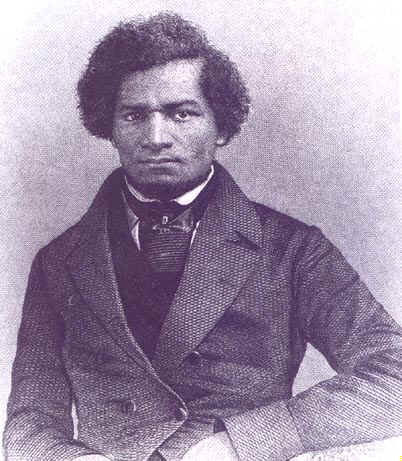
Frederick Douglass said, “Power concedes nothing without a demand. It never has and never will.” The school funding situation has reached the point where I believe Frederick Douglass’ quote is a message we must take to heart.

Legislators and the governor must hear our demand to change the formula and must stop sacrificing this state’s future…which is its children!

It is time for ALL to join together and board the bus and head to Madison! Our children deserve nothing less than this from us.

On the eve of Madison’s Juneteenth Celebration (10:00 AM, June 14, Penn Park) it is an appropriate pleasure to offer a couple additional Frederick Douglass Quotes.

A little learning, indeed, may be a dangerous thing, but the want of learning is a calamity to any people.

If there is no struggle, there is no progress. Those who profess to favor freedom, and deprecate agitation, are men who want crops without plowing up the ground, they want rain without thunder and lightning.

My advice to those who want to join in agitating for school finance reform is to contact the Wisconsin Alliance for Excellent Schools. We need your help!.

Thomas J. Mertz

Leave a comment

Filed under "education finance", AMPS, education, Elections, finance, Pope-Roberts/Breske Resolution, Referenda, School Finance, Uncategorized

Here Comes the Summer

To celebrate the last day of school for the 2007-8 year in the Madison Metropolitan School District, a selection of Summer music videos.

The Undertones, “Here Comes the Summer.”

Sly and the Family Stone, “Hot Fun in the Summertime.”

Eddie Cochran, “Summertime Blues.”

Doc and Richard Watson,” Summertime.”

The Lovin’ Spoonfull, “Summer in the City.”

The Barracudas, “Summer Fun.”

Congratulations to all the graduates; thanks to all the teachers and staff, especially those retiring.

Enjoy the season!

Thomas J. Mertz

1 Comment

Filed under AMPS, Best Practices, Local News