
Click on image for pdf.
Previous EdTweaks can be found at www.edtweak.org.
Thomas J. Mertz
 At a discordant meeting last night, the Kenosha School Meeting approved a 2.17% tax levy increase.* The maximum levy allowed under the state budget — after the Governor and Legislature slashed state aid and lowered revenue limits — was 6.03%.
This trend of not taxing to the max deserves lots of attention, but a few words about the discord first. The Kenosha case is strange, but the state level refusal to take bold action to reform the revenue and budgeting policies for adequacy, sustainability and equity has shifted many of the cuts and the tax increases to local governing authorities making them the focus of misdirected complaints from both the Right and Left (here is an amazing example from the Right — the blogger is an aide to Senator Mary Lazich, accuses the distict officials of dishonesty based on the state created shift to property tax revenues and also has the gall to call the School Meeting “undemocratic” because only people he disagrees with were in attendance). This frustration needs to be directed at the state officials who can actually enact real reforms).
The meeting described in and the comments appended to this news story demonstrate that the state’s shift of a larger share of under-funding education to property taxes has given the anti-tax crowd a new place to vent and perhaps some new adherents. What is interesting about Kenosha is that unlike in Washburn — where the teabaggers came out to protest the mil rate is going up 15% — there is little or no basis for their sentiments.
The 2.17% levy increase is not large, the resulting 7.37 mil rate is not large, in four of the last eight years the mil rate in Kenosha has been reduced and the 2009-10 mil rate is significantly below the 2003-4 rate of 7.72 and far, far smaller than the 1991-2 rate of 9.54 (all figures from the preliminary June budget).
The gap between the 2.17 mil rate approved and the allowed 6.03 and the $3.5 to $5.0 million in additional cuts mandated by this budget are both large and will have a large, negative impact on education in Kenosha. These cuts have to be sen in the context of a school funding system that has all but mandated annual program and service cuts for the last 16 years (I am not clear what cuts are being contemplated and it appears that some use of the Fund Balance is likely).
The combination of cuts, property tax increases and under levies is happening all over the state. In counties, cities and school districts, most of the attention has been on the first two and few realize that many of their beleaguered local officials are not taxing to the max. Even fewer are thinking about what this means in the short and long term. I don’t know how extensive this trend is, but it is worth keeping an eye on.
School districts that I am aware of who will not tax to the max include, Madison, Kenosha, Appleton, Janesville, New Berlin, Whitnall, Oshkosh (I think), Greenfield (if those who attended the School Meeting have their way), Turner, and I am sure many I’ve missed and more to come (please let me know of other districts in the comments).
In the short term it means more cuts and often lower Fund Balances (which may lead to higher interest rates for borrowing — see Dane County for example). In the current economy, more cuts will mean trying to do more with less. That usually can’t be done and certainly cannot be sustained. It means closing schools and limiting educational opportunities, it means not filling potholes and plowing streets, it means telling the cold, the disabled and the hungry “no,” it means that investments that would form the basis of future prosperity aren’t being made, it means less safe streets, delayed infrastructure, and lowered expectations for the present and the future. This is what is happening every day at every budget hearing.
I am not clear on the mechanisms for any adjustments that are made to state aid due to levies that are below those anticipated. I’ve got a couple of queries out and will pass along the wonky details as soon as I am able.
Cuts and lower levies this year will also shape the perceptions of budgets and levies in future years. Every cut that officials make regretfully, every fiscally based redefinition from essential to discretionary, every abandoned cost of living adjustment, every potential investment to create growth that is passed over…provides ammunition to those who rail against activist government, those who refuse to recognize that government is the mechanism by which a humane society cares for the neediest, an engaged society shapes the present, and a wise society invests in the future.
The precedent of smaller levies will make future levy increases seem larger. In Madison, the current plan is to split the huge two-year levy increase into two very large levy increases, with the first (this year) being well below the allowed amount (such bad choices, there is no good way to handle this). This make a certain kind of sense from both a policy and a public relations perspective. Still I worry about the message, the precedent, the impact and even the public relations. On the last, part of me says just get the worst of it over with, enact as much as you can this year, take the heat and move on.
Fiscally, school districts that do not levy to the max for two consecutive years lose that authority in the future. Their future levy limits are based on the lower amounts actually levied. Madison will avoid this by levying the general fund to the max and cutting the debt service levy (if I understand correctly). Other district may not have that option, so the underfunding will be compounded in future budgets.
As I’ve said in past posts, the shift to property taxes is wrong and I have sympathy for those are saying “this is too much” and asking local officials to limit their levies. I also have sympathy for the local officials who are hearing those voices and limiting their levies. I just want all who are involved to act with an awareness that this is a partial and temporary solution that is harmful in many direct and indirect ways. I’d also like all those involved to join those of us pushing state officials to take the steps that only they can take to get us out of this destructive cycle.
There is one more thing I’d like and that is to see our State Senators and Members of the Assembly attending the county, city and school budget meetings; hearing the voices that cannot penetrate the closed doors where they cut their secret deals; witnessing the local officials struggle with the hard choices the state officials largely avoided (read Brenda Konkel’s report from one of these meetings: “Raise My Taxes!“); and maybe, just maybe explaining to one and all why they believed their work was something to boast about. Senator Fred Risser and Representative Mark Pocan, consider this a personal invitation from one of your constituents who has supported you in election after election.
Thomas J. Mertz
*KUSD is one of the districts in Wisconsin that continues the old tradition of the Annual School Meeting handling budget approvals.
Filed under "education finance", Budget, education, finance, Local News, School Finance, Uncategorized
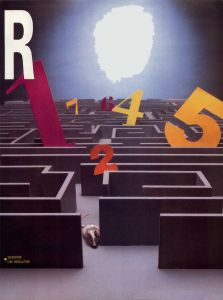 I was cleaning out old links and came across this wonderful editorial from the Eau Claire Leader Telegram. It really really does a great job of explaining what is wrong with the “data driven” numbers obsessed educational policy decision-making and providing some perspective. Here is the whole thing:
Editorial: As school year starts, don’t get numbed by numbers
When observing our educational system through the lens of the media, it’s easy to get lost in the numbers.
We’re not talking about the numbers kids will find in multiplication tables and quadratic equations when they return to classrooms in the Chippewa Valley this week; we mean the kind of numbers that make headlines.
There are the good numbers, such as standardized test scores, which typically show local schools meeting and exceeding state and national averages.
There are bad numbers as well – unfortunately, too many of them: the millions that are perpetually being cut from school budgets because of state aid shortfalls, not to mention the compensation numbers of a certain Eau Claire school district administrator most in the community wish would just go away.
On top of this, there are confusing, ambiguous numbers – those used to calculate allowable increases in teachers’ salary and benefits packages, for instance, or those mysterious ones known as “mill rates” – the kind that drive endless political debates and generate hard feelings among educators, taxpayers and elected officials.
All of these numbers are important, which is why you’ll find them in the pages of this newspaper. However, focusing on the numbers alone can distract our attention from other parts of the educational equation. To put it another way, if we focus only on the ‘rithmatic, we forget about the readin’ and ‘ritin’.
Measuring, tabulating and trying to improve test scores is important to education, but that’s far from the mind of a kindergartner who can’t wait to use his brand new box of crayons on the first day of school.
School budgets and the decisions that shape them are vital too, but so is the pride of an elementary student who has finished her first chapter book, the joy of a middle-schooler tackling a novel, or the excitement of a high school student unfolding Shakespearean sonnets.
Likewise, while it’s necessary to ensure our educators are paid in a way that’s fair to them and the taxpayers, it’s also necessary to acknowledge and support teachers as they inspire young people to learn, work hard and express themselves.
And though community residents deserve honest school administrators and elected school board members, we shouldn’t let the numbers games some people have played undercut our support for the goal of our educational system: producing good citizens capable of improving their own and others’ lives.
The 2009 school year is a brand-new spiral-bound notebook. May the numbers and letters that fill it in the coming months tell a positive story.
– Tom Giffey, editorial page editor
Thomas J. Mertz
Filed under Arne Duncan, Best Practices, education, Gimme Some Truth, Local News
 I just read the release and memo on the Democratic agenda for the Fall legislative session. The agenda is a recipe for disasters.
The disaster that matters to most of us in the state is already in progress as school districts cut programs and services while raising property taxes at rates that have not been seen for years (read this report from Kenosha, look at Rhinelander); as municipalities trim essential services, cut investments that would lead to recovery and growth while also raising property taxes and fees (here is the latest from Eau Claire); and counties axe public safety and safety net programs, close nursing homes and like everybody else, raise property taxes and fees (here is a recent report on Dane County). This Fall budget season is bad; the 2010-11 will be worse if there isn’t bolder action from the state.
The disaster that probably matters most to the Democratic leadership will come in the 2010 elections. Their vulnerable members will lose if all they bring back to the voters is window dressing campaign finance reforms and tougher drunk driving laws (this isn’t quite fair, some of the agenda is good — Green Jobs in particular –, but it is not anywhere near sufficient to meet the crises we are facing). Even the Democrats in “safe seats” (like in Madison) may well find themselves surprised by challengers from the left who demand better and bolder action.
I don’t care what their polling says, they need to take their heads out of the sand and look around at what is happening with the schools, with the counties, with the cities and most of all with the families they claim to be “Standing Up” for. They need to look beyond November 2010 and act in the long term interests of our still great state. Mostly they need to recognize that the revenue and budgeting assumptions they have been working from cannot be sustained.
Some realize this. Representative Cory Mason is proposing a jobs program funded by higher taxes on those earning over $1 million annually. A “Save Our Services” campaign has started, seeking to fund essential services via an expanded sales tax base (info on the October 1 Madison rally here). Last night the Madison Metropolitan School District Board of Education voted unanimously in support of a resolution calling for a sales tax increase dedicated to school funding. This idea is the focus of a “Pennies for Kids” campaign that the Wisconsin Alliance for Excellent Schools is in the process of initiating (this is just beginning, stay tuned).
Many of us would like to see even broader changes in our state’s taxation, budgeting and investment policies, but something has to be done to meet the crisis and these are good steps. the Institute for Wisconsin’s Future and Wisconsin Council on Children and Families Catalog of Tax Reform Options for Wisconsin is still the best place to begin thinking about revamping the entire system in order to achieve adequacy, equity and sustainability.
If the Democrats stick with their “do little or nothing” agenda, the crises will grow all around the state and come back to hit them hard in November 2010. When that happens they will have no one to blame but themselves. With power comes responsibility, with failure of effort and accomplishment comes accountability.
One closing observation: There is nothing in the Democratic agenda about Governor Jim Doyle’s “Scramble for the Crumbs”/ Race to the Top package. I hope this indicates that many in the party are too smart to sell what is left of their souls for a lottery ticket in a rigged game where the payoff is one-time funding far below the needs of our schools ($80 million is what I hear).
Thomas J. Mertz
Filed under "education finance", Accountability, Budget, education, Elections, finance, Gimme Some Truth, Local News, Uncategorized

Click on image for pdf.
Previous EDTweaks can be found at www.edtweak.org.
And thanks to my brother for making the connection between the Joe Wilson “You lie” outburst and this classic Bob Dylan performance.
Thomas J. Mertz

Update: Board President Arlene Silveira sent me a copy of an amended agenda and the Wisconsin Association of School Boards resolutions are now an action item for the Students Achievement and Performance Monitoring Committee (committee agenda here). The “Weekly Notice” link has also been fixed (over the weekend…that’s impressive).
On the WASB matter, I’ve had lots of talks with Board members in Madison and elsewhere about how to get schools the resources they need. One idea that has some support is adding a dedicated statewide sales tax to the school finance mix. It is clear that the continued shift to property taxes cannot be sustained, that the current sources of state revenues are not sufficient or sustainable and that the resultant program and service cuts in schools around the state are forcing districts to endanger our proud tradition of quality public education for all. A sales tax won’t fix everything, but it will help. Board members (in Madison and elsewhere) have been supportive but the idea may have come together too late to become part of the WASB resolution process this year. We’ll see.
(Original Post, see comments also)
It was a more than little difficult finding the agendas for the Madison Metropolitan School District Board of Education Committee meetings scheduled for Monday, September 14.
First, it looks like MMSD is again neglecting to send notices to those who subscribed to their “send notices” list. Since no notice had arrived, I began checking the “Weekly Notice of Meetings” link on the Board page periodically. Early on Friday the link gave last week’s notice; at some point it began giving a “page not found error” (pdf of this from 7:45 PM 9/11/09).
I assumed the page was being updated and kept trying. Finally, at about 6:00 PM I realized that there would be no update and started searching. Sure enough, a search for “weekly notice” and September 2009 led me to this page which led me to the agenda linked above.
I wouldn’t make a big deal of this, except that this is an organization that has not updated their budget page with the state budget bad news from June; an organization with apparently nothing to post on “State and Federal budget issues” at the same time their Board of Education is writing op eds on the topic ; an organization whose “Recently in the News” page is stuck in January of 2009; an organization that has not issued a news release since June (at least according to their web site)…Communication is clearly a problem.
We’ve been hearing about communication problems for years. I have two pieces of advice. First, it is important to begin by getting the little things right. Second, if the people in charge of communications, the web page, public relations and all that are not doing their jobs well, find new people.
Now the obligatory but heartfelt clarification. There are many people at MMSD who have been consistently helpful with my requests for information. I know that if instead of periodically clicking today I had dropped the Board Secretary a note, I would have had the agenda in my in box and the link would have been fixed (instead I assumed an update was in process and took my son to the beach till it was too late to drop that note). I do appreciate the efforts that have been made.
Enough of my trials and tribulations, time for some notes on the agendas. First I want to note three things that are not there.
There is nothing about the budget reconciliation. Looking at the Board calendar, that means the earliest there will be a public discussion of what are major decisions about taxation, budgeting, spending and borrowing will be the October 5 committee meetings (things now go to committee before they go to the Board), or three weeks prior to the final approval of the tax levy and budget. State statues dictate that the budget be presented to the public one month prior to a public budget hearing. That was done in the Spring, but much as changed due to the miserable state budget. I think that an effort to make the local changes in a manner respectful of the spirit of public knowledge and input on the budget is in order (more on the budget revisions here and here). This is another little thing — or given the magnitude of the changes, big thing — in the realm of public engagement that is not being done correctly.
Second, and germane to the state created budget mess, I expected that there would be some discussion of resolutions to be proposed to the Wisconsin Association of School Boards. From the discussion at the August 17 meeting I was under the impression that these would be finalized at a public meeting prior to the September 15 deadline. Apparently these are being done outside the public eye, with no formal discussion or vote. Not good.
Last, there is an agenda item for an update on the “class and a half” specials fix, but no documentation. Id hope this isn’t another case like “Ready, Set, Goals” where the good intentions produced no tangible result.
No time to comment on what is on the agendas (maybe on Monday), except to say the item on short term borrowing highlights yet another way that Wisconsin’s school finance system is broken and if the people pushing value added really believe that reports like the one included are adding much of use in policy decisions, they need to stop drinking the Kool Aid (same goes for all the data fetishists in Arne Duncan’s gang).
Thomas J. Mertz
Filed under Accountability, Arne Duncan, Best Practices, education, Local News, Uncategorized
 With most Wisconsin school districts contemplating or committed to sizable local property tax increases for 2009-10 and looking at continued service and program cuts combined with more property tax increases in 2010-11, this is not the best time to be asking the voters to approve a referendum. Personal budgets are tight, the economy is uncertain and there is a delicate balance between program and service cuts as demonstrations of fiscal responsibility and program and service cuts undermining quality to the extent that it is difficult to garner further support (the “starve the beast” idea).
Yet because the problems caused by the latest state budget were piled on top of 16 years of struggles due to the broken state school finance system, some districts feel they have no choice. These include ones seeking building projects, ones who feel they cannot endure any more cuts and continue to provide the quality of education they are committed to, and ones that are anticipating the expiration of a non-recurring referendum and the budget gap this will produce.
Although there has been little or no official acknowledgment or discussion, the Madison Metropolitan School District is in this last category. At the end of the 2009-10 fiscal year, Madison will lose about $5.5 million in revenue authority for ‘maintenance and technology.” The probable cuts for 2010-11 are bad; without this money they will be more horrific than anything we have experienced lately. If the district wants to extend this authority, the time to start making their pitch is now. I hope they do and I hope they get started.
Madison has not begun discussions, but others have. There are five referenda on the ballot at special elections in October and November 2009 and more being contemplated.
Two of the ones that are set are for building projects. These are being fast tracked in order to try for the 0% interest ARRA srtimulus bonds.
On November 3, voters in Pewaukee will vote on $24.95 million in debt authorization for classroom construction and other renovations, including a swimming pool (more from the district here and from a pro-referendum community group here). That same day the Trevor-Wilmont voters will decide on an $11 million plan to build an addition and renovate (more from the district here).
Pewaukee is also asking for $400,000 in annual recurring authority for general operating purposes for the new facilities.
Wheatland will go back to the voters on October 27, asking for four years of nonrecurring authority in the amount of $300,000 per year. Nonrecurring authority in this amount expired at the end of the 1008-9 year, so this is in a sense a renewal.
A similar referendum failed last April (here and here). The language is a great example in truth in marketing:
BE IT RESOLVED by the School Board of the Joint School District Number 1, Towns of Wheatland, Brighton, Randall and Salem, Kenosha County, Wisconsin, that the revenues included in the School District budget for the 2009-2010 school year and for three school years thereafter, to and including the 2012-2013 school year be authorized to exceed the revenue limit specified in Section 121.91, Wisconsin Statutes, by $300,000 a year, for non-recurring purposes in order to maintain the current educational level of the District and cover shortfalls due to decreased funding.” (italics and bold added).
Sad but true, the shortfalls are bigger than ever and referenda continue to be the only way to fully fund education.
On October 6, 2009 the Whitehall district has a three year non recurring maintenance, technology and infrastructure referendum on the ballot. The amounts are $200,000 for 2009-10, $150,00 for 2010-11 and $100,000 for 2011-12. Superintendent Mike Beighley explained the thinking behind the referendum:
“When we look at the ability to improve our district with the limited increase in taxes, I think we have an obligation at least to present that to the public as an option,” said Beighley.
All across the state other districts see similar opportunities to “improve,” yet know that refrerenda are difficult and the odds of passage are less than 50%, so they don’t even ask.
Two districts struggling to finalize referenda plans are Wisconsin Dells and Rhinelander.
In the Dells, the possibility of the ARRA 0% bonding makes building an addition for 4 year-old kindergarten an attractive option. The district is holding a community meeting on September 9 and may go for the November 3 date. They are also considering an operating referendum to make up for part of the state budget created mess:
[District Administrator Chuck] Whitsell also said the district is facing an $800,000 budget deficit next school year, and because of no raise in the per pupil taxing authority it has been given from the state, the district might ask taxpayers to increase the revenue limits in another referendum question.
I hope they do ask for the operating money and get it.
In Rhinelander the need is clear, but the path to meeting the need has been continually blocked. It is one of those districts that has been caught in almost all the faults of the current school funding system. The district is geographically large, but the economies of scale are small or negative. Enrollment has declined and incomes are not great, but property values remain relatively high. Referenda have repeatedly failed. There have been cuts for 16 years, 150 positions have been lost in the last seven years and more are on the table.
Here in Madison we think we have experienced the failures of the school funding system (and we have to a great extent), but I talk to my friends in Rhinelander and can only shake my head and think how lucky we are to have avoided the full weight of these failures.
Dating back to 2004, 10 operating referenda have been voted down in Rhinelander. Yet it looks like they will try again. I am filled with admiration for their perseverance and commitment.
The date hasn’t been set, but the word is Rhinelander voters will get two questions this time. One will ask for three years of $1,5 million revenue authority for operations and the other is for $13.7 million in construction bonding to maintain and remodel facilities.
Superintendent Roger Erdahl summed up the situation succinctly:
“It would stop closing buildings, it would stop laying off staff, which are the techniques we currently use to balance our budget.”
Here is what will happen if there is no successful referendum (from NewsoftheNorth.Net):
The following actions would be taken in the year 2010-11, in order of priority:
- Close and sell South Parking building, requiring a mandatory grade re-configuration, for a savings of $117,000.
- Close and sell Cassian-Woodboro building, with an accompanying grade re-configuration, for a savings of $120,000.
- Reduce extra-curricular activities for a savings of $27,800.
- Reduce custodial staff, for a savings of $472,000.
- Reduce regular education paraprofessional staff, for a savings of $200,000.
- Reduce full-time teaching staff by 12.5 by raising class sizes from the current low 20s to low to mid-30s in grades 4-12; or by reducing electives at the middle and high schools; or by doing a combination of larger class sizes and the reduction of electives, for a savings of $1 million.
In the year 2011-12, the following drawdown actions would be taken:
- Reduce full-time staff, raise class sizes and reduce electives to achieve a savings of $296,000.
- Decertify the elementary and secondary charter school and absorb these students into the other district school buildings for a savings of $240,000.
- Reduce high school graduation requirements and move to a six-period day; reduce staff at the middle school and eliminate all professional travel and staff development, for a savings of $160,000.
- Eliminate all Fund 10 staff development and travel and impose a moratorium on the acquisition of textbooks and instructional materials; eliminate middle school activities and travel; reduce administration staff, for a savings of $320,000.
- Move 7th and 8th grade to the high school building; with grades 3 – 6 moving to the middle school building to reduce full-time staff, for a savings of $240,000.
- Close and sell Crescent school building for a savings of $125,000.
- Moratorium on all maintenance upkeep and repair of buildings, except for emergencies, for a savings of $500,000.
This is the destruction of public education. This is the inevitable result of what Ruth Page Jones has called the “Going out of Business Plan” that is Wisconsin’s system for investing in education and the future.
Next time the Governor or a Legislator starts gabbing about how “education is a priority we protected in the state budget,” drop them a line and ask about Rhinelander. Ask them if education has been “strengthened” as their political mouthpiece claims. Ask them what they are going to do to fix the mess they have made and inherited.
And be proactive. The best way to help the children of Rhinelander and Wisconsin is to work for change via the Wisconsin Alliance for Excellent Schools (WAES). Our state needs to look for ways to fully fund the education of every child in every district, we need to consider a “Cents for Schools” dedicated sales tax, we need to make sure that the money is going where it is needed most, we need to do better. WAES is the loudest and clearest voice saying these things. Lend your voice and make the call for reform even louder.
Thomas J. Mertz
I had not recently thought about what was said by Madison Metropolitan Board of Education members as they passed their initial budget in May, but the happenings in Washburn brought them to mind and reminded me that the struggle to recognize that investments in education are a state responsibility requiring a state solution isn’t over in Madison.
As we now know the state budget produced multiple financial problems for MMSD (we know this, but you wouldn’t know it by going to the MMSD budget page or the news releases, or the “recently in the news” — they missed this from Board President Arlene Silviera and everything else that has happened since January). As a result, the entire Board of Education has been in one way or another looking to the state for long and short term help.
Back in May, that was not the case. One member got things right; most were too happy with what then seemed like a positive budget to bring up the long term state issues; one got things wrong in an offensive and dangerous manner
Johnny Winston Jr. is the one who got it right.
He revealed the truth, school finance is a state and federal problem and requires at the very least a state solution. Recent developments at the state finance level have moved us further from that solution.
For a variety of reasons (listed below), until the latest state budget Madison had enjoyed relatively painless budgeting in the most recent years. At the same time, the state school funding system remains broken, any of the varied nips and tucks that have been made at the local level have only provided limited relief, they’ve only been partial remediations – and temporary. The real fix has to come at the state level, it must be comprehensive and it must be sustainable.
Lucy Mathiak is the one who got it wrong.
In addition to her misguided championing of local solutions to a state created problem (see here for MMSD’s official and correct position), Mathiak mostly misidentified and wrongly interpreted the main factors that contributed to the recent lack of major harmful budget cuts in Madison.
Here is my list, in approximate order of importance:
Right and wrong, partial and temporary, these factors are all about played out. The party is over and the bills must be paid.
As Asst. Superintendent Erik Kass said, 2010-11 is looking “ugly,” and I’ll add that this ugliness has nothing to do with mythical local mismanagement (in fact the recent surpluses and the harm caused by the cuts and conflicts that created those surpluses reveal that the very Board members Mathiak praises had pushed the district too far on issues of budgeting and were the ones closest to mismanaging) and the solution will not be found via equally mythical miraculous local administration and governance.
The new state budget has brought back to MMSD the hard choices needed to make the cuts that do the least harm and to find the fiscal strategies that can be sustained. The Title I and IDEA stimulus money will soften the blows, but that is yet another partial and temporary band-aid.
The self-serving myths Mathiak mouthed back in May are dangerous because they make it harder to convince people that school finance reform must be a priority. I’m glad I remembered what she said, because these falsehoods must be countered at every opportunity.
Join the movement for real education funding reform. Check out the School Finance Network; become a member of the Wisconsin Alliance for Excellent Schools.
If you do these things, you will be going a long way towards righting some very significant wrongs.
Thomas J. Mertz

The Labor Day extravaganza starts with a lengthy excerpt from the1886 Platform of the Knights of Labor. It is a good reminder that the sruggle has been going on for a long time.
Preamble
The alarming development and aggressiveness of great capitalists and corporations, unless checked, will inevitably lead to the pauperization and hopeless degradation of the toiling masses. It is imperative, if we desire to enjoy the full blessings of life, that a check be placed upon unjust accumulation, and the power for evil of aggregated wealth. This much-desired object can be accomplished only by the united efforts of those who obey the divine injunction, “In the sweat of thy face shalt thou eat bread.”
Therefore we have formed the Order of the Knights of Labor, for the purpose of organizing and directing the power of the industrial masses, not as a political party, for it is more — in it are crystalized sentiments and measures for the benefit of the whole people, but it should be borne in mind, when exercising the right of suffrage, that most of the objects herein set forth can only be obtained through legislation, and that it is the duty of all to assist in nominating and supporting with their votes only such candidates as will pledge their support to these measures, regardless of party. But no one shall, however, be compelled to vote with the majority, and calling upon all who believe in securing the greatest good to the greatest number, to join and assist us.
Declaration of Principles
We declare to the world that our aims are:
1. To make industrial and moral worth, not wealth, the true standard of individual and national greatness.
2. To secure to the worker the full enjoyment of the wealth they create, sufficient leisure in which to develop their intellectual, moral and social faculties; all of the benefits, recreation and pleasures of association; in a word, to enable them to share in the gains and honors of advancing civilization.
Next up is a reminder to attend the South Central Federation of Labor LaborFest, at the Labor Temple (Park and Wingra). Lots of good people, activities for all ages, good food and drink and music from Mel Ford and Paul Cebar and the Milwaukeeans. You can download a flier here.
While on the topic of reminders, the pending bill requiring that labor history be taught in Wisconsin schools could use your support. Find out more here and also check out the other great things that the Wisconsin Labor History Society has to offer.
Last, that labor classic “I’m Sticking with the Union” as performed by a stellar cast at Pete Seeger’s 90th Birthday concert.
Last year’s Labor Day post, with more music and history can be found here.
Thomas J. Mertz
Filed under Blast from the Past, education, Local News, National News, Take Action
 Fund a Classroom Project in Madison
 AMPS
AMPS 