Category Archives: Best Practices

The Man With a “Plan”

94575

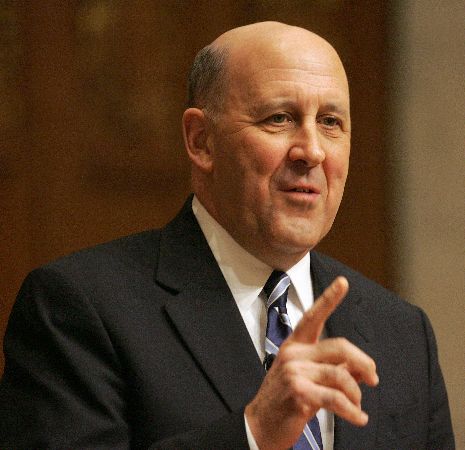
After greeting the School Finance Network (SFN) plan with little better than contempt and offering a budget proposal that at best slows the bleeding in school finance (after 15 years of steady blood loss), Wisconsin Governor Jim Doyle has previewed his own “plan” for fixing school funding.  It may be a good starting point for talking (not as good a starting point as SFN’s work), but I don’t think contains the answers to the financial and other struggles of our schools and I don’t like the way it only provides the  resources needed to “improve student performance” (which unfortunately will likely be defined by the flawed and limited WKCE) to those districts that meet criteria that have nothing to do with education.

Like many policy proposals these days, it uses rewards and punishments, carrots and sticks.  The reward is an opportunity to escape from the revenue caps, to no longer have to cut 1%-2% of educational programing annually.  The punishment is to continue under the system that has eaten away at our schools, limited our students’ opportunities and put our state’s future in danger for the past 15 years.

The rewards are tied to the following ill-defined (at this point) policies:

• Join together for the purposes of negotiating union contracts

• Make employees use the state health plan unless the school district already has a plan that is cheaper

• Require schools to agree to a list of practices that would improve student performance

• Provide compensation for teachers that better reflects the needs of individual schools such as those in rural districts that struggle to attract teachers for some subjects

I’m going to leave the contracts, compensation and health insurance aside for now in order to say a few words about #3, the “best practices.”

Doyle cited the work of Alan Odden as the basis for the kind of practices he has in mind.  The Wisconsin School Finance Adequacy Initiative Final Report for 2007 has some good ideas about “best practices” based on research  and good estimates of the costs of these practices, also based on research.   Some of the things in the Odden report are stronger than others and some would be difficult for many districts, but small classes, formative assessments used wisely, teacher coaches, staff development are all good ideas.

What Odden and SFN both propose is funding these practices for all schools.  Doyle seems think that access to best practices should be a reward available only to those who get all their ducks in order. I guess the New “New Wisconsin Promise” will be “A Quality Education for Every Child Who Lives in District that Joined with Other Districts to Negotiate Contracts and Limit Health Care Costs.”

I want to make it clear that neither Odden nor SFN wants to simply give the schools more money to do whatever they want (although both do show proper respect for the  professional knowledge of our state’s educators).  Both include means of targeting money to research based programs and both also propose “accountability” evaluations.

There are ways to target money toward best practices but still make the resources available to all schools  (the Student Achievement Gaurentee in Education — SAGE — program is a partial example).  You can do categorical aids which can only be spent in certain ways,  you can do grants, you can do reimbursements.  Instead, Doyle ties the resources for best educational practices to his ideas of the best financial and policy (and probably political) practices.  As education policy, this makes no sense.

We’ve had 15 years in Wisconsin under a system of school finance that is based on the politics of tax policies, not education.  As a nation, with No Child Left Behind we’ve been punishing schools instead of helping them.

If Doyle’s plan moves forward, I sincerely hope that education is put first and that the stick punishment is put away;  that the very good ideas about funding promising educational practices are enacted in a manner that will reach all districts, all schools, and all students in Wisconsin.

Thomas J. Mertz
2 Comments

Filed under "education finance", Accountability, Best Practices, Budget, Contracts, education, finance, Local News, nclb, No Child Left Behind, School Finance

Primary Election Roundup

politics040408_fullsize_story11

Some quick results and very few thoughts this morning.

Turnout was pathetic.  During the Presidential campaign season we heard a lot about a new political engagement, especially among the young.   February primaries lack the glamor (and resources) of Presidential votes, but going from about 2.9 million statewide voters in November 2008 to about 250,000 statewide voters in February of 2009 does not bode well for our political culture.  Locally, in Madison District 8 — one of the campus districts — the vote total in November 2008 was about 7,500; yesterday it was 528.   One data point does not make a trend, but this can’t be good for our democracy.

Tony Evers and Rose Fernandez survived the Sate Superintendent primary.  Here are the totals:

Schools Superintendent REPORTING 97%
Tony Evers

88,734

35%
Rose Fernandez

78,830

31%
Van Mobley 34,534 14%
Todd Price 28,641 11%
Lowell Holtz 22,163 9%

I want to thank Todd Price for his effort and his successes in raising awareness of the continuing crises in school funding, testing and other school matters. Tony Evers now has my full support (and I hope to see more evidence of the aggressive advocacy he has claimed).

All nine referenda failed!

The Appleton referenda lost by a 5 to 4 margin.  According to the Post Crescent this will mean “as many as 30 fewer teachers and larger class sizes next fall, plus delaying safety measures for several school buildings.”

The Clinton referendum asking to fund investments in a geothermal HVAC system failed again, this time by a large margin of 968-576.  This is exactly the sort of infrastructure investments we should be making, but under our current state school finance system they are difficult (more here, here and here).

The Highland request for recurring authority to limit program cuts lost 298 to 158.

Class sizes will be going up in Salem.  There is confusion about the margin.  DPI reports that it was 964 to 654.  The Kenosha News says 664 to 654.  More form that source on what this will mean to the quality of education in Salem:

The increase, officials said, was needed to cover expenses for the upcoming school year. School Board President Patricia Merrill said the result means 19 employees would be laid off for the 2009-10 school year, with layoff notices likely to be announced at Thursday’s School Board meeting.

Also on the chopping block are extra-curricular and after-school programs, starting this fall. Other programs scheduled for elimination include the gifted-and-talented program and technical education. Cuts are expected for music, arts, gym and Spanish. Merrill also said technology upgrades could be halted and staff workshops and travel will be reduced.

Superintendent Dave Milz said class sizes will likely increase.

“I’m not sure how any of these things can be beneficial for the kids,” Milz said. “This will certainly prove to be a challenging experience for the board and community to overcome.”

Referenda were narrowly defeated in Salem last June and September.

The vote in Siren was very close, 156 to 167 (turnout is important!).  There is talk of going back to the voters, but programing cuts are likely.

The votes on the three asks in Waupun were also relatively close.  Out of about 2,700 votes cast, they ranged from 698 in the “ongoing operational expenses vote,” to 26 votes in the “textbooks” and “materials” measure.  There will likely be school closures, and many cuts.

Closing the two outlying schools is a ticket item that would address about half of the budget deficit. No other suggestions presented could put a dent into it as closing Alto and Fox Lake elementary schools.

School board president Cathy Loomans said, “The business we’re in is about putting teachers in front of students. So the majority of our budget is staffing, and unfortunately, when you make these kinds of cuts, they have to come from staffing and that’s going to directly affect class size. There’s no way anymore to insulate the students from making these kinds of cuts.”

“Looking at what cuts we’re going to do, we have to look at what’s best for all the students to give the students across the district an equitable education,” Anne Kraintz, school board member, said.

For more information on the situation in Waupun (from one perspective), check out this site.

All around, not a great day for the future of education in Wisconsin.

Thomas J. Mertz

Leave a comment

Filed under "education finance", Best Practices, Budget, education, Elections, Equity, finance, Local News, Referenda, referendum, School Finance, Uncategorized, We Are Not Alone

Vote Today! – Today’s School Votes

Today’s election is very important.  Wisconsin will decide which two candidates for State Superintendent of Public Instruction will be on the April ballot; districts around the state have significant referendum questions and there are a couple of local Aldermanic races in Madison where there are candidates who I think deserve support (there are also some other primaries for judges and Board of Education and other Aldermanic races around the state).  The projected turnout is only 6%-10%, so your vote may make the difference.

First and foremost, Todd Price is the clear choice for State Superintendent.   Price has a thorough understanding of the difference quality public education can make in the lives of individuals, the health of our communities and the future of our state.  He also has correctly diagnosed and offered solutions to the problems of our state school finance system, our testing regimen, NCLB and more.  Most importantly, Todd Price has brought an urgency to this race that others lack.   We don’t need another state superintendent who accepts the continued erosion of our schools under a broken state finance system, underfunded programs for our highest need students and the misplaced priorities of NCLB and WKCE.  We need a State Superintendent who will challenge our governor, our legislators and our local school officials to do better.  Todd Price will be that State Superintendent.  Vote for Todd Price.

There are nine referenda in six districts on the ballot today.  The districts are Appleton, Clinton,  Highland,  Salem, Siren and Waupun.  I don’t have time this morning to fully explore these measures (if possible, I will add some links later), but essential things like preserving smaller class size (Appleton and Siren), investing in sustainable energy (Clinton), keeping neighborhood schools open (Waupun), paying for books, technology and other learning materials and avoiding further programing cuts will be decided.  I hope they all pass.

I am going to offer some quotes from a Todd Price press release and interview on these measures and the system that has led 151 referenda votes since January 1, 2008, most simply to preserve  or limit cuts to current programs, maintain or upgrade facilities, or build needed schools.

Price characterizes the need for these votes as “a regrettable symptom of a school finance system that has been harming our students, our communities, and our state for far too long.”…

“Referenda are band aids, temporary fixes. Our districts keep asking for more band aids just to stop the bleeding. It is time to address the real problem; it is time to fix Wisconsin’s broken school finance system.”…

“These campaigns to provide an adequate education for all children divide communities and distract from the essential task of working together for the education of all children,” Price explains. “One neighborhood is pitted against another, people on fixed incomes who can’t afford tax increases but know education is important are frustrated, educators and boards of education spend too much time trying to pass referenda instead of working to improve education; parents and concerned community members end up volunteering on campaigns instead of in the classrooms.”…

Racine Unified is a good example. The district struggles on an annual basis to balance its budget without making significant cuts to programs or going to referendum for extra money. It’s led to a contentious relationship between the district and the public, left schools in disrepair and resulted in relatively poor student performance.

Last, voters in Madison District 2 need to keep one of our city’s most Progressive and hardest working Alders in office — vote for Brenda Konkel.  In District 8, newcomer Katrina Flores is the best choice and as a grad student in the School of Education a sure friend to the schools.

Thomas J. Mertz

Leave a comment

Filed under "education finance", Accountability, Best Practices, education, Elections, finance, Local News, nclb, No Child Left Behind, Referenda, referendum, School Finance, Take Action, Uncategorized

What does Van Mobley mean by a “Basic Education for the Real Economy” (and who gets a “basic education” and who gets something richer)?

martin08

John Nichols in the Capital Times seems enamored with State Superintendent of Public Instruction candidate Van Mobley’s sound byte  “”Basic Education for the Real Economy.” Me, I’m confused, skeptical and suspicious.  Mostly, I think it sounds like an abandonment of public education as a means of expanding equality of opportunity and an embrace of the idea of social and economic stratification via  “appropriate education.”  In other words, a “basic education”  and some vocational skills for the masses, something better for the ruling classes.  I will say I am impressed with the sound byte itself — it sounds very good and is open to many interpretations.  It appeals to John Nichols and the “reading, riting and rithmatic” crowd.  Nice political rhetoric.

Before continuing I want to say two things.  First, if you believe like I do in public education as our best tool for moving towards equality, I think Todd Price is the best choice to keep that vision alive.  Second, despite what I think is an inexcusable lapse in not further examining Van Mobley and his rhetoric, John Nichols deserves some credit for being one of the few journalists in the state who has given the Superintendent’s race regular coverage.

Next, I think the full statement is in order:

Basic Education for the Real Economy

For the last twenty years we have geared our education system to prepare our children to thrive in the “New Economy.” Guess what? The “New Economy” is collapsing. It was a chimera. It is time to get back to the basics of reading, writing and arithmetic. What do children learn from the internet if all they can do is look at the pictures? As Superintendent I will refocus class time on the basics.

Since Mobley is a historian, I’m going to play historian too.   This Struggle for the American Curriculum (click the link for Herb Kliebard’s masterful book by that name) is as old as public education itself.   There are lots of versions:  Education for Democratic Citizenship vs. Education for a Trained Workforce; Manual Training for all as part of a varied education vs. Industrial Education for some and liberal arts and the classics for others; Booker T. Washington’s Vocational Education vs. WEB DuBois quest for excellence in liberal arts and sciences…  One consistent thing has been that calls for “basic education” have rarely been mouthed by those looking for equity and equality.  The “back to basics” crowd generally know that the elite have the resources to supplement the “basics” and that by limiting the education of the non-elite, they all but guarantee a recreation of inequality.

Mobley also writes of the failure of the “New Economy” as a reason for his emphasis on the basics.  This is a false dichotomy.  Our only chices aren’t “the basics” vs. “Education for  New Economy.”  However, there is some truth here, but only some.  The whole “World is Flat,” “Education for the 21st Century,” line of thinking  rests on some shakey oversimplifications.  As the Center for the Study of Jobs & Education in Wisconsin and United States has ably demonstrated, the “New Economy” jobs have always been few and far between.  This doesn’t change the need to work towards the promises of democracy and equality of opportunity and may reinforce the need for our schools to provide full and varied educations in order that people in all occupations may  achieve full and varied successes.

Mobley’s statement also made me think of something I was teaching today.  The topic was how railroads transformed America in the 19th Century.  I always use the computer revolution as a comparison to communicate that railroads touched every aspect of life, from work, to entertainment, to agriculture, to politics…to education.  To further this point, I also quoted Henry Adams (from The Education of Henry Adams):

This relatively small part of its task was still so big as to need the energies of a generation, for it required all the new machinery to be created — capital, banks, mines, furnaces, shops, power-houses, technical knowledge, mechanical population, together with a steady remodelling of social and political habits, ideas, and institutions to fit the new scale and suit the new conditions. The generation between 1865 and 1895 was already mortgaged to the railways, and no one knew it better than the generation itself.

Mobley asserts that because the “New Economy” bubble burst, our students need only a  “basic” education.  Adams reminds us that innovations like railroads and computers, and the commitment societies make when they “mortgage” their futures by embracing them, remake and remodel everything.   The depression of 1893 did not mean that America no longer needed a “mechanical population;” the recently burst bubble does not mean that our children will thrive with just the “basics.”   Just because only some  of today’s students will work at “knowledge based” “New Economy” jobs doesn’t mean that they won’t benefit in myriad ways from a well rounded education that includes knowledge about computers and the world that computers are such a big part of.

I’ll admit that all this is riffing on a very short and not very clear statement by Mobley.  Unfortunately, that’s all I have to work with.  Even in his WisconsinEye interview and the candidate forum, Mobley did not say much more about this.  Slick.  Mobley needs to be pressed; consider this the first prod.

Vote for Todd Price, Tuesday February 17, 2009!

Thomas J. Mertz

Leave a comment

Filed under Best Practices, Elections, Local News, No Child Left Behind, Take Action, Uncategorized

Wisconsin State Superintendent Forum Video

Here is a video from the State Superintendent of Public Instruction forum hosted on February 12 by the Wisconsin Council of Religious and Independent Schools.

There hasn’t been much media coverage on this important race and most of the candidates cannot afford extensive campaigns.  Please take this opportunity to see and hear Todd Price, Rose Fernandez, Lowell Holtz, Tony Evers and Van Mobley.

I think that once you learn about the candidates, you will join me in supporting Todd Price.

Vote February 17th!

Update

I just found these links: The League of Women Voters guide and Q&As from the Appleton Post Crescent.

Thomas J. Mertz

1 Comment

Filed under "education finance", Accountability, Best Practices, Budget, education, Elections, Equity, finance, Local News, nclb, No Child Left Behind, School Finance, Take Action

Todd Price for State Superintendent

img_2654_2

I hope to find the time to do a fuller analysis and endorsement, but meanwhile here is my letter to the editor version.

As State Superintendent of Public Instruction Todd Price will be the uncompromising advocate for our students and our schools that Wisconsin needs.

Each day that we continue to accept reasons to resist change is a day that Wisconsin’s commitment to excellence in public education is in jeopardy.  Our way of funding education is broken.  Merrill has laid off 10% of their staff; failed referenda this Spring in Appleton, Salem and elsewhere would bring larger class sizes; Holmen and other districts can no longer afford to participate in the proven but underfunded Student Guaranty in Education (SAGE) class size reduction program; Madison gutted locally funded class size reductions two years ago and there is no official talk of restoring them.  Todd Price is committed to fixing this broken system not finding excuses to preserve the status quo.

On school finance; testing and accountability; green, sustainable schools; proactive school climate and safety, the failures of No Child Left Behind; and other pressing school matters, Todd Price is the only candidate who will work to find and implement solutions immediately.  The future can’t wait.  Vote for Todd Price.

Here is a message from Todd’s campaign telling how you can help:

We’re lucky to have such a viable candidate running for Wisconsin State Superintendent of Schools in the February 17th election. The campaign needs your help to get Todd Price elected! Visit Todd’s website.

Here is what you can do:

***Donate! Because of the wonders of the internet money can be transmitted, and used on web advertisements very quickly. . If we can raise enough in the next week, we qualify for $98,000 of State Election Fund dollars! Every dollar helps.

***Invite your friends to join the Facebook group and post it to your profile by going to the group page and clicking Share+ on the right-hand side and select Post to Profile.

***Write a letter to the editor.

***Part of an organization that will endorse Todd? Let us know at: Contact@toddprice.org

***Oh yeah, vote for Todd Price February 17th!

An AP wire story speculated that turnout might “barely break double digits,” so every little bit of help could be the difference in a crowded primary. So please help if you can.

Thomas J.  Mertz

Leave a comment

Filed under "education finance", Accountability, Best Practices, Budget, education, Elections, finance, Local News, nclb, No Child Left Behind, Referenda, referendum, School Finance, Take Action

School Finance Network Releases Funding Reform Proposals

sfn_logo_option_b

The School Finance Network (SFN), a coalition of nine organizations “committed to strengthening our system of public school funding,” will be presenting their plan to the public and the media today and Wednesday (2/3 and 2/4).  Their website is up.

Locally, there will be a press conference with Madison School Board Member Beth Moss and State Rep. Sondy Pope-Roberts at today at 12:30 p.m., Glacier Edge Elementary School, Verona.

SFN has been at work on this for a long time.  They have produced a very good set of proposals.  Check it out, get involved, take action.

CAST is working with SFN coalition members and others to make sure that school funding is addressed in a positive way this legislative session.  Contact CAST: madisoncast@sbcglobal.net.

More here from the Milwaukee Journal Sentinel and an earlier statement from Rep. Pope-Roberts here.

Thomas J.  Mertz

Leave a comment

Filed under "education finance", Best Practices, Budget, education, finance, Local News, Pope-Roberts/Breske Resolution, School Finance, Take Action

Education in Doyle’s “State of the State” — The Road to Ruin

GOV Gov-6

I’m having some trouble understanding what Governor Jim Doyle meant to communicate about education and education finance in his State of the State speech.

There was at least one good thought on the topic, I’ll give him that:

A second grader is not going to be able to come back when the economy is better and pick up where she left off if we fail her today. An older person can not check out of a nursing home and come back in a few years. There are basic needs our state has always met, and just as our predecessors met them in the most difficult times, we have a responsibility to meet them today. yesterday.

But there was also a rephrasing of his new oxymoronic slogan:  “Staying even is the new increase.”  I wonder how that formulation would be scored on a WKCE Reading or Math test?

To make matters worse, after stating that schools are among his top priorities and mislabeling the effective cuts of stable dollar funding as an increase, he continued:

And I am not going to say education funding is off limits. But I will not allow cuts that ruin the quality of our classrooms (emphasis added).

This is the new standard — anything short of “ruin” is OK.  Talk about setting the bar low.  Remember when we used to talk about quality education for all.  I do.

Hell, I remember when Doyle did:

It means fixing our broken system of school funding, and making an ironclad guarantee to every Wisconsin child that this state will give you a good start in life a quality education that enables you to succeed in tomorrow’s economy.

Governor Jim Doyle, 2002 victory speech

It gets worse.

Doyle apparently still sees a need for school finance reform, but his prescriptions are out of whack, or maybe just whack.

We can change school funding in a way that encourages the hiring and retention of good teachers, provides for high standards and encourages efficiencies in our school districts. We can take these steps to make sure our kids get a great education.

The first sounds like “merit pay,” which means asking cash strapped school districts to spend more on (some) teachers.  Explaining how “high standards” will fix school funding is beyond me (and I would guess beyond Doyle to0).  This brings us to the vaunted efficiencies.

For 15 years Wisconsin districts have sought and found efficiencies in order to balance budgets under  broken system based on a structural gap between mandated costs and allowed revenues.  Any reader of AMPS should know that in most districts the vast majority of potential savings via efficiencies has been long exhausted and that for years the cuts have been harming, if not ruining “the quality of our classrooms.”

If you want further evidence, just look at the operating referenda scheduled for this Spring and what districts are asking for.

  • Bowler, Herman, Loyal, Medford, Reedsville , Siren and Waupun aren’t very specific, only asking something like Siren’s “sustaining operating expenses with which to maintain the current level of operations.
  • Waupun also asks for funds  “for non-recurring purposes consisting of acquiring educational resources including textbooks and classroom support materials.”
  • Ripon also wants to fund “replacing textbooks” and in addition for “updating curriculum, updating technology, performing maintenance and replacing vehicles.”
  • Middleton-Cross Plains wants funds for “acquisition of instructional materials and instructional technology” and “operating expenses of a new elementary school.”
  • Salem’s ask is clear: “for non-recurring purposes which would prevent further cuts to student’s educational opportunities and prevent an increase in class sizes.”

Books, class size, technology, maintenance…As a state we should do everything in our power to make sure that these basic educational expenses are met.  We don’t.

Governor Doyle knows that and his two-faced “prioritizing” of education while doing nothing to fix a system he himself has called broken is leading us down the road to ruin.

While on the topic of leadership I want to add that the Wisconsin Association of School Boards and Superintendent of Public Instruction candidate Tony Evers both praised Doyle’s remarks on education.   I know all about catching more flies with honey than vinegar, but I think that in this case those who have spent too long in the royal court can no longer even tell when the emperor has no clothes.  Or maybe they can tell, but just won’t.

Thomas J. Mertz

Leave a comment

Filed under "education finance", Accountability, Best Practices, Budget, education, Elections, finance, Local News, Referenda, referendum, School Finance

Education Tweaks

Click on Image for pdf.

Click on Image for pdf.

Click on image for pdf file.

Click on image for pdf.

As always, past and future Education Tweaks can be found here.

Thomas J. Mertz

Leave a comment

Filed under Best Practices, education, Gimme Some Truth, National News, nclb, No Child Left Behind

New Madison School Blog — Wit and Wisdom

logo

A MMSD math teacher has a “new” site and blog, Wit and Wisdom,with some good math education materials and observations on local and national education policy.  It is worth checking out.

The blog has been added to the AMPS Resources Page, where you can find all sorts of interesting and useful things.

Thomas J. Mertz

Leave a comment

Filed under Best Practices, education, Local News