Category Archives: Elections

Third Time a Charm? Another Wausaukee Referendum in the Works (Updated, Again)

You’d better hold on to what you’ve got
Cause if you think nobody wants it
Just throw it away and you will see
Someone will have it before you can count 1, 2, 3
Yes they will, yes they will

Joe Tex, “Hold On to What You Got” (click to listen)

[Updates at the bottom. Update number 2 is a clarification from District Administrator Jan Dooley. Scroll down.]

WBAY is reporting that the Wausaukee Board of Education has instructed staff to draft another referendum. The Board will vote Thursday (July 3) to decide whether this will be placed before the electorate. The details are sketchy. WBAY reports that:

The school board decided Tuesday night on a $675,000 referendum. For the average $100,000 home, that’s an added $102 in property taxes for the next ten years.

An attorney will now draft the proposal for approval by the board on Thursday. It would then go before residents for a vote in 45 days.

If a third referendum fails, the Wausaukee School District is prepared to close. It’s nearly $200,000 in debt.

This sounds like a ten year nonrecurring referendum, but it is hard to tell. More on AMPS as the story develops.

A February four year nonrecurring referendum (at $1,250,000 the first year and $1,000,000 the subsequent years) failed by a vote of 1,334 to 394; on June 24 a one year nonrecurring $575,000 referendum failed by a vote of 563-544.

More on AMPS here and commentary from John Smart here.

Stay tuned.

Update #1

This video report from WLUK-TV gives more details, but adds to the confusion. According to the story, they are considering what sounds like a 2 1/2 year nonrecurring referendum. I’m not sure that is possible.

Keep checking back, I’ll post more as it becomes available.

Update #2

I received this very informative email from District Administrator Jan Dooley:

After receiving over 640 taxpayer signatures in support of another referendum, the board voted, at last night’s meeting (July 1), to authorize me to work with legal counsel to draft the resolutions for a third referendum. The referendum will be to exceed our revenue limit by $675,000 per year for ten years. The board will be voting on the resolutions at Thursday night’s meeting.

During the meeting last evening, our school board president, Dennis Taylor, indicated that the yearly school tax increase for this referendum amount on a $100,000 home would be approximately $102 per year. This amount is based on a zero percent increase in equalized value. If equalized value of property in the district increases, the actual impact for the referendum amount will be less per year.

Where the confusion may enter in is that Mr. Taylor indicated that in 2 ½ years our building debt will be paid off. Our current annual payment for our building debt is $675,000; thus, when our building is paid off, the school tax increase from the referendum will be offset by the decrease in school taxes from the pay off of the building debt. Thus, the increase from the referendum will be felt by taxpayers for the next three years, and then the school tax will revert to near existing levels. I trust that is the basis for the reporting of an increase of $102 per year for 2 ½ years on a $100,000 home.

With anticipated declining enrollment, our district will continue to realize a natural increase in our tax rate because of a drop in state aid.

As I have said before and will say again, “Educating our children should not be this difficult.” Our children deserve a solid education, and there should be sufficient revenue with which to provide such an education. A major problem that our district faces is our shrinking state aid. Since state aid is based on property wealth per student, and we are faced with high property values and declining enrollment, you understand the end result. Currently, our district is aided at 14.93%; thus, our taxpayers are already paying over 85% of our total revenue limit. This fact makes passing a referendum exceedingly difficult, at best. The sobering reality is that nearly 50% of our student population receives free and reduced lunches. Our district may be property rich, but many families are income poor.

So, we’re caught in a vice grip. Our state constitution guarantees a fair and equitable education for every child in the state. We have reduced our programming to a level where we believe any further cuts will greatly harm our children. We need additional revenue to provide this level of education for our children. Our taxpayers feel overtaxed with the state picking up only 14.93% of the cost. When our board of education reluctantly voted on June 26 to consider dissolving our school district, in the wake of our failed referendum on June 24, the board members were taking a stand for children.

Moving to this third referendum will not halt the dissolution process. The two processes will run parallel with one another. Since we do not know whether the referendum will pass in August, the board is scheduled to take action on ordering the dissolution of the school district on July 8. Should our referendum pass and our district receive additional money for operational costs, this factor will be weighed by the state in deciding the future of our district.

If you have any additional questions or need further clarification, please feel free to contact me at any time.

Jan Dooley, District Administrator

School District of Wausaukee

So it is a ten year nonrecurring referendum proposal, but the retirement of debt from a building project will lessen the apparent property tax impact after 2 1/2 years.

I wish Ms Dooley, all the staff, parents, students, Board and community members in Wausaukee the best. The most important way we can way to help them is to keep the pressure on the Governor and the Legislature.

Thomas J. Mertz

Leave a comment

Filed under "education finance", AMPS, Best Practices, Budget, education, Elections, finance, Referenda, referendum, School Finance, Uncategorized, We Are Not Alone

Our schools are in danger, and some are just throwing stones

Joan Miro – “Personage Throwing a Stone at a Bird.” (1926)

Prince Buster, “Dont Throw Stones” (click to listen)

John Smart — of the Park Falls School Board, the Policies & Resolutions Committee of the Wisconsin Association of School Boards and the Board of Directors of the Wisconsin Alliance for Excellent Schools — provides some more big picture context and good advice related to the vote by the Wausaukee School District to dissolve.

Our schools are in danger, and some are just throwing stones
by John Smart

It was just announced that the Wausaukee School Board has voted to dissolve their school district. They have had two failed referenda asking to allow them to exceed the state-imposed revenue caps, the last one losing by 19 votes, and the Board felt it had run out of options. Board President Dennis Taylor said, “The choice is not ours. The choice is the taxpayers of this community.”

If the dissolution goes through, the 500 or so students in the district will be distributed to surrounding schools in Wabeno, Marinette or maybe Crivitz or Pembine.

So many of our school districts are having financial problems that I should have thought that everyone would have some genuine understanding of the situation by now, but apparently that’s not so. There are still “experts” in the woods who think they have all the answers.

There have been 88 school referenda in Wisconsin so far this year in attempts to override the state’s unrealistic revenue caps, and exactly half of them failed, like Wausaukee’s. That means that school districts like Washburn, Rhinelander, Chetek, Durand, Hartford and so many others are in the process of making drastic cuts in curricular and co-curricular programs, thus depriving our next generation of the wherewithall to compete in the 21st Century global economic sweepstakes. Others may be contemplating the drastic measure that Wausaukee has taken.

It’s easy to level blame on the school boards and administrators for not doing their duty, but school boards are just local citizens who are willing to take on the job because it’s so important. It’s really everyone’s responsibility to study the issues and take part in the solutions. How many local citizens attend your district’s school board meetings? Ten or twenty? More? Less? Do you?

It’s also too easy to blame teachers and their unions. Our teachers are dedicated professionals who are working overtime to educate our kids. They’ve put themselves through a minimum of four years of higher education and must continue to take classes in order to maintain their licenses. Their compensation should be compared to other professionals, like doctors, dentists and lawyers, and in that company they’re hardly overpaid. Plus – I challenge anyone who thinks that teaching in 2008 is easy to spend a day in a classroom! I have.

Enrollments are declining in most of our districts. In Park Falls, we just graduated a class of 85, but our kindergarten class was 53, which doesn’t bode well for the future.

We’re trying to consolidate with the Glidden district in order to boost our combined numbers. Even though there are always snags in such attempts, we’re hoping that we can combine our strengths and build a great new school district.

But, considering declining enrollments and the failure of the state funding formula, consolidations are far from the ultimate answer, as those of us in the trenches know only too well.

The state school funding formula is based on student numbers, so that is not working in our favor, and will continue to get worse unless major reforms are instituted.

State aids are also based on equalized property evaluations, and ours in the Park Falls School District have risen, from $303,606,538 in 1997-8 to $648,752,692 in 2007-8, thanks in large part to expensive “cottages” built on our beautiful lakes and rivers by seasonal visitors and retirees. To the state formula, which is based on property values rather than income, this makes it look like we’re more than twice as wealthy as we were ten years ago, and consequently our school aids have been reduced.

In Park Falls, we received $3,923,263 from the state ten years ago and $2,578,690 this past school year. Our enrollment may have dropped, but the expenses of running a school haven’t dropped! Everything from teachers’ salaries to energy costs have gone up, and the difference must, of necessity, be raised from local property taxpayers. In Park Falls, our tax levy has risen from $1,820,324 ten years ago to $3,844,298 this past school year.

The current state school funding formula was passed as a temporary, stop-gap measure in 1993, but is still in place. It sets the QEO, a limit to the compensation teachers can be given, and the revenue cap, a limit to how much the school districts can levy from property taxes. But it left a gap between the two that assured a fiscal nightmare, which is now upon us. It should also be pointed out that teachers are the only public employees who are limited by law in raises to their compensation packages, and school districts are the only municipal governmental units limited by caps in tax levies.

The legislature has been incapable of dealing with this issue. The “No New Taxes” people in the Assembly are determined to hold firm, resisting the clear need for sales tax and corporate tax reforms, which would put more revenue into the general fund and allow more adequate school aids.

There are good plans for school funding reform on drawing boards all over the state [and nation], and they are all hinged to the realization that there is nothing a society does that is more important than educating its young. The Wisconsin Alliance for Excellent Schools has some terrific ideas [www.excellentschools.org] – please check them out.

There is an election in November, and with it the opportunity to change the do-nothing legislature. Please make sure that your candidates understand how critical the school funding issue is, and vote accordingly.

The future demands nothing less. Please let’s make Wausaukee the last school closing in Wisconsin.

More on Park Falls, here.

Thomas J. Mertz

Leave a comment

Filed under "education finance", Accountability, AMPS, Best Practices, Budget, education, Elections, finance, Referenda, referendum, School Finance, Take Action, We Are Not Alone

Wausaukee School District Votes to Dissolve

19 votes.

That was the margin by which the June 24, 2008 non-recurring, one year $575,000 school operating referendum lost in Wausaukee. 19 votes out of 1107 cast (number from the DPI site, the linked Peshtigo Times story appears to be wrong). Now according to the Eagle-Herald, the Wausaukee Board of Education feels that the best thing to do is to dissolve the district.

[In a story from WBAY (Green Bay)] School Board President Dennis Taylor says, “the choice is not ours. The choice is the taxpayers of this community. The community has to decide if they’re willing to spend an extra $180, in some cases $150 a year to keep a school open in this community.”

Blaming those who voted against a referendum, although accurate because they are the proximate cause, misses the bigger picture, the role of the state school finance system.

District Administrator Jan Dooley provided some of this:

She feels hopes for a state “bail out” are in vain. She said there are many districts in almost the same financial position as Wausaukee, and if the state lets one it will have to help them all. “I don’t see the state intervening by offering assistance to Wausaukee over and above what is offered ot all districts in the state, because then the floodgates would open. The only chance would be a change in the state aid formula.”

“We have cut, and we have cut to a level that we feel we cannot risk cutting more staffing without losing kids,” Dooley declared. “I think everyone in the district should be asking, ‘What do we want for the children of our district, and what do we need to do to bring that about?’ Our children don’t deserve to have more programs cut on them,” she declared. “This is about children and their futures! I am an educator at the core of my being and this resonates deep within me. Right now it’s the children that are at the forefront in my mind.”

She said Wausaukee is at a point where “We’re caught in what I call the death spiral. We have established what we believe is a sound education for our children. If we cut more, parents will say I want more, so they will take their children and put them into another district. If we cut more, we risk losing more students, which means we lose more aids, and have to cut still more programs. it’s a downward spiral that won’t end.”

“The children in the School District of Wausaukee deserve an education that is no less than any other children in the state,” she declared.

The failure of a referendum in February inspired a thorough discussion of the roll of state finance system in this sad turn of events. After that vote, people on both sides of the issue looked to our elected state officials for change.

[Gerry] Gerbers described the proposed referendum as, “Ill designed and ill conceived,” in that it offered no long-term solutions…

Gerbers cited figures showing that the district is property rich and income poor. Wausaukee School District residents have family and individual incomes below the state average. More than 10 percent of the population is at or below the poverty level. He and Kipp said residents cannot afford more tax increases.

Village President Clark Caine argued that the state kicks in and pays property taxes for poor households under the Homestead property Tax Relief law, “so that is really not an issue.” [Editor’s Note: In theory this is correct, but the Homestead Credit formula has not been adjusted for inflation, so many people who should qualify, don’t. — TJM}

Gerbers reviewed a bit of the state aid formula. Wausaukee, because of huge amounts of recreational properties which are rapidly rising in value, gets only 14.93 percent of its expenses reimbursed by the state. Peshtigo gets five times more aid per student than Wausaukee.

Gerbers is calling attention to the problems of the many high property value, high cost, low income districts in the state. These are described further in the Atlas of School Finance from the Institute for Wisconsin’s Future. Some believe that the current “Sparsity Aid” — ironically featured on the front page of the DPI website today (snap shot, here) — sufficiently addresses the needs of the districts. It doesn’t. Gerbers is right about this, but he was wrong to oppose the referendum because it isn’t a long term solution. referendum supporters had the right idea:

Ann Hartnell asked why not call for approval of this referendum, and use that approval anyway to buy time for the changes they plan to propose. She said the school board would not be obligated to levy the full amount authorized by the referendum.

Caine also urged approving the referendum, then pushing for change….

Trustee Hilbert Radtke said people in Madison and Milwaukee do not realize the difficulties faced by rural districts under existing funding formulas, and we don’t have enough votes here to change it.

A suggestion from the floor was to enlist the help of non-resident property owners, since they also pay taxes in the district. Get them to contact their legislators from parts of the state where there are enough votes.

Hartnell agreed, but said even a concerted campaign from all of Marinette County might make a huge difference.

I hope that despite the disappointment these plans go forward and that this situation catches the attention of the Governor and the Legislature.

What next for Wausaukee? Some people are already working for yet another referendum.

Resident Gerald Schimidt says, “the community has the potential to basically shrivel up, die, go away. We don’t want to see that.”

John May says, “it will be a shame for a small community like this to lose a big school like that.” His son Cody goes to school here, but the way things are going he may not be for much longer.

The school is now considering shutting down. It’s nearly $200,000 in debt and the board says it can’t cut costs anymore.

School board member Dave Kipp says, “the level of frustration is very high. We have done everything we can to cut costs to the bone without sacrificing a quality education for our kids. That’s the key point.”

The only way to potentially save the school is for taxpayers to step up. Which is exactly what John Guarisco is doing at this barbeque, collecting signatures to ask the school board for yet another referendum and another chance for taxpayers to save their school district.

Meanwhile the planning for a July 2009 closure has begun. If this happens, the students will be disbursed to five neighboring school districts — Crivitz, Pembine, Marinette, Wabeno, or Goodman-Armstrong Creek — all of which face similar difficulties under our state school finance system, a system designed not to educate, but to keep property taxes low and politics safe.

Please join the Wisconsin Alliance for Excellent Schools and others in working to enact a way of funding schools that puts education first. Please contact your Legislators and Governor Doyle and tell them this has gone on too long.

Thomas J. Mertz

Leave a comment

Filed under "education finance", AMPS, Budget, education, Elections, finance, Referenda, referendum, School Finance, Take Action, Uncategorized, We Are Not Alone

School-funding reform update, week of June 16

From the Wisconsin Alliance for Excellent Schools.

The Wisconsin Alliance for Excellent Schools (WAES) is a statewide, independent, membership-based organization of educators, school board members, students, parents, community leaders, researchers, citizens, and community activists whose lone goal is the comprehensive reform of Wisconsin’s school-funding system. If you would like more information about the organization — or on becoming part of WAES — contact Tom Beebe at 920-650-0525 or tbeebe@wisconsinsfuture.org.

*******

Good news and not so good news out of Winneconne

Because of the flaws in Wisconsin’s school-funding system, more and more communities are forced to go to expensive and divisive referenda in order to operate their public schools. To date, a couple of things are known: The number of votes being taken is increasing and the rate of success is about 50 percent. While a “no” vote tells us that a great many public schools are approaching fiscal and educational crisis, there is also something to be learned in a “yes” vote.

One such lesson comes from Winneconne, where a scaled back referenda to exceed revenue limits by $880,000 in the 2008-09 and 2009-10 school years (a vote on a $1.19 million and $1.45 million proposal was defeated in April) was approved 1,645 to 1,116.

The good news is the referendum passed and allows the district to cover ongoing labor, transportation, and utility expenses. The not-so-good news is its passage does not eliminate the need for some budget cuts. The board had already identified $310,000 in cuts for next year and an additional $260,000 in 2009-10.

*******

Wisconsin’s tax ranking drops … What does it mean?

According to headlines and stories in media across the state, Wisconsin has, for the first time in years, moved off of the Top 10 tax list. Is that, however, a claim to fame or is it the canary in the mine shaft for those interested in school-funding reform and the protection of the state’s public structures that are financed through state and local taxes?

One view is offered by the Institute for Wisconsin’s Future

Executive Director Karen Royster and Research Director Jack Norman wrote in the May 24 Milwaukee Journal-Sentinel that instead of worrying about where the state is in regard to total taxes, we need to pay much more attention to tax fairness . We “built momentum (in the last legislative session) for smart tax reform that will modernize our out-of-date system and create a fair and efficient method of raising revenue,” the pair said. The article went on to talk about recent successes and suggestions for the next session of the Legislature.

On May 29, Norman joined Andrew Reschovsky, professor of public affairs and applied economics with the LaFollette Institute at the University of Wisconsin-Madison on Wisconsin Public Radio to talk about taxes and public spending in Wisconsin. You can hear the complete hour on “Conversations with Joy Cardin” by clicking here.

*******

Tomah Journal wants candidates to get real about spending cuts
Sometimes, a newspaper editorial hits the nail squarely on the head in its insight and intelligence. June 5, the Tomah Journal did just that in an editorial titled, “Cut state spending? Candidates should offer specifics.” The paper vowed to make sure candidates in the upcoming election who talk about cutting spending are specific about those cuts.

The editorial was an answer to the fact Wisconsin dropped from 10th to 11th in terms of tax ranking. “Tax rankings by themselves have little meaning,” the editorial said. “What matters is tax value. Are state and local governments effectively providing public services that are cost-prohibitive for most individuals to purchase on their own? And is Wisconsin upholding its moral responsibility to make sure the poor, sick, and vulnerable aren’t doomed to destitution?”

That just about says it all and is the measure of good government … not just the relative position of tax payments. “Just as politicians who advocate more spending have an obligation to identify which taxes they would raise,” the Journal says, “aggressive tax-cutters have an obligation to identify the spending they would cut. And, if they can’t identify specific cuts, then it’s a concession that Wisconsin is making the right choices on taxes and spending.”

*******

WAES upgrades website; joins YouTube and Facebook

It will be a while before it is finished, but we are in the process of giving a new look and feel to the WAES website in order to make it more user friendly and, most importantly, valuable to those involved in reforming the way Wisconsin funds its public schools.

At the present time, not much will look different, but that will change. One of the new features is that you can join WAES online and send in your dues with a credit card or with PayPal. It should also be easier to sign up for and read the e-mail update and to register for a school-funding reform presentation. Give the site a look-see at http://www.excellentschools.org. Let me know what features you feel would make it more valuable for you.

That’s not all that’s new. WAES has also entered the brave new world of Facebook and YouTube. For those of you using the former, check us out, join up, bring in your friends, use this new and exciting technology to spread the word about school-funding reform, and show your support and network with other people working to change school finance by joining the Wisconsin Alliance for Excellent Schools Facebook cause. Also, they say a picture is worth a thousand words. If that’s true, then video must be worth a million. WAES is new at it, but go to the WAES YouTube Channel and, thanks to WAES members and technical folks at Advocates for Madison Public Schools, see what’s going on. Be sure to subscribe to the WAES Channel on YouTube or check back for updates
*******

Sen. Schultz continues to advocate school-funding reform

Too many people think that school-funding reform is all about Republicans vs. Democrats. It’s not, and Sen. Dale Schultz, a Republican from Richland Center, is a good example. In a recent column in The Monroe Evening Times, he praised the Governor for signaling his willingness to talk about reform and said he looks “forward to joining him to improve how our schools are funded.”

Sen. Schultz also offered some good comments on the property tax levy credit, part of the school-funding formula that directs state aid intended for children in classrooms to property taxpayers. “The name is misleading,” Schultz said, “because school levy credits actually are payments to municipalities to offset municipal tax levies, and schools never see the money. The shifting of millions of aid dollars to the levy credit meant less in general school aids that go where needs are greatest — small, rural, and poor school districts … ”

The comments didn’t go quite far enough, however, because there are “small, rural, and poor school districts” in some parts of the state — those with artificially high property values — that actually do benefit from the levy credit. Because of their high property values, these groups get very little if any state aid. Taxpayers in those districts do, however, get the levy credit. It is, therefore, a big piece of the school budget for many districts.

WAES Wisconsin Adequacy Plan addresses the problems in both types of school districts and looks forward to working with Sen. Schultz and other legislators to actually change what is an unfair and inadequate funding system.

*******

WAES needs your support now more than ever

There’s a great deal going on around the country and in Wisconsin that will affect our communities and our families for years to come, but nothing is more important than the the future of our public schools. At a time we need a state school-funding formula that moves our children’s education to the next level, however, we have one that is unequal, inadequate, and too complicated. It doesn’t work for children. It doesn’t work for families, and, it doesn’t work for schools.

We need to change the way we fund public schools in Wisconsin and we need to do it soon. If we don’t act, we should expect nothing more than the status quo which, for the last 15 years,has been laying off teachers, increasing class sizes, divisive referenda just to run our schools, and cuts in the quality programs and services we used to offer Wisconsin’s children. The quality and quantity of education continues to erode in virtually every corner of Wisconsin.

Nothing will change until we demand that the Legislature and the Governor do what is right for children and for taxpayers. That is the sole purpose of WAES — to make that demand and to work with the people of the state to make it happen.

As an independent, dues-supported, non-profit organization, WAES needs your help to continue this important work. As more and more school districts edge toward the brink of fiscal and educational crisis, this work and your support are more important than ever.

If you haven’t joined already, now is the time to join WAES. You can go to our website and use PayPal or your credit card. If that doesn’t work for you, print the Membership Statement, fill it out and mail it, along with your check, to Wisconsin Alliance for Excellent Schools, 315 Maple Street, Fort Atkinson, WI 53538. To get the dues structure for organizations — or for more information — contact Tom Beebe at 920-650-0525 or tbeebe@wisconsinsfuture.org.

You can make a difference.

*******

Yet more proof that early-childhood-education programs work

It isn’t something we don’t already know, but the latest analysis of a long-running early-childhood-education program for children of low-income families in Chicago suggests economic payoffs from such services that continue well into childhood.

The most recent work reported by the Early Childhood Focus says that attendance in the preschool program for 18 months — averaging a cost of $6,692 per child — generated a return to society of $47,759 per participant. This figure includes increased taxes on earnings due to educational attainment ($7,243), savings to the criminal justice system ($7,130), reductions in school remedial services ($4,652) and averted tangible costs to crime victims ($6,127).

This research is recognized by WAES and is included as a key piece in most adequacy funding reform models — including the Wisconsin Adequacy Plan — that is based on research. At the same time, it flies in the face of the claims made by some members of the State Legislature arguing against increases in public school revenue.

*******

School-funding reform organization welcomes four new members
WAES welcomed two new members since the last e-mail update. We need your help now, so please consider joining as a dues-paying member of the school-funding reform organization

New members are (you can see the complete list here):

Individuals: Doug Leuck and Carol Krogmann

School district:Athens and Cadott

*******

Help us better serve you by letting us know when you change your e-mail address. In that way we can stop sending the update to the old one and switch over to the new address as soon as possible.
*******

School-funding reform calendar
June 19 — School-funding reform presentation for the Northwoods School Funding Alliance, 7 p.m., at Lakeland Union High School in Minocqua.

June 20 — School-funding reform presentation as part of the finance class of the education leadership course offered through Edgewood College, 10 a.m., DC Everest School District office, 6300 Alderson Street, Weston
July 29 — School-funding reform presentation as part of the School Law and Politics class offered through Marian University , 9 a.m., Northcentral Technical College, Wausau.

*******

Please feel free to share your copy of the WAES school-funding update with anyone interested in this important public policy issue. Contact Tom Beebe at tbeebe@wisconsinsfuture.org or 920-650-0525 for details.

Thomas S. Beebe, Outreach SpecialistWisconsin Alliance for Excellent Schools315 Maple StreetFort Atkinson, WI 53538Cell: 920-650-0525E-mail: tbeebe@wisconsinsfuture.org.

The moral test of a government is how it treats those who are at the dawn of life, the children; those who are in the twilight of life, the aged; and those who are in the shadow of life, the sick, the needy, and the handicapped,” — Hubert Humphrey, 1976

[Disclosure: I am a member of the WAES Board of Directors}

Thomas J. Mertz

Leave a comment

Filed under "education finance", AMPS, Best Practices, Budget, education, Elections, Equity, finance, Local News, National News, Referenda, School Finance, Take Action, Uncategorized, We Are Not Alone

Quotes of the Day – “Power Concedes Nothing…”

The Chi-Lites, “(For God’s Sake) You’ve Got to Give More Power to the People” (Click to listen).

From Jackie Cody, Oneida County, Wisconsin.

The school funding formula must be changed to offer a long-term solution to the funding of the K-12 public schools in Wisconsin. The elected school officials must take their fight to the state legislators and the governor…

Neither our legislators nor our governor has had the political will or courage to change the formula. They have gotten away with forcing districts to make hard choices over whether to sacrifice maintenance, cut programs, lay off teachers, and eliminate or contract out custodial, maintenance and food preparation, while districts try to live on the fumes of state aid.

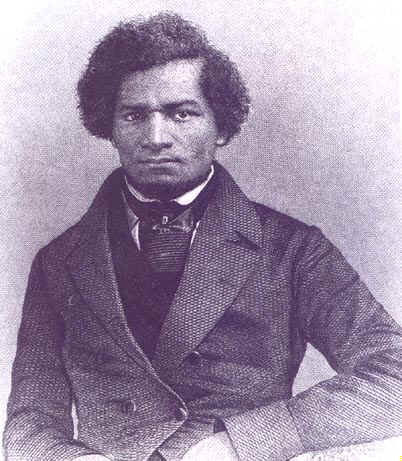
Frederick Douglass said, “Power concedes nothing without a demand. It never has and never will.” The school funding situation has reached the point where I believe Frederick Douglass’ quote is a message we must take to heart.

Legislators and the governor must hear our demand to change the formula and must stop sacrificing this state’s future…which is its children!

It is time for ALL to join together and board the bus and head to Madison! Our children deserve nothing less than this from us.

On the eve of Madison’s Juneteenth Celebration (10:00 AM, June 14, Penn Park) it is an appropriate pleasure to offer a couple additional Frederick Douglass Quotes.

A little learning, indeed, may be a dangerous thing, but the want of learning is a calamity to any people.

If there is no struggle, there is no progress. Those who profess to favor freedom, and deprecate agitation, are men who want crops without plowing up the ground, they want rain without thunder and lightning.

My advice to those who want to join in agitating for school finance reform is to contact the Wisconsin Alliance for Excellent Schools. We need your help!.

Thomas J. Mertz

Leave a comment

Filed under "education finance", AMPS, education, Elections, finance, Pope-Roberts/Breske Resolution, Referenda, School Finance, Uncategorized

Part of the story on property taxes

The Cap Times picked up an A.P story on a Legislative Fiscal Bureau report on property taxes. The article says in part:

Taxes paid to schools are by far the largest chunk of a homeowner’s tax bill. They increased 7.4 percent this year.

The biggest thing missing here is that the delay in the state budget resulted in $79.3 million in school funding being shifted from state general revenues to local property taxes. As the report notes:

If the 2007-8 school taxes are reduced by the $79.3 million in additional school levy tax credit funding, a net school tax levy increase of $199.5 million (5.3%) would result.

So 5.3% not 7.4%. This shift was a one time thing (we hope).

Real increases for 2007-8 in combined state and local school spending are about 3.7%, or half of the quoted 7.4%, The 2007-9 budget deal also included a $264 (2.8%) increase in per member revenues, and increases in some categorical aids; but moved further away from the 2/3 state funding leg of the “three legged stool, leading to a more permanent increase in the percentage of school revenues dependent on local property taxes. Instead of 66.6% support, this year the state will provide about 63.0% and next year (without the school tax levy credit games) 64.9% (calculations based on this LFB paper). These are aggregate estimates and the ratios for individual school districts vary greatly. Madison gets about 41% of of our revenues from the state.

Some other things of note in the report released today.

  • Residential taxpayers paid 71% of property taxes (same as last year)
  • The share of property taxes paid by the manufacturing sector dropped from 3.4% to 3.3%. This share is already lower than the real property value because of the “manufacturing and equipment exemption.”
  • The total value of taxable property in Wisconsin increased 6.2%; net tax levies increased 6.0%; gross tax levies by 6.3%.

As Paul Harvey would say “Now you know the rest of the story.” I just wish the wire services and papers would do better on this.

Thomas J. Mertz

Leave a comment

Filed under Elections, Uncategorized, We Are Not Alone

We Are Not Alone #20

At the April 4 th press conference for the release of the MMSD administration’s proposed budget — at the prompting of the press — the “R-Word” (referendum) was discussed. Since the one time Tax Incremental Finance District disbursement saved Madison from the annual rituals of cuts and conflict this year (and gave Art Rainwater the fitting farewell gift of an opportunity to make his last budget a true “cost to continue” budget), referendum talk was the headline in the Capital Times and the State Journal:

Referendum talk is back for schools
Susan Troller

A gaping $9.2 million hole in the Madison school district’s 2009-2010 budget will likely be stirring talk of a referendum as soon as the city’s new schools superintendent, Dan Nerad, takes office at the beginning of July.

By Andy Hall

Madison school officials soon will begin considering whether to ask voters for additional money to head off a potentially “catastrophic ” $9.2 million budget gap for the 2009-10 school year.

We are not alone.

41 Wisconsin school districts had 61 referenda on the ballot April 1st; 33 of these were for basic operating or maintenance expenses (the remainder were to authorize debt for capital projects).

As the State Journal recently editorialized, these referenda are a manifestation of the “no win situation” districts face due to the “system for financing public schools that essentially requires most schools to spend at a faster rate than they are allowed to raise revenue.”

The mess created by the state ‘s outdated and unfair school financing system is not new, but the consequences are mounting. Gov. Jim Doyle and lawmakers tweaked the system a year ago, but the state ‘s political leaders continue to shrink from the overhaul required…

The victims are the students — along with Wisconsin ‘s future in the globally-competitive, knowledge-based economy.

Superintendent Rainwater’s last words at the press conference summed things up nicely (I hope these are not his last words on the subject — Art, enjoy retirement but please continue to advocate for our schools and children):

“The politicians in the state of Wisconsin and those who fund the politicians need to understand what’s going to happen to this state if they lose this great public school system. We will be sitting here 10 years from now, wondering what in the heck happened to us. And what happened is this: We destroyed our ability to compete in a world that is changing.”

Now to the April 1st votes (with links to the Department of Public Instruction summaries):

Now the districts where the referenda failed are looking at what to cut next.

Here is a list of probable cuts (covering two years) from Waupan where the three-year nonrecurring referendum lost by 589 votes:

  • Reduce the teaching staff at Jefferson by 2.0 FTE?s (grade 1 and grade 2)
  • Reduce the teaching staff at Washington by 2.0 FTE?s (grade 1 and grade 2)
  • Eliminate the position of Gifted and Talented Teacher (1.0 FTE)
  • Eliminate the position of Director of Instruction (.8 FTE)
  • Eliminate 1.0 FTE elementary principal
  • Restructure administration
  • Eliminate the position of Police Liaison Officer
  • Eliminate Alternative School Program (.5 ? 1.5 FTE)
  • Reduce High School Health/PE (1.0 FTE)
  • Eliminate High School French (1.0 FTE)
  • Eliminate Guidance position (.6 FTE)
  • Eliminate Media Program (1.0 FTE)
  • Eliminate Library Aide (1.0 FTE)
  • Eliminate Clerical positions (.7 FTE)
  • Eliminate part-time custodians at middle school
  • Eliminate Industrial Arts at the middle school (1.0 FTE)
  • Combine Computer/FCE at the middle school (1.0 FTE)
  • Eliminate Special Education Aide (1.0 FTE)
  • Reduce one section of Honors Math at the middle school level

*FTE – Full Time Employee

As the district website asks, “If we continue to eliminate programs and cut staff, it will diminish and erode the quality of education in our district. What will happen to our kids and our community?”

As they have been for over a decade in Wisconsin, cuts like this are being contemplated around the state —  both in districts where referenda failed in those districts where no referenda were held. AMPS will give updates on these as the school budget season continues. For now, just a couple of videos about Wisconsin Heights, where the second referendum in two years failed, this time by 75 votes out of 1,975 cast (3.8%).

From before the vote:

From after the vote:

What can we do? Keep the pressure on our state officials, especially Governor Doyle; support the Wisconsin Alliance for Excellent Schools; join ABC-Madison; write your local newspapers; and last but not least vote and know where the candidates stand before you vote.

Thomas J. Mertz

Leave a comment

Filed under "education finance", AMPS, Budget, education, Elections, finance, Local News, Referenda, School Finance, Take Action, Uncategorized, We Are Not Alone

What to say?

string-telephone.jpg

Some news analyses of the mixed results of Tuesday’s (April 1st, 2008) various school referendums are in. But it was in the opening lede of today’s piece in the Wisconsin State Journal that especially caught my eye, the ongoing problem of message.

More than half of the public school referendums in the state failed to gain approval from voters in Tuesday ‘s election, sending some districts back to the calculators and calendars.

Of the 61 referendums, 30 passed and 31 failed.

In the tiny Weston School District, a request of $644,000 was denied by 31 votes, 395-364, while in expanding Jefferson, the voters decided the district did not need to spend $45.6 million for a new high school.

In both cases, superintendents thought the schools ‘ messages, while unsuccessful, were clear: Pay now or pay more later. The districts may return with recalculated referendums in the fall because the formula for state aid is not going to change.

I don’t believe this type of reporting/analysis is particularly useful, either for the public or policy makers, for one simple reason; the education community has yet to figure out a way of coming up with a common set of talking points/slogans that will give the voting public, most of whom do not have children in school, a compelling reason for their taxes to be raised (and let’s be truthful here) by less than $30 a year, in the vast majority of referendums. At the same time, I would bet most of these referendums on Tuesday, both the successful ones and those that failed, did not incorporate into their message the fact that school the funding formula is broken. Fortunately, we did not have to go before the voters this year, for reasons explained here, but will WE do any better job than other communities when MMSD will inevitably be facing another multi-million dollar shortfall next year at this time and must ask for voters for relief? The past record on this score is not encouraging.

We still have a balkanized approach to school funding reform campaigns around this state. When will the coalition building over the last ten years begin to pay off?

Robert Godfrey

3 Comments

Filed under "education finance", Elections, Referenda, School Finance, We Are Not Alone

NCLB News

nclb-cartoon.gif

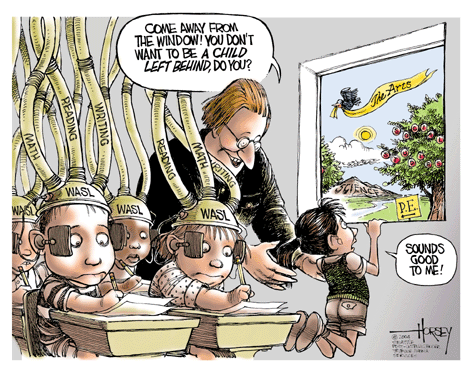
I’m going to start trying to post regularly on No Child Left Behind.  This is the first (or second) collection of links and excerpts.

Education Secretary Margaret Spellings was before the House Appropriations Committee recently.  The Chronicle of Higher Education reported on the session.

Democrats were harsh, with Rep. Jesse L. Jackson Jr. of Illinois calling the administration’s budget priorities “a bunch of garbage,” and Rep. Rosa L. DeLauro of Connecticut saying she was glad today was the last time she had to hear Ms. Spellings defend the president’s priorities. But Republicans were barely kinder, with Rep. John E. Peterson of Pennsylvania saying the administration’s budget “puts a zero priority on technical education,” and Rep. Dennis R. Rehberg of Montana accusing Ms. Spellings of neglecting American Indians. “I don’t know what you guys are smoking over there,” Mr. Rehberg told Ms. Spellings, “but it just ain’t working.”

The United Church of Christ has some wonderful anti-NCLB resources.  I think my favorite is Ten Moral Concerns in the No Child Left Behind Act.

1. While it is a civic responsibility to insist that schools do a better job of educating every child, we must also recognize that undermining support for public schooling threatens our democracy. The No Child Left Behind Act sets an impossibly high bar—that every single student will be proficient in reading and math by 2014. We fear that this law will discredit public educationwhen it becomes clear that schools cannot possibly realize this utopian ideal.

6. The No Child Left Behind Act blames schools and teachers for many challenges that are neither of their making nor within their capacity to change. The test score focus obscures the importance of the quality of the relationship between the child and teacher. Sincere, often heroic efforts of teachers are made invisible. While the goals of the law are important—to proclaim that every child can learn, to challenge every child to dream of a bright future, and to prepare all children to contribute to society—educators also need financial and community support to accomplish these goals.

7. The relentless focus on testing basic skills in the No Child Left Behind Act diminishes attention to the hu­manities, the social studies, the arts, and child and adolescent development. While education should cover basic skills in reading and math, the educational process should aspire to far more. We believe education should help all children develop their gifts and realize their promise—intellectually physically, socially, and ethically. The No Child Left Behind Act treats children as products to be tested, measured and made more uniform.

9. The No Child Left Behind Act exacerbates racial and economic segregation in metropolitan areas by rating homogeneous, wealthier school districts as excellent, while labeling urban districts with far more subgroups and more complex demands made by the law as “in need of improvement.” Such labeling of schools and districts encourages families with means to move to wealthy, homogeneous school districts.

The Center on Education Policy has issued a new report on the curriculumn narrowing which has resulted from the high stakes testing in math and reading.

Among the districts that reported both increasing time for ELA or math and reducing time in other subjects, 72%indicated that they reduced time by a total of at least 75 minutes per week for one or more of these other subjects. For example, more than half (53%) of these districts cut instructional time by at least 75 minutes per week in social studies, and the same percentage (53%) cut time by at least 75 minutes per week in science.

Some news on the “opt out” front (states, districts, schools and students considering refusing to comply with the law).  Virginia is on the edge of leaving NCLB behind (hat tip to Jim Horn at Schools Matter).  The Carol Stream (IL) Elementary District 93 has decided not to force children who don’t speak and read English to take tests writen for  English speakers (this is a violation of the law…another tip of the hat to Jim Horn is in order).

District 93 officials say they’re willing to break the law this spring to shield students from the frustration and humiliation of taking an exam not designed for them.

“The board believes it’s appropriate to do that,” District 93 Superintendent Henry Gmitro said. “While there may be consequences for the adults in the organization, we shouldn’t ask kids to be tested on things they haven’t been taught.”

Illinois dropped the test that was designed for English learners this fall, after the U.S. Department of Education made a final ruling that the test wasn’t an adequate measure of state learning standards. The old test was written in simpler English.

As a stopgap measure, English learners will take standard assessments with some special accommodations, such as extended time and audio recordings, while Illinois develops a test that will meet federal guidelines.

Locally, the Wisconsin Peace & Justice Network  is asking people to identify alternate uses for the money that is being spent on the Iraq war.  According to their figures, Madison taxpayers have contributed about $300 million.  After fully funding free quality early child education and restoring MMSD’s cost to continue cuts of the last few years, I would suggest Madison opt out of NCLB at a cost of about $5 million per year.  We can dream.

Last, I’ve added a new blog to the Resources page: the NEA’s NCLB – It’s Time for a Change!.  Check it out.

Thomas J. Mertz

Leave a comment

Filed under "education finance", Accountability, Best Practices, education, Elections, Equity, finance, National News, nclb, No Child Left Behind

Referenda Roundup

check-yes2.jpg

There were fourteen referenda on the ballot last Tuesday (more here on the campaigns), six passed and eight failed.  There will be at least fifty-eight referenda on the ballot April 1, 2008.  Madison should have an operating referendum on the November ballot.  Last year over one hundred districts went to referendum.

Is this any way to fund our schools?  Read below and decide for yourself.

Auburndale

Question 1: Operating, recurring, $160,000/year —  Failed 772-600.

Question 2:  Funding unfunded retirement benefits, nonrecurring (4 year), $250,000/year — Failed 926-455 (this is going to be  a problem for many districts in the years to come).

Question 3: School Improvements (physical plant), nonrecurring (4 year) $215,000/year — Failed 704-681

From the Wausau Daily Herald

“I don’t know what other solutions are out there,” said Raab, adding that the board has been looking at potential budget cuts, but “I just don’t know how deep we can go.”

Superintendent Gerald Eichman said the district must do a better job informing the community of its needs and the state’s school funding formula when asking for another referendum.

School districts say they have built-in deficits because fixed costs, such as teacher’s salaries and benefits, rise faster than the state increases revenue limits…

“We’re going to be able to survive next year,” he [Superintendent Gerald Eichman] said. “It’s going to get exponentially worse each year after because of the increasing costs.”

Darlington Community

One Question: Operating, nonrecurring (4 year), $700,000/year — Passed 748-724.

From the Monroe Times:

District Administrator Joseph Galle, who was out of the district Wednesday, previously said the money is needed for general day-to-day operational expenses, such as heating fuel, electricity and paying staff salaries and benefits…

Galle cited a growing gap between state funding and district expenses and a decline in state aid due to declining enrollment as reasons for a referendum.

Kenosha

Question 1: Operating and maintenance of new high school with academies, recurring, $2,427,00/year — Passed 16,255-12,387.

Question 2: Issue debt for new high school construction, $52,500,000 — Passed 17,341-11,701

From KenoshaNews.com:

“I am so ecstatic,” said Bradford Principal Sue Savaglio-Jarvis as the final votes came in. “I think all through this process it was going to pass. I’m so happy the community saw this was important for student learning. It’s a relief because we see an end to the overcrowding coming, and we can start giving kids more opportunities that they don’t have right now.”

Marshfield

One Question: Operating, nonrecurring (5 years), $2,000,000 the first year, $2,500,000 the second, $3,000,000 the remaining years — Passed 5,893-4,683.

From the Marshfield News Herald:

“I really have to applaud the voters for coming through loud and clear with a pro-education message,” said John Adam Kruse, chairman of the Yes Committee. “By maintaining our great public schools, we will continue to be a community that people will want to raise their children in.”

Merrill Area

One Question: Operating, recurring, $930,000 the first year, $995,000 the second year amd $990,000 the third year — Failed 5,116-2,049.

From the Wausau Daily Herald:

 Staff losses at the schools will increase some class sizes and reduce individual instruction. Less support staff will mean that more responsibilities will fall on teachers, said Gerald Beyer, principal of Prairie River Middle School.

“From the building-level principal perspective, these cuts are real,” he said.

More on cuts in Merrill here and this video

Oconto Falls

One Question: Issue debt for athletic field improvements, $4,970,000, Failed 1,698-1,580.

Rio Community

Operating and maintenance, nonrecurring, $295,000 the first year, $415,000 the second year and $560,000 the third year (3 year), Failed 501-483.

From the Portage Daily Register:

[School Board member Don] Shippert said if the board decides to pursue the same referendum again, there are only 18 people left to convince. He also said he understands that living on a fixed income and being retired is difficult, because he is in the same situation.

“I hope there would be a feeling of community support for the younger generation. There should be a commitment that each generation has to the next,” Shippert said.

Thorpe

One Question: Issue debt for Ag/Tech shop addition, $490,000, Passed 661-494.

This is the happy ending to a heartbreaking story.   A similar referendum had failed by one vote in 2007.  This time the community, led by the Future Farmers of America Alumni, came together to pass the referendum.  Communities like Thorpe struggle to keep population and jobs.  Investing in effective agricultural and technical education can help keep these communities and our state strong.  Thorp’s agricultural education program is one of the fastest growing in Wisconsin, now they will have the facilities they need.  Good work.

Waterloo

One Question: Issue debt for new boiler, Passed 1,082-334.

From the Watertown Daily Times:

Without voter approval to exceed the state-imposed revenue caps, the board would have had to cut educational programs to pay for a new boiler. Revenue caps limit the amount of money a school district can raise through the property tax levy. The project is nothing the district can do within its budget officials have said.

Wausaukee

One Question: Operating and maintenance, nonrecurring, $1,115,000 the first year, $1,000,000 the last three (4 year), Failed 1,334-394.

From the Peshtigo Times:

The school district has been facing budget shortfalls of more than $354,000 a year. Its once healthy general fund balance is now projected to be over $700,000 in the negative by the end of the 2009-2010 school year if nothing changes. The specter of closing the school looms on the horizon…

Trustee Jeff Townsend hoped people would realize the damage loss of the school would cause to the village economy. The real solution, he suggested, “is to get more students.” He said people need to sit down as professionals and figure out how to improve the schools so parents will move to Wausaukee because they want their kids attending school there…

Trustee Rosie Figas asked Gerbers what his group was doing to influence the state to change its school funding formula. Gerbers said the 48 “northern lake districts” in the state are all facing the same financial problems. He said members of their group met several times with Sen. Roger Breske, but the northern districts don’t have enough votes to force change in Madison. He said Crivitz is in almost the same position as Wausaukee, only a little behind. “They’ll be where we are next year,” he predicted.

Woodruff-Arbor Vitae

One Question: Operating, recurring, $689,500 the first year, $125,000 more the second year and $70,000 more the third (exceed revenue caps $880,000 each subsequent year), Failed 1,014-924.

From WJFW:

[District Administrator Susan] Treb says, “We have to consider what’s going on and be realistic about the broken system we currently have for funding public schools.” (and video)

Thomas J.  Mertz

Leave a comment

Filed under "education finance", AMPS, Budget, education, Elections, finance, Referenda, School Finance, Uncategorized