Category Archives: National News

Mayors and CEOs (Chief Educational Officers), Oh My (Oh No)

From the American School Board Journal, circa 1900.

From the American School Board Journal, circa 1900.

Secretary of Education Arne Duncan has announced a new crusade to bring mayoral politics to all big city school districts.

His reasons are spelled out in this NY Post article:

He said mayoral control provides more accountability, stability and flexibility to implement reform.

Duncan — citing improved test scores and graduation rates, more school choice and curbing social promotion.

Currently only seven of the largest districts are under some form of mayoral control.  Not a very big sample size.  Mayoral was tried and abandoned in Detroit and Washington in the recent past and in the distant past it was common.

Never play poker with anyone who lived or worked in Mayor Richard M. Daley’s Chicago — as Duncan did — and can keep a straight face while discussing “mayoral accountability.”  The “Mayor for Life” is accountable to no one.

Yes,  that gives him more stability and flexibility.  The appeals to accountability and stability are contradictory.

In other cities, the mayor may not enjoy Richie Daley’s infinite tenure.  In those places, educational accountability may function but stability goes out the window.  Educational accountability is also present in Board of Education elections and Superintendent contracts and in these cases it is the sole issue; with mayors people vote based on everything from patronage jobs to garbage pick-up.

The record on test-scores and graduation rates is limited and mixed.  Social promotion, I have no idea.

That leaves “school choice.”  Yes, the mayoral educational Czars have liked their charter schools, as does our misguided President and his Secretary Duncan.  I have trouble believing that the core of this is about charter schools, but I may be wrong.

What is clear is that Duncan enjoyed his barely fettered reign in Chicago and doesn’t think any meddling Board members should interfere with the plans of his fellow CEO “reformers.”

That’s one  reason to favor keeping elected Boards in charge.  Inefficiency is part of democracy.

For more see:

Anne L. Bryant, “School board relations: collaboration instead of mayoral takeover is best for urban school districts.”

Harvard Educational Review, Summer 2006, Special Issue on Mayoral Leadership in Education.

Kenneth K. Wong, Francis X. Shen, Dorothea Anagnostopoulos, Stacey Rutledge, The Education Mayor: Improving America’s Schools.

[I’d like to do more with this, but my Internet connection has been in and out, so I’m going to post as is, while it is working.]

Thomas J. Mertz

Leave a comment

Filed under Accountability, Arne Duncan, Best Practices, education, National News

New Links (on the Resources Page)

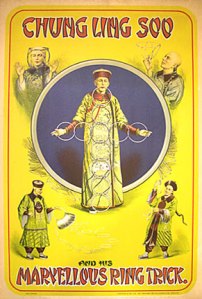
soo-rings72

From the Magicgallery.com, click on image for more.

Most of the links to blogs and other things are on the AMPS Resources page. I just added some new things that I have found interesting or useful.  Here are the links and some descriptions.

Under Wisconsin (for all state and local things) you can now find, the School Finance Network, the Wisconsin Department of Public Instruction,  the Wisconsin Parent Teacher AssociationWisPoliticsProgressive Dane,  the Wisconsin Council on Children and Families,  and the Institute for One Wisconsin.

The new Wisconsin blogs are MMSD Board Member Maya Cole’s blog and a local Math teacher’s Wit and Wisdom.

New national blogs are Education Notes Online (described as “The education/political scene in New York City and beyond, focusing on the UFT and the NYC Department of Education”); education disinformation de-bunker Gerald Bracey at the Huffington Post, “Education, NCLB, Politics and Humor”  from the Frustrated Teacher; frequent commentator and now occasional blogger John Thompson at This Week in Education; the name says it all for Schools, Society, and the Pursuit of Equity in Education in the U.S;  for the last, three from Education Week, Deborah Meier and Diane Ravitch’s Bridging Differences is always enlightening;  NCLB Act II and Politics K-12 are essential for keeping up on the news.

Under the general resources, I’ve added Gerald Bracey’s Education Disinformation Detection and Reporting Agency and the Coalition of  Essential Schools.

Click around, and feel free to make suggestions via the comments.

Thomas J. Mertz

Leave a comment

Filed under Best Practices, education, Gimme Some Truth, Local News, National News, nclb, No Child Left Behind, School Finance, Uncategorized

Grass Roots Teacher Devolpment — Let’s Put Classroom Action Research Into Action

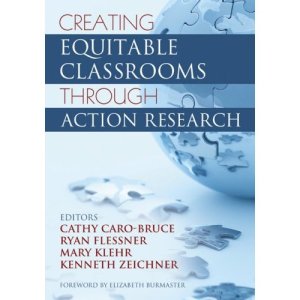
Click on image to learn more about this collection of research by MMSD teachers.

Click on image to learn more about this collection of research by MMSD teachers.

Three articles in latest Teacher Magazine Professional Development Sourcebook reminded me of the great and underutilized Madison Metropolitan School District Classroom Action Research work.

One article,  “Putting Teachers in the Driver’s Seat,”  discusses strategies such as  Collaborative Teacher Research,  Critical Friends Groups,  Lesson Study,  Book Clubs,  and the National Board’s “Take One!.”  As the author, professional development coach Anthony Cody,  notes   “There is a great deal of research that shows the most powerful forms of professional development create opportunities for teachers to collaborate and reflect on student learning.”

In the second article, “Grassroots Professional Development,” 2004 Florida Teacher of the Year Dayle Timmons described the multiple forms of collaborative development in use at her Chets Creek Elementary School.  Many of these are similar to those described by Cody.  Reading about Timmons experiences two things stood out.:  First, the very creative use of technology, second, the absolute necessity of sufficient time for collaborative work and planning.

“Teacher-directed professional development” is also a theme of the article “Reinventing Professional Development in Tough Times.”  The article notes that although potentially more effective and less expensive than contracting with outsiders,  internal work isn’t free.   Teachers, whether as leaders or collaborators need release time from the classroom in order to prepare and follow up.

This brings us back to MMSD.  We have an incredibly talented staff, in most schools a climate of professional collaboration thrives, in the classroom action research the basis for great staff development is already in place (take a look yourself, you’ll be impressed).  What is needed is the initiative and funding to put this work to work, to put the action research into action (some of this may be happening, but I can’t find any record and haven’t heard anything).

Fortunately, my reading of the Title 1 guidelines for the stimulus package indicate that this would be an acceptable use of that funding and it also appears to be the kind of project that might be funded via Sec. Arne Duncan’s discretionary “Race to the Top” money.

Wouldn’t it be great to build on MMSD’s strengths these ways?

Thomas J. Mertz

Leave a comment

Filed under Best Practices, education, Local News, National News, Uncategorized

Historian and Citizen John Hope Franklin Dies at 94

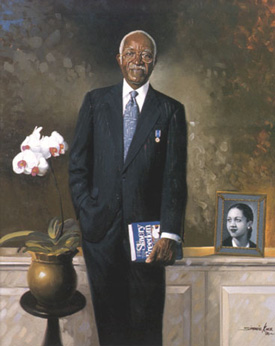
jhfportrait

Historian John Hope Franklin died on March 25, 2009 at age 94. Franklin was a consummate scholar, a pioneer in African American history, an engaged citizen and a man of great warmth.  His honors include the Presidential Medal of Freedom,  a MacArthur “Genius”  Grant, The Presidencies of both the Organization of American Historians and the American Historical Association and many more.  I had the honor being mentored by one of his former students, Betty Balanoff,  and of meeting him through Betty.

As important as Franklin’s work has been in reshaping the discipline of history by placing African American history and the history of race at the center of scholarly understandings through such works as ,The Free Negro in North Carolina, 1790-1860The Militant South, 1800-1861Reconstruction After the Civil War, and the continually revised and now standard From Slavery to Freedom ; it is his legacy as a citizen scholar and activist scholar that I want to say a little about.

Actually, I want to start by having Professor Franklin say a few words:

Those in a position to speak for the country and to outline its current mission insist that we citizens are undertaking to share with the world the blessings of a free and prosperous society and to spread democracy throughout the world. Under the most favorable circumstances, this would be a remarkable mission; and it is not too much to argue that these are not the most ideal times for such an undertaking. Before we enter upon such an ambitious mission it is well to remember that we ourselves are still in the process of becoming democratic, and it has taken us more than two hundred years to arrive at this stage.

Franklin’s scholarship is a reminder of our nation’s struggles and triumphs in the process of “becoming democratic” and of the distance that remains.  This scholarship was informed by his own struggles and his own belief in the ideals of freedom and democracy.  The scholarship was also inseparable from his work  as a citizen to move our nation toward true democracy and freedom.  History was a tool for social change.

Franklin wielded the tool of history in many arenas beyond the class and seminar rooms.  He worked with the NAACP legal team on the Brown v. Board of Education case;  he publicly and privately supported Rev. Martin Luther King, W.E.B DuBois, Rev. Jesse Jackson and others in the struggles for racial justice,  testified against the nomination of Robert Bork to the Supreme Court, served as part of the United States delegation to UNESCO and on the National Council of the Humanities, and headed One America (President Bill Clinton’s initiative on race).

The traditions of activist scholarship and scholarly activism that Franklin exemplified are in danger of being lost.  Teaching at all levels is increasingly dominated by the consumerist pressures of vocationalism and entertainment.    Scholarship is increasingly informed almost exclusively by the pressures of tenure where narrow debates within the academy matter more than contributions to furthering social justice.  In the public sphere, simplistic sound bytes take precedence over informed analysis.   Both the academy and the public sphere are poorer because of these developments.

As John Hope Franklin demonstrated, scholarship in general and history in particular have great contributions to make to advancing social justice.   I believe that his life also demontsrates that enagement with contemporary social action enriches scholarship.

On the first day of each class I teach, after covering the official scope and goals of the course, I lay the syllabus aside and confess to students that in my own head and heart, the most important goal is to use the knowledge of history to make them better and more engaged citizens.  When I do this I think of the Betty Balanoff and how her activism, scholarship and teaching advanced the legacy of John Hope Franklin and how I,  in turn am honored to advance Betty’s legacy.

Thomas J. Mertz

Some more links:

Mirror to America:  The Autobiography of John Hope Franklin video at the Library of Congress.

Mirror to America: The Autobigraphy of John Hope Franklin.

UNC-TV Biographical Conversations.

Washington Post obituary.

John Hope Franklin Collection at Duke University.

Leave a comment

Filed under Best Practices, education, National News, Take Action, Uncategorized

Quotes of the Day — Standardized Tests “Insensitive to Instruction”

By Ricardo Levins Morales from the Northland Poster Collective, click on image for more information.

By Ricardo Levins Morales from the Northland Poster Collective, click on image for more information.

Most states’ NCLB tests are, sadly, essentially insensitive to instruction, that is, those tests are unable to detect the impact of improved instruction in a school or district even if such improvement is unarguably present. The chief cause for such instructional insensitivity stems directly from the test-construction procedures employed to create almost all NCLB tests. Those procedures turn out to make scores on NCLB tests more directly related to students’ socioeconomic status than to how well those students have been taught. Instructionally insensitive NCLB tests simply can’t distinguish between effective and ineffective instruction. (Emphasis added)

W. James Popham, UCLA, “AN AUTUMNAL MESSAGE: LET FLY THE AYP PIGEONS.

These profiles emerge as an artifact of how items are selected. Test developers include in their respective proprietary item pools only those items shown to sort students in the same relative order in terms of their likeliness of getting an item correct. (In other words, ideally for each item in a given area, Student Q should always be more likely to get it right than Student S.) When high-stakes tests are then assembled using only the items that fit with these internal sorting profiles, the tests themselves also end up being remarkably robust in keeping students in the same relative order in terms of their overall scores (Student Q’s overall test score is very likely to be higher than S’s).

Using this approach, test scores will continue to predict other tests scores in ways that will remain remarkably insensitive to the quality of content-specific instruction. And just one of the unintended consequences of this insensitivity to instruction may be that those schools feeling the most pressure to improve test scores will resort to emphasizing test-taking skills, as opposed to meaningful academic content, as a compelling alternative strategy for attaining immediate, if short-lived, results. (Emphases added)

Walter M. Stroup, “What Bernie Madoff Can Teach Us About Accountability in Education.”

I came across this phrase a few times recently and I really think it captures one huge flaw with the reliance of standardized tests.  By design they do not measure learning, instead they sort into a bell (or other) curve.  If all students learn something, no matter how important that something is, it will not be included on a standardized test because it doesn’t sort.

This inescapable truth seems to be lost on President Obama, Sec.  Arne Duncan and all those in Congress, state legislatures and local school districts who keep calling for more money to be spent on testing and data systems.  Although there is potential for better testing I fear that this will only expand the inappropriate uses of the existing testing, testing that for the most part hinders real accountability by this “insensitivity to instruction,” and harms education by wasting time and money on things that don’t help students be successful in anything but taking tests.  Garbage in, garbage out.

For more, see:

Dick Schutz, “Why Standardized Achievement Tests are Sensitive to Socioeconomic Status Rather than Instruction and What to Do About It.”

Deborah Meier, “‘Data Informed,’ Not ‘Data Driven.'”

Diane Ravitch, “President Obama’s Agenda.”

John Thompson, “God Does Not Play Dice.”

And for a local angle:

Quotes of the Day” June 4, 2008, on the WKCE and Value Added.

Thomas J. Mertz

Leave a comment

Filed under Accountability, Arne Duncan, Best Practices, education, Gimme Some Truth, Local News, National News, nclb, No Child Left Behind, Uncategorized

How to Spin a Story — Jay Mathews on KIPP Problems

Robert Sollis, "Good News"

Robert Sollis, "Good News"

The short version is that the first step in spinning a story is to ignore any information that undermines your position; the second step is to include information that supports your biases, and throughout use every trick in the book to evoke sympathy for your cause.  This is to be expected from Public Relations flacks and political spokespeople.  It is more problematic when spin of this sort comes from one of the leading educational columnists in the United States, Jay Mathews of the Washington Post.  In a recent post that pretends to explore problems at Knowledge Is Power Program (KIPP) charter schools — including physical and emotional abuse, questionable financial management and insecure testing protocols —, Mathews does all of the above, with the twist of appearing to include and address the negative information.

It is no secret that Mathews is a charter cheerleader and champion of KIPP schools.  His columns and recent book have made that much clear.  Opinions and a viewpoint are to be expected from columnists.  However,  I think an ethical line is crossed when  —  as in Mathews “Turmoil at Two KIPP Schools” — that biased columnist leaves out crucial information while giving the appearance of examining developments contrary to his or her well-established positions.   It is a line of trust that is broken and line between journalist and flack that is crossed.

You can read the piece yourself for the rhetorical tricks like the introductory characterization of KIPP as the  “most educationally successful group of public schools in the country” (note that in the case discussed below, the Board of Education — the public school authority —  was powerless to remove the principal or require training by a psychologist  and that the local Charter Board was told by the KIPP national office that if they acted on their desire to remove the principal as they desired, KIPP would have the school closed, so “public” should probably be in quotes), and closing invocation of the “unrelenting stress” on KIPP “school leaders.”  I want to concentrate on what Mathews does and does not include in his treatment of the disturbing events at KIPP Academy Fresno in California.

Mathews can assume most of his readers are not familiar with the disturbing doings in Fresno and this allows him to pretend that he is giving and objective overview.  The national media has barely touched the story, but the Fresno Bee has been very thorough and Jim Horn at Schools Matter has been posting news and opinion on the case (Schools Matter is how I learned of the situation).

The basic story is that after extensive allegations of abusive discipline, punishments and practices by the principal, Chi Tschang,  and staff dating back to 2004; requests for help by the local Charter Board; the resignation of four of six Charter Board members,  an investigation by the Board of Education that documented many undisputed incidents of what read like psychotic abuses of power by an unstable control freak (the principal has disputed some of the allegations and given a blanket denial of all since the report gives indisputable documentation for many things the blanket denial lacks credibility), uncredentialed teachers, massive violations of mandated testing procedures including open access to tests by students. extra time given and teachers telling students to correct answers, not following rules for student suspensions,  and violations of student and family legal privacy rights;  the principal resigned and under a new KIPP appointed principal the school and KIPP are fighting to avoid closure.

I’m going to skip over most of the gory details (some will be included to document what Jay Mathews left out and you can read rest yourself by clicking the links above), but I do want to echo Jim Horn in noting that much of the abuse and deliberate humiliation reported at the Fresno KIPP school is only an extreme manifestation of the authoritarian KIPP philosphy and add that humiliation as an educational strategy is at the heart of the No Child Left Behind Act.

Early in the Mathews piece (before any details of the titular “turmoil”) we are treated to this report about academic achievement:

At the end of 2007, 80 percent of KIPP Fresno’s seventh-graders scored proficient or advanced in algebra, compared to only 17 percent of students in regular Fresno public schools. In English Language Arts, 81 percent of KIPP seventh-graders scored proficient or advanced while the regular students were at 29 percent.

Nowhere does Mathews even allude to the testing problems found by the Board of Education investigation.  These included (all quotes from the Notice to Cure and Correct issued by the Board of Education).

  • “They stated that tests were not placed in a secure environment.”
  • “Robin Sosa, a teacher at the Charter School, stated in an interview that in the first couple of years, tests may have been left out during the day and the tests were stored in Mr. Tschang’s office, but that they have since corrected this.”
  • “Kim Kutzner and Marcella Mayfield stated that the school adopted a policy that students were required to check their answers again and again after they had finished their tests and were not allowed to do other activities.”
  • “Ms. Kutzner also witnessed teachers record students’ answers during testing, review students’ tests, and tell students which page to correct.”
  • “Mr. Tschang stated that he possibly gave students extra time on more than one day on a test that was to be completed in a single sitting.”
  • “In a staff meeting in May of 2006, Ms. Kutzner, who had five years of experience as a test-site coordinator, reviewed with the entire staff the violations that she had witnessed during testing and presented the written testing protocol materials to Mr. Tschang. The staff actively opposed any changes in procedures which would potentially lower lest scores, and Mr. Tschang and Mr. Hawke slated that the legal and ethical requirements for testing were, in fact, only guidelines that could be ignored”(emphasis added).
  • “The violations were knowingly in disregard of state testing procedures in that Mr. Tschang signed the STAR Test Security Agreement and the Charter School’s teachers signed the STAR Test Security Affidavit in which they agreed to the conditions designed to ensure test security. Mr. Tschang also failed to report the testing irregularities to the District STAR Coordinator.”

Much of the case for KIPP, as made by Mathews and others, rests on standardized test scores (at one point in this piece Mathews writes: “All they have to do is show, with test scores, that their students are showing significant achievement gains that will put them on a path to college”).   If the Fresno KIPP “actively opposed” following the required protocols because of the potential to lower scores then I believe it is inappropriate to use these tests results  in defense of that school and unethical to boast of the test scores without giving this context, as Mathews does.  I’ll also add that when the policy — be it KIPP’s or California’s or the NCLB’s  —  is all about test scores and not education,  that some unscrupulous people would willfully disregard procedures in pursuit of higher scores is to be expected.

I’m going to give Mathews full paragraph on the “turmoil” in Fresno and follow it with some more quotes from the “Notice to Cure and Correct.”

At KIPP Fresno, school leader Chi Tschang, who founded the school in 2004, resigned in January in order, he said, to remove himself as a barrier to the school’s continued operation. Shortly after the Fresno school district released a report based on interviews with current and former parents, students and KIPP board members accusing Tschang—among other things– of making a student crawl on his hands and knees while barking, keeping students outside in the rain as a disciplinary measure and yelling “all day” at students caught shoplifting near the campus. Tschang told me these accusations were either false or ripped out of context. Many of KIPP teachers and parents have backed him up. But national KIPP leaders have not criticized the district’s report and instead have supported the school’s new leader, William Lin. The school district has the power to close the school by refusing to release a letter KIPP Fresno needs to access a state charter school facility grant. As of yesterday, the district had not issued the letter. [Editors Note: The letter has been issued, but it contained “qualifications” that the KIPPsters are not happy with].

Mathews makes it look like the accusations are serious but also raises doubts in numerous ways.  He also does not touch on the actions of the Charter Board (including mass resignation), the questionable financial practices, the interactions with the Board of Education prior to the report, the problems of authority among KIPP, the local Board and the school district or any other of the facts that would reflect badly on KIPP or the idea of charter schools.  He also glosses over much of the abusive behavior.  Here are some allegations Mathews left out (names of students and parents deleted).

  • “In her interview, Kia Spenhoff stated that she witnessed Mr. Tschang put his hands on students. She witnessed Mr. Tschang pick a student up off the ground, hold the student by the neck against a wall, and then drop the student. When asked about this incident Mr. Tschang stated, “I don’t remember picking up and dropping a student, I do remember shaking a kid.”‘
  • “_____ mother of student _____ witnessed Mr. Tschang push her son’s face against a wall.”
  • “_____ also reported witnessing Tschang push another student’s face against the wall and saying, “Put your ugly face against the wall, I don’t want to see your face.”‘
  • “Student reported witnessing Mr. Tschang draw a circle on the ground and force a student to stand in the circle for two hours in the sun during the summertime.”
  • “____ reported that Mr. Ammon admitted to intentionally humiliating her son and that in a meeting between Mr. Ammon, Mr. Tschang, and _____ Mr Ammon said, “I thought he needed to be humiliated, that it is my job to do this.” and “I just really think he needs to be humbled, he reminds me of me at that age, and I know he has no dad at home.” When asked about the incident, Mr. Tschang stated, “No, I don’t remember this. What I do remember is that _____ was repeatedly acting in a defiant and disrespect way [sic] to Mr. Ammon and other teachers.'”
  • “Parent reported that Mr. Tschang took student glasses away from him because _____-was constantly adjusting his glasses. _____-is totally dependent on his glasses and cannot see without them. Mr. Tschang admitted to taking _____-glasses away.”
  • “Vincent Montgomery, former Chief Operating Officer for the school, reported that he observed several incidents in which he felt Chi Tschang was emotionally abusive toward students, such as requiring students to stand outside in the rain. Mr. Montgomery also stated he felt that any gains made by kids were offset by the emotional abuse they experienced.”
  • Student reported witnessing Mr. Tschang draw a circle on the ground and force a student to stand in the circle for two hours in the sun during the summertime.
  • “_____ of _____ stated that _____began to get physically sick from the abusive discipline and a counselor told her to get out of KIPP.”
  • “When asked about his yelling at students Mr. Tschang stated, “If parents are not happy with the school program, it is a school of choice.'”

Mr Tschang is correct that it is “school of choice,” but it is also a school paid for by taxpayers.  These excerpts are just the tip of the iceberg of the allegations in the report.  I don’t know if the allegations are true, but I do know that the School Board thought the evidence was sufficient to demand Mr. Tschang’s removal or that he attend very extensive training in child and adolescent development, psychology, anger management and unlawful harassment  before having any further role in discipline at the school and the Board also required extensive changes in and monitoring of school operations.  You wouldn’t know any of this or the extent of the allegations from Mathews’ spin job.

Instead, Mathews vaguely notes that the Fresno superintendent “has praised KIPP’s achievements” and later falsely asserts that “all sides appear to support what KIPP has been doing to raise student achievement to rare heights” (no one who has read the district report can possibly believe that this is a true statement).

It took almost four years to his rein in the excesses while Tschang resisted the efforts of local Charter authorities and the local school board to exert control and find remedies.  Part of the “public” in public education is public accountability; with Fresno KIPP the only accountability for principals was to the corporate office and all they apparently cared about was test scores (however they were “achieved’).

The press is also part of the system of accountability.  I respect Mr Mathews freedom to make the case for what he believes in (as I make the case for what I believe in here), but I also expect something more than unrelenting spin from a major newspaper columnist.  I guess my expectations are too high.

For the response from the flacks who are actually on KIPP’s payroll, see here (scroll down).  Although basically “no comment,” it is more honest than what Mathews wrote.

Thomas J. Mertz

13 Comments

Filed under Accountability, Best Practices, Gimme Some Truth, National News, nclb, No Child Left Behind, Uncategorized

A Hand Out Or A Hand Off?

via mnn.com

An interesting idea presents itself through an experiment conducted at Liberty Elementary in Harrisburg, Pennsylvania. The school is now using the web to send information to parents that would otherwise have gone home on paper. The school built a website through a platform that allows users to create free sites.

Students would take home a folder once a week with information for parents.

“We were busy stuffing the folders one day and someone said, ‘We have to figure out how to do it electronically,’ ” said Jean Hudson, the school’s administrative assistant.

They found an easy to use platform to execute their plan.

“It’s a great way for the school to promote going green,” according to Hudson. The use of less paper also has saved the school money. The school, which is the largest of the district’s three elementary schools with 520 students, is saving $1,521 this year, Liberty Principal Tanja Pederson said. “We wanted to save money, but we are really more excited about being greener,” Pederson said.

Less than 10% opted to receive paper handouts, either because they preferred that form or more likely because they do not have Internet access. Important communications such as report cards and special announcements have continued to be sent home.

I’m agnostic about the potential efficacy and cost savings of such efforts and would be interested to hear the opinions of others. I do know that our principal puts quite an effort into producing a wonderful newsletter to families every month. The hurdles in placing it online may initially be a little vexing but in the long term, probably not too taxing. I can see a number of plusses, including a quicker relay of timely information. But I can also envision some minuses. There are many good things to be said about a paper document that you can refer to quite easily, especially when it is attached by a magnet to the side of your refrigerator, like ours. I worry too about the families without internet connections, which will vary from school to school. However, if, like the Harrisburg school, a choice could be offered to parents, this could be a model of both saving money and being greener that Madison schools could emulate.

Robert Godfrey

1 Comment

Filed under "education finance", AMPS, Best Practices, Budget, National News

Education Tweak #9

Click on image for pdf.

Click on image for pdf.

All the Education Tweaks can be found at http://edtweak.org/.

Thomas J. Mertz

Leave a comment

Filed under Accountability, Best Practices, Gimme Some Truth, National News

School Funding Action – Florida

From MYFOX 35, Orlando.

This weekend thousands of Florida parents, teachers, students, administrators and community members took part in militant “Make Our Schools A Priority” protests against cuts in education.

The big event was the rally in Orlando reported in the video above (more here), but smaller actions have been held around  the state, some of which included legislators in attendance (examples here and here).

The economic situation, tax collections, the state budget and local school budgets are all in dire circumstances.  Some of this is detailed on the Channel13, Central Florida web site.  A couple of examples:

Brevard County:

MONEY:

WHAT’S BEEN DONE:

WHAT COULD HAPPEN:

Marion County:

MONEY:

WHAT’S BEEN DONE:

I like the militancy, the mass actions and even the confrontational tone.   I sincerely believe that although things are nowhere near as bad in Wisconsin that after 15 years of annual cuts in educational opportunities we also have a crisis in school funding.   I worry that polite advocacy fails to communicate the reality of that crisis.

A Saturday, March 21 meeting of the Wisconsin Joint Finance Committee will be held at Miller Park.  This would be a great time to turn out some numbers for education and comprehensive education finance reform.

Back in Florida, the Legislature returns for a budget session on Tuesday facing a $700 million shortfall.  Governor Charlie Crist is scheduled to give his “State of the State” address on that day.

Hat tip to Sherman Dorn for making me aware of the goings on in Florida.

For more on school finance in Florida, see the National Access Network state page.

Thomas J. Mertz

Leave a comment

Filed under "education finance", Best Practices, Budget, education, finance, Local News, National News, School Finance, Take Action, Uncategorized, We Are Not Alone

Schools that integrate dance, music, and art

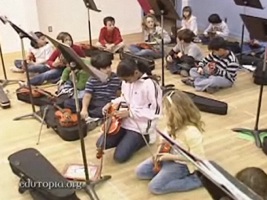
Tucson classroom

Here’s a delightful piece about public elementary schools in Tucson, Arizona where arts are integrated into every “academic” subject, from math to social studies. For example, first graders write their own operas and fourth graders learn science by playing the violin.

A sweeping initiative in the Tucson Unified School District to improve student achievement through an interdisciplinary curriculum that fuses the arts and academic subjects. The project, Opening Minds Through the Arts, is built on brain-based learning theories and research into children’s neurological development.

And some interesting results.

In the first three years, the nonprofit research firm WestEd tracked the OMA schools along with demographically matched controls: All six schools had high percentages of low-income students, English-language learners, and children of transient families. OMA students significantly outscored their counterparts in reading, math, and writing, and although the benefits held across all ethnicities, Hispanic students, in particular, made substantial gains in writing.

WestEd also found that teachers in OMA schools did better than their peers on every indicator, including lesson planning and design, arts-integrated instruction, and the creative use of varied learning activities. Today, 40 of Tucson’s more than 70 elementary schools have at least some elements of OMA. Pilot projects are under way at 4 of the district’s 20 middle schools.

Corbett, a Title I school with about 600 students, was one of the original OMA sites, and the program initially met resistance there. Teachers worried about sacrificing precious minutes in an already jammed day to music or dance, recalls Principal Joyce Dillon. “Now they say, ‘It’s so completely related to what we’re teaching. I never want to give it up.'”

Robert Godfrey

Leave a comment

Filed under AMPS, Best Practices, education, National News