Category Archives: Uncategorized

The Axe Keeps Falling — More Cuts and Layoffs, Trying To More With Less

From the Paul Bunyan murals by James S. Watrous at the University of Wisconsin Memorial Union.  For more information. click the image.

From the Paul Bunyan murals by James S. Watrous at the University of Wisconsin Memorial Union. For more information, click the image.

Bo Diddley, “Bo’s a Lumberjack” (click to listen or download)

As noted last week, under Wisconsin’s broken school funding system, Spring is the season for budget cuts  in districts around the state.  The latest places the axe is falling are Minocqua-Hazelhurst-Lake Tomahawk, Kaukauna, and Oshkosh.

Minocqua-Hazelhurst-Lake Tomahawk (MHLT) is a K-8 district serving 550 students spread out over 350 square miles.  It is a classic “small but necessary” district in dire need of realistic  sparsity aid as one part of an improved system of funding schools.  Governor Jim Doyle’s budget proposal cuts the already inadequate sparsity aid by 1%.

The Lakeland Times reports that the district voted to lay off two teacher, cut the employment of three others by 20%,  lay off four educational support team members and discontinue funding for outside curriculum integration with the Lakeland Union High School (LUHS).

These were obviously painful decisions.  One board member had this to say about the curriculum integration defunding:

“We’re facing decisions that you well know,” board member Billy Fried said. “We’re negotiating with teachers. We’re making cuts in staff, and it’s really hard to look them in the face and also look our taxpayers in the face when we’re kind of shrinking our own, yet maintain an outside service that a lot of us feel confident they [MHLT current staff] can do a good job.”

The probability of an operating referendum in the near future was part of the decision:

“If I had any thoughts or felt that from the administration that it would be detrimental to the students, I would do nothing [and continue the service] … I think, too, one thing to keep in mind is we are going, we know we have to go to referendum soon, and I think we need to show we’ve done every possible thing before we go to referendum,” [Board Member] Laura Ahonen said.

Administrators and others did weigh in on the issue.  Principal Rob Way “admit(ted) that it would be a challenge, but one that they could handle successfully.”  Tom Gabert, Lakeland Union High School Board Member said “The major concern with doing it internally, was that past experience has shown that when there is no money on the table, it often gets neglected.”

Combined with the layoffs and this decision means that MHLT staff will be asked to do more with less.  The newspaper simply noted that the layoff notices were given with “much regret.”

Oshkosh is a much larger district (about 10,000 students) and the layoffs are also larger.  Oshkosh has referendum votes scheduled for April 7 on a complicated mix of building. upgrades and maintenance measures.  Although one of the questions asks for operating funds, these are designated for “the costs of small additions and renovations to existing school facilities and equipment acquisition” and would have no impact on the layoffs.

According to the Oshkosh Northwestern, here is what is being done to balance the budget:

The district plans to propose a freeze on administrator salaries and reduce at least one full-time equivalent administrator, said school district Human Resources Director John Sprangers.

The list includes 36 full-time teachers and nine part-time teachers primarily from middle and high school elective courses. Music and special education departments would take the biggest hit, losing six educators each.

Last year, “The district filled a $1.4 million hole in its budget… entirely by cutting non-personnel expenses such as maintenance and department funds.”  These cuts are part of the reason that there is now a maintenance operating referendum on the ballot.  What an insane circle of robbing Peter to pay Paul and then asking for money to pay back Peter while taking back from Paul…This has to end.

WLUK-TV has more on the story:

Note that both larger class sizes and fewer options will result from the cuts.   According to the Northwestern the middle school schedule will be reconfigured  “allowing each teacher to do more,” (I’ll add “with less” because that’s what is happening, and note that the “more” is in terms of classes and students taught and the the reality in terms of quality and learning will likely be that they are doing less).

The Kaukauna layoffs were actually approved on March 9, 2009.  With so many cuts it is hard to keep up.

Kaukauna serves about 4,100 students with a staff of approximately 500 and a budget of about $52 million.  In order to meet the projected $2.9 million shortfall for 2009-10, the Board froze administrator salaries, and laid off over 10% of their teachings staff.  The projections are based on very conservative estimates of future revenue caps, but past experiences with losing students due to open enrollment and underestimates of costs have taught the Board to be conservative.  One Board member noted that the new cuts will probably lead to the loss of more students via open enrollment.

Delayed maintenance projects,  threatening safety are also a factor in the layoffs.

To avoid big cuts last year, Kaukauna closed a school and sold the administrative building.  The layoffs will mean in increase of about two students per class.  Past cuts mean that like the teachers, administrators will be doing more with less:

Board President Jeff McCabe and clerk Cindy Fallona pointed out that because of cuts, administrators have had to tack on more duties without being compensated. Among them are financial officer Bob Schafer, who is overseeing buildings and maintenance, and human resources director Mary Weber, who is serving as Park principal. Randy Hughes, special education and pupil services director, has helped with administrative duties at an elementary school. Eric Brinkmann, Haen principal, tracks student academic performance for the district.

Superintendent LLoyd McCabe correctly identified Wisconsin’s dysfunctional system of educational investment as the source of all these troubles:

McCabe is hoping state lawmakers will tackle the school funding issue to relieve pressure on districts.

“I think that there’s pretty good agreement that state funding has to be revised and the problem that the state has is that they don’t have the money to do anything about it,” he said.

“Wisconsin schools cannot continue to produce students who rank at the very top of the nation with the funding structure that exists today.”

This leads directly to my “join the fight” plea.

If we don’t put/keep the pressure on, nothing will happen except more cuts, more referendum fights, more kids not getting the education they need and deserve, fewer kids reaching adulthood with the tools to be successful…we all need to get and be active.

Use your own experiences to write your own letters to the editor:

Contact the Governor, your Senators and Representatives.  Make them keep their promises (for more as-yet-unmet promises from Governor Doyle, see here and here).

Don’t forget the April 1, 2009 MMSD “Legislative Informational Community Session” and the April 21 Assembly hearing on the School Finance Network (SFN) plan (details on both, here).

Connect with activists around the state and support real change by joining the Wisconsin Alliance for Excellent Schools.  Keep up-to-date with SFN by signing on as a School Finance Network supporter.

Talk to your friends, neighbors, co-workers…spread the word.

Thomas J. Mertz

Leave a comment

Filed under "education finance", Best Practices, Budget, education, Equity, finance, Local News, Referenda, referendum, School Finance, Take Action, Uncategorized, We Are Not Alone

Madison Memorial Division 1 Hoops Champs — School Sports Pinched by Funding Formula

Jeronne Maymon puts up a rebound shot over Racine Horlick's Jamil Wilson.  Joe Koshollek, Milwakee Jounral Sentinel. Click Imgae for more.

Jeronne Maymon puts up a rebound shot over Racine Horlick's Jamil Wilson. Joe Koshollek, Milwaukee Journal Sentinel. Click Image for more.

The Madison Memorial Spartans defeated Racine Horlick 56-41 to win the WIAA Division 1 State boys basketball championship.  Congratulations.

Meanwhile, the Lakeland Times reports “Failing school funding formulas beginning to pinch athletics.  Here is what sports reporter Doug Etten has to say.

Though people are once again starting to see the signs of a market in recoup mode after a national credit meltdown, some area school districts are still struggling to make ends meet, and because of that, are passing the bill onto taxpayers.

Or at least trying in the case of many districts that have seen numerous referendums fail and fail miserably as taxpayers are standing up for what they think is a bad formula being handed down by the state.

As budgets are cut and staff members begin seeing their jobs in jeopardy, athletic teams are doing their best to remain untouched.

It is good to see reporters and newspapers recognize the cause of local district problems is at the state level.

Thomas J. Mertz

1 Comment

Filed under "education finance", Budget, education, finance, Local News, School Finance, Uncategorized

Quotes of the Day — Standardized Tests “Insensitive to Instruction”

By Ricardo Levins Morales from the Northland Poster Collective, click on image for more information.

By Ricardo Levins Morales from the Northland Poster Collective, click on image for more information.

Most states’ NCLB tests are, sadly, essentially insensitive to instruction, that is, those tests are unable to detect the impact of improved instruction in a school or district even if such improvement is unarguably present. The chief cause for such instructional insensitivity stems directly from the test-construction procedures employed to create almost all NCLB tests. Those procedures turn out to make scores on NCLB tests more directly related to students’ socioeconomic status than to how well those students have been taught. Instructionally insensitive NCLB tests simply can’t distinguish between effective and ineffective instruction. (Emphasis added)

W. James Popham, UCLA, “AN AUTUMNAL MESSAGE: LET FLY THE AYP PIGEONS.

These profiles emerge as an artifact of how items are selected. Test developers include in their respective proprietary item pools only those items shown to sort students in the same relative order in terms of their likeliness of getting an item correct. (In other words, ideally for each item in a given area, Student Q should always be more likely to get it right than Student S.) When high-stakes tests are then assembled using only the items that fit with these internal sorting profiles, the tests themselves also end up being remarkably robust in keeping students in the same relative order in terms of their overall scores (Student Q’s overall test score is very likely to be higher than S’s).

Using this approach, test scores will continue to predict other tests scores in ways that will remain remarkably insensitive to the quality of content-specific instruction. And just one of the unintended consequences of this insensitivity to instruction may be that those schools feeling the most pressure to improve test scores will resort to emphasizing test-taking skills, as opposed to meaningful academic content, as a compelling alternative strategy for attaining immediate, if short-lived, results. (Emphases added)

Walter M. Stroup, “What Bernie Madoff Can Teach Us About Accountability in Education.”

I came across this phrase a few times recently and I really think it captures one huge flaw with the reliance of standardized tests.  By design they do not measure learning, instead they sort into a bell (or other) curve.  If all students learn something, no matter how important that something is, it will not be included on a standardized test because it doesn’t sort.

This inescapable truth seems to be lost on President Obama, Sec.  Arne Duncan and all those in Congress, state legislatures and local school districts who keep calling for more money to be spent on testing and data systems.  Although there is potential for better testing I fear that this will only expand the inappropriate uses of the existing testing, testing that for the most part hinders real accountability by this “insensitivity to instruction,” and harms education by wasting time and money on things that don’t help students be successful in anything but taking tests.  Garbage in, garbage out.

For more, see:

Dick Schutz, “Why Standardized Achievement Tests are Sensitive to Socioeconomic Status Rather than Instruction and What to Do About It.”

Deborah Meier, “‘Data Informed,’ Not ‘Data Driven.'”

Diane Ravitch, “President Obama’s Agenda.”

John Thompson, “God Does Not Play Dice.”

And for a local angle:

Quotes of the Day” June 4, 2008, on the WKCE and Value Added.

Thomas J. Mertz

Leave a comment

Filed under Accountability, Arne Duncan, Best Practices, education, Gimme Some Truth, Local News, National News, nclb, No Child Left Behind, Uncategorized

WAES School-Funding Reform Update, Week of March 23, 2009

waesgraphic

Table of Contents below.  Click here for the entire update and click on linked items for related stories on AMPS.

For more information, check out the Wisconsin Alliance for Excellent Schools web site.

Thomas J. Mertz

Leave a comment

Filed under "education finance", Budget, education, finance, Local News, Referenda, referendum, School Finance, Take Action, Uncategorized, We Are Not Alone

How to Spin a Story — Jay Mathews on KIPP Problems

Robert Sollis, "Good News"

Robert Sollis, "Good News"

The short version is that the first step in spinning a story is to ignore any information that undermines your position; the second step is to include information that supports your biases, and throughout use every trick in the book to evoke sympathy for your cause.  This is to be expected from Public Relations flacks and political spokespeople.  It is more problematic when spin of this sort comes from one of the leading educational columnists in the United States, Jay Mathews of the Washington Post.  In a recent post that pretends to explore problems at Knowledge Is Power Program (KIPP) charter schools — including physical and emotional abuse, questionable financial management and insecure testing protocols —, Mathews does all of the above, with the twist of appearing to include and address the negative information.

It is no secret that Mathews is a charter cheerleader and champion of KIPP schools.  His columns and recent book have made that much clear.  Opinions and a viewpoint are to be expected from columnists.  However,  I think an ethical line is crossed when  —  as in Mathews “Turmoil at Two KIPP Schools” — that biased columnist leaves out crucial information while giving the appearance of examining developments contrary to his or her well-established positions.   It is a line of trust that is broken and line between journalist and flack that is crossed.

You can read the piece yourself for the rhetorical tricks like the introductory characterization of KIPP as the  “most educationally successful group of public schools in the country” (note that in the case discussed below, the Board of Education — the public school authority —  was powerless to remove the principal or require training by a psychologist  and that the local Charter Board was told by the KIPP national office that if they acted on their desire to remove the principal as they desired, KIPP would have the school closed, so “public” should probably be in quotes), and closing invocation of the “unrelenting stress” on KIPP “school leaders.”  I want to concentrate on what Mathews does and does not include in his treatment of the disturbing events at KIPP Academy Fresno in California.

Mathews can assume most of his readers are not familiar with the disturbing doings in Fresno and this allows him to pretend that he is giving and objective overview.  The national media has barely touched the story, but the Fresno Bee has been very thorough and Jim Horn at Schools Matter has been posting news and opinion on the case (Schools Matter is how I learned of the situation).

The basic story is that after extensive allegations of abusive discipline, punishments and practices by the principal, Chi Tschang,  and staff dating back to 2004; requests for help by the local Charter Board; the resignation of four of six Charter Board members,  an investigation by the Board of Education that documented many undisputed incidents of what read like psychotic abuses of power by an unstable control freak (the principal has disputed some of the allegations and given a blanket denial of all since the report gives indisputable documentation for many things the blanket denial lacks credibility), uncredentialed teachers, massive violations of mandated testing procedures including open access to tests by students. extra time given and teachers telling students to correct answers, not following rules for student suspensions,  and violations of student and family legal privacy rights;  the principal resigned and under a new KIPP appointed principal the school and KIPP are fighting to avoid closure.

I’m going to skip over most of the gory details (some will be included to document what Jay Mathews left out and you can read rest yourself by clicking the links above), but I do want to echo Jim Horn in noting that much of the abuse and deliberate humiliation reported at the Fresno KIPP school is only an extreme manifestation of the authoritarian KIPP philosphy and add that humiliation as an educational strategy is at the heart of the No Child Left Behind Act.

Early in the Mathews piece (before any details of the titular “turmoil”) we are treated to this report about academic achievement:

At the end of 2007, 80 percent of KIPP Fresno’s seventh-graders scored proficient or advanced in algebra, compared to only 17 percent of students in regular Fresno public schools. In English Language Arts, 81 percent of KIPP seventh-graders scored proficient or advanced while the regular students were at 29 percent.

Nowhere does Mathews even allude to the testing problems found by the Board of Education investigation.  These included (all quotes from the Notice to Cure and Correct issued by the Board of Education).

  • “They stated that tests were not placed in a secure environment.”
  • “Robin Sosa, a teacher at the Charter School, stated in an interview that in the first couple of years, tests may have been left out during the day and the tests were stored in Mr. Tschang’s office, but that they have since corrected this.”
  • “Kim Kutzner and Marcella Mayfield stated that the school adopted a policy that students were required to check their answers again and again after they had finished their tests and were not allowed to do other activities.”
  • “Ms. Kutzner also witnessed teachers record students’ answers during testing, review students’ tests, and tell students which page to correct.”
  • “Mr. Tschang stated that he possibly gave students extra time on more than one day on a test that was to be completed in a single sitting.”
  • “In a staff meeting in May of 2006, Ms. Kutzner, who had five years of experience as a test-site coordinator, reviewed with the entire staff the violations that she had witnessed during testing and presented the written testing protocol materials to Mr. Tschang. The staff actively opposed any changes in procedures which would potentially lower lest scores, and Mr. Tschang and Mr. Hawke slated that the legal and ethical requirements for testing were, in fact, only guidelines that could be ignored”(emphasis added).
  • “The violations were knowingly in disregard of state testing procedures in that Mr. Tschang signed the STAR Test Security Agreement and the Charter School’s teachers signed the STAR Test Security Affidavit in which they agreed to the conditions designed to ensure test security. Mr. Tschang also failed to report the testing irregularities to the District STAR Coordinator.”

Much of the case for KIPP, as made by Mathews and others, rests on standardized test scores (at one point in this piece Mathews writes: “All they have to do is show, with test scores, that their students are showing significant achievement gains that will put them on a path to college”).   If the Fresno KIPP “actively opposed” following the required protocols because of the potential to lower scores then I believe it is inappropriate to use these tests results  in defense of that school and unethical to boast of the test scores without giving this context, as Mathews does.  I’ll also add that when the policy — be it KIPP’s or California’s or the NCLB’s  —  is all about test scores and not education,  that some unscrupulous people would willfully disregard procedures in pursuit of higher scores is to be expected.

I’m going to give Mathews full paragraph on the “turmoil” in Fresno and follow it with some more quotes from the “Notice to Cure and Correct.”

At KIPP Fresno, school leader Chi Tschang, who founded the school in 2004, resigned in January in order, he said, to remove himself as a barrier to the school’s continued operation. Shortly after the Fresno school district released a report based on interviews with current and former parents, students and KIPP board members accusing Tschang—among other things– of making a student crawl on his hands and knees while barking, keeping students outside in the rain as a disciplinary measure and yelling “all day” at students caught shoplifting near the campus. Tschang told me these accusations were either false or ripped out of context. Many of KIPP teachers and parents have backed him up. But national KIPP leaders have not criticized the district’s report and instead have supported the school’s new leader, William Lin. The school district has the power to close the school by refusing to release a letter KIPP Fresno needs to access a state charter school facility grant. As of yesterday, the district had not issued the letter. [Editors Note: The letter has been issued, but it contained “qualifications” that the KIPPsters are not happy with].

Mathews makes it look like the accusations are serious but also raises doubts in numerous ways.  He also does not touch on the actions of the Charter Board (including mass resignation), the questionable financial practices, the interactions with the Board of Education prior to the report, the problems of authority among KIPP, the local Board and the school district or any other of the facts that would reflect badly on KIPP or the idea of charter schools.  He also glosses over much of the abusive behavior.  Here are some allegations Mathews left out (names of students and parents deleted).

  • “In her interview, Kia Spenhoff stated that she witnessed Mr. Tschang put his hands on students. She witnessed Mr. Tschang pick a student up off the ground, hold the student by the neck against a wall, and then drop the student. When asked about this incident Mr. Tschang stated, “I don’t remember picking up and dropping a student, I do remember shaking a kid.”‘
  • “_____ mother of student _____ witnessed Mr. Tschang push her son’s face against a wall.”
  • “_____ also reported witnessing Tschang push another student’s face against the wall and saying, “Put your ugly face against the wall, I don’t want to see your face.”‘
  • “Student reported witnessing Mr. Tschang draw a circle on the ground and force a student to stand in the circle for two hours in the sun during the summertime.”
  • “____ reported that Mr. Ammon admitted to intentionally humiliating her son and that in a meeting between Mr. Ammon, Mr. Tschang, and _____ Mr Ammon said, “I thought he needed to be humiliated, that it is my job to do this.” and “I just really think he needs to be humbled, he reminds me of me at that age, and I know he has no dad at home.” When asked about the incident, Mr. Tschang stated, “No, I don’t remember this. What I do remember is that _____ was repeatedly acting in a defiant and disrespect way [sic] to Mr. Ammon and other teachers.'”
  • “Parent reported that Mr. Tschang took student glasses away from him because _____-was constantly adjusting his glasses. _____-is totally dependent on his glasses and cannot see without them. Mr. Tschang admitted to taking _____-glasses away.”
  • “Vincent Montgomery, former Chief Operating Officer for the school, reported that he observed several incidents in which he felt Chi Tschang was emotionally abusive toward students, such as requiring students to stand outside in the rain. Mr. Montgomery also stated he felt that any gains made by kids were offset by the emotional abuse they experienced.”
  • Student reported witnessing Mr. Tschang draw a circle on the ground and force a student to stand in the circle for two hours in the sun during the summertime.
  • “_____ of _____ stated that _____began to get physically sick from the abusive discipline and a counselor told her to get out of KIPP.”
  • “When asked about his yelling at students Mr. Tschang stated, “If parents are not happy with the school program, it is a school of choice.'”

Mr Tschang is correct that it is “school of choice,” but it is also a school paid for by taxpayers.  These excerpts are just the tip of the iceberg of the allegations in the report.  I don’t know if the allegations are true, but I do know that the School Board thought the evidence was sufficient to demand Mr. Tschang’s removal or that he attend very extensive training in child and adolescent development, psychology, anger management and unlawful harassment  before having any further role in discipline at the school and the Board also required extensive changes in and monitoring of school operations.  You wouldn’t know any of this or the extent of the allegations from Mathews’ spin job.

Instead, Mathews vaguely notes that the Fresno superintendent “has praised KIPP’s achievements” and later falsely asserts that “all sides appear to support what KIPP has been doing to raise student achievement to rare heights” (no one who has read the district report can possibly believe that this is a true statement).

It took almost four years to his rein in the excesses while Tschang resisted the efforts of local Charter authorities and the local school board to exert control and find remedies.  Part of the “public” in public education is public accountability; with Fresno KIPP the only accountability for principals was to the corporate office and all they apparently cared about was test scores (however they were “achieved’).

The press is also part of the system of accountability.  I respect Mr Mathews freedom to make the case for what he believes in (as I make the case for what I believe in here), but I also expect something more than unrelenting spin from a major newspaper columnist.  I guess my expectations are too high.

For the response from the flacks who are actually on KIPP’s payroll, see here (scroll down).  Although basically “no comment,” it is more honest than what Mathews wrote.

Thomas J. Mertz

13 Comments

Filed under Accountability, Best Practices, Gimme Some Truth, National News, nclb, No Child Left Behind, Uncategorized

The Axe Is Falling — School Layoffs, Closures and Cuts

Paul Gauguin "The Man with an Axe"

Paul Gauguin "The Man with an Axe"

All over Wisconsin — in districts where referenda failed, in districts where referenda weren’t tried and maybe in some districts where referenda passed — the axe is falling, teachers and programs are being cut and the “New Wisconsin Promise” of  “A Quality Education for Every Child” is sounding more like a cruel joke every day.  As long as Wisconsin’s politicians lack the courage to fix our broken school finance system with the  structural gap between allowed revenues and mandated costs, the annual Spring chopping ritual will continue.

If you know the story already and don’t need the latest details, skip to the bottom for ways to take action and make reform happen.

Appleton, where two referenda failed in February has eliminated 44 teaching positions, the equivalent of 31 full time teachers.  Here is what it will look like in the classrooms according to district financial officer Don Hietpas:

“We’re staffing the high schools this year at 28-to-1 (student-to-teacher ratio). We are staffing the elementary school at one per class than we did last year, so it’s 27-to-1. So the average class size is going up at all levels, except for K-3, which is an area we continue to protect.”

Board President Sharon Fenlon noted an unintended consequence that will have long term implications for districts and the teaching profession:

“It’s very tough,…especially because the layoff is in order of seniority. Many of the people laid-off are quite new to the profession and people we would like to encourage to stay in the profession, and to have to lay them off is very painful.”

Teachers aren’t the only thing on the chopping block in Appleton:

“We’re cutting capital projects, we’re cutting technology, we’re cutting other areas besides classroom teachers, secretaries, para-professionals, administrators, so the reductions will be across the board,” Hietpas said.

Appleton is often held up as the poster district for charter schools in Wisconsin, but all the charters in the world can’t stop the budget cuts when the school funding system is broken.

Eau Claire hasn’t tried a referendum since 2007 and hasn’t passed one since 1999.  After the defeat in 2007 they closed the “Little Red School” and continued with the steady cuts in othe areas.  This year the structural budget gap is about $4.1 million (from a budget of  about $105 million) and things look to be particularly bad.  SAGE has been cut back, athletic directors are gone, salary freezes are being floated and still more cuts will be needed. WEAU News has the list of things being considered:

–10 high school teachers. That would save the district $650,000.

–2 elementary art teachers (while cutting art time from 60 minutes to 45 minutes a week). That would save $124,000.

–15 elementary school support staff or assistants, saving $600,000.
–5 middle school support staff, saving $205,000.
–10 high school support staff, saving $410,000.
–4.5 central office support staff, saving $184,500.

–1.1 library media specialists. That would save $68,700.

–5 custodians, saving $310,000.
–1 senior maintenance position, saving $62,000.

–A vacant staff development/assessment coordinator position, saving $105,200.

Other options to save money include:

–Eliminating custodial overtime on the weekends. It would save the district $35,500, but could mean the cancellation of weekend athletics, music and theatre.

–Reducing elementary art, music, PE, and special ed PE program specialists. That would not cut teacher jobs, but eliminate positions above and beyond their daily duties. It would save the district $39,200.

–Discontinuing Spanish classes in elementary schools because grant funding is no longer available. That would equal a savings of $13,000.

Also on the table is “cutting the number of teams for certain high school sports. ”

As the Board struggles  “”to reduce the programs that have the least impact on the kids,” the head of the local teacher’s union points the finger where it belongs — our state elected officials:

“This problem isn’t going to go away. We’re going to have the same problem next year. We’re going to have it the following year until we really change the way schools are funded in the state of Wisconsin,” says Ron Martin, president of the Eau Claire Association of Educators.

And here from an earlier story:

But Martin says the school district and the school board really aren’t to blame. He says the revenue caps and funding at the state level are the major reason for the budget issues.

“It’s stifling us and in Eau Claire’s situation, it’s killing us.”

Pretty bleak assessment, but absolutely correct.

Waupun is another district that lost referenda votes in February.  Since 1996, eight operating referenda have failed in Waupun.  They’ve gotten used to cuts, but this time in addittion to eliminating 30 positions (30 positions!), it means closing schools.  Nothing divides a district like school closures.  To make matters worse, the schools slated for closure are not in Waupun proper, but in Alto and Fox Lake.  At the March 16, 2009 Board meeting, Fox Lake’s Mayor made a formal request to detach from the district.  The request had not been properly filed, but the Board went on record denying it anyway.  Fox Residents are still exploring options:

Kim Derleth, a member of the Concerned Area Residents for Education (CARE), said the Fox Lake-based organization will hold a special listening session at 6:30 p.m. today (Tuesday) in the Fox Lake Community Center to discuss area residents’ options.

Derleth said the intent of the session is to hear the viewpoints of the public to determine a course of action following Monday night’s “no” vote. One of the options the group has discussed is exploring secession from the Waupun Area School District.

It looks like this controversy won’t go away soon.

In Neneeh they are in the last year of a non recurring referendum and it appears that like Madison last  Novemeber, they asked for less than is needed to meet the structural gaps. In Neneeh’s case, the third year’s over the caps revenue authorization was $1.4 less than the first year’s and $1.2 less than the secon year’s.  It appears they also chose to fund a fiber optic netweork from operating funds.   Through the combination of factors, primary among them a state school fiannce system that is built on annual cuts and doesn’t allow for capital investments without referenda, Neneeh is facing about a $1 million shortfall in an $84.3 million projected budget for 2009-10.

The proposed solution, cut teaching positions:

Under the plan, Neenah would employ the equivalent of 447.5 teachers, compared with 458 teachers this year.

The staffing plan would cut 8.8 positions at the high school and 4.3 positions at the middle schools. It would result in no change at the elementary schools and slight increases in instructional support services (0.2 position) and contingency staffing (0.4 position).

“Staffing plan” may sound better than “cutting teachers,” but whatever the terminology there will be fewer class choices, larger classes (up to 30 students), less individual attention and a decline in educational opportunities.

Merrill and I am sure others have already started their cuts; Janesville and I am sure others are starting to work on theirs.   30 districts are holding referenda in April (the 29 detailed here, plus Salem), some won’t pass.  Sadly, more to come.

Now for the “do something” soapbox boilerplate.  If we don’t put/keep the pressure on, nothing will happen except more cuts, more referendum fights, more kids not getting the education they need and deserve, fewer kids reaching adulthood with the tools to be successful…we all need to get and be active.

Maya Cole’s recent op ed hit the right notes.  Pass it around.  Write your own letters to the editor:

Contact the Governor, your Senators and Representatives.  Make them keep their promises (for more as-yet-unmet promises from Governor Doyle, see here and here).

Don’t forget the April 1, 2009 MMSD “Legislative Informational Community Session” and the April 21 Assembly hearing on the School Finance Network (SFN) plan (details on both, here).

Connect with activists around the state and support real change by joining the Wisconsin Alliance for Excellent Schools.  Keep up-to-date with SFN by signing on as a School Finance Network supporter.

Talk to your friends, neighbors, co-workers…spread the word.

Thomas J. Mertz

Leave a comment

Filed under "education finance", Accountability, Budget, education, Equity, finance, Local News, Referenda, referendum, School Finance, Take Action, Uncategorized, We Are Not Alone

Governor’s Budget Numbers from the Legislative Fiscal Bureau

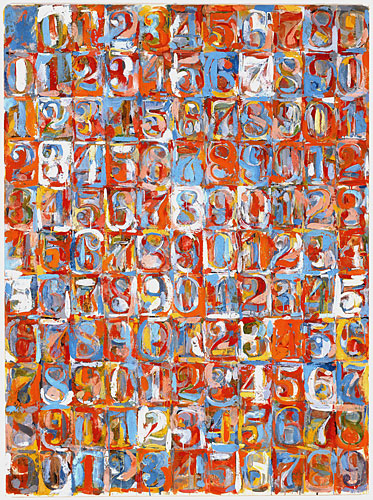
Jasper Johns, Numbers in Color

Jasper Johns, Numbers in Color

The Legislative Fiscal Bureau has released their analysis of the Governor Jim Doyle’s Budget proposal.  The  Department of Public Instruction/Schools section is here.  I haven’t had time yet to go through all of it, but here are a few excerpts and fewer comments.

Using the definition of partial school revenues as it existed prior to the repeal of the two thirds funding commitment and including the proposed federal general aid funding, the administration estimates that state support of partial school revenues would decrease from 65.8% in 2008-09 to between 63.8% and 65.1% in 2009-10 and to between 62.0% and 63.2% in 2010-11. The low end of the ranges identified by DOA assumes school districts levy to the maximum allowed under revenue limits, while the high end of the range assumes that school districts use all of the increase in their federal Title I and Individuals with Disabilities Education Act (IDEA) funding to reduce their levies. All of these DOA estimates assume the current law revenue limit per pupil adjustment (estimated by DOA to be $277 in 2009-10 and $286 in 2010- 11), the proposed revenue limit modifications, and the state support funding in the bill, which is presented in Table 1 (emphasis added).

Not only is one time revenue being used for ongoing expenses (which may be acceptable in these economic circumstance), but all this revenue is being used to offset state funds.  When combined with the “current law” revenue cap increases estimated at $277 and $286 per member for the two years, this shifts the burden to local property taxpayers in significant ways.

However things go down, the state will move further from the 2/3 support concept and consequently the local property tax portion of school revenues will be increasing at a faster rate than the state portion (unless districts don’t tax to the limit, but that has some bad effects in subsequent years).    I am still confused about the Governor’s and the LFB thoughts on IDEA and Title I, which appear to be at least partially contrary to the “supplement not supplant” provisions. I do know that there is lobbying going on from many quarters to expand the loopholes and allow more of the stimulus money to be used to fund existing, not expanded programs and services.

There are also some positives.  Revenue cap increases are included at past levels, school safety, nurses and transportation are eased; the low revenue ceiling is raised, Special Education isn’t actually cut, SAGE and 4 K are given increases, albeit insufficient ones.  It could be worse.

In other areas across the board 1% reductions are called for.  This will tough to deal with, but Title I and IDEA stimulus money may fill some gaps.  See this chart:

Click on image for pdf of page.

Click on image for pdf of page.

This brings me to the Qualified Economic Offer (QEO).

The Governor has again called for the elimination of the QEO.  With the Democrats in control of both houses, this may well be one of the few educational promises they keep.  I’m philosophically opposed to the QEO, but I’m philosophically opposed to the revenue caps also and to lift the QEO in absence of comprehensive school finance reform is a recipe for disaster.

Comprehensive reform is what we need.  The School Finance Network plan looks like the best shot at making this happen in ways that positive ways.  read the proposal, sign on as a supporter and attend the April 21 hearing.

I know that this biennial budget could have been much worse for education in Wisconsin and I am grateful that the “death by 1,000 cuts” status quo was not expanded to “death by 2,000 cuts, or 3.000 cuts…”

I also know that there are a multitude of revenue options that have not been proposed (see the Institute for Wisconsin’s Future (IWF) and the Wisconsin Council on Children and Families (WCCF) Catalog of Tax Reform Options for Wisconsin). Mostly I know that for 15 years education has been eroding in our state because of a broken system that privileges property tax control over education, that “it could of been worse” means little to a student whose educational opportunities are limited by inadequate investments and I know that in two years the stimulus money will be gone and if our state elected officials (they need to earn the term “leaders”) don’t act now to put in place a system of school funding that works for all of Wisconsin’s students things will be much worse than any of us want to imagine.

Thomas J. Mertz

2 Comments

Filed under "education finance", Best Practices, Budget, education, Equity, finance, Local News, School Finance, Take Action, Uncategorized

I Got Mail!

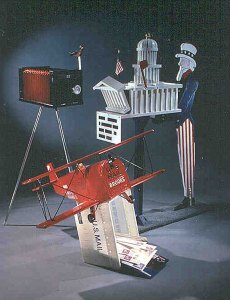
From the Folk Art Mailboxes exhibit at the National Postl Museum, click the image for more.

From the Folk Art Mailboxes exhibit at the National Postal Museum, click the image for more.

Dandy Livingstone, “Rudy, A Message To You” (click to listen or download).

Recently AMPS called attention to the fact that MMSD had not been sending agendas and other Board of Education information to those of us who had signed up to “get BOE Agendas delivered directly to your e-mail inbox.”  I’m happy to report that as of earlier this week, the situation has been rectified.  Thanks to any and all who made this happen.

No Board meetings this week, but lots of activity with the Strategic Planning Action Teams, (I’m still not clear on who comprises these teams or how they were picked/assigned).

Thomas J. Mertz

Leave a comment

Filed under Uncategorized

Dual Language Middle School Program, Yes; Charter, No.

Click on link for more on the book.

Click on link for more on the book.

At Monday’s Board of Education Meeting an administrative recommendation to move forward with planning for a dual language district middle school program  at Sennett was approved by a vote of 7-0 and the request for a memo of understanding with  Nuestro Mundo Inc in order to qualify a charter dual language immersion middle school program for planning grants was not acted on.  The lack of action was an expression of non support for the charter, as the comments by the Board members made clear.

I applaud the Board for their action and inaction.

The video of the meeting can be found here.

Despite a large group of people testifying and an editorial on the topic in the Wisconsin State Journal (my earlier comments on that editorial here).   I have seen no news coverage of this decision.  Strange and not good.

Thomas J. Mertz

Leave a comment

Filed under Best Practices, Equity, Local News, Uncategorized

Stimulus Money: Issues and Confusion

From Critical Exposure, By empowering young people to develop skills as documentary photographers and advocates, we expose citizens and policymakers to the realities of our current two-tiered education system as seen through the eyes of the students who confront those realities each day...works to secure policy changes in order to ensure that all children have access to an excellent, equitable public education, fulfilling this nation's promise of providing all children with an opportunity to succeed. Click on the image to learn more.

From Critical Exposure Click on the image to learn more about this great project teaching students to use photography to document and advocate.

There is a story in the Wisconsin State Journal on the stimulus money and education that covers some of the key issues but also perpetuates  the confusion surrounding how states and schools may and may not use this money.

To be fair, some of this confusion is understandable.  The stimulus package was put together quickly, portions of it are not very clear and much of the education portion reflects contradictory thinking.

However, much of the confusion is inexcusable, especially the omission of any explanation of the structural gap between costs and allowed revenues that is an essential part of the broken “three legged stool” of Wisconsin education funding.  Reporter Mark Pitsch should have read his former colleague Andy Hall’s “Squeezing Schools,” and incorporated some of that material.

Also difficult to understand is the repeated confusion about different aspects of the stimulus school funding and how they relate to the revenue caps.  More below, with clarifications

Before looking at the State Journal article and related issues, I want to make one basic truth clear (and get on my soapbox a little):  The money in the stimulus, for Title I (targeted for schools with high poverty concentrations), IDEA (money for special education) and even the general purpose money flowing through the states only temporarily makes underfunded mandates less underfunded.

The WSJ got this right with their headline: “Stimulus can’t solve schools’ shortfalls.”

School “shortfalls” are structural.  The continued underfunded mandates from the Federal and State governments, in Wisconsin a broken system that requires districts to cut programs and services by between 1% and 2% annually are structural faults.  Structural failures require structural solutions.  Sign on with the Wisconsin Alliance for Excellent Schools and the School Finance Network to work to fix this in Wisconsin.  Let your Senators and Representative know that educational opportunity should be a civil right and educational mandates need to be fully funded.

The stimulus money creates a “funding cliff.” Once the money is gone — absent Federal and State initiatives to fully fund education — schools are in danger of falling off the cliff.  This would mean massive program cuts and layoffs in a couple of years.  Like a nonrecurring referendum, this sort of education funding is not good policy.

Robert Manwaring at the Quick and Ed has a very good discussion of the complexities of deciding what to do with this one time funding.

Interestingly, the guidance goes out of its way to emphasize that this is short-term money, and that districts and states should use it for shorter-term investments, so there isn’t a “funding cliff”. But on the flip side, the guidance makes clear that the stimulus funds’ goals are to help create or maintain jobs. (Those two priorities seem in conflict, since hiring or keeping a teacher is more of a long-term investment.)

The guidance McNeil refers to was released by the Department of Education on March 7.  That is the same day the Pitsch’s State Journal story was published.  However, this time line does not explain the confusion in that story.

In discussing Title I funding, Pitsch writes:

The stimulus addition should allow the district to divert general fund money to other programs.

Both the Title I and IDEA funding continue the “supplement not supplant” policies in place for those programs, meaning that the funding cannot, except under very special cirumstances be used to replace general fund money.  Here is what the Department of Education says about the Title I Part A funds:

Fiscal Issues

  • Maintenance of effort: With prior approval from the secretary of education, a state or LEA may count expenditures of SFSF used for elementary or secondary education as non-federal funds for purposes of determining whether the state or LEA has met the Title I, Part A maintenance of effort requirement. This may reduce the incidence of LEAs failing to maintain fiscal effort and the need to seek a waiver from the Department.
  • Supplement, not supplant: the Department may not waive the Title I, Part A “supplement, not supplant” requirement. Note, however, that in certain circumstances, including cases of severe budget shortfalls, an LEA may be able to establish compliance with the “supplement, not supplant” requirement, even if it uses Title I, Part A funds to pay for allowable costs that were previously paid for with state or local funds. (For additional information, see Title I Fiscal Issues Non-Regulatory Guidance, available at: http://www.ed.gov/programs/titleiparta/fiscalguid.pdf [PDF, 256K].)

On related issues with IDEA, EdWeek’s Christina Samuels, who blogs  at On Special Education wrote

The maintenance of effort provisions that currently exist within the Individuals with Disabilities Education Act will apply to stimulus funds. That means that you can’t take all of your stimulus money and use that to pay for your current special education programs. There is SOME flexibility in the 2004 reauthorization of the IDEA to “supplement, not supplant” provisions, though. If the federal government allocates more money to a district from one year to the next, the district is allowed to take the difference between the two allocations, halve it, and use that figure to reduce their own funding requirements.

So some stimulus Title I  and IDEA money may be used to supplement, possibly allowing general fund money preciously used for Title I purposes (to make up for the underfunding) to be used elsewhere. This is very different than what Pitsch wrote.

Pitsch’s section on Governor Doyle is also full of misinformation and confusion:

Doyle said in an interview that most of the federal stimulus money wouldn’t be subject to state revenue caps for school districts. But he urged them to remain under the caps even as they spend the federal dollars. If they don’t, they’ll face big budget holes in future years and possibly anger homeowners if property taxes go up too much.

“School districts would be very, very well advised to take that money and keep their spending under the revenue caps,” said Doyle (emphasis added).

Doyle appears to be referring to the Title I, IDEA and other special purpose funds, which do not count against revenue caps (he also appears to be telling them to violate or take advantage of the loopholes in the “supplant not supplement” provisions).  However, most of the stimulus money schools will receive comes not from these funds, but from the State Fiscal Stabilization Fund.  This is the flow through money that Doyle used to supplant state money in his budget.  To the Governor’s credit, he went beyond the 81.8% required by the law to limit property tax increases and district budget cuts to more -or-less the usual, unacceptable levels.

Here is a chart from the Wisconsin Association of School Boards:

Federal Program

2008 Actual Allocation

American Recovery & Reinvestment Act (estimated amounts as of 2/19/09)

State Fiscal Stabilization Fund

——–

$876,940,096

Title I Grants to Local Educational Agencies

$199,030,396

$147,696,280 Individual District Estimates

Education
Technology Grants

$3,443,011

$9,170,493

IDEA, Part B:
Grants to States

$197,853,865

$208,200,108

IDEA, Part B:
Pre-school Grants

$9,322,204

$9,827,791

IDEA, Part C:
Grants for Infants & Families

$6,984,803

$6,999,614

The non revenue cap monies total about $381 million; of the $876 million in flow through, Doyle has called for $291 million to be spent on general aids in 2008-9, $277 million in 2009-10 and $221 million in 2010-11, for a total of $789 million.  $789 million is more than twice $381 million; more than twice as much stimulus money is under the caps than is not.

School finance can be confusing, but misrepresentations of simple facts and omissions of key contexts like those in the Wisconsin State Journal article render what is challenging almost impossible.  How is the public supposed to develop informed opinions when our reporters fail in their duties?  In the coming months, Boards of Education around Wisconsin will face difficult choices regarding the use of the non capped stimulus funds.  The public needs to be part of this process and in order that to happen in any productive way, the media needs to do much better in explaining the issues.

Thomas J. Mertz

Leave a comment

Filed under "education finance", Budget, education, finance, Gimme Some Truth, Local News, School Finance, Take Action, Uncategorized