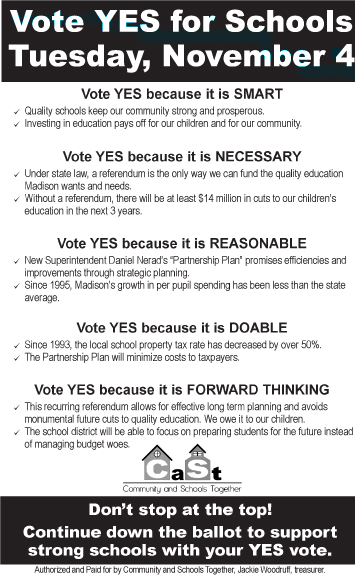
Vote Today! Vote Yes for Schools!

Vote today!  Vote Yes for Schools!

Not much else to say, so some special election day musical selections.

Chis Stamey and Yo la Tengo, “Vote” (click to listen or download).

Chick Webb Orchestra with Ella Fitzgerald, “Vote for Mister Rhythm” (click to listen or download).

Sam Cooke, “A Change is Gonna Come” (click to listen or download).

Thomas J. Mertz

Leave a comment

Filed under AMPS, Elections, Referenda, referendum, Take Action, Uncategorized

Madison Referendum: More Than Affordable…

Successful Recurring Recurring Referenda as % of Revenue Limits, Nov. 2004 - Nov. 2008.

Successful Recurring Recurring Referenda as % of Revenue Limits, Nov. 2004 - Nov. 2008.

For a number of reasons, I’m fairly confident that the MMSD referendum will pass.  In fact, I still think that Madison could have and should have passed a larger referendum.  I’ll start with the could have and then revisit some of the should have.

The graph at the top of the page shows successful recurring operating referenda since November, 2004 as percentages of the district revenue caps in place at the time of the votes (operating referenda linked to building projects were not included, the final total price was used for multi-year recurring referenda, $13 million in Madison’s case).  The pending Madison referendum is in red.  This referendum represents 4.98% of the district’s revenue limit; the average of all the successful referenda is 8.53%.  If Madison had asked for the average percent, it would have been an over $22 million referendum.  With $22 million, we could have restored valued programs, renewed the maintenance and technology revenue authority, realistically considered new ways to improve the education our district offers, and more.  The lesson here is that other districts, with much less of a culture of educational support, have passed relatively more sizable measures than we are considering.

For further evidence that Madison could have afforded more, we need look no further than the the recently approved 2009-10 budget and mil rate (district documents, here).  Due to greater than expected growth in the tax base, individual tax rates went down more than expected, from 9.92% to 9.81%.  This points to two important things.  First, the starting point for referendum-related tax increases is lower than anticipated.  Second, the quality of our schools continues to be a contributing factor to our healthy local economy.

Affordability is a matter of opinion and it is impossible to prove or disprove the outcome of offering the voters a larger referendum, but both the above pieces of evidence are suggestive of a positive prognosis.  With counterfactuals, that’s about as good as you can do.

I could offer at least 24,189 reasons why there should have been a larger referendum.  I just want to touch briefly on three today.  First, I do not believe that there are $3 million worth of cuts over the next three years that will not have a negative effect on the quality of education our district provides; second, there are many valuable things that have been cut in that past that I think should have been considered for restoration;  last, there will be a need for a maintenance referendum in 2010 and I believe that an extension of this should have been included.

When discussing the quality of education, it is always important to begin with the observation that we are a district with high needs.  We have a higher percentage of students with disabilities, students in poverty and English language learners than the state average (data can be accessed here and is summarized here).  These categories are important, because each of them are covered by underfunded mandates.  Because our percentages are higher and the mandates are underfunded, Madison must spend a higher percentage (than the average district) of our general operating revenue to address these needs.

This is part of the reason that I do not believe that after 15 years and over $60 million worth of cuts, $3 million more worth of “harmless” cuts can be found.   I am not naive enough to pretend that there aren’t programs and positions that are not as effective as they should be, but I do believe that there are also new and old ways that money reallocated from these budget lines could be used to improve the quality of our schools.  As framed by this referendum, any new ideas or restorations of old services will only be possible after $3 million worth of cuts are found.

In a letter to the Cap Times Steve Pike detailed some of the ways past cuts have harmed our schools.  I have touched on some of others here (as well as other places).  Both in local budget discussions and in the fight for state finance reform, I have repeatedly said “we cannot afford to cut more.”  I believe that.  I believe that many of the cuts that have already been made were harmful.  We have more deteriorating facilities, less current technology, larger classes, less community outreach and parent-teacher contact, a smaller variety of offerings, more difficult situations with specials classes, fewer support staff…than we used to have and and we should have.

The maintenance and technology renewal is somewhat different, but just as important.  The 2009-10 school year is the last year of the non-recurring maintenance and technology referendum passed in 2006.  In the 2010-11 year, MMSD will lose $5.5 million in revenue authority from this referendum (while adding an anticipated $4 million or $9 million — depending on how you count it — from the referendum on the ballot November 4).  The current referendum could have been offered so that this amount was included on a recurring basis, beginning in 2010.  This amount would have still left the referendum well below the average (as percentage of revenue limits) of passed recurring referenda pictured at the top.  As far as I can tell this possibility was never publicly considered by the Board of Education.  Because of this oversight, the district, the Board and the community will have to engage in an additional referendum process and campaign.

I’ve been campaigning on behalf of the referendum and will enthusiastically vote yes because the the alternative is so obviously wrong.  My enthusiasm will be tinged with regret that the referendum could have been bigger and better, could have provided more room for dreaming and less need for cutting.  I believe that a referendum like that would have passed also and our children and our community would have both benefited.

The referendum on the ballot is more than affordable, but less than it should have been.  Vote Yes for Schools!

Thomas J. Mertz
Leave a comment

Filed under "education finance", Best Practices, Budget, education, Elections, finance, Local News, Referenda, referendum, Uncategorized

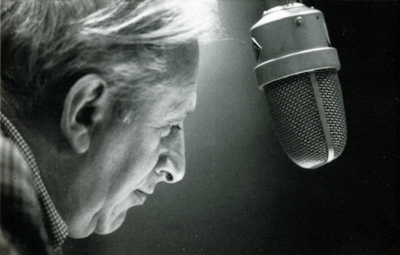
Studs Terkel, 1912-2008

Two quotes:

“Someone who does an act. In a democratic society, you’re supposed to be an activist; that is, you participate. It could be a letter written to an editor.”

“But once you become active in something, something happens to you. You get excited and suddenly you realize you count.”

In had the pleasure of meeting both Studs and Ida Terkel (and here).  I remember Studs saying that he wasn’t much of an activist, that Ida had him beat there.  They both were activists, they both were fine democratic citizens.  I hope he voted early.

Many hours of education and pleasure, as well as inspiration to activism can be found at Studs’ “Conversations with America” site.

Thomas J. Mertz


Leave a comment

Filed under Best Practices, Take Action, Uncategorized

Quote of the Day — “Most Powerful” Data

“I am not a number,” from The Prisoner.

It’s one reason why the most impressive data we used at the schools I’m most familiar with were the results of interviews with alumnae conducted years after they left us. But even that only helps us if we’re open to hearing what they say. For the possibility—however unlikely—that we may be wrong about this or that has to be uncomfortably confronted—over and over. Sometimes it’s small things and sometimes it’s the big ones. It’s this that I hope good schools do for both their kids and their staff—because this habit of what I call “skepticism” is what democracy rests on. The “data” that are the most powerful are not all the proxy data—like test scores—which we have been inundated with. What we need to be listening to are the real experiences of our students and our graduates, and over time their impact upon the larger world as well.

Deborah Meier, (hat tip, Jim Horn – Schools Matter)

Thomas J. Mertz

Leave a comment

Filed under Accountability, Best Practices, education, National News, nclb, No Child Left Behind, Quote of the Day

News from CAST

From the Community and Schools Together website:

Many things going on and many new things on the web site.

We are in the last weeks of literature distribution.  Almost 20,000 homes have been reached, another 10,000 or so will be done this weekend (October 25-26) and next week we want to hit as many more as possible.

On October 25 and 26 we still need help in Fitchburg and in the Falk and Huegel areas.  Next week there will be lots of small things – including Maple Bluff and Brams Addition — and major pushes on the North side and to the South and West.

Without you volunteering, we can’t do anything.  Isn’t assuring that our schools avoid $13 million worth of cuts in the next three years worth an hour or so of your time?

To help, email madisoncast@sbcglobal.net or fill out this form.

New on the web site is an up-to-date Endorsement Page, including a letter signed by 49 local elected officials.

The Press/Media Page has also been updated, with videos, a radio interview, many editorials and opinion pieces, more do-it-yourself Advocacy material, and all the latest news reports.

Check out the district referendum pages also.

More updates coming soon.

Thomas J. Mertz

Leave a comment

Filed under "education finance", Best Practices, Budget, education, Elections, finance, Local News, Referenda, referendum, School Finance, Take Action, Uncategorized

We Are Not Alone #25 — Class Size and Segregation Edition

I’ve written about the Student Achievement Guaranty in Education (SAGE) as an underfunded mandate, and noted the trend toward increasing class sizes around the state, especially but not exclusively in districts where referenda have failed.  A report from Verona shows how vulnerable this proven educational practice is —  even in growing districts — under our broken system.

We all know that declining enrollment districts have been hit hard, but despite adding 100 students this year, Verona is considering dropping out or getting kicked out of SAGE, of denying their students the benefits of small classes in the early grades.

Verona is having troubles with the new strictness on the 15/1 ratio, and having troubles paying to keep this ratio out of general operating funds.  If they drop or lose SAGE, they will lose $850,000, but to comply with the rules would mean adding classes at an additional cost of $430,000. Even without the SAGE issue, Verona was looking at $600,000 in cuts for 2009-10. What’s a district to do?

Segregation is one very unfortunate solution.  The way this is reported is scary and not 100% accurate:

One choice would be to group low-income students at a couple schools and designate those as SAGE sites, as many districts – including Madison – already do.

SAGE contracts are limited and in recent years MMSD has cut local funds for class size reduction and moved their limited contracts to high poverty schools.  Madison has not embraced an affirmative policy of economic segregation and still gives some attention to seeking desegregation when assigning students.

Madison has also not embraced a policy of affirmative desegregation and I’ve heard no concern that the Third Friday Count showed Glendale at 80% low income, while the adjoining attendance area for Elvehjem is 25% low income.

The Equity Task Force asked the Board to consider having an annual report on economic segregation in schools and in class assignment.  They have never discussed this proposal  in an open meeting.

Like class size reduction, socio-economic diversity has yeilded positive achievement results.  These are becoming either-or-choices, when we all know we should do both.

Thomas J. Mertz

Leave a comment

Filed under "education finance", Best Practices, Budget, education, Equity, finance, Local News, Referenda, referendum, School Finance, Uncategorized, We Are Not Alone

24,189 Reasons — My Referendum Letter

To be sent to The Capital Times, The Wisconsin State Journal, The Capital City Hues, The Madison Times and maybe more (I may do another edit before sending).  Click on the links to send your own letter!

24,189 Reasons to Vote Yes

According to the official September census, the Madison Metropolitan School District serves 24,189 students.  The individual and collective futures of these students are the best reasons to vote yes on the November 4 operating referendum.

We have an obligation to these students to give them the best opportunities to flourish and to be part making their world a better place than the one we are leaving them.

The world we are leaving our children is a mix of good and bad.  We are a prosperous community in a prosperous nation, but there is great economic uncertainty and growing deficits and debts at all levels.  We have wonderful traditions of self government, but these traditions have been corrupted and our representatives are often ineffective or inattentive.  We have ideals of justice and equality that unite us, but are torn apart by divisions and inequality.  We think of ourselves as a world leader for peace and freedom, but our devastating mistakes have made us an embattled pariah at a time when cooperation is essential.

We need to give the coming generations the tools they need to build on the good and correct the bad.  We can do this in many ways, but strong public schools have to part of it.

Our community understands this; we value education and know the value of education.  Under the broken state finance system, referenda are how we can act on this knowledge to support the quality schools we want and need.

Our schools are very good, but far from perfect.  Fifteen years of trying to do more with less under a broken system have taken their toll.  We can all find things with the schools that we don’t like or think need to be done better, or more, or less.  The improvements we demand aren’t going to happen without the resources supplied by the referendum.

What will happen are more distracting struggles as the district tries to find the least harmful $13 million to $16 million worth of cuts over the next three years.

Dissatisfaction with particulars and desire for improvement aren’t reasons to vote no, they are reasons to vote yes.  Just like we need to give those 24,189 students the tools to make the world better, we need to give our schools the resources they need to build on the good and correct the bad.

Vote yes for schools, vote yes for a better future, vote yes for the 24,189 children who are depending on your support.

Thomas J. Mertz

Franklin-Randall and JC Wright Parent

Chair, Progressive Dane Education Committee

Take care of the children
The children of the world
They’re our strongest hope for the future
The little bitty boys and girls

Make this land a better land
Than the world in which we live
And help each man be a better man
With the kindness that you give
I know we can make it (I know that we can)
I know darn well we can work it out
Oh yes we can, I know we can can

“Yes We Can Can,” by Allen Toussaint, as performed by Lee Dorsey (click to listen or download).

Leave a comment

Filed under "education finance", Accountability, AMPS, Best Practices, Budget, education, Elections, finance, Local News, Referenda, referendum, School Finance, Take Action, Uncategorized

City Budget and Education II

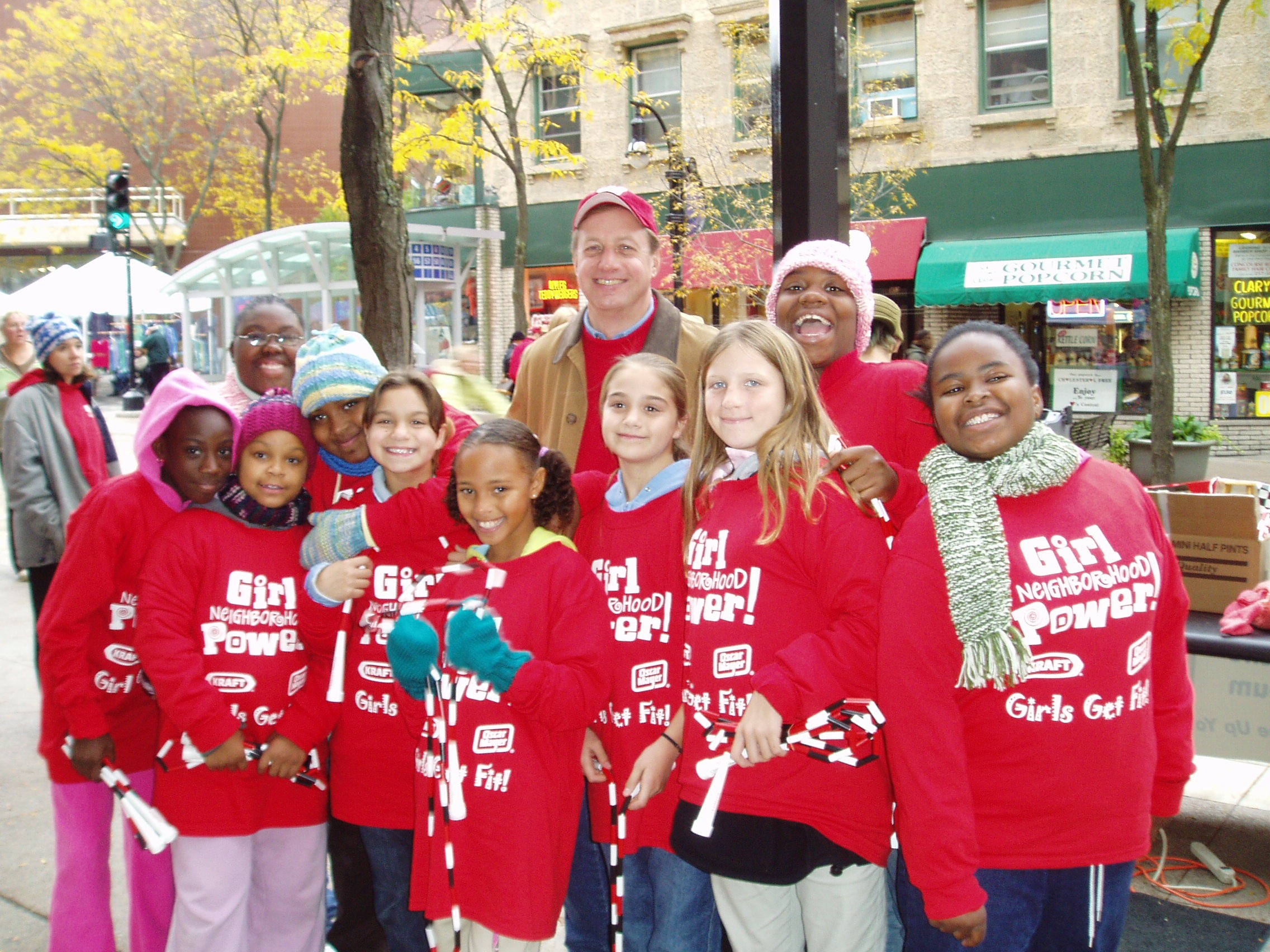
Maybe these children wouldn’t be smiling if they knew what the Mayor had in store for them.

I’ve been working on a post on the Community Agenda for America’s Public Schools, this reaction to the agenda and the lack of apparent progress in public and private partnerships for the public schools in Madison, including the intiative announced by Mayor Cieslewicz on April 9, 2008 (and discussed behind the scenes by many over a year before that).  Today another piece of the story demanding immediate attention came to light. So here instead is an unplanned part II of City Budget and Education (part I here).

My friend in city hall, Brenda Konkel, has the details and the analysis:

Dean Mosiman called me about the budget story he wrote. It’s hard to react to something you haven’t seen, but one thing is clear. The Mayor totally misled me and several others when he said he would hold Community Services agencies harmless like the police department. Not true.

No cost of living increases for the Community Services and CDBG groups. I was mad enough when he told us that even though we requested 4%, he was giving us 3%. (And he didn’t even know that he didn’t give us what we had requested.) When I say “us”, I mean as part of the Early Childhood Education and Childcare Board. I seriously, don’t want to go to another heartbreaking meeting where we agonize over which after school program to cut.

This is absurd on so many levels. Nothing for kids to do after school will just mean we need more police services. Which means there will be less money for community services and then Capt. Lengfeld can complain that the community services agencies just can’t keep up. It makes sense, he’s right, if there are no cost of living increases and the city is growing, and health care and fuel costs and everything else goes up, how are agencies supposed to keep up. Duh.

This makes no sense. We better just add 100 more police officers and get them some human services training, because there won’t be community services to work with them to prevent troubles in the community. Or, we better just start accepting that lower quality of life that some neighborhoods are concerned about

Leave a comment

Filed under Accountability, Best Practices, Budget, education, Local News, Referenda, referendum

New Name

The name of this blog has been changed from Advocates For Madison Public Schools to Advocating on Madison Public Schools.  Not much else will change.

When I participated in a focus group as part of the MMSD Superintendent selection process, the last question asked was something about “where would you like the district to be in five years?”  My answer was that I would there to be a place for friendly critics; a place for people who support the schools but also work for change and improvement.  For too long there has been a “with us or against us” attitude and no dissent or even differences of opinion are tolerated.

Often this was blamed on Art Rainwater, but the problem is wider and deeper and it is my impression that in some areas things have been getting steadily worse over the last year and one half.

It is too early to tell what influence Dan Nerad will have in this area.

I am no longer comfortable blogging as an “Advocate For,” because that smacks too much of the mindless polarized way of seeing things that I deplore.  I’m more comfortable “Advocating on.”

Not much will change, just the name.

Oh, the header image will probably change again, this was a placeholder, a quick job.

Thomas J. Mertz

Leave a comment

Filed under AMPS, education

Quote of the day — Not welcome

“We must not continue to welcome into Madison more at-risk populations from elsewhere because we will never have sufficient resources to provide for them.”

Madison Alder Thuy Pham-Remmele

This attitude makes me sick.

We are a wealthy and prosperous city in what by any standard is a wealthy and prosperous nation.  Maybe some can enjoy their wealth and prosperity while turning their back on the less fortunate or in Alder Phan-Remmele’s words, the “at risk.”

I believe that instead we should try to spread that prosperity to the less fortunate.  I am proud that our city and our schools devote resources to the “at risk,” I think both should do more.

And Alder Phan-Remmele, without our attention the “at risk” aren’t going to disappear, they will continue to struggle in cycles of poverty and become more desperate.  Many in Madison, some elsewhere, but in the nation and on the planet we share.  With our attention, with the opportunities and support we can afford to provide some will cease to be at risk and will be productive and contributing and the cycle will be broken.

Unfortunately, less directly and for what appear to be better reasons, Mayor Dave Cieslewicz has voiced similar thoughts.  The Mayor is correct that concentrations of poverty in housing and in schools are not good and that there are real benefits, educational and otherwise in affirmative policies of economic diversity (The Equity Task Force included this in their recommendations, but like many things the Equity Task Force offered, it was never discussed publicly by the Board of Education and has not been enacted).

But once again I say, that Madison is large enough, wealthy enough and diverse enough that we can achieve these benefits without hanging up the “not welcome” sign.  I’ll also add that resources like SAGE and Title I money may not follow poor children to the suburbs (as they don’t in some Madison Schools), and that the loss of the services these provide may undercut the gains of increased economic diversity.

Brenda Konkel has much more.

I also point again to the ideas of the Schools and the Common Good.

Thomas J. Mertz

Leave a comment

Filed under AMPS, Best Practices, education, Equity, Local News, Quote of the Day, Uncategorized