Category Archives: We Are Not Alone

Back in Stride — Walk On the Child’s Side Update

From the Wisconsin Alliance for Excellent Schools:

What: 10th anniversary Walk on the Child’s Side

Who: All Wisconsinites who care about their public schools

Where: Walk from the UW-Madison Library Mall to the steps of the State Capitol

When: 11 a.m. on Tuesday, June 16

Make a statement for school-funding reform

* Your legislators will be invited to walk with us. Make sure they are there representing, you, your community, and your children.

* Speakers at the Capitol will include Randy Braun, Walk on the Child’s Side veteran and superintendent of the Cameron School District; Randy Kunsch, CARE member and Walk veteran; Mary Bell, WEAC president; Art Rainwater, former Madison school district superintendent and Walk veteran; and Jennifer Morales, Walk veteran and former Milwaukee school board member. Other speakers, including students, will be added.

* Off-site parking will be available with shuttle buses running to and from the event.

* Bring and sign or banner telling who you are and where you are from. Event organizers will have materials to make signs at the last minute.

* Wear your original Walk on the Child’s Side shirt. Some will be available on a first-come, first-served basis.

A decade after the first Walk on the Child’s Side and 15 years since the state’s school-funding system was passed into law, not much has changed except that the funding crisis has deepened among Wisconsin’s public school children and schools. If you come to Madison for the anniversary Walk, you will make an important statement on behalf of those children, their schools, and all of our futures.

The Walk on the Child’s Side will begin at the University of Wisconsin-Madison Library Mall at 11 a.m. and end at the Capitol. Several speakers will talk about the history of school-funding reform and call for legislative action. Walkers will end the day visiting with their elected officials to ask them to work together for comprehensive reform. What’s new since the last update Sponsors of the 10th anniversary Walk on the Child’s Side are Price County Citizens Who CARE, Northern Tier Uniserv, and the Wisconsin Alliance for Excellent Schools. If this isn’t the biggest and best Walk, legislators and the Governor won’t get the message.

Download a flier here.  Save the date and spread the word!

Thomas J. Mertz

Leave a comment

Filed under "education finance", Best Practices, Budget, education, finance, Local News, School Finance, Take Action, Uncategorized, We Are Not Alone

Fragrant Delusions

reality-check

In another episode of feigned outrage, the new adjunct to a scorned Republican Party searching for new identity – leaderless and jumbled up with 30 years of rhetoric that, surprisingly, in just a wink of an eye, seems immensely trite, dated even – tone deaf to the body politic; behold a specimen of Wisconsin politics that can easily serve as specimen A of this “did we really talk and think like that before” mentality. We present to you – Steve Nass.

In short, the Cap Times editorial, responding in part to this, pretty much says it all. It can only be redundant to pile on with citations of this piece. Suffice to say, this crazed, destroy it all juju, is merely a taste of the Trojan Horse “Sturm und Drang” that would have awaited us if the Rose Fernandez candidacy had been successful. To cite more positive rhetoric of Wisconsin’s history, Forward!

Robert Godfrey

Leave a comment

Filed under "education finance", Accountability, AMPS, Best Practices, Gimme Some Truth, School Finance, We Are Not Alone

April 7, 2009 Referenda Results

From Modern Mechanix (click image for more)

From Modern Mechanix (click image for more)

The results are in.  Good news with Tony Evers, Shirley Abrahamson and Arlene Siveira.  Very mixed results on the school referend in Wisconsin.  Not as bad as February, but many children’s educations will suffer as a result of the losses.

Information on the measures can be found in this previous post and the full report from DPI is here.

First the Non Recurring Operating Referenda where 10 passed and 14 failed.

DISTRICT

Referenda Type

Yes Votes

No Votes

RESULTS

Birchwood (0441)

NR – 2009 – 2011

360

386

Failed

Horicon (2576)

NR – 2009

505

822

Failed

Kiel Area (2828)

NR – 2009 – 2016

887

928

Failed

Loyal (3206)

NR – 2009 – 2012

439

514

Failed

Manawa (3276)

NR – 2009 – 2014

590

937

Failed

Oakfield (4025)

NR – 2010 – 2014

308

344

Failed

Oshkosh Area (4179)

NR – 2009 – 2014

6,872

6,930

Failed

Reedsburg (4753)

NR – 2009 – 2012

999

2,240

Failed

Ripon (4872)

NR – 2009 – 2012

854

1,112

Failed

Wheatland J1 (6412)

NR – 2009 – 2013

363

417

Failed

Albany (0063)

NR – 2009 – 2013

459

333

Passed

Benton (0427)

NR – 2009 – 2012

407

291

Passed

Bowler (0623)

NR – 2009 – 2012

223

216

Passed

Elcho (1582)

NR – 2009 – 2012

800

632

Passed

Herman #22 (2523)

NR – 2009 – 2014

142

137

Passed

Maple Dale-Indian Hill (1897)

NR – 2009 – 2019

809

632

Passed

Mineral Point (3633)

NR – 2009 – 2011

896

592

Passed

Northland Pines (1526)

NR – 2009 – 2012

1,963

1,767

Passed

Oshkosh Area (4179)

NR – 2009 – 2014

7,212

6,624

Passed

Phelps (4330)

NR – 2009 – 2012

378

144

Passed

Phelps (4330)

NR – 2009 – 2012

360

161

Passed

Ripon (4872)

NR – 2009 – 2015

1,077

898

Passed

Washington (6069)

NR – 2009

242

236

Passed

Wisconsin Heights (0469)

NR – 2009 – 2011

1,225

598

Passed

Lots of close votes (6 on Washington Island referendum!) and unfortunately, unless there is comprehensive reform (see below), even the districts where the referenda passed will soon be asking again or heading off the cliff.  Many of the ones that failed will return to the voters, sooner rather than later.

The results for Recurring Operating Referenda were not as good.  7 failed and only 2 passed.

DISTRICT

Referenda Type

Yes Votes

No Votes

RESULTS

Medford Area (3409)

RR – 2010

1,220

2,428

Failed

Merrill Area (3500)

RR – 2009

1,836

3,153

Failed

Middleton-Cross Plains (3549)

RR – 2009

4,963

5,726

Failed

Paris J1 (4235)

RR – 2009

165

512

Failed

Reedsburg (4753)

RR – 2009

1,349

1,907

Failed

Riverdale (3850)

RR – 2009

559

883

Failed

Siren (5376)

RR – 2009

234

418

Failed

North Lakeland (0616)

RR – 2009

839

732

Passed

Reedsville (4760)

RR – 2009

863

554

Passed

The votes don’t look to have been as close. Recurring referenda make much more sense in terms of planning, but for some reason the anti-forces have been very successful demagoguing the concept.

Last the Issue Debt Referenda (building, remodling, upgrading HVAC…).

DISTRICT

Referenda Type

Yes Votes

No Votes

RESULTS

Medford Area (3409)

Issue Debt

1,191

2,505

Failed

Middleton-Cross Plains (3549)

Issue Debt

4,766

5,677

Failed

Middleton-Cross Plains (3549)

Issue Debt

5,008

5,425

Failed

Oshkosh Area (4179)

Issue Debt

3,761

10,124

Failed

West Bend (6307)

Issue Debt

5,632

6,317

Failed

Albany (0063)

Issue Debt

539

257

Passed

Cudahy (1253)

Issue Debt

1,085

1,000

Passed

Elk Mound Area (1645)

Issue Debt

648

413

Passed

Maple Dale-Indian Hill (1897)

Issue Debt

972

465

Passed

Reedsville (4760)

Issue Debt

795

624

Passed

Ripon (4872)

Issue Debt

1,372

616

Passed

West Bend (6307)

Issue Debt

5,971

5,897

Passed

5 yes and 7 no, with mixed results in West Bend.

More votes in Salem and Cuba City later this month and elsewhere — especially where referenda failed —  the axe will continue to fall and AMPS will cover as many of the cuts as we can.

Now the” take action” boilerplate (literally cut-and-paste this time).

This growing reliance on regular referenda is perhaps the clearest evidence that the way our state funds education is broken.  Too much time and energy is being misdirected at securing basic funding instead of educating, too many communities are being split over these votes instead of united to give their children the opportunities to create a better future.

It is well past time to fix it.

Get involved in the effort by attending the April 21, 2009 Assembly Education Committee hearing on the School Finance Network proposal (info here), and joining the School Finance Network and the Wisconsin Alliance for Excellent Schools (it is just fine to do all of the above, I have or will).

Thomas J. Mertz

Leave a comment

Filed under "education finance", Best Practices, Budget, education, Elections, finance, Local News, Referenda, referendum, School Finance, Take Action, Uncategorized, We Are Not Alone

44 School Referenda On April 7!

From the Cleveland Municipal School District Visions of Democracy project, click on the image for more.

From the Cleveland Municipal School District Visions of Democracy project, click on the image for more.

Today,  April 7, 2009 voters in 30 Wisconsin school districts will decide 44 referenda questions.  April 21 brings a 31st in Cuba City.  On April 28 a 32st district, Salem, will vote on a referendum for the fourth time in less than a year.

Salem is an extreme case, but at least 10 of the districts seeking operating funds have had failed operating referenda in the last two years and five seeking operating funds are districts facing the “off the cliff” loss of funds scenario that hits when a non-recurring referendum runs out.

There are a total of 32 operating referenda, 9 recurring and 23 non recurring (including 3 of the 5 districts on the edge of the cliff because previous non-recurring referenda are expiring); the remaining 12 votes are to issue debt for building, maintenance, refurbishing and upgrading projects. Before listing and linking,  some context and a call to action.

[Note:  Wisconsin Heights was missed in the original post.  It has been added below, but the rest has not been updated.]

Not counting the April 2009 votes, since April 1, 2007 there have been 252 referenda in Wisconsin; since April 1, 2005 there have been 481.

This growing reliance on regular referenda is perhaps the clearest evidence that the way our state funds education is broken.  Too much time and energy is being misdirected at securing basic funding instead of educating, too many communities are being split over these votes instead of united to give their children the opportunities to create a better future.

It is well past time to fix it.

Get involved in the effort by attending the April 21, 2009 Assembly Education Committee hearing on the School Finance Network proposal (info on both here), and joining the School Finance Network and the Wisconsin Alliance for Excellent Schools (it is just fine to do all of the above, I have or will).

The official details of all the referenda are here; Below are links to more information on the ballot measures (search AMPS for more on many)

Operating, Non-Recurring:

Wisconsin Heights:  Newsletter.

Wheatland J1: District Site; District Press Release, News Story “Wheatland Center to vote on revenue cap referendum.”

Washington Island District Referendum Info.

Ripon District Referendum Page; PolicyOptions.org, Brief (good stuff)

Phelps District Referendum Page.

Oshkosh Area District Referendum Page; News Stories, “Details emerge on Oshkosh school district’s three question referendum in April,” “Teachers organization underwriting majority of referendum ‘Yes’ vote push.”

Oakfield District Site; “What makes Oakfield special?’

Northland Pines Referendum Page.

North Lakeland District Site; News Stories, “North Lakeland voters to consider referendum Tuesday,” “Vought, committee make case for proposed new levy referendum.”

Mineral Point District Referendum Page.

Middleton-Cross Plains District “Community Conversation;” Referendum Page; Ellen Lindgren: “Middleton’s Kromrey School should be replaced.”

Maple Dale-Indian HillDistrict Site; News Story, “Maple Dale-Indian Hill School Board votes for referendum.”

Manawa District Referendum Page; Editorial: “Manawa referendum helps protect schools.”

Loyal District Site; News Story, “School District of Loyal Asks Taxpayers to Reach Into Pockets.”

Kiel Area District Referendum Page; Letters to the Editor.

Horicon District Site; News Story, “Horicon to pursue school referendum.”

Herman District Referendum Page.

Elcho District Referendum Page, News Stories, “Elcho school district leaders push for referendum” (with video), “Elcho heads to referendum.”

Bowler District Site; News Story, “Bowler school district leaders asking taxpayers for referendum.”

Birchwood District Site.

Benton District Site; Fact Sheet; PowerPoint.

Albany District Referendum Page; News Story: “Albany voters face two school referendums.

Operating, Recurring:

Siren:  District Site; News Story “Siren looks at school referendum.”

Riverdale District Referendum Page

Reedsville District Referendum Page; News Stories, “Reedsville public schools facing financial crisis,” “Reedsville schools’ future up to voters.”

Reedsburg District Referendum Page; News Story, “District will leave no stone unturned.”

Paris J1: District Fact Sheet; News Story: “Will Paris deal with budget shortfall or dissolve the district?

Merrill Area District Referendum Page; News Stories, “Leaders like Merrill referendum’s chances,” “Merrill will try again for school aid.”

Medford AreaDistrict Site; Building the Medford Community.

Issue Debt

West Bend District Referendum Page.

Ripon District Referendum Page; PolicyOptions.org, Brief (good stuff).

Oshkosh Area District Referendum Page; News Stories, “Details emerge on Oshkosh school district’s three question referendum in April,” “Teachers organization underwriting majority of referendum ‘Yes’ vote push.”

Middleton-Cross Plains District “Community Conversation;” Referendum Page; Ellen Lindgren: “Middleton’s Kromrey School should be replaced.”

Medford AreaDistrict Site; Building the Medford Community.

Maple Dale-Indian HillDistrict Site; News Story, “Maple Dale-Indian Hill School Board votes for referendum.”

Elk Mound Area District Referendum Page, News Video; Blog post “Referendums are a tough sell,” News Story,” Elk Mound Board OKs spending referendum.”

Cudahy District Referendum Page, News Story.,” Roof work tops Cudahy referendum spending list.”

Turnout will be low in most places.  So many futures riding on so few votes.

I wish them all the best.

Vote Yes for Schools!

Thomas J. Mertz

Leave a comment

Filed under "education finance", Budget, education, Elections, Local News, Referenda, referendum, School Finance, Uncategorized, We Are Not Alone

Joint Finance Budget Hearings

Andy Warhol, "Dollar Signs"

Andy Warhol, "Dollar Signs"

The Parliaments, “(I Just Wanna) Testify” (click to listen or download)

The public testimony phase of the Joint Committee On Finance‘s (JFC) budget process has begun.  There were official hearings last week in Sparta, West Allis and Eau Claire, as well as a listening session in Ashland. This week the committee will be in Racine on Monday, March 30;  Appleton, Wednesday April 1; and Cambridge on Friday, April 3 (click here for details).

The way it works is, first the Governor proposes a budget, then the JFC hears from agency heads and the public and proposes changes (or not), each house of the legislature takes up the options and than it is a three-way back-and forth, till there is budget that both houses agree on and the Governor signs (the Governor gets one final swipe with his now-limited partial veto).  Much of this is explained in this 2007 memo.

These hearings are the only official public opportunity for citizens to have a say in Wisconsin’s  taxing, spending and investment priorities over the next two years.

It is disappointing that the media coverage has been so minimal (see below for some of what has appeared).

Some of this is due to the reality that these hearings are largely a ritualistic dance.  Advocates make their case, legislators smile and nod and look for openings to make their points and then behind closed caucus and office doors the real work is done (Reps. Cory Mason, D-Racine, and Dean Kaufert, R-Neenah have proposed bringing party caucuses under the open meetings laws).  I still think that the hearings are important, if only to keep the voice of the public before the powerful.  The hundreds who testified last week also think it is important.

For advocates of comprehensive school finance reform, the ritual dance requires some awkward steps.  It isn’t easy to simultaneously speak to pressing need a big fix of the broken system and address what is likely to be helpful or harmful in the immediate budget process.

Most  advocates also have an interest in budget matters not directly related to comprehensive school funding reform.   So teachers such as Kelly McMahon and Abby Ryan make strong cases for the Student Achievement Guarantee  in Education (SAGE) program within the context of the general benefits of investing in education but with no direct appeal for comprehensive reform.

John Smart, a Board Member in Park Falls testifying in Ashland didn’t use any fancy terpsichorean moves, he simply reminded the committee members of the failures of our current system and the possibilities offered by the School Finance Network:

My name is John Smart – I am a member of the Park Falls School Board, the Policies & Resolutions Committee of the Wisconsin Association of School Boards [WASB], and the board of the Wisconsin Alliance for Excellent Schools [WAES].

The Park Falls and Glidden School Districts have voted to consolidate, and the new Chequamegon School District will officially come into existence on July 1st of this year. I am running for the new board as well in the April 7th election, but I don’t know how I will fare! As elected officials yourselves, you will understand that…

We hope to realize some economies of scale by consolidating, but the principle reason for doing so is to provide our students with more opportunities. We will appreciate anything that the legislature can do to assist us in this challenge. You will be seeing many more school district consolidations in the near future, so be prepared.

You are certainly aware that the costs of running an effective school district continue to rise: staff – healthcare – technology – building maintenance – and so much more. You are also aware that referenda have been increasingly unsuccessful in raising the necessary funds. Ours was. Our property-taxpayers are rebelling. The existing school funding formula does not work anymore – if it ever did – and reform is desperately needed.

The WASB and the WAES are both members of the School Finance Network, along with representatives of almost all of the stakeholders in education in Wisconsin, including the PTA. The SFN has proposed a new funding formula, which will be analyzed at a hearing of the Assembly Education Committee on April 21st, and I intend to be there as well.

I urge you to look closely at school funding. We really must do something to resolve this situation before we do damage to one of the best education establishments in the nation. Thank you for your consideration.

WEAC President Mary Bell moved with grace between the immediate and the big picture while also advocating for consideration of the School Finance Network‘s proposals.  Here are excerpts from her testimony in Sparta:

The budget proposal introduced by Gov. Jim Doyle recognizes that we must all make sacrifices in light of Wisconsin’s challenging economic conditions, but that there is no greater promise than the one we make to educate our children for the future. Investing in them reaps dividends for generations to come, and we cannot turn our backs on who we are and what we value – our children’s education. Wisconsin has great schools because the people of our state have been committed to building great schools for generations – even in times of hardship. We urge the legislature to uphold our great tradition by passing the Governor’s budget proposal with funding for schools intact.

I’d like to now speak to some of the specific features of the Governor’s budget proposal that will affect public schools and colleges in Wisconsin….

We support these funding improvements, but urge the legislature not to assume they will solve the serious funding issues of Wisconsin’s public schools. Layoffs and program cuts will still be part of the spring and summer news reports, though certainly not as deep as without this important investment. A thoughtful and comprehensive look at school funding is needed, if not with this budget, then in this legislative session. The School Finance Network proposal is, we believe, worthy of your attention as we, the citizens of Wisconsin engage in that conversation…

Many others testified on education issues, but the news reports are pretty skimpy, so it is hard to tell how they managed the dance.

WAYY reports that in West Eau Claire:

Eau Claire School Superintendent, Dr. Ron Heilmann, was one of several area administrators who spoke on the difficulties facing school districts. Heilmann says revenue limits over the past 16 years are threatening public schools across the state. Eau Claire is one of several districts considering lay-offs for teachers and other staff to cut expenses (see this on AMPS for more on cuts in Eau Claire and elsewhere).

The story on WEAU also mentions Dr. Heilmann’s testimony.

The Leader-Telegram article includes Heilmann and adds some words about others educators:

Many educators addressed the committee, saying limiting revenues as costs continue to grow has created a budgetary imbalance that threatens the quality of services schools can provide. From growing class sizes to fewer programs, schools can’t continue under the current funding system without gutting educational programs, school officials said.

“We’re not making it here, folks,” Eau Claire school board member Brent Wogahn told panel members, who were spread across the full width of the Gantner Concert Hall stage.

After years of school districts trimming budgets, Heilmann said, “The fat is gone … and (budget cuts) are impacting our students in ways that are unacceptable.”

The testimony of  Chippewa Falls School District Business Manager Chad Trowbridge, also in Eau Claire, was covered by Chppewa.com:

Trowbridge said the district had made $2.3 million in cuts since 2000, and was still facing a deficit in 2010-2011.

“We continue to do more with less and we are subjected to the same kind of inflationary pressures as everyone else,” he said.

Trowbridge warned that any state cuts from the two-thirds finding level would result in increased property taxes. He also spoke in opposition to repeal of the Qualified Economic Offer policy that limits teacher salary and benefit increases.

Finally, here is a video on the Sparta hearing  from Channel 3000, Madison.  Not much on school funding, but a great time-lapse sequence that gives the feel of the ritual dance.

As always the WisPolitics Budget Blog is a good source for updates on the budget process, including the JFC hearings (although this time around, the coverage seems a bit thin thus far).

Don’t forget that you too can learn how to do the citizen/lobbyist for school finance reform dance at the MMSD Legislative Advocacy Forum on Wednesday, April 1 at Wright Middle School.

Thomas J. Mertz

Leave a comment

Filed under "education finance", Budget, education, finance, Local News, Referenda, referendum, School Finance, Take Action, Uncategorized, We Are Not Alone

The Axe Keeps Falling — More Cuts and Layoffs, Trying To More With Less

From the Paul Bunyan murals by James S. Watrous at the University of Wisconsin Memorial Union.  For more information. click the image.

From the Paul Bunyan murals by James S. Watrous at the University of Wisconsin Memorial Union. For more information, click the image.

Bo Diddley, “Bo’s a Lumberjack” (click to listen or download)

As noted last week, under Wisconsin’s broken school funding system, Spring is the season for budget cuts  in districts around the state.  The latest places the axe is falling are Minocqua-Hazelhurst-Lake Tomahawk, Kaukauna, and Oshkosh.

Minocqua-Hazelhurst-Lake Tomahawk (MHLT) is a K-8 district serving 550 students spread out over 350 square miles.  It is a classic “small but necessary” district in dire need of realistic  sparsity aid as one part of an improved system of funding schools.  Governor Jim Doyle’s budget proposal cuts the already inadequate sparsity aid by 1%.

The Lakeland Times reports that the district voted to lay off two teacher, cut the employment of three others by 20%,  lay off four educational support team members and discontinue funding for outside curriculum integration with the Lakeland Union High School (LUHS).

These were obviously painful decisions.  One board member had this to say about the curriculum integration defunding:

“We’re facing decisions that you well know,” board member Billy Fried said. “We’re negotiating with teachers. We’re making cuts in staff, and it’s really hard to look them in the face and also look our taxpayers in the face when we’re kind of shrinking our own, yet maintain an outside service that a lot of us feel confident they [MHLT current staff] can do a good job.”

The probability of an operating referendum in the near future was part of the decision:

“If I had any thoughts or felt that from the administration that it would be detrimental to the students, I would do nothing [and continue the service] … I think, too, one thing to keep in mind is we are going, we know we have to go to referendum soon, and I think we need to show we’ve done every possible thing before we go to referendum,” [Board Member] Laura Ahonen said.

Administrators and others did weigh in on the issue.  Principal Rob Way “admit(ted) that it would be a challenge, but one that they could handle successfully.”  Tom Gabert, Lakeland Union High School Board Member said “The major concern with doing it internally, was that past experience has shown that when there is no money on the table, it often gets neglected.”

Combined with the layoffs and this decision means that MHLT staff will be asked to do more with less.  The newspaper simply noted that the layoff notices were given with “much regret.”

Oshkosh is a much larger district (about 10,000 students) and the layoffs are also larger.  Oshkosh has referendum votes scheduled for April 7 on a complicated mix of building. upgrades and maintenance measures.  Although one of the questions asks for operating funds, these are designated for “the costs of small additions and renovations to existing school facilities and equipment acquisition” and would have no impact on the layoffs.

According to the Oshkosh Northwestern, here is what is being done to balance the budget:

The district plans to propose a freeze on administrator salaries and reduce at least one full-time equivalent administrator, said school district Human Resources Director John Sprangers.

The list includes 36 full-time teachers and nine part-time teachers primarily from middle and high school elective courses. Music and special education departments would take the biggest hit, losing six educators each.

Last year, “The district filled a $1.4 million hole in its budget… entirely by cutting non-personnel expenses such as maintenance and department funds.”  These cuts are part of the reason that there is now a maintenance operating referendum on the ballot.  What an insane circle of robbing Peter to pay Paul and then asking for money to pay back Peter while taking back from Paul…This has to end.

WLUK-TV has more on the story:

Note that both larger class sizes and fewer options will result from the cuts.   According to the Northwestern the middle school schedule will be reconfigured  “allowing each teacher to do more,” (I’ll add “with less” because that’s what is happening, and note that the “more” is in terms of classes and students taught and the the reality in terms of quality and learning will likely be that they are doing less).

The Kaukauna layoffs were actually approved on March 9, 2009.  With so many cuts it is hard to keep up.

Kaukauna serves about 4,100 students with a staff of approximately 500 and a budget of about $52 million.  In order to meet the projected $2.9 million shortfall for 2009-10, the Board froze administrator salaries, and laid off over 10% of their teachings staff.  The projections are based on very conservative estimates of future revenue caps, but past experiences with losing students due to open enrollment and underestimates of costs have taught the Board to be conservative.  One Board member noted that the new cuts will probably lead to the loss of more students via open enrollment.

Delayed maintenance projects,  threatening safety are also a factor in the layoffs.

To avoid big cuts last year, Kaukauna closed a school and sold the administrative building.  The layoffs will mean in increase of about two students per class.  Past cuts mean that like the teachers, administrators will be doing more with less:

Board President Jeff McCabe and clerk Cindy Fallona pointed out that because of cuts, administrators have had to tack on more duties without being compensated. Among them are financial officer Bob Schafer, who is overseeing buildings and maintenance, and human resources director Mary Weber, who is serving as Park principal. Randy Hughes, special education and pupil services director, has helped with administrative duties at an elementary school. Eric Brinkmann, Haen principal, tracks student academic performance for the district.

Superintendent LLoyd McCabe correctly identified Wisconsin’s dysfunctional system of educational investment as the source of all these troubles:

McCabe is hoping state lawmakers will tackle the school funding issue to relieve pressure on districts.

“I think that there’s pretty good agreement that state funding has to be revised and the problem that the state has is that they don’t have the money to do anything about it,” he said.

“Wisconsin schools cannot continue to produce students who rank at the very top of the nation with the funding structure that exists today.”

This leads directly to my “join the fight” plea.

If we don’t put/keep the pressure on, nothing will happen except more cuts, more referendum fights, more kids not getting the education they need and deserve, fewer kids reaching adulthood with the tools to be successful…we all need to get and be active.

Use your own experiences to write your own letters to the editor:

Contact the Governor, your Senators and Representatives.  Make them keep their promises (for more as-yet-unmet promises from Governor Doyle, see here and here).

Don’t forget the April 1, 2009 MMSD “Legislative Informational Community Session” and the April 21 Assembly hearing on the School Finance Network (SFN) plan (details on both, here).

Connect with activists around the state and support real change by joining the Wisconsin Alliance for Excellent Schools.  Keep up-to-date with SFN by signing on as a School Finance Network supporter.

Talk to your friends, neighbors, co-workers…spread the word.

Thomas J. Mertz

Leave a comment

Filed under "education finance", Best Practices, Budget, education, Equity, finance, Local News, Referenda, referendum, School Finance, Take Action, Uncategorized, We Are Not Alone

WAES School-Funding Reform Update, Week of March 23, 2009

waesgraphic

Table of Contents below.  Click here for the entire update and click on linked items for related stories on AMPS.

For more information, check out the Wisconsin Alliance for Excellent Schools web site.

Thomas J. Mertz

Leave a comment

Filed under "education finance", Budget, education, finance, Local News, Referenda, referendum, School Finance, Take Action, Uncategorized, We Are Not Alone

The Axe Is Falling — School Layoffs, Closures and Cuts

Paul Gauguin "The Man with an Axe"

Paul Gauguin "The Man with an Axe"

All over Wisconsin — in districts where referenda failed, in districts where referenda weren’t tried and maybe in some districts where referenda passed — the axe is falling, teachers and programs are being cut and the “New Wisconsin Promise” of  “A Quality Education for Every Child” is sounding more like a cruel joke every day.  As long as Wisconsin’s politicians lack the courage to fix our broken school finance system with the  structural gap between allowed revenues and mandated costs, the annual Spring chopping ritual will continue.

If you know the story already and don’t need the latest details, skip to the bottom for ways to take action and make reform happen.

Appleton, where two referenda failed in February has eliminated 44 teaching positions, the equivalent of 31 full time teachers.  Here is what it will look like in the classrooms according to district financial officer Don Hietpas:

“We’re staffing the high schools this year at 28-to-1 (student-to-teacher ratio). We are staffing the elementary school at one per class than we did last year, so it’s 27-to-1. So the average class size is going up at all levels, except for K-3, which is an area we continue to protect.”

Board President Sharon Fenlon noted an unintended consequence that will have long term implications for districts and the teaching profession:

“It’s very tough,…especially because the layoff is in order of seniority. Many of the people laid-off are quite new to the profession and people we would like to encourage to stay in the profession, and to have to lay them off is very painful.”

Teachers aren’t the only thing on the chopping block in Appleton:

“We’re cutting capital projects, we’re cutting technology, we’re cutting other areas besides classroom teachers, secretaries, para-professionals, administrators, so the reductions will be across the board,” Hietpas said.

Appleton is often held up as the poster district for charter schools in Wisconsin, but all the charters in the world can’t stop the budget cuts when the school funding system is broken.

Eau Claire hasn’t tried a referendum since 2007 and hasn’t passed one since 1999.  After the defeat in 2007 they closed the “Little Red School” and continued with the steady cuts in othe areas.  This year the structural budget gap is about $4.1 million (from a budget of  about $105 million) and things look to be particularly bad.  SAGE has been cut back, athletic directors are gone, salary freezes are being floated and still more cuts will be needed. WEAU News has the list of things being considered:

–10 high school teachers. That would save the district $650,000.

–2 elementary art teachers (while cutting art time from 60 minutes to 45 minutes a week). That would save $124,000.

–15 elementary school support staff or assistants, saving $600,000.
–5 middle school support staff, saving $205,000.
–10 high school support staff, saving $410,000.
–4.5 central office support staff, saving $184,500.

–1.1 library media specialists. That would save $68,700.

–5 custodians, saving $310,000.
–1 senior maintenance position, saving $62,000.

–A vacant staff development/assessment coordinator position, saving $105,200.

Other options to save money include:

–Eliminating custodial overtime on the weekends. It would save the district $35,500, but could mean the cancellation of weekend athletics, music and theatre.

–Reducing elementary art, music, PE, and special ed PE program specialists. That would not cut teacher jobs, but eliminate positions above and beyond their daily duties. It would save the district $39,200.

–Discontinuing Spanish classes in elementary schools because grant funding is no longer available. That would equal a savings of $13,000.

Also on the table is “cutting the number of teams for certain high school sports. ”

As the Board struggles  “”to reduce the programs that have the least impact on the kids,” the head of the local teacher’s union points the finger where it belongs — our state elected officials:

“This problem isn’t going to go away. We’re going to have the same problem next year. We’re going to have it the following year until we really change the way schools are funded in the state of Wisconsin,” says Ron Martin, president of the Eau Claire Association of Educators.

And here from an earlier story:

But Martin says the school district and the school board really aren’t to blame. He says the revenue caps and funding at the state level are the major reason for the budget issues.

“It’s stifling us and in Eau Claire’s situation, it’s killing us.”

Pretty bleak assessment, but absolutely correct.

Waupun is another district that lost referenda votes in February.  Since 1996, eight operating referenda have failed in Waupun.  They’ve gotten used to cuts, but this time in addittion to eliminating 30 positions (30 positions!), it means closing schools.  Nothing divides a district like school closures.  To make matters worse, the schools slated for closure are not in Waupun proper, but in Alto and Fox Lake.  At the March 16, 2009 Board meeting, Fox Lake’s Mayor made a formal request to detach from the district.  The request had not been properly filed, but the Board went on record denying it anyway.  Fox Residents are still exploring options:

Kim Derleth, a member of the Concerned Area Residents for Education (CARE), said the Fox Lake-based organization will hold a special listening session at 6:30 p.m. today (Tuesday) in the Fox Lake Community Center to discuss area residents’ options.

Derleth said the intent of the session is to hear the viewpoints of the public to determine a course of action following Monday night’s “no” vote. One of the options the group has discussed is exploring secession from the Waupun Area School District.

It looks like this controversy won’t go away soon.

In Neneeh they are in the last year of a non recurring referendum and it appears that like Madison last  Novemeber, they asked for less than is needed to meet the structural gaps. In Neneeh’s case, the third year’s over the caps revenue authorization was $1.4 less than the first year’s and $1.2 less than the secon year’s.  It appears they also chose to fund a fiber optic netweork from operating funds.   Through the combination of factors, primary among them a state school fiannce system that is built on annual cuts and doesn’t allow for capital investments without referenda, Neneeh is facing about a $1 million shortfall in an $84.3 million projected budget for 2009-10.

The proposed solution, cut teaching positions:

Under the plan, Neenah would employ the equivalent of 447.5 teachers, compared with 458 teachers this year.

The staffing plan would cut 8.8 positions at the high school and 4.3 positions at the middle schools. It would result in no change at the elementary schools and slight increases in instructional support services (0.2 position) and contingency staffing (0.4 position).

“Staffing plan” may sound better than “cutting teachers,” but whatever the terminology there will be fewer class choices, larger classes (up to 30 students), less individual attention and a decline in educational opportunities.

Merrill and I am sure others have already started their cuts; Janesville and I am sure others are starting to work on theirs.   30 districts are holding referenda in April (the 29 detailed here, plus Salem), some won’t pass.  Sadly, more to come.

Now for the “do something” soapbox boilerplate.  If we don’t put/keep the pressure on, nothing will happen except more cuts, more referendum fights, more kids not getting the education they need and deserve, fewer kids reaching adulthood with the tools to be successful…we all need to get and be active.

Maya Cole’s recent op ed hit the right notes.  Pass it around.  Write your own letters to the editor:

Contact the Governor, your Senators and Representatives.  Make them keep their promises (for more as-yet-unmet promises from Governor Doyle, see here and here).

Don’t forget the April 1, 2009 MMSD “Legislative Informational Community Session” and the April 21 Assembly hearing on the School Finance Network (SFN) plan (details on both, here).

Connect with activists around the state and support real change by joining the Wisconsin Alliance for Excellent Schools.  Keep up-to-date with SFN by signing on as a School Finance Network supporter.

Talk to your friends, neighbors, co-workers…spread the word.

Thomas J. Mertz

Leave a comment

Filed under "education finance", Accountability, Budget, education, Equity, finance, Local News, Referenda, referendum, School Finance, Take Action, Uncategorized, We Are Not Alone

School Funding Action – Florida

From MYFOX 35, Orlando.

This weekend thousands of Florida parents, teachers, students, administrators and community members took part in militant “Make Our Schools A Priority” protests against cuts in education.

The big event was the rally in Orlando reported in the video above (more here), but smaller actions have been held around  the state, some of which included legislators in attendance (examples here and here).

The economic situation, tax collections, the state budget and local school budgets are all in dire circumstances.  Some of this is detailed on the Channel13, Central Florida web site.  A couple of examples:

Brevard County:

MONEY:

WHAT’S BEEN DONE:

WHAT COULD HAPPEN:

Marion County:

MONEY:

WHAT’S BEEN DONE:

I like the militancy, the mass actions and even the confrontational tone.   I sincerely believe that although things are nowhere near as bad in Wisconsin that after 15 years of annual cuts in educational opportunities we also have a crisis in school funding.   I worry that polite advocacy fails to communicate the reality of that crisis.

A Saturday, March 21 meeting of the Wisconsin Joint Finance Committee will be held at Miller Park.  This would be a great time to turn out some numbers for education and comprehensive education finance reform.

Back in Florida, the Legislature returns for a budget session on Tuesday facing a $700 million shortfall.  Governor Charlie Crist is scheduled to give his “State of the State” address on that day.

Hat tip to Sherman Dorn for making me aware of the goings on in Florida.

For more on school finance in Florida, see the National Access Network state page.

Thomas J. Mertz

Leave a comment

Filed under "education finance", Best Practices, Budget, education, finance, Local News, National News, School Finance, Take Action, Uncategorized, We Are Not Alone

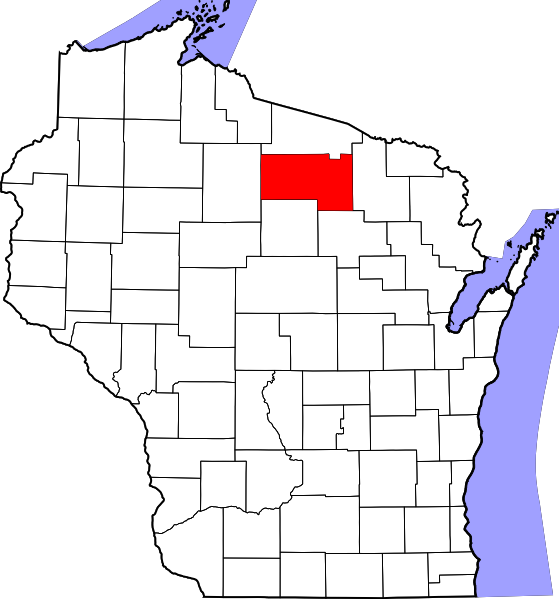
Oneida County Resolution on School Finance

559px-map_of_wisconsin_highlighting_oneida_countysvg

There was at least one positive vote for the future of education in Wisconsin on February 17th.  The Oneida County Board of Supervisors went on record supporting “legislative change to the state-aid formula to more fairly distribute state-aids throughout the state of Wisconsin” (full resolution here).

According to the Lakeland Times, Supervisors explained the situation and their votes as follows.

“… I just thought it would be nice that the people of Oneida County know that the supervisors … will support this resolution and bring it down to Madison,” Dean said. “This resolution, 13-2009, is to support our schools – Rhinelander and other districts. With the decreasing state aids to schools, Oneida County school districts are receiving less state aids based on school aid formulas. Oneida County property taxes is not the answer. The state is obligated – I’ll say it again, the state is obligated – to support the district schools. The Legislature has to make some kind of adjustments … If we send support like this, and other people as well, maybe they’ll see that we do have a problem. In closing – if you think education is expensive, try ignorance.”

Supervisor Gary Baier agreed, noting “property value rich and tax poor” northern Wisconsin districts are facing an economic crisis under the current school funding formula.

“The [school funding] formula is broken, it hasn’t worked for years …,” he said. “If they (the state) say they are going to fund it (education) two-thirds, then they ought to fund it two-thirds.”

I’m going to be asking the Dane County Board to do something similar.

Thomas J. Mertz

Leave a comment

Filed under "education finance", Budget, education, finance, Local News, School Finance, Take Action, We Are Not Alone